FREEDIVING SECRETS from world champion Alexander Bubenchikov

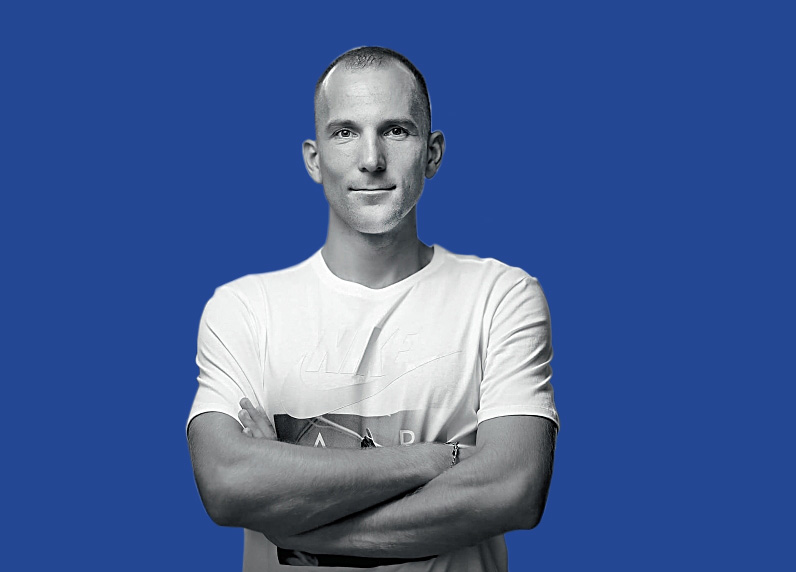
Alexander Bubenchikov — World Freediving Champion / 24tv.ua
What is freediving? Sport, adrenaline, excitement, a philosophy of controlling the body, an attempt to push beyond one’s limits and slow down the body’s deterioration — or something else… Huxley asked cardiologist, Candidate of Medical Sciences and anti-aging medicine specialist Nadezhda Kryzhanovskaya to uncover the secrets of the underwater realm from world freediving champion Alexander Bubenchikov. Alexander set a world record at the Individual AIDA Pool Freediving World Championship 2018, swimming 289 meters underwater with fins. His longest recorded breath-hold is 9 minutes and 3 seconds. Alexander is a man of many interests — he is a physicist with a keen interest in physiology and sports medicine. He enjoys alpine skiing, volleyball, and karting. He also develops and creates freediving equipment under his own brand, 2 b free.
THE MOST INTERESTING THINGS ARE ALWAYS HIDDEN WITHIN US
T
he functionality of the human body, the coordination of its mechanisms, and its ability to overcome barriers are characteristic of mammals, which can run, swim, and climb vertically. The subject of self-regeneration cannot be fully explored without examining our most ancient relationships — with oxygen and carbon dioxide. As aerobic organisms, we essentially reversed photosynthesis and began using oxygen to our advantage, generating energy with the universe’s principal oxidizing agent. And who among us, as a child, did not pinch their nose just to see what it was like not to breathe?
Apnea (unless it occurs during sleep, of course — in that case, you need to see a doctor) is an act of controlled breath-holding that each of us has used either in the water or during a medical examination (“breathe” — “hold your breath”). In freediving, this technique has been honed to perfection and allows humans to conquer unimaginable depths. The history of diving goes back thousands of years. People use every opportunity to explore the world further. At some point, someone was the first to dive down and reach the bottom. Everyone knows the famous culture of ama female divers in Korea and Japan — women dive even in the late stages of pregnancy and give birth to healthy babies. Apparently, we have been given the ability to use apnea to enjoy the freedom of diving.
Today, freediving is not merely a sport. It is self-control. After all, conserving oxygen is the most important guarantee of a successful dive. And the brain is the body’s main consumer of oxygen. So taming the unruly one is a must-have for diving. Thanks to Jacques Mayol, humanity broke through the 100-meter depth barrier, and we discovered that, while exploring the universe, we still do not know ourselves. For me, this is what I call Selfregeneration — the use of various techniques that activate our internal resources and the exploration of everything our body is capable of.
FREEDOM FROM TIME
Freediving gives you a sense of freedom and unity with the element of water. We all exist in three-dimensional space, but in reality we are bound to a plane and can break away from it only when diving or flying. Underwater, a person gains true freedom of movement. The brain perceives three-dimensional space, and this gives you an inexplicable joy — akin to what you feel as a child when you are allowed to go outside and play. I think pilots, paragliders, and hang-gliders experience a similar feeling. You become free from time. At first glance, this seems illogical, because no one can hold their breath indefinitely. In everyday life, we are constantly thinking about time: sometimes we do not have enough of it, and sometimes we do not know how to pass it. During a dive, time loses its meaning. The numbers on a stopwatch do not know how you feel or how much strength you have left. The only thing that matters is how you feel. When I prepare for record-breaking dives, I often repeat like a mantra: “For this dive, I have all the time in the universe”. This helps me let go of the sense of urgency and focus on how I feel.
SELF-DISCOVERY
A common misconception is that freediving is about extreme experiences, adrenaline, and living on the edge. Quite the opposite! Freediving is about relaxation, serenity, being in touch with yourself, your body, and the environment. And immense pleasure! It is the sheer joy of diving, the feeling of freedom and weightlessness, that draws people into the world of freediving. And the best part is that you do not have to dive deep or hold your breath for a long time to experience it. I remember my first dives. I did not set myself any goals. I simply enjoyed diving. I would descend to a certain depth, where the water no longer pushed me upward, lie down on the bottom, and experience a completely unique sensation. There were tons of water above me, but I felt no pain, no fear, and did not even feel the urge to breathe. I simply wanted to stay there longer. That is why, for me, freediving is about discovering your true self, pleasure, and harmony with the environment. Focusing on sensations helps you establish a connection with your body, learn to feel it more subtly, and choose how to respond to stimuli. After all, these are merely signals sent by our receptors, and it is important to understand where they come from, what they indicate, and then consciously choose how to behave. This skill is useful in everyday life as well. Amosov himself advocated and practiced therapeutic breath-holding. In addition to everything mentioned above, it improves oxygen transport and trains the respiratory, nervous, and cardiovascular systems.
OVERCOMING FEAR
I cannot say that I was afraid of diving itself. It was more a fear of the unknown. Very often, people are afraid precisely of what they do not know. That is why, when I teach people freediving, we begin with theory, learning how our bodies work and how they respond to breath-holding. We discuss which dangers are real and which are merely myths. Knowledge helps eliminate fear completely. People understand that there is nothing to be afraid of, know what to expect, and learn how to interpret their sensations correctly. The main danger in freediving is blackout — loss of consciousness due to a lack of oxygen. Therefore, the first rule is to dive only with a buddy who knows what to do in an emergency. Even experienced athletes never break this rule. If you are a beginner, be sure to find an instructor and take at least a basic course so that you can dive correctly, comfortably, and safely. During most dives, hypoxia is not even an issue: the oxygen reserves in our lungs, blood, and tissues are so substantial that you really have to make an effort to use them up. What people mistake for hypoxia is actually an elevated level of CO2, which stimulates the respiratory center in the brain and creates the urge to breathe.
At this point, blood oxygen saturation has generally not yet fallen below 100%. Studies show that during the first minutes of breath-holding, the brain may receive even more oxygen than before. Why does this happen? The first reason is peripheral vasoconstriction — the narrowing of peripheral blood vessels, which redirects blood away from the limbs toward the vital organs: the heart, lungs, and brain. The second reason is the Bohr effect: as it turns out, when the level of CO2 in the blood rises, hemoglobin begins releasing oxygen more actively into the tissues, including the brain. Most of our fears can easily be dispelled. A good instructor can help with this. For example, there is no need to be afraid of darkness: in the open sea, even at a depth of 100 meters, everything is perfectly visible without a flashlight. Not to mention 20–30 meters, which are accessible to anyone who wants to try. Water pressure can also be managed. When diving to depth, we experience a change in pressure — just as on an airplane, our ears become blocked. Once you master a simple pressure-equalization technique, you will get rid of the unpleasant sensations in your ears and feel just as comfortable at a depth of 20–30 meters as you do at the surface.
HEART RATE AND VO2MAX*
My heart rate is around 50 bpm. Incidentally, during breath-holding, the heart rate drops significantly — the body begins using oxygen more efficiently — and the lowest heart rate I have ever recorded was 27 beats per minute. The last time I measured my VO2Max , the result was completely average — 53.7 ml/kg. And that makes perfect sense: a freediver has no need for the ability to utilize as much oxygen as possible per unit of time. On the contrary, you need to teach your body to use it as slowly as possible. The two main consumers of oxygen in the body are the muscles and the brain. That is why the ability to relax both physically and mentally is so important for a freediver.
A SPORT FOR EVERYONE
Anyone can practice freediving. If a person is capable of running, jumping, swimming, and riding a bicycle, then they can dive as well. To help people overcome their fears, broaden their perception of what is possible, and discover the beauty of the underwater world, I created the Bubenchykov Freediving School. No special skills are required to begin training. Everything we need is already within us. Nature itself has given us the mammalian diving reflex — the same one found in whales, fur seals, and dolphins. That is why our body already knows how to respond. Our task is simply not to interfere with it. Before record-breaking dives, I try to relax as much as possible to make things easier for my body. I use a specific relaxation technique for this.
While practicing it, I discovered that relaxation has many layers: often you feel completely relaxed, but after a while — suddenly — it is as though a new level opens up. When you manage to relax truly deeply, you begin to trace the connection between your thoughts and tension in your body very clearly, and you realize that thoughts are, in fact, material. What you think affects your body, and vice versa. I also use full, deep breathing: a slow inhalation into the abdomen, then into the middle and upper parts of the lungs, followed by a smooth exhalation in reverse order that lasts twice as long. This kind of breathing also helps you relax. That is because the connection between our mental and physical state and our breathing works both ways. Deep, smooth breathing with an emphasis on abdominal inhalation and a prolonged exhalation has a calming effect. You can try it for yourself.
PLANS
We are planning to visit Y-40 Deep Joy — the deepest swimming pool in the world (42.15 meters deep) near Venice, then travel to Sri Lanka to dive with whales, and we also have our traditional deep-diving trip to Dahab ahead of us.
When copying materials, please place an active link to www.huxley.media
Select the text and press Ctrl + Enter