AI VS SCIENCE: An Accelerator of Ideas or a Destroyer of Established Foundations?


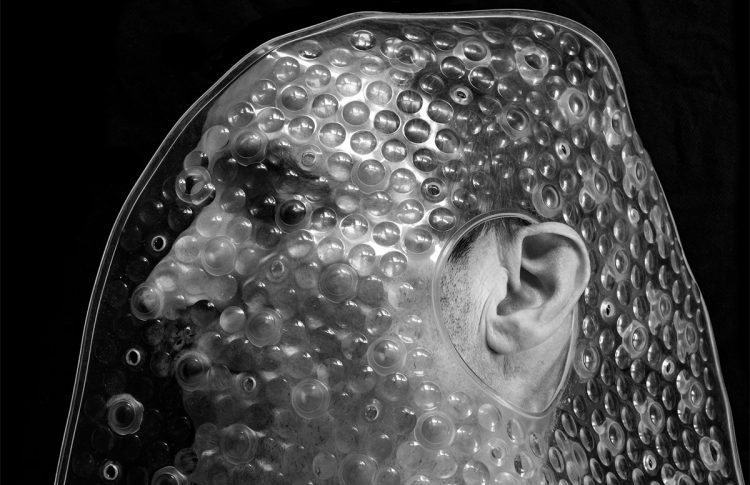
Photo by Google DeepMind on Unsplash
In recent years, artificial intelligence has become an integral part of the scientific process. It helps draft reports and process data, predict protein structures, and discover new materials. Yet the paradox is that its impact on science is twofold: AI strengthens the position of individual researchers while simultaneously narrowing the collective landscape of scientific discovery.
AI IS TRANSFORMING THE SCIENTIFIC PROCESS
A
study recently published in the journal Nature analyzes data from more than 41.3 million scientific publications across various fields of the natural sciences over recent decades, from biology and medicine to physics and geology. This dataset spans the period from the early development of machine learning to the recent expansion of generative AI tools. The authors employed a trained language model to automatically identify papers that had been “enhanced” by AI tools, thereby obtaining a large-scale picture of AI’s impact on scientific careers and on the scientific landscape as a whole.
AI MAKES INDIVIDUAL SCIENTISTS MORE PRODUCTIVE
The results are striking in their ambiguity. They suggest that the use of AI can lead to individual success while simultaneously contributing to collective stagnation. Scientists who actively use AI tools demonstrate impressive personal achievements. They publish 3.02 times more scientific papers than their colleagues without AI support. Their articles receive, on average, nearly 4.85 times more citations. Young researchers who actively incorporate AI reach leadership positions 1.4 years earlier than their peers. This means that artificial intelligence genuinely expands individual capabilities, making scientific work faster, more productive, and more visible.
SCIENCE AS A SYSTEM IS DEGRADING
However, science as a collective system responds to AI differently. In recent years, the range of topics being studied has shrunk by 4.63%. Interactions among scientists, such as citations and scholarly discussions, have declined by approximately 22%. Rather than opening new horizons, collective scientific activity is increasingly concentrating on areas with large volumes of data, where AI performs most effectively. As a result, significant portions of the scientific landscape are becoming underexplored or ignored altogether. But what explains this phenomenon?
THE SHRINKING SCIENCE EFFECT
The shift toward data-rich research fields is an almost inevitable side effect of the algorithms themselves. AI models are designed to focus on what can be easily measured and optimized, rather than on what is difficult to formalize or describe quantitatively. As a result, individual researchers may achieve rapid success, but this success bears little resemblance to what has traditionally been regarded as collective scientific progress, which historically advanced through the discovery of new conceptual domains and radically new ideas. This phenomenon has already been given a name: the “shrinking science effect”. Its essence lies in the fact that technologies intended to expand our cognitive capabilities actually concentrate our efforts within narrow areas where abundant data and clear metrics already exist.
THE ILLUSION OF UNDERSTANDING
The problem is further compounded by the fact that many AI approaches — especially those based on deep neural networks — behave like “black boxes”. In other words, they produce highly accurate predictions but do not explain why a particular physical or biological phenomenon occurs. This reflects the long-standing dilemma between statistics and machine learning: the former seeks explanation, while the latter seeks successful prediction. The growing emphasis on predictive performance at the expense of deeper explanation and understanding is increasingly criticized by scientists. After all, the goal of science is not merely to predict outcomes but, above all, to understand the causes and mechanisms behind phenomena. By relying on AI, we may acquire an “illusion of understanding”. We can believe that we have advanced further than we actually have.
A FALSE SENSE OF PROGRESS
There is nothing unusual about this. The history of science contains many examples in which technological tricks appeared to be major breakthroughs while, in reality, merely concealed profound gaps in understanding. The speed and ease with which AI is being adopted in science create a false sense of progress, as models simply identify correlations rather than rigorously test hypotheses or uncover mechanisms. Add to this the possibility of errors within the models themselves. For example, information leakage between training and test datasets can make a study appear convincing while failing to reflect the underlying mechanisms. An analysis of hundreds of medical AI applications revealed that only a small proportion met basic quality standards, while many models merely “guessed” based on statistical relationships within the data rather than genuinely recognizing disease.
SCIENCE IS CEASING TO “UNDERSTAND THE WORLD”
Science is not merely a collection of data or a tool for making predictions. It provides the means to formulate concepts, build theories, and understand relationships that extend beyond measurable variables. Reducing science to a set of predictive models does not expand scientific horizons: faster does not necessarily mean deeper. If AI pushes the explanatory and exploratory dimensions of scientific activity to the margins — the formulation of questions, the explanation of mechanisms, and the search for new conceptual directions — we risk creating a science that can predict outcomes but struggles to understand the world. The authors of the study published in Nature propose several solutions that could mitigate the negative effects of AI use.
FOR SCIENCE, MEANING MATTERS MORE THAN SPEED
Among these solutions is the development of standards for monitoring AI models and testing them for errors and data leakage. Greater emphasis should be placed on evidence synthesis and the critical re-evaluation of results. It is also important to establish incentives for research in data-scarce fields. This would help preserve not only productivity but also the depth of scientific inquiry, ensuring that AI truly serves the advancement of knowledge rather than merely accelerating career success. The twenty-first century may be remembered as the era in which humanity learned to effectively combine artificial and human intelligence, drawing from this partnership not only predictions but also genuine understanding of the world. Achieving this, however, will require a more thoughtful approach to the role of AI in science — one that places meaning, rather than speed, at the center of the scientific enterprise.
Original research:
When copying materials, please place an active link to www.huxley.media
Select the text and press Ctrl + Enter