BORIS BURDA: How People Gradually Learned to Wash Themselves

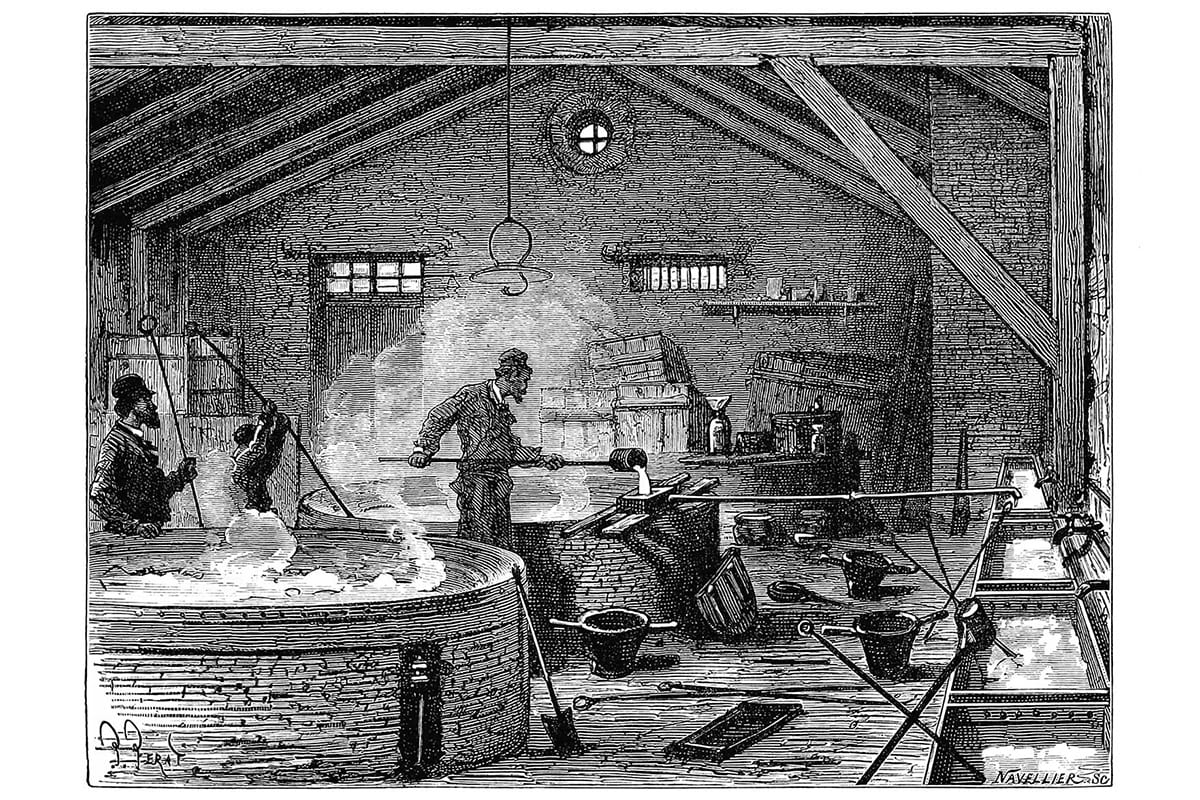
Soap-making process from animal fat at a factory in the suburbs of Paris / oldbookillustrations.com
ATTENTION — QUESTION!
In which play did an actress perform who was forced to pay a fine for mentioning a company that produced soap?
ATTENTION — CORRECT ANSWER!
«Macbeth». The actress playing Lady Macbeth exclaimed: «Oh, if only I had in my hands now soap from the Fish brothers’ company, I would wash away this blood and rid myself of suffering!»
WHO WAS FIRST?
T
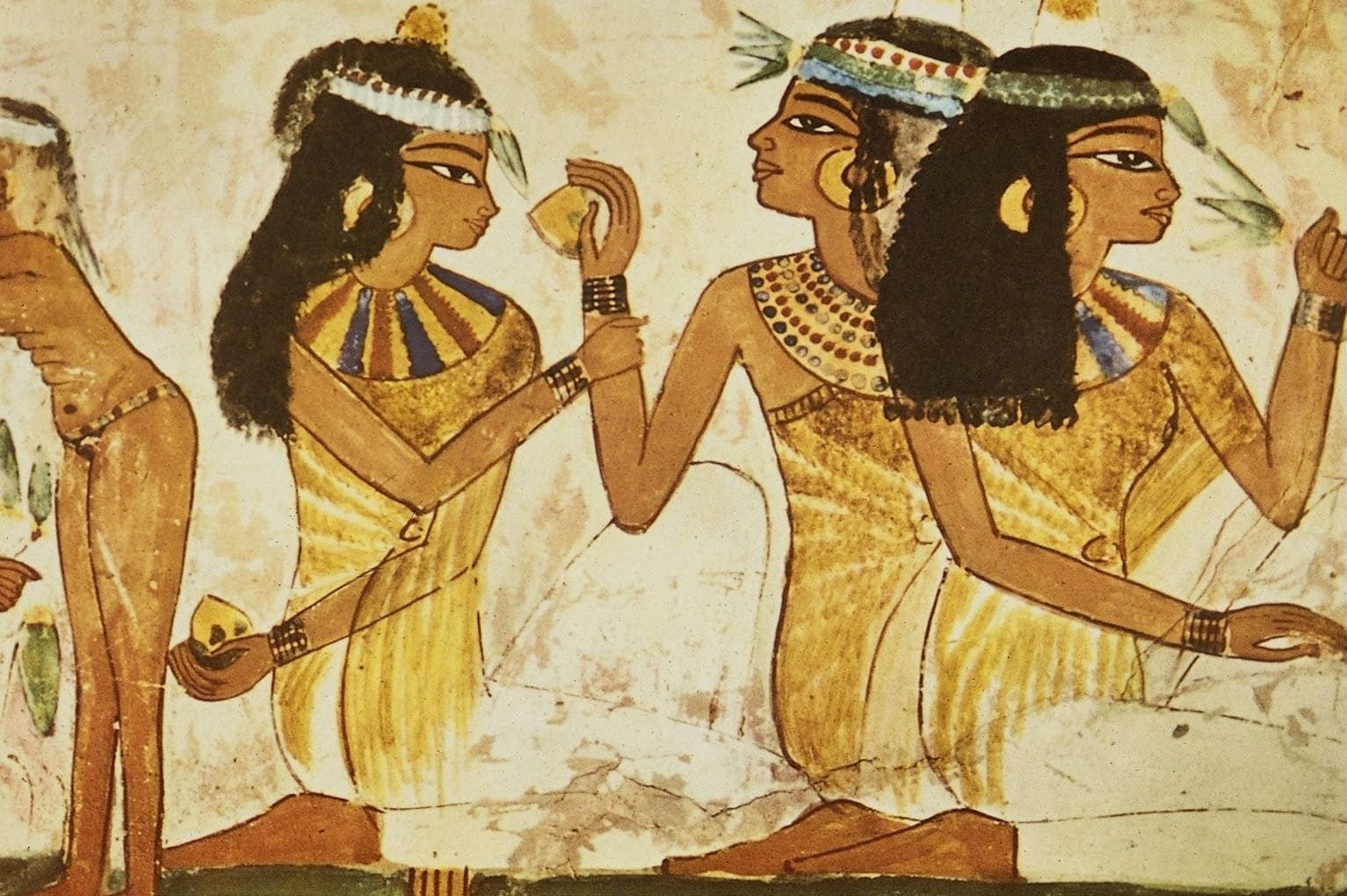
he most ordinary and familiar things were not always known to us. They simply appeared at some point long ago and were then repeatedly modified to become what we recognize today. This also applies to things we touch several times every day. Tracing their evolution is not easy, but it is fascinating. Even when people began to feel the desire to slightly reduce the thickness of the layer of dirt on their bodies, soap did not appear immediately. The Egyptians rubbed themselves with beeswax — it helped only a little. The peoples of the Balkan and Apennine Peninsulas, the Greeks and the Romans, simply scrubbed themselves with fine sand. Not much of a solution either.
But those who truly made a great invention were the Sumerians, who in many ways were ahead of everyone else. Around 2500 BC, a clear recipe was recorded on recently discovered clay tablets: boil ash with water, then add goat fat. Why — unclear, but apart from soap, it is good for nothing else. The ancient Egyptians tried to offer some competition. In a papyrus dating to 1550 BC, there is mention of a certain substance made of goose fat, plant matter, and soda, which could hardly have served any purpose other than soap — though again, without details of its use. Egyptians did use pure soda for washing, but that is something else…
Clearly later, but without doubt, soap was mastered in ancient Rome. Nearby, there was Mount Sapo, where sacrificial animals were burned. Fat mixed with ash flowed into the Tiber, and those who washed their clothes at that spot noticed they became cleaner. It is said that the Italian word for «soap» — sapone — originated from the name of this mountain. And hardly a serious competitor to the examples above is the account by the Roman historian Pliny the Elder of a special ointment made from beech ash and tallow, which the ancient Gauls used to clean their hair. It is unquestionably later than the Sumerian example, and in general is always accompanied by the timid note «according to one version», which can be interpreted as «highly unlikely»…
WASHING IN THE MIDDLE AGES
Like many other valuable ideas, the secret of soap-making returned to Europe through Arab culture after the Crusades — as, in fact, did the custom of washing hands before meals. However, in the 12th–13th centuries, in noble families of England and France, no one would sit at the table without washing their hands. Moreover, they washed them with soap. The craft of the soap-maker, truly a difficult one, began to enjoy considerable respect; its status was high, and production was considered a great secret. In the 14th century in England, soap-makers were even forbidden to spend the night under the same roof with colleagues and foreigners — to avoid any suspicion of stealing professional secrets. Of course, this was not the case everywhere. In the vast Mongol Empire, the death penalty for a Mongol was applied in only four cases: horse theft, the murder of a relative or friend, an attempt on the khan, or… washing. Yes, indeed! It was believed that washing could anger the spirits of water, and if one had the strange urge to be cleaner, one should rub oneself with sand!
A somewhat middle-ground position on this issue was taken by Elizabeth I of England — she bathed once a month to set a good example for her subjects. Her successor, James I of England, did so just as often, but washed only his hands. This was not Isabella I of Castile, who was washed for the first time at birth, the second time on her wedding day — and that was it! It was enough for her… It is no wonder that the Sun King, Louis XIV, did not believe his spies, who reported that Prince Alexander Menshikov (and not only him!) washed at least once a week. For the king, washing was the rarest medical procedure, to which he resorted under the vigilant supervision of royal physicians. But perhaps for the 18th century, even that was already excessive…

THE SOAP INDUSTRY
In the 19th century, soap production became mass-scale and… harmful. First, sea salt was treated with sulfuric acid, then oil was added to the resulting sodium sulfate — not always olive oil, more often palm or peanut oil. The toxic fumes made production so dangerous that convicts were sent to work at these factories. It turned out that fat was not even essential for making soap! At the turn of the 19th century, the Englishman Andrew Pears proposed making soap from a more delicate raw material — glycerin. This invention enabled the production of soap that was not only highly fragrant but also transparent! The Pears trademark remains well known to this day.
In the second half of the 19th century, William Sheppard from the United States introduced a novelty — liquid soap. However, it did not gain popularity until 1980, when his compatriot Robert Taylor proposed the now-familiar pump dispenser packaging. After that, liquid soap quickly became popular, despite having been invented long before. Soap from Marseille has not lost its reputation either, as its olive-oil production began as early as the 12th century. Jean-Baptiste Colbert even protected this name as a brand. On the eve of the 19th century, 49 Marseille soap factories were producing 76,000 tons of soap per year, with soap mentioned alongside wine in trade agreements of that time between France and Russia.
A true revolution in soap production in the Russian Empire was brought about by the Frenchman Henri Brocard. He began producing «Children’s» soap with embossed alphabet letters, as well as soap shaped like amusing animals. Brocard’s soaps — «Coconut», «Rose», «Greek», «Honey», «Amber», and the elongated «Cucumber» soap — appealed to everyone. And in 1863, at the American company Procter & Gamble, something went wrong, and the mixture was left in the vat longer than usual. The defective batch was about to be discarded, but fortunately, they changed their minds — because they had created floating soap! In 2001, the company released 1,000 non-sinking bars and offered a $250,000 prize to anyone who could find them. No one came forward…
SOAP IN OUR TIME
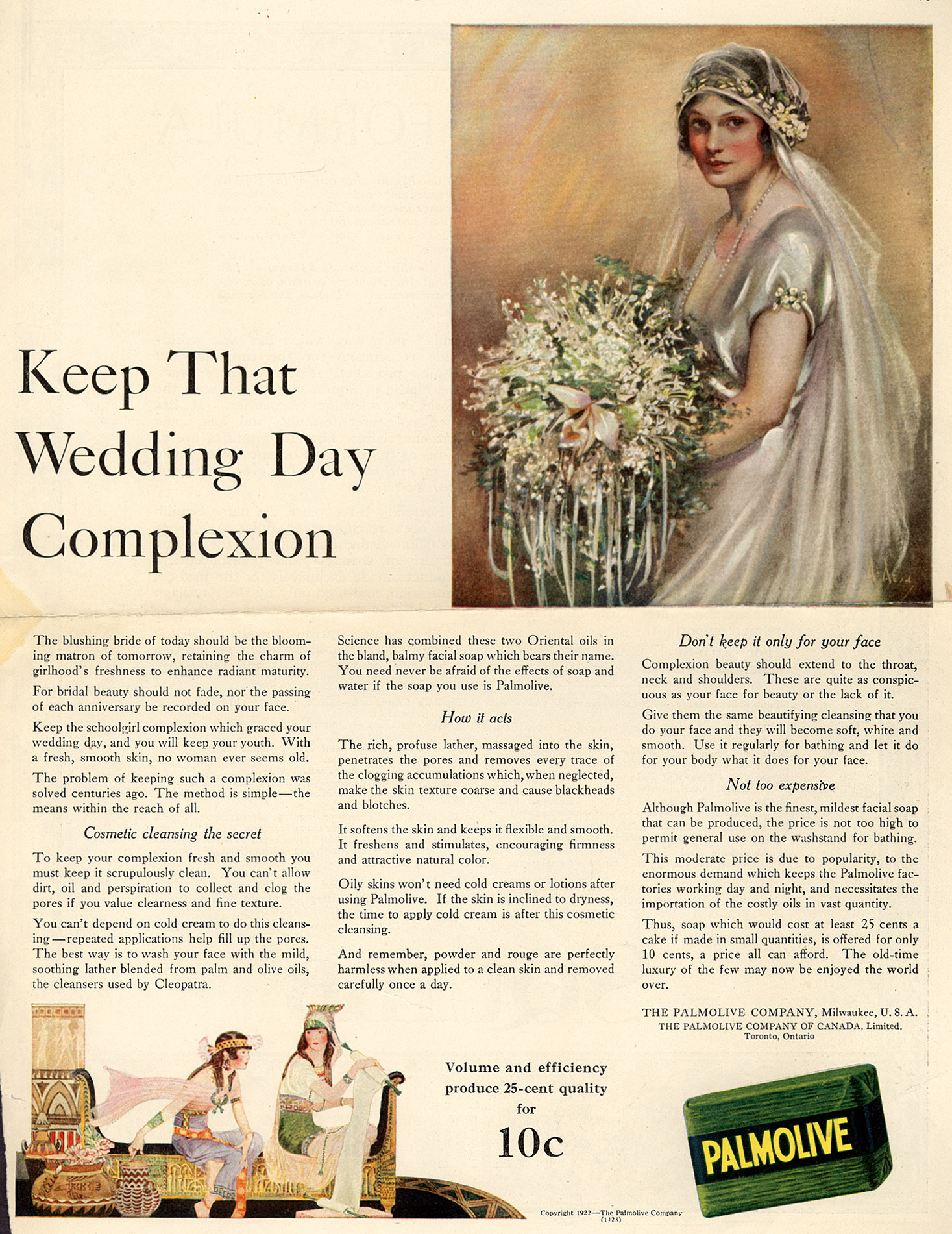
Today, soap is such a banal, familiar, and essential thing that the very word pops up in the most unexpected contexts. The simplest example can be heard in football stadiums — every now and then, someone will shout: «Referee to the soap!» Incidentally, if that were done, one referee would yield about seven bars. When the advent of radio and television opened new avenues for advertising, a number of shows were sponsored by soap manufacturers, and they came to be known as «soap operas». This is hardly directly connected to the fact that the star of some of the earliest such shows, Douglas Fairbanks, sold soap in his youth — but such stories do circulate…
The English word mail (post), once it entered the Russian-speaking world, immediately gave rise to a new meaning of the word «soap» — it came to mean an email. So when you hear the phrase «send me this text by soap», no one is going to carry the text into the bathroom and lather it with bath soap — everyone already understands what it really means. Soap could also evoke negative memories. The chief designer Sergei Korolev would become furious if even a single washbasin in his research institute had a bar of laundry soap instead of the proper toilet soap. The reason was simple and grim — in the GULAG «sharashkas», where he spent years, such an «economy» was standard practice. And I would especially note an exhibit at a 2005 exhibition in Basel, created by the Italian Gianni Motti. At first glance, it looked like an ordinary bar of soap. But Motti claimed that all the fat from which it was made had been taken, via liposuction, from the corrupt Italian Prime Minister Silvio Berlusconi. The title of the exhibit was «Clean Hands»!
When copying materials, please place an active link to www.huxley.media
Select the text and press Ctrl + Enter


