REVELATIONS IN SCIENCE: How Phlogiston Mysteriously Evaporated from Physics and Chemistry

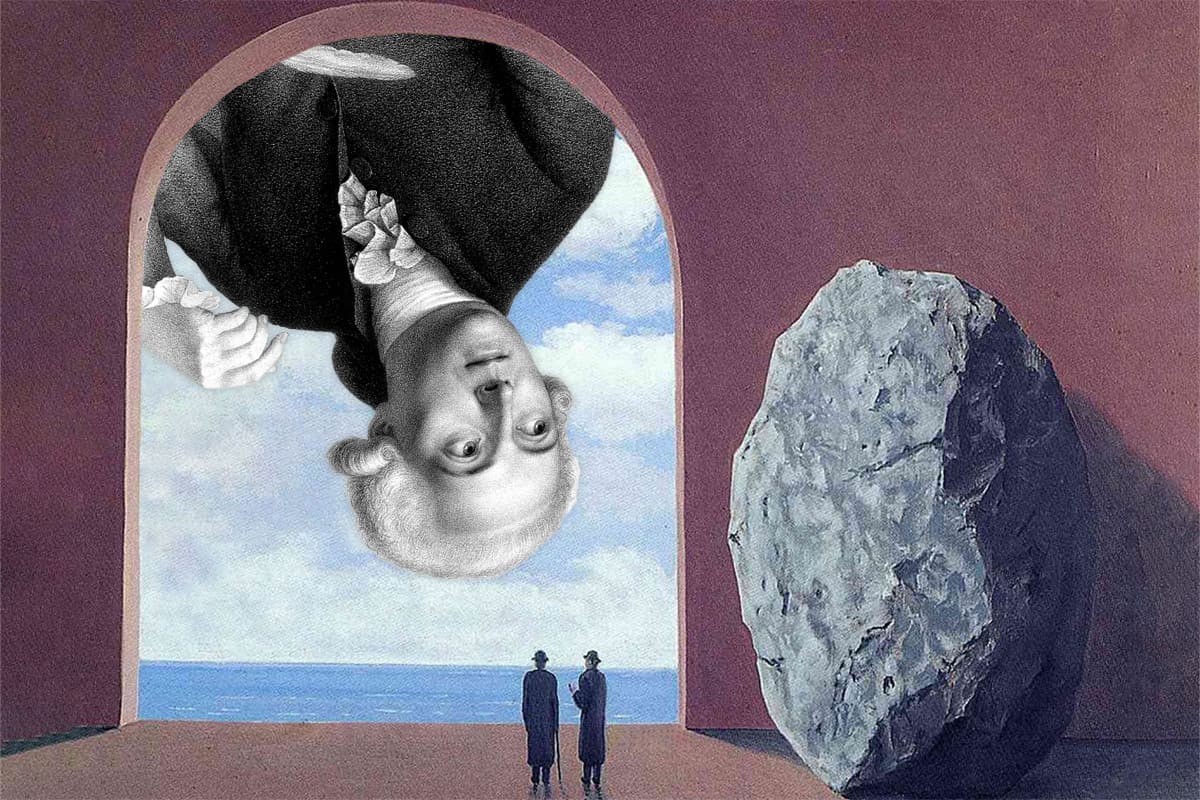
Art design: huxley.media via Photoshop inspired by René Magritte’s painting Portrait of Stephy Langui, 1961
THE FUNDAMENTAL BUILDING BLOCKS OF THE UNIVERSE
P
eople have always been fascinated by what everything — including themselves — is made of. When Empedocles explained that the world consisted of four fundamental elements — Earth, Air, Water, and Fire — he was almost certainly repeating ideas that had come before him, though we no longer know whose. The Chinese added a fifth universal element to this quartet: Metal (without specifying exactly which metal they had in mind). Only a few thinkers disagreed, among them Democritus, a younger contemporary of Empedocles, who argued that matter could be divided only down to a tiny particle that was itself indivisible (in Greek, atomos). During the Middle Ages, ideas about the structure of matter changed. The Chinese concept of Metal, in the hands of medieval alchemists, evolved into a system of seven metals associated with the seven planets (counting the Sun and the Moon among them): gold, silver, mercury, copper, tin, iron, and lead.
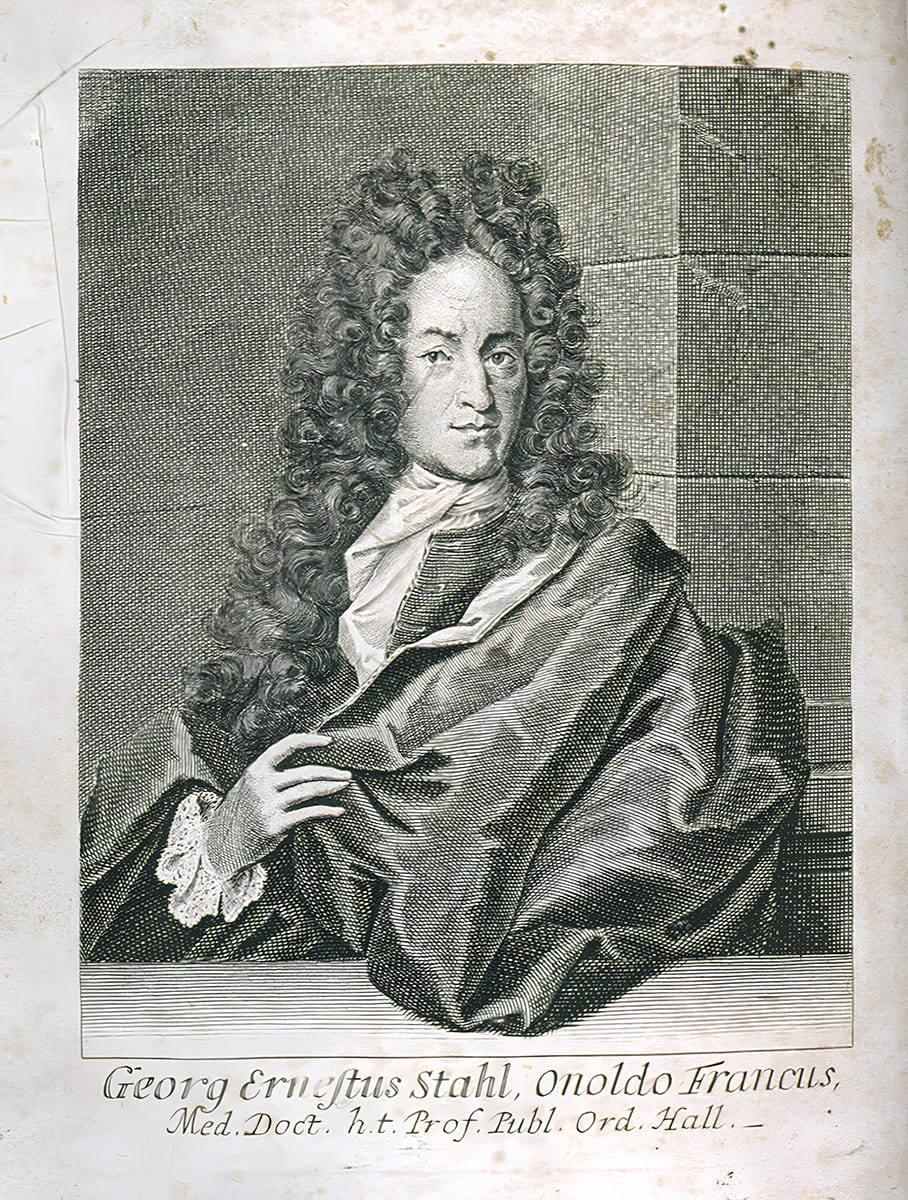
The individualist Paracelsus simplified the picture somewhat, maintaining that everything in the world was a combination of three principles — Mercury, Sulfur, and Salt (not ordinary table salt, but something that Paracelsus himself never fully understood). As time went on, theories of matter alternately became simpler and more complex. Dalton rediscovered the atom, and a century later, three physicists identified its components: Rutherford discovered the proton, Chadwick the neutron, and Thomson the electron. The modern discovery of quarks has even stripped the proton and neutron of their status as elementary particles. Today, counting the Higgs boson, there are no fewer than nineteen elementary particles — and, presumably, each has its own antiparticle as well. Be that as it may, it is no easy feat to invent a new fundamental constituent of the Universe. Yet Georg Ernst Stahl (1659–1734) managed to do just that. He conceived a new elemental substance — one that was, among other things, remarkably logical. But its scientific life lasted less than a century. Why? That is the story I am about to tell.
THE ESSENCE OF FIRE
It is difficult to say exactly where the story of this fundamental substance began. One certainly cannot overlook the great Arab alchemist Jabir ibn Hayyan, known in Europe as Geber. As early as the late eighth century, he observed that the weight of a metal after burning differed from the weight of the “earth” — the residue or oxide that remained behind. Chemists of later centuries took this observation seriously, especially after the publication of Robert Boyle’s famous book The Skeptical Chymist, in which he plainly stated that if an experiment produced one result while Aristotle or any other authority predicted another, he would trust the experiment rather than Aristotle. That sounds perfectly obvious today and hardly worth mentioning. Well, congratulations on living in the twenty-first century. Had you voiced such opinions somewhere in the middle of the last millennium, you might well have found yourself burned at the stake according to all the proper procedures — humanely, of course, without the shedding of blood.
Then came Johann Joachim Becher, a man of remarkably diverse talents, whose interests ranged from plans to connect the Danube and the Rhine by canal to schemes for producing gold from ordinary sand. Among other things, he regarded the burning of metals as a process in which they lost what he called “fatty earth”, while simultaneously acquiring “fiery matter”. Becher and his successor Stahl called this fiery matter phlogiston (from the Greek word meaning “combustible”). The theory seemed perfectly logical. “Fatty earth” combined with phlogiston to form a metal, and when the metal burned or rusted, the phlogiston escaped. There was only one problem: it quickly became apparent that rust, scale, or ash produced by burning a metal weighed more than the metal from which it had supposedly been formed. Phlogiston vanished, yet the weight increased. How could that be?
MORE PHLOGISTON, LESS WEIGHT
As it turned out, even this contradiction could be explained in a way that preserved the theory’s internal logic. The explanation was elegant and straightforward: if phlogiston leaves a metal and the resulting scale, rust, or ash weighs more, then phlogiston itself must possess negative weight. Less phlogiston meant more weight. Combustion, rusting, and even respiration could all be understood as variations of the same process — the removal of phlogiston from matter. As phlogiston escaped, weight increased. Stahl himself proposed this idea, and many scientists accepted it because it appeared to work. The equations of material balance came out correctly, and there was even a plausible explanation for why. This, incidentally, was another advantage of phlogiston theory: it allowed scientists to preserve the principle of conservation of mass, a concept dating back to Empedocles, regardless of whether heat was being released or absorbed.
And when relationships between phenomena become quantitative rather than merely qualitative — as they had been in alchemy — we are already much closer to science. In this sense, phlogiston became a hallmark of scientific progress, one of the earliest genuinely scientific theories in several important respects. Of course, a scientific theory can be either right or wrong. To determine which category phlogiston belonged to required further investigation. A crucial development soon followed. Scientists were forced to acknowledge that air was not a single, featureless substance. It was actually a mixture of different gaseous materials, each playing its own role in chemical transformations. The shift began in 1754, when the Scottish scientist Joseph Black published his findings demonstrating that at least one gas — gases were then known as “elastic fluids” — possessed properties distinctly different from those of ordinary air.
THE COMPONENTS OF AIR
It turned out that there was far more than one of them. Henry Cavendish — grandson of the second Duke of Devonshire and the first Duke of Kent, one of the wealthiest and most aristocratic men in Britain, a reclusive hermit and an exceptionally gifted scientist — discovered what would later be identified as hydrogen, nitrogen, and carbon dioxide. Not long afterward, the Englishman Joseph Priestley and the Swede Carl Wilhelm Scheele independently discovered oxygen. Scientists interpreted the relationship between these gases and phlogiston in different ways. For a time, oxygen was classified as “dephlogisticated air”, meaning it was completely devoid of phlogiston. That, supposedly, was why combustion proceeded so vigorously in it: phlogiston could escape without hindrance. As for nitrogen, Priestley regarded it as “phlogisticated air”, saturated with so much phlogiston that combustion occurred only poorly. Cavendish, for much the same reason, called it “mephitic air” (from the English mephitic, meaning noxious or harmful). Hydrogen was the easiest case of all. It did not support the combustion of other substances, yet it burned itself splendidly. For that reason, Cavendish, Scheele, and Priestley all believed that hydrogen was nothing less than pure phlogiston. None of this contradicted phlogiston-based theories in the slightest. Indeed, among those who continued to support the existence of phlogiston for many years was the man who would eventually destroy the theory: Antoine Laurent Lavoisier.
ANOTHER WEALTHY SCIENTIST
Lavoisier belonged to a fairly common type of eighteenth-century scholar: a man driven into science not by necessity, but by personal fascination. Cavendish was by no means unique. Lavoisier, too, came from a wealthy and distinguished family, received an excellent education, and pursued scientific research largely for his own intellectual satisfaction. He regarded phlogiston as entirely real and even used phlogiston-based theories to solve practical scientific problems. Most remarkably, he was often able to obtain brilliant results. One such case arose when the owner of a sugar refinery approached him with a question. Could science explain why the sugar produced at his factory had a yellowish tint that some customers found unappealing? Guided by the prevailing theories of the day, Lavoisier suggested that the sugar became contaminated with phlogiston during production. Phlogiston, he reasoned, might itself be yellow. Under normal circumstances, its color would go unnoticed, but in sugar, where phlogiston supposedly accumulated in unusually high concentrations, it became visible. What substance could absorb phlogiston? According to contemporary theory, activated charcoal. The idea was tested experimentally, and it worked: the sugar became white. Of course, the true explanation had nothing to do with phlogiston. The charcoal removed impurities through adsorption, a phenomenon that was not yet understood and whose very existence was unknown at the time. Nevertheless, the experiment’s success greatly enhanced the prestige of phlogiston theory. After all, a prediction had been made based on the theory — and the prediction had come true.
THE LAW OF CONSERVATION
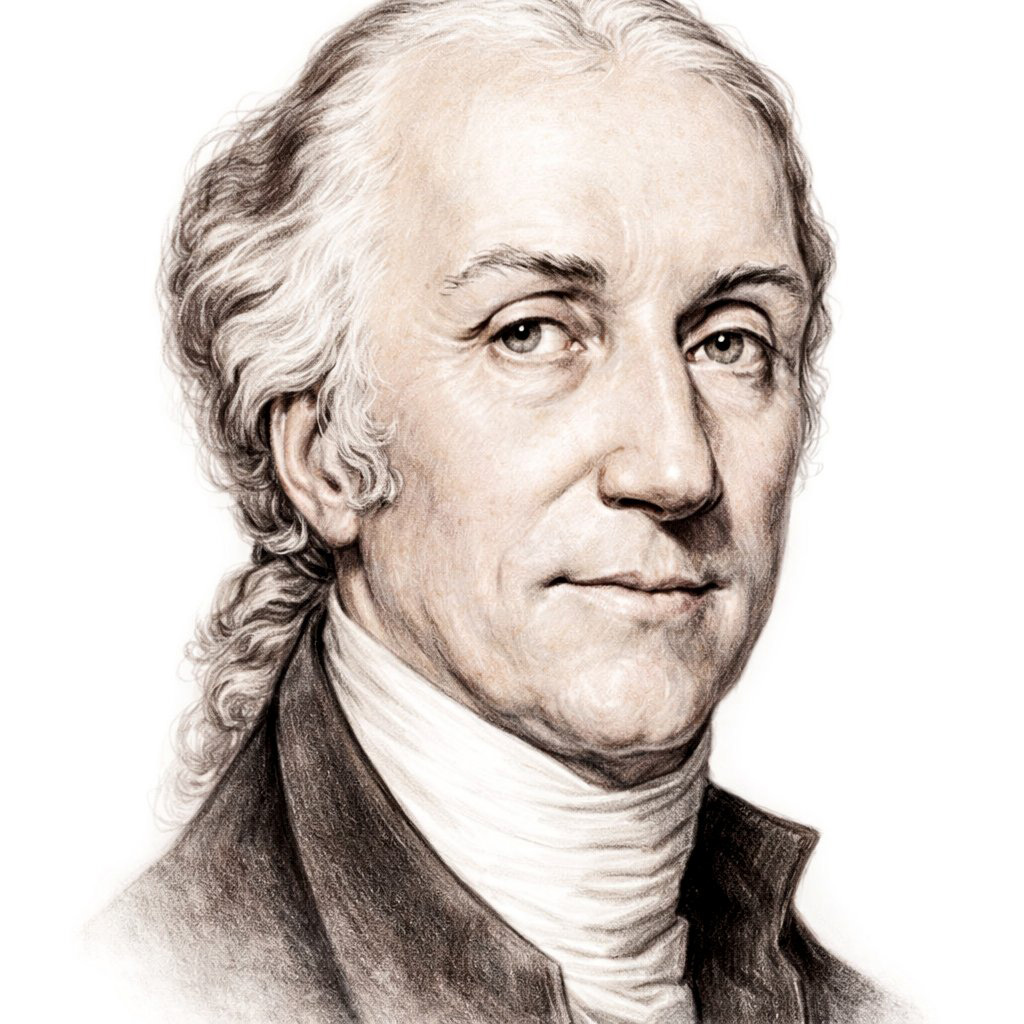
The most interesting part of the story began when Lavoisier turned his attention to the “dephlogisticated air” discovered by Priestley and Scheele — what we now call oxygen. (At one point, he even tried to claim a share of the discovery himself, but let us not dwell on that; scientists are human too.) By studying the way oxygen combined with a wide variety of chemical elements, Lavoisier demonstrated beyond doubt that metallic oxides — rust, metal scale, oxide powders, and the like — are heavier than the original metals because they consist of the metal plus oxygen. The mass of the oxide is simply the sum of the mass of the metal and the mass of the oxygen. As one can easily see, Lavoisier’s new ideas were, in a sense, mathematically equivalent to the conclusions reached by phlogiston theory when describing the same reactions. The mass of a metal oxide equals the mass of the metal plus the mass of oxygen. Yet it can also be represented as the mass of the oxide minus the mass of phlogiston — provided one remembers that phlogiston supposedly possessed negative mass. Pure mathematics, when divorced from physical reality, can lead us surprisingly far.
From that point onward, the conservation of mass became known throughout the world as Lavoisier’s Law — except in one country, where many laws recognized everywhere else somehow required special treatment. There, it was referred to exclusively as the Lomonosov–Lavoisier Law, a designation found nowhere else except in states closely aligned with it. Interestingly, Lomonosov himself never claimed the discovery. In his own Review of the Most Important Discoveries, the conservation of mass does not appear among his achievements. Of course, in the post-Soviet era, publications asserted that Lomonosov discovered nothing at all, but that claim is equally unconvincing. His discovery of the atmosphere of Venus, for example, is beyond serious dispute. What is difficult to defend, however, is the assertion that Lomonosov discovered the conservation of mass before Empedocles. Such arguments generally rely on books produced in the Soviet Union, and even then, only during a specific period of its history. Meanwhile, several Wikipedia articles mentioning Lomonosov’s supposed discovery have already been nominated for removal. No great hurry has followed, however — Wikipedia tends to be far less dependent on ideology, or on changes in ideology, than many other institutions.
A SOMBER CONCLUSION
All that remains is to note, somewhat sadly, that Lavoisier lived only fifty years. His life ended beneath the guillotine. Like many wealthy Frenchmen of his era, he participated in France’s peculiar system of tax farming — a scheme that resembled the privatization of the national tax service. Private contractors collected taxes on behalf of the state, guaranteeing a fixed payment to the treasury while recovering their costs from taxpayers, usually with a very substantial surcharge added for their supposedly selfless efforts. Naturally, abuses occurred. Yet Lavoisier was not executed for any specific crime that had been proven against him. Revolutions are rarely interested in such distinctions. Several of his colleagues attempted to appeal to the revolutionary tribunal’s common sense, only to receive the famous reply attributed to its vice president, Coffinhal: “The Republic has no need of chemists”. On the contrary, revolutions need chemists very badly. The trouble is that deputy chairpersons of revolutionary tribunals usually realize this only shortly before their own execution — and some never have the opportunity. Thus, Lavoisier’s conservation law, without any assistance from Lomonosov, finally displaced phlogiston from mainstream science. Ironically, modern science has since shown that even the conservation of mass is not strictly true. Such developments are perfectly normal in science. Today, the fundamental principle is the conservation of mass–energy: mass and energy can be transformed into one another. In practice, the conservation of mass still holds as an excellent approximation whenever the energies involved are relatively small. This is often how scientific laws evolve. A principle once regarded as universally exact gradually yields part of its domain to a deeper theory, surviving not as a falsehood but as an approximation valid under specific conditions. The only melancholy aspect of this process is that there seems to be no end to it in sight…
LITERATURE
- Volkov, V. A., Vonsky, E. V., & Kuznetsova, G. I. Outstanding Chemists of the World. Moscow: Vysshaya Shkola, 1991. 656 pp.
- Dorfman, Ya. G. Lavoisier. Moscow: Publishing House of the Academy of Sciences of the USSR, 1962. 328 pp.
When copying materials, please place an active link to www.huxley.media
Select the text and press Ctrl + Enter