SAME-SEX LOVE: How Primates “Build a Career” Without War

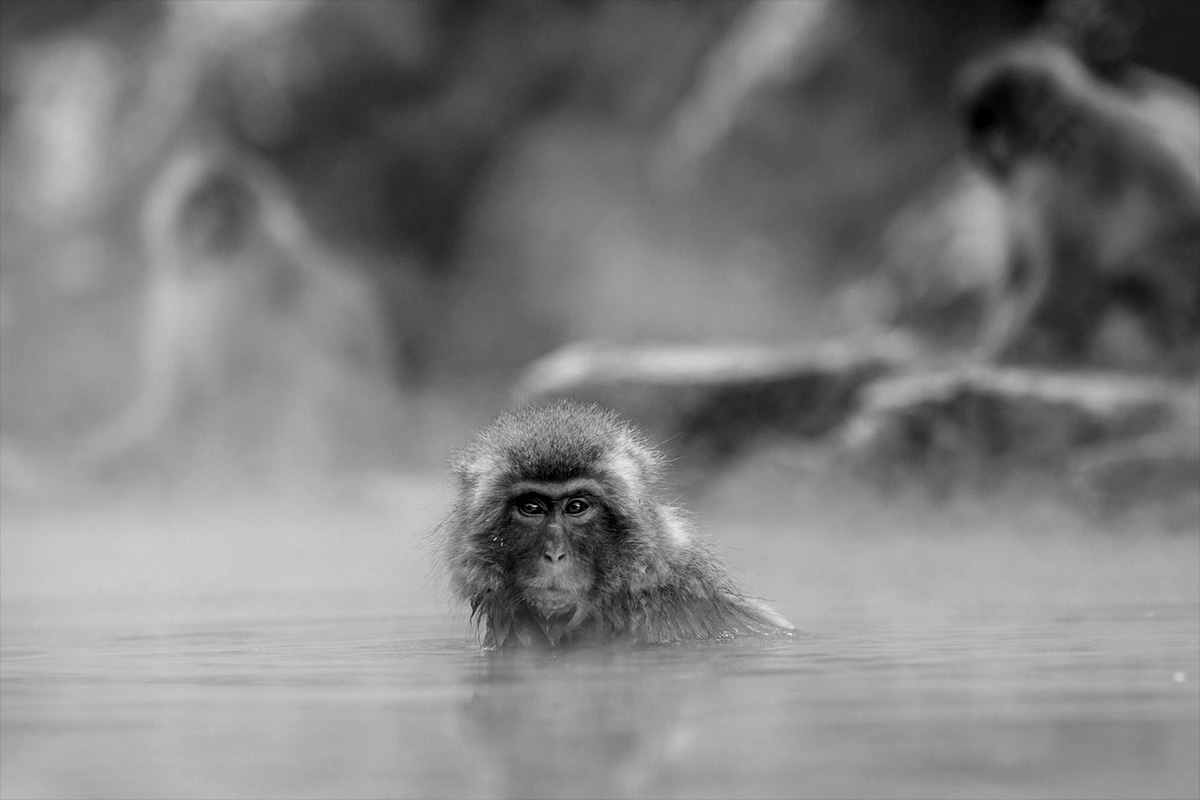
Photo by Steven Diaz on Unsplash
A recent study published in Nature Ecology & Evolution shows that same-sex sexual behavior is not a sign of an excess of sexual function. In primates, it may be a form of response to stress. Such sexual behavior is linked exclusively to survival strategies and is therefore in no way the result of any innate defect, nor is it connected to any physiological or psychological characteristics of the reproductive system.
SAME-SEX LOVE: A VARIANT OF THE NORM?
T
he large-scale study covered nearly 500 species of non-human primates. As part of the research, evolutionary biologists examined the sexual behavior of virtually all ape species living on the planet, from two-meter-tall giant gorillas to pygmy marmosets standing just 15 centimeters high. The scientists found that same-sex sexual behavior is part of the normal social life of some primates and may even play an important role in their long-term success. Bonds between individuals of the same sex help apes resolve conflicts and strengthen alliances. Such relationships become especially common in less favorable habitats, for example, in arid landscapes or in areas where the risk of predator attacks is high.
ZOOS ARE NOT TO BLAME!
Same-sex interactions among monkeys have been documented for a long time. However, because they were observed mainly in captivity, under zoo conditions, they were long regarded as an “anomaly”. It was assumed that in their natural environment, monkeys behaved more “properly”. Although documentary films shot in the wild periodically recorded same-sex sexual behavior among primates — including mating, genital touching, and fellatio — only in the past few years have these behavioral patterns become the subject of serious scientific research. At first, it was very difficult for specialists to understand the significance of this phenomenon. A wide range of explanations was proposed, from a behavioral effect arising when reproduction is controlled by only a few individuals to an adaptive mechanism. Over time, however, scientists arrived at more surprising conclusions.
STRENGTHENING SOCIAL BONDS
It all began when a team of evolutionary biologists from Imperial College London spent three years observing a colony of rhesus macaques in Puerto Rico. The scientists discovered that same-sex sexual relationships among males were not some kind of anomaly. They were an obvious social norm — a common phenomenon associated with subsequent reproductive success. In this way, males strengthened social bonds. They not only had sex with one another, but also fought side by side, competed together for status and resources, and together gained access to a greater number of females. Against this backdrop, the Sacred Band of Thebes, composed of 300 lovers who managed to break the back of warlike Sparta, no longer seems quite so unusual. In general, humans took their cue from the gods of antiquity. Virtually all the inhabitants of Olympus engaged in same-sex relationships. Greek mythology contains about 50 such stories. Only two gods do not appear in them — the god of war, Ares, and the god of the underworld, Hades.

SAME-SEX CONTACTS REDUCE RISKS
Same-sex sexual relationships sometimes play a significant role in human societies, which, as we know, are composed of members of the primate order and the hominid family. Such relationships may, for example, serve as the basis for initiation rituals and social advancement. But researchers from Imperial College London believe that not only humans, but other primates as well, derive benefits from same-sex sexual bonds. After reviewing the scientific literature, they identified such cases in 59 of the 491 monkey species examined. Evidence of stable, recurring same-sex behavior was found in 23 species. But why is this behavior more common in some primates than in others? It turns out that the prevalence of same-sex sexual behavior correlates with environmental factors, serving as a response to harsh living conditions, a high risk of predation, and the need to navigate complex social hierarchies. To improve their chances of reproduction, males must climb the social ladder, and paradoxically, same-sex bonds can help them do exactly that.
HIERARCHY AS A SOURCE OF SAME-SEX LOVE?
Further modeling showed that longevity and sexual dimorphism (that is, physiological and behavioral differences between males and females) are also markers of same-sex behavior in monkeys. Biological characteristics such as lifespan indirectly contribute to same-sex sexual relationships through their influence on social structures. Unfavorable environmental conditions can also promote sexual dimorphism, which in turn is associated with life in hierarchical groups where same-sex sexual behavior is commonly observed. For example, among golden snub-nosed monkeys, which are well adapted to cold climates, same-sex sexual contacts are often accompanied by grooming that strengthens social bonds between individuals. Researchers suggest that in long-lived bonobos, close relatives of chimpanzees, the high frequency of same-sex interactions may help maintain social cohesion over decades.
AN ALTERNATIVE TO AGGRESSIVE DOMINANCE
The simplest way to increase status and “build a career” within a monkey troop is through aggressive behavior. Unfortunately, observations show that males who fight their way to the very top of the hierarchy and become exhausted by constant battles often experience a sharp decline in reproductive success. In most social animals, the struggle for power consumes nearly all available time and energy. An alpha male red deer, for example, may gather a harem of up to twenty females after defeating rivals in fierce contests. Yet genetic studies show that he fathers fewer than 20 percent of the offspring. More than 80 percent of fawns are sired by lower-ranking males who prefer secret romantic encounters to open warfare for status. In a monkey troop, however, it is possible to “build a career” in a less grim manner — through same-sex bonds, which, as we may recall, were ignored by Ares and Hades, the gods associated with death and violence. Among bonobos, unlike their more aggressive chimpanzee relatives, a complete matriarchy prevails, and males play virtually no role in status competition. Conflicts are resolved not through violence but through same-sex sexual behavior. Since an alpha female occupies the highest position in the hierarchy, socialization occurs through female homosexuality rather than male homosexuality, as is more common among chimpanzees, orangutans, and baboons.
Among early humans, just as among other primates, the movement of individuals from one group to another and from one social status to another became embedded through natural selection, reinforcing both forms of homosexuality. As initiation rituals, these practices still survive among certain African and South American tribes, as well as among the peoples of Papua New Guinea. Civilized society, however, has long developed a wide variety of forms of social communication, status enhancement, and social mobility. As a result, same-sex love first came to be regarded as an anachronism and later as a deviation from the norm. The study conducted by researchers at Imperial College London is groundbreaking not only because it opens a path toward understanding the evolutionary foundations of same-sex behavior. It also demonstrates how seemingly rare behavioral patterns observed in wild animals can be studied. This methodology may be applied to other forms of behavior, such as mourning, tool use, and symbolic communication, because it places them within a broader evolutionary context.
Original research:
When copying materials, please place an active link to www.huxley.media
Select the text and press Ctrl + Enter


