10 LAWS OF TYRANNY: Pol Pot from Cambodia

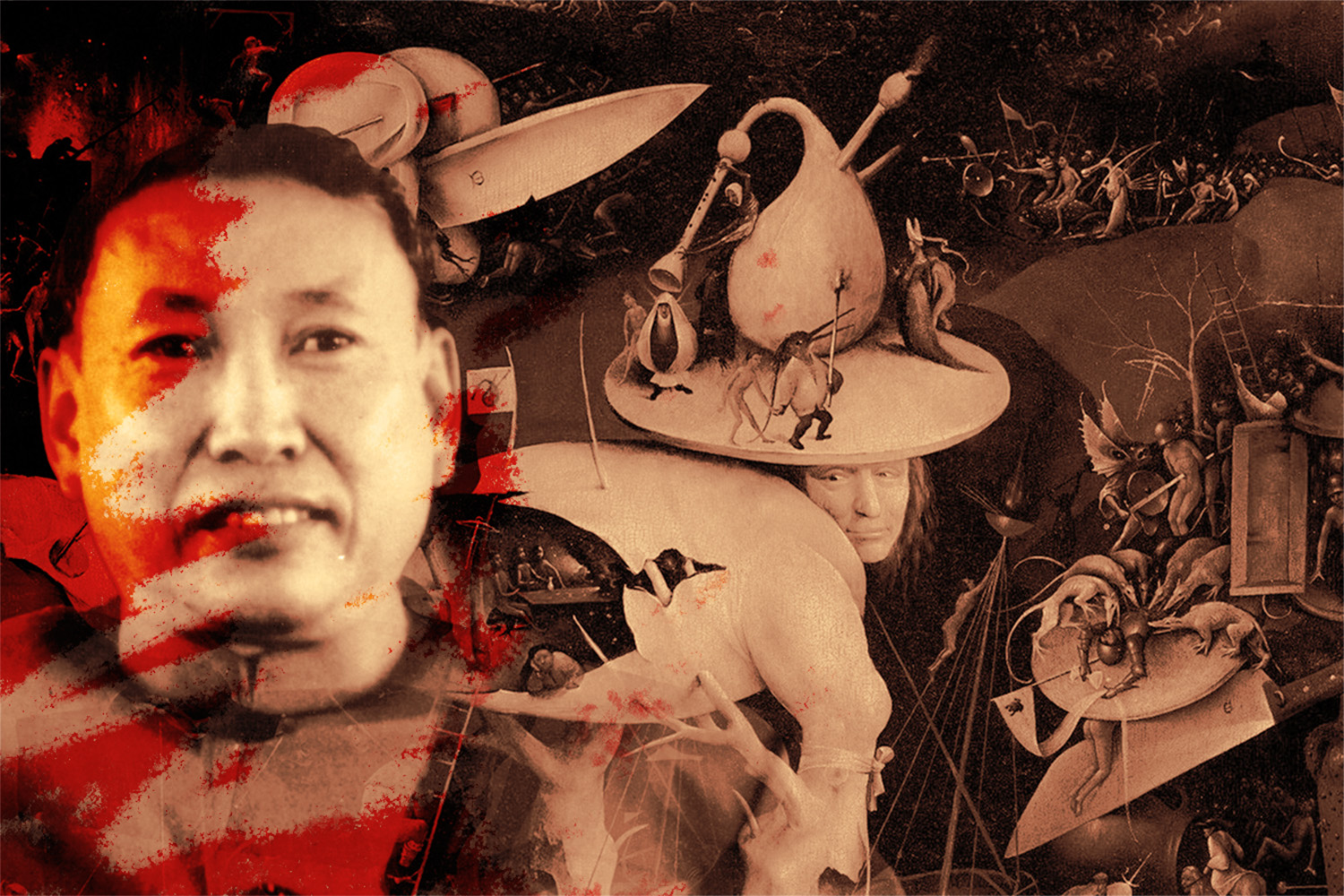
Hieronymus Bosch. The Garden of Earthly Delights. Musical Hell. Right panel. Fragment, 1500s / Art design: Olena Burdeina (FA_Photo) via Photoshop
Yes, the 20th century saw many dictatorships and regimes built on the cult of personality. But never before had the world witnessed such horrifying consequences as in Cambodia under the Khmer Rouge regime led by Pol Pot. Since the Children’s Crusade of 1212, there had never been a time in world history when an army was primarily made up of teenagers.
Teenagers, almost children, became the main strike force of the Khmer Rouge. Armed with Chinese-made AKM rifles, small and nimble, dressed in black baggy pants and black shirts, wearing sandals made from car tires, they survived on a bowl of rice a day, hunted monkeys, and roasted them over coals wrapped in palm leaves.
10 RULES OF POL POT’S RULE

RULE 1. THE MORE NAMES A PERSON HAS, THE BETTER
H
e had many names: Pouk, Hay, Elder Brother, First Brother, 87, and so on. But the world remembers him by the pseudonym Pol Pot. He himself believed that the more names a person has, the better — it confuses the enemy.
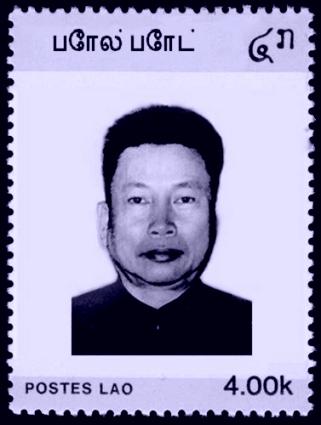
Pol Pot (May 1925 – April 1998, real name Saloth Sar) was a political leader whose communist Khmer Rouge government ruled Cambodia from 1975 to 1979. During this time, between 1.5 and 2 million Cambodians died from starvation, executions, or disease.
Saloth Sar, the son of a landowning farmer, received his primary education in a Buddhist monastery in Phnom Penh, was a monk for over a year, then trained as a carpenter and mastered the profession of a cabinetmaker. In 1949, Saloth received a government scholarship to study in Paris (Cambodia was a French colony at the time). There, he joined the Communist Party.
He studied radio engineering at university, but his involvement in political activities interfered with his studies, and the scholarship was cut off as soon as he failed his exams. In 1953, Saloth Sar returned to Phnom Penh, where, from 1956 to 1963, he taught at a private school. When the authorities suspected him of communist sympathies, he left the capital.
RULE 2. USE MARXIST IDEAS TO CONQUER THE MASSES
In 1963, the pseudonym Pol Pot finally appeared. Over the next 12 years, he worked to build the Communist Party based on Marxism-Leninism.
Having read Marx back in Paris, Pol Pot preached equality and the rejection of all earthly goods (money, education, proper housing), while he himself enjoyed these benefits quite freely.
He sent the people to work on rice plantations, with nothing to eat but rice. But Pol Pot considered himself a gourmet — he ate venison, wild boar, and cobra meat, loved oysters, duck eggs, and even Swiss cheese. In short, he was the first among equals.
RULE 3. MONEY IS EVIL, THE COUNTRY DOESN’T NEED IT
There was no familiar cult of personality, no portraits of the leader. No one in the country even knew who was ruling them. The leader and his associates addressed each other by ordinal numbers: «Comrade One», «Comrade Two», and so on. Pol Pot himself took the modest number «Comrade 87», which he used to sign his decrees and orders.
From 1970 to 1975, Pol Pot’s Revolutionary Army became a powerful force in Cambodia, controlling vast agrarian areas.
On April 17, 1975, the dictator’s dream of power came true: Khmer Rouge troops entered Phnom Penh. Pol Pot immediately issued a decree abolishing money and ordered the destruction of the National Bank. Anyone who tried to collect the banknotes scattered by the wind was shot on the spot… Why would money be needed — Pol Pot had an entire country in his hands!
RULE 4. COMPLETELY ISOLATE THE COUNTRY
At the very first Politburo meeting, Pol Pot announced that Cambodia would henceforth be called Kampuchea and promised that within a few days, the country would become communist. But why should there be outside observers of such a unique process? Pol Pot immediately sealed off his Kampuchea from the entire world with an iron curtain. He severed diplomatic relations with all countries, banned postal and telephone communications, and completely closed the country’s borders for entry and exit.
The USSR «warmly welcomed» its communist comrade. But when the Soviet government invited the leaders of «brotherly Kampuchea» for a friendly visit, they rudely responded: «We cannot come, very, very busy, lots of work». And — silence…
The Soviet KGB tried to establish an intelligence network in Kampuchea but to no avail. Practically no information about what was happening inside the country ever reached the outside world.
To complete the country’s full isolation, Pol Pot issued language decrees: he banned all languages except Khmer — speaking Vietnamese, Thai, or Chinese was punishable by death. But the gravest crime was speaking European languages, especially French.
RULE 5. RETURN TO THE «ROOTS»
The very next morning, after the establishment of the new regime, the residents of Phnom Penh were awakened by loudspeaker announcements. It was an order for everyone to leave the city within three days. Khmer Rouge soldiers pounded on doors with rifle butts and fired continuously into the air. At the same time, water and electricity supplies were cut off.
But evacuating two and a half million people from the city couldn’t happen overnight. The «evacuation» dragged on for a week. Khmer Rouge soldiers went house to house, separating children from their parents, shooting both protesters and the uncomprehending.
Those who submitted and awaited «evacuation» found themselves out in the open without food or water. People drank from ponds in city parks and from drainage ditches. Hundreds more died from intestinal infections, adding to the death toll caused by the Khmer Rouge.
Phnom Penh became a ghost city: being there was forbidden under threat of death. Only the Khmer Rouge leadership settled in one district on the outskirts. Nearby was «S-21» — a former high school where «enemies of the people» were brought. After torture, they were either fed to crocodiles or burned on iron grates.
The same fate befell the other cities of Kampuchea. Pol Pot declared that cities were breeding grounds of rotten capitalist corruption and that from now on, everyone would be peasants. All were to cultivate rice and live in huts.
RULE 6. ABOLISH SCIENCE AND RELIGION
The intelligentsia was enemy No. 1 — it had to be destroyed or «re-educated» in the rice fields. Even anyone wearing glasses was considered an intellectual and killed on the spot — not to mention teachers, scientists, writers, artists, and engineers. Doctors were also exterminated because, according to Pol Pot, the absence of healthcare would rid the future happy nation of the sick.
Pol Pot did not simply separate religion from the state, as communists in other countries did — he completely abolished it. Monks were executed, and temples were turned into slaughterhouses. Of the sixty thousand monks, only three thousand returned to the ruined temples after the regime fell. The national question was dealt with in the same way: all ethnic groups in Kampuchea, except for the Khmer, were subject to extermination.

RULE 7. DESTROY EVERYTHING AND REBUILD THE WORLD FROM SCRATCH
In the first year of his rule, Pol Pot completely destroyed the country’s economy and all its political and social institutions. Libraries, theaters, and cinemas were eliminated, songs, dances, and traditional celebrations were banned, and national archives and old books were burned.
Entire villages were destroyed — peasants were herded into rural communes. Those who refused «voluntary» relocation were exterminated. They were not shot (to save bullets) — they were killed by a blow to the back of the head with a hoe, standing at the edge of a pit.
If a large number of people needed to be executed, they were gathered in groups of several dozen, tied with steel wire, electrocuted using a generator, and then pushed unconscious into the pit.
RULE 8. ABOLISH THE INSTITUTION OF FAMILY AND MARRIAGE
Pol Pot succeeded in doing what no other revolutionary leader had done before — he completely abolished the institution of family and marriage. Wives lived separately from their husbands. Their children were given to childless party officials, who raised them as «revolutionary fighters».
Each commune was led by a village elder, who assigned partners to the men. But men and women lived in separate barracks and were allowed to meet only once a month on their day off. An 18-hour workday was introduced; grueling labor was combined with «re-education» in the spirit of Marxism-Leninism.
RULE 9. BET ON THE YOUTH
Pol Pot can safely be called the Asian Hitler. Behind the lofty name, Democratic Republic of Kampuchea raged anti-colonial nationalism — an attempt to merge Marxism with traditional Buddhist Cambodian values.
The so-called «Khmer socialism» had nothing in common with the socialism of Marx and Engels. The Khmers were the «younger brothers» of the Vietnamese. The regime’s power was in the hands of teenagers who decided to play a children’s game of «soldiers», only with real weapons.
During the rule of Pol Pot and the Khmer Rouge, millions of Cambodians were killed, and their bodies buried in mass graves that later became known as the «killing fields».
RULE 10. FIGHT TO THE END
In December 1978, Vietnamese troops, who had long been in conflict with the Khmer Rouge, entered Cambodian territory. In early 1979, the Vietnamese captured Phnom Penh. Just a few hours before, Pol Pot fled the capital.
The Cambodian dictator Saloth Sar (aka Pol Pot) remained in power for less than four years. Compared to other tyrants, such as Ceaușescu or Kim Il-sung, it was a very short time. But in that brief period, peaceful and picturesque Cambodia was turned into either medieval ruins or one vast cemetery.
Although he was overthrown rather quickly, he continued for another 20 years, hiding in the jungle and waging guerrilla warfare against his own country.
THE END OF THE DICTATOR
By 1997, the Khmer Rouge had completely lost its significance. In June of that year, Pol Pot was removed from the leadership of the organization and placed under house arrest; in July, he was convicted of treason… The dictator was sentenced to death, but with a stay of execution: for his «services to the revolution», the bloody leader was allowed to live out his natural life.
Throughout his life, Pol Pot followed the well-known Nazi principle: the more monstrous the lie, the more people are likely to believe it. Shortly before his death, he gave an interview in which he said he had no regrets, that he had been right in everything, and that his subordinates had misinterpreted his orders.
Pol Pot died on April 15, 1998. His body was cremated, and his ashes scattered. The bloody dictator left behind no property, no bank accounts, not even a marshal’s overcoat. During illnesses, he used only herbal decoctions. A few small bottles of traditional remedies and a mosquito net — that was all that remained of the fearsome Sar.
10 LAWS OF TYRANNY: Dada Ume Idi Amin from Uganda
When copying materials, please place an active link to www.huxley.media
Select the text and press Ctrl + Enter