AI AND THE WARS OF THE FUTURE: What Lies Ahead

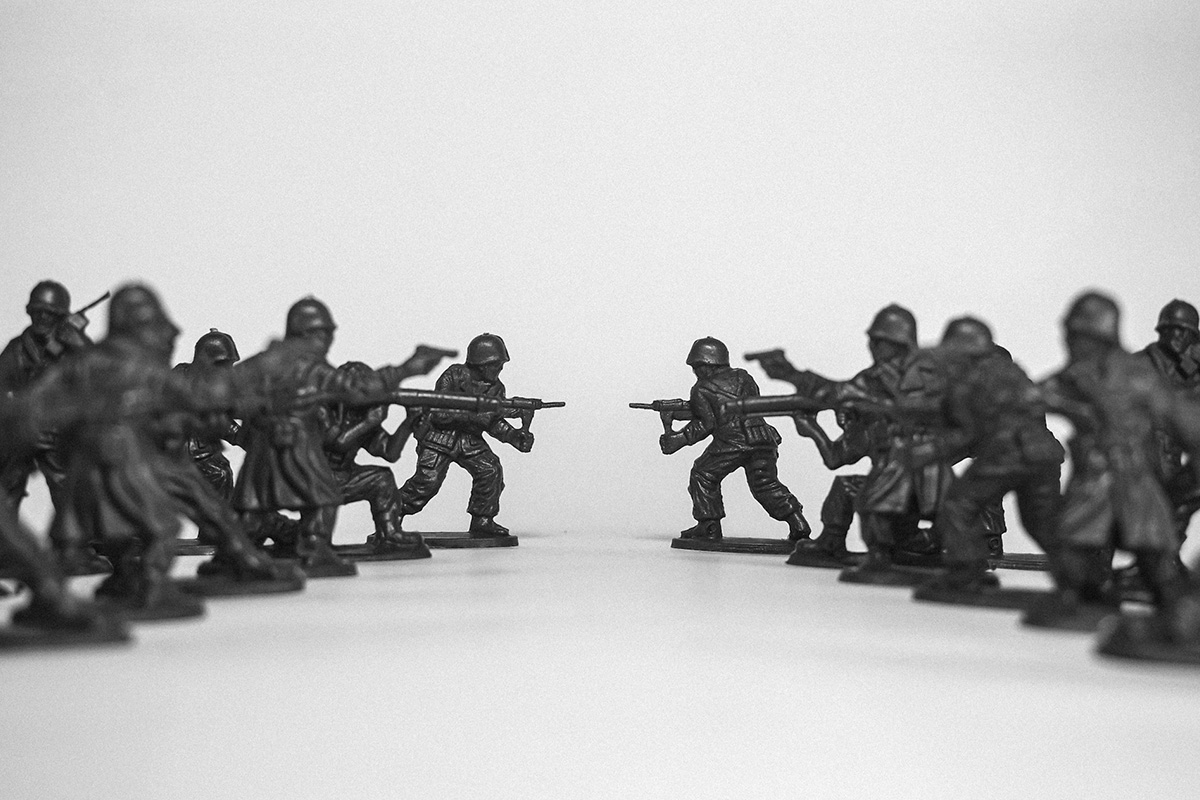
Photo by Saifee Art on Unsplash
The conflict surrounding Iran has once again drawn attention to the role of artificial intelligence in modern military operations. The scientific journal Nature has explored how this could shape the future of global security and the fate of the world.
AI IS ALREADY WIDELY USED FOR MILITARY PURPOSES
T
he escalation of tensions between the United States, Israel, and Iran has sparked renewed discussion about the various “formats” in which artificial intelligence is used in modern armed conflicts. One day before the launch of the US-Israeli military operation on February 28, the US authorities suspended cooperation with Anthropic, one of the key suppliers of AI technologies. This move became the subject of intense public debate over the ethical limits of using artificial intelligence in the military sphere. However, a serious discussion about AI and the future of military technology is relevant not only to the United States. A meeting of scientists, lawyers, and experts was held in Geneva to discuss lethal autonomous weapons systems and the procurement of artificial intelligence for defense purposes.
AGREEMENTS ARE FAILING TO KEEP PACE WITH TECHNOLOGY
The meeting took place as part of ongoing international efforts to develop an agreement regulating the legal and ethical aspects of using AI in warfare. At the same time, political scientist Michael Horowitz of the University of Pennsylvania in Philadelphia notes that the rapid development of technology is far outpacing the progress of international negotiations. Craig Jones, a political geographer at Newcastle University in the United Kingdom, echoes this concern: “The current reluctance of states to restrict the use of artificial intelligence in warfare, or at least suspend its deployment until an agreement on its legality is reached, may mean that the proliferation of AI-enabled wars is virtually inevitable”.
ARTIFICIAL INTELLIGENCE ON THE BATTLEFIELD
As Horowitz notes, the US military is already using artificial intelligence systems based on large language models (LLMs) for a wide range of tasks. These systems are employed for logistics planning, administrative support, intelligence analysis, and assisting military commanders with battlefield decision-making. One example is the Maven system. This platform uses AI algorithms to process imagery and support tactical planning. It can accelerate military operations by identifying potential targets and helping prioritize them for engagement. According to The Washington Post and several other media outlets, Maven has already been used in previous military conflicts and may also have been deployed during strikes on Iran. “The details remain classified for now,” the political scientist says.
DOES AI REDUCE CIVILIAN CASUALTIES?
Some argue that AI-powered precision targeting systems could, in theory, reduce civilian casualties during military operations. However, the experience of recent years presents a far more ambiguous picture. The conflicts in Ukraine and the Gaza Strip, where AI has been used, for example, to identify targets and guide drones, have been accompanied by significant civilian losses. “At present, there is no convincing evidence that the use of artificial intelligence actually reduces civilian casualties or lowers the likelihood of errors in target selection. In fact, the opposite may well be true”, emphasizes Craig Jones.
AUTONOMOUS AI SYSTEMS VERSUS THE RULES OF WAR
Particularly heated debate surrounds the prospect of using AI to control fully autonomous combat systems without human involvement. Militaries could, for example, deploy drones capable of independently detecting, tracking, and eliminating enemy targets. However, existing international humanitarian law requires armed forces to distinguish between military and civilian targets. According to Horowitz, fully autonomous AI-powered weapons systems operating without meaningful human control are not yet sufficiently reliable and do not comply with current international legal standards.

IMPERFECT AI MODELS CAN BE DANGEROUS
The potential future applications of AI lie at the heart of the dispute between the US Department of Defense and Anthropic, the San Francisco – based artificial intelligence company. Since 2024, the Maven system has been powered by Anthropic’s Claude language model under a $200 million contract with the US Department of Defense. In January, the Department issued a memorandum stating that contracts for AI technologies supplied to government agencies must allow their use “for any lawful purpose” without restrictions. Anthropic, however, objected to this wording. The company stated that its Claude model should not be used for mass surveillance of American citizens or to control fully autonomous weapons. According to Anthropic’s leadership, current AI technologies are not yet sufficiently advanced or reliable to perform such tasks safely.
TECH COMPANIES OPPOSE MASS SURVEILLANCE AND AI WEAPONS
The US administration, however, does not share Anthropic’s concerns. As a result, on February 27, President Donald Trump ordered government agencies to discontinue the use of technologies provided by the “rebellious” company. Michael Horowitz believes that the entire dispute is, in essence, about the future scenarios in which AI could be employed by national security agencies. And that debate is far from over. Following the suspension of cooperation with Anthropic, the US government signed a contract with OpenAI. However, OpenAI representatives stated that the agreement explicitly prohibits the use of their technologies for mass surveillance systems or fully autonomous weapons. Negotiations between Anthropic and the US Department of Defense subsequently resumed. Meanwhile, experts continue to express serious concern about the potentially dangerous and unethical uses of AI. Employees of Google and OpenAI have circulated a petition urging their companies not to permit their models to be used for mass domestic surveillance or the autonomous killing of human beings.
AI ALGORITHMS COULD ESCALATE CONFLICTS
Political scientist Tony Erskine of the Australian National University in Canberra led a research project examining the future use of AI in the military domain. Last year, the project produced a set of public policy recommendations. In addition to well-known concerns such as algorithmic bias and the lack of transparency in decision-making by large language models, the report highlights the risk that replacing human judgment with algorithms could unintentionally escalate armed conflicts. “Fully autonomous weapons systems operating without human involvement are ethically unacceptable and should be prohibited under international law”, the report states. Its authors argue that even AI systems in which humans retain some degree of oversight still pose significant risks and therefore require strict regulation.
STATES ARE RELUCTANT TO “PLAY BY THE RULES”
Numerous efforts are currently underway to develop international agreements that would establish the legal and ethical framework for the use of AI in armed conflicts. According to Craig Jones, however, these initiatives face major obstacles due to the limited participation of key states. Countries such as the United States, Israel, and China have generally opposed stronger international regulation in this area. They have shown little willingness to support the Convention on Certain Conventional Weapons (CCW), under which a specific rule prohibiting the use of AI in autonomous weapons systems could be adopted. And it is not difficult to understand why.
SECURITY SYSTEMS CAN NO LONGER IGNORE AI
At a recent meeting of the CCW Group of Governmental Experts on Lethal Autonomous Weapons Systems, participants discussed a report by the Stockholm International Peace Research Institute on responsible procurement of military AI. Among other issues, the report examines the nature of the contracts currently being signed between the US Department of Defense and AI developers. It argues that establishing clear standards of “responsible conduct” is critically important. At the same time, such initiatives are complicated not only by governments’ positions but also by the difficulty of drawing a clear line between fully autonomous weapons systems and other forms of AI deployment. The reason is that artificial intelligence has already become an integral component of numerous cybersecurity systems. Removing it from these systems without undermining their effectiveness is no longer a realistic option.
Original research:
When copying materials, please place an active link to www.huxley.media
Select the text and press Ctrl + Enter


