CALLIGRAPHY TRAINS THE BRAIN: Why a Pencil Is Better Than a Keyboard, and a Blackboard Better Than a Monitor

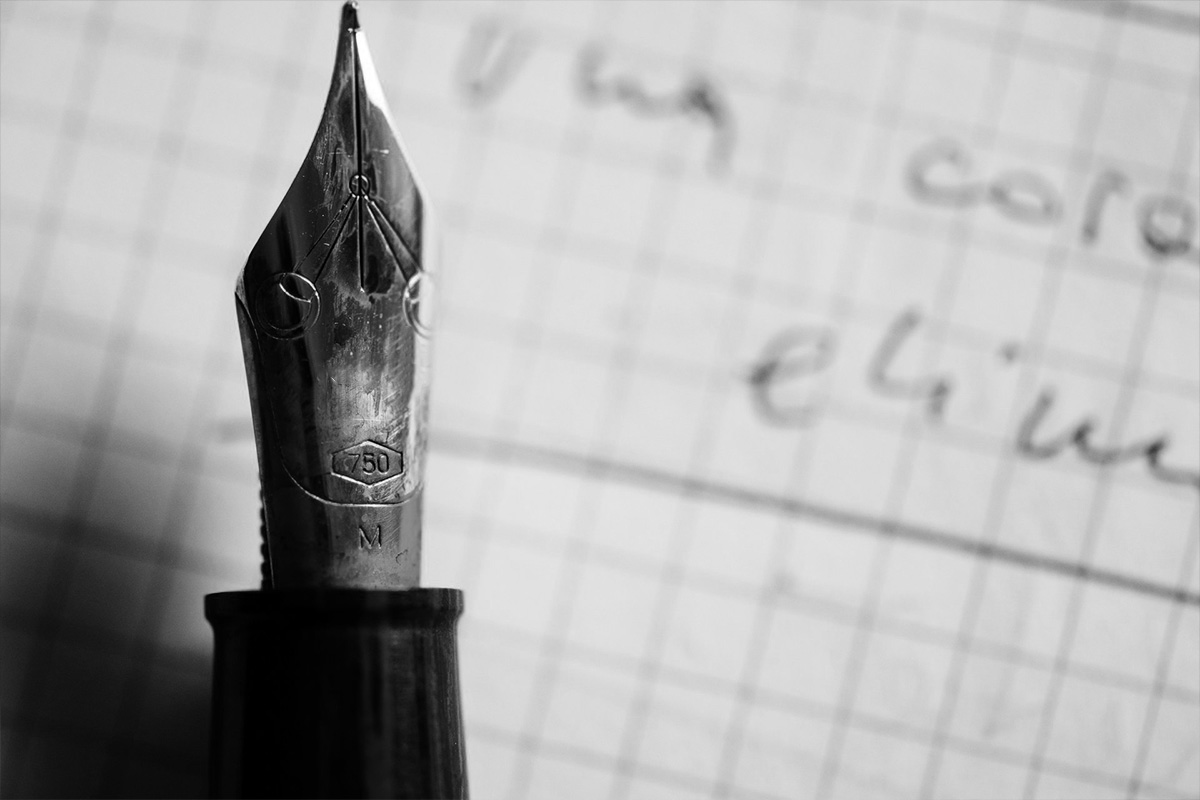
Photo by luca romano on Unsplash
At one time, schools around the world abandoned requirements for students’ handwriting. Now, in light of new scientific findings, this long-forgotten tradition is making a comeback.
CURSIVE WRITING IS MAKING A COMEBACK
C
ursive writing is a calligraphic style of handwriting characterized by smooth, connected letters. For a time, it disappeared from school curricula, especially in developed countries. Although schools in France and Brazil never stopped teaching cursive writing, educational institutions in the United States, Finland, and Switzerland increasingly shifted toward digital tools. In recent years, however, cursive writing has been unexpectedly rehabilitated in these countries as well. For example, the state of New Jersey became the latest U.S. state to restore handwriting instruction in classrooms. It joined roughly twenty other states that, over the past decade, have adopted similar requirements, obliging schools to teach cursive writing to children in grades 3–5, that is, approximately between the ages of 8 and 11.
HANDWRITING IS AN EXTRAORDINARILY COMPLEX PHENOMENON
On his final day in office, former New Jersey Governor Phil Murphy signed the corresponding bill into law. The decision was justified by the argument that learning cursive writing may provide cognitive benefits for students. Research consistently shows that handwriting is a far more complex phenomenon than it is often assumed to be. Writing by hand stimulates the brain’s development much more effectively than typing on a keyboard. To determine whether cursive writing truly offers advantages over print handwriting, in which letters are written separately, the editors of the journal Nature turned to neuroscientists and education specialists.
THE EFFECT OF HANDWRITING ON THE BRAIN
Neuroscientist Karin Harman James emphasizes that in the United States, it is not uncommon to encounter people who have never learned cursive writing, since it has not been a mandatory part of the school curriculum since 2010. This is despite the fact that calligraphy, by developing fine motor skills, has a significant impact on children’s learning. In one of her studies, James taught pre-literate children either to write letters by hand or to type them on a keyboard. Later, while the children underwent functional magnetic resonance imaging (fMRI), they were shown images of letters. The researchers found that in children who had learned to write by hand, the activated brain regions resembled those involved in reading in adults. This pattern, however, was not observed in children who had learned only to type.
CURSIVE WRITING STIMULATES LEARNING AND MEMORY CENTERS
These findings, together with other behavioral tests, demonstrated that handwriting improves children’s ability to recognize letters and numbers. “It appears that the very act of writing by hand genuinely helps children learn to recognize objects”, says James. “This is not surprising, since fine motor skills are known to be extremely important for children’s development and their success in solving a wide variety of tasks”. Audrey van der Meer, her colleague from the Norwegian University of Science and Technology, also compared the brain activity of children writing by hand with that of children typing on a keyboard. She found that during handwriting, electrical brain activity becomes concentrated near the centers responsible for learning and memory, whereas during keyboard typing, these areas are scarcely engaged at all.
THE DEVELOPMENT OF COMPLEX MOTOR PATTERNS
Audrey van der Meer insists that calligraphy is exceptionally important for children’s development. “Handwriting creates complex motor patterns, whereas typing on a keyboard involves only very simple finger movements”, the Norwegian researcher argues. She adds that some schools in Norway have transitioned entirely to digital learning, meaning that on their very first day of school, six-year-old pupils receive a tablet on which they learn to read and write. But what are the consequences of this technological innovation? “Primary school teachers are now complaining that students arrive in their classrooms barely able to hold a pencil”, she says. For this reason, the neuroscientist and her colleagues recommend that the Norwegian government reinstate handwriting instruction requirements.
FROM PRINT SCRIPT TO CURSIVE
Virginia Berninger, an educational researcher and clinical psychologist, spent nearly three decades studying handwriting at the University of Washington. Her research focused on determining which styles of handwriting — cursive or print — should be taught and at what stages of education. As a result, her team concluded that even teaching children to write in print during first and second grade (approximately between the ages of 6 and 8) offers significant benefits. Berninger notes that psychologists have long understood that actively performing a task helps reinforce learning. Since nearly all reading materials for children are presented in printed text, it makes sense to begin with print handwriting. Only afterward should students move on to learning cursive writing. According to Berninger, beginning in fourth grade, cursive handwriting gains an advantage over print writing in both spelling performance and writing speed.
USE IT OR LOSE IT!
At the same time, a group of Canadian researchers concluded that children who learned only one style of handwriting — either cursive or print — during first and second grade wrote better than those who first learned print writing and later switched to cursive. Moreover, children in the cursive-only group demonstrated an additional advantage over their peers in syntax and word formation skills. Overall, scientists acknowledge that calligraphy can improve children’s fine motor skills by enhancing dexterity and attention, although relatively few studies have examined this connection in depth. Experts also disagree on which handwriting style is superior. What is clear, however, is that the brain operates according to the principle of “use it or lose it”, making it important to exercise it regularly through activities that develop fine motor skills. There are other reasons to preserve handwriting as well: it is part of our cultural heritage and an essential aspect of human nature. It is encouraging when new generations retain the ability to write love letters, poems, or even something as simple as a grocery list by hand.
Original research:
When copying materials, please place an active link to www.huxley.media
Select the text and press Ctrl + Enter


