COULROPHOBIA: Why Are 53% of People Afraid of Clowns?

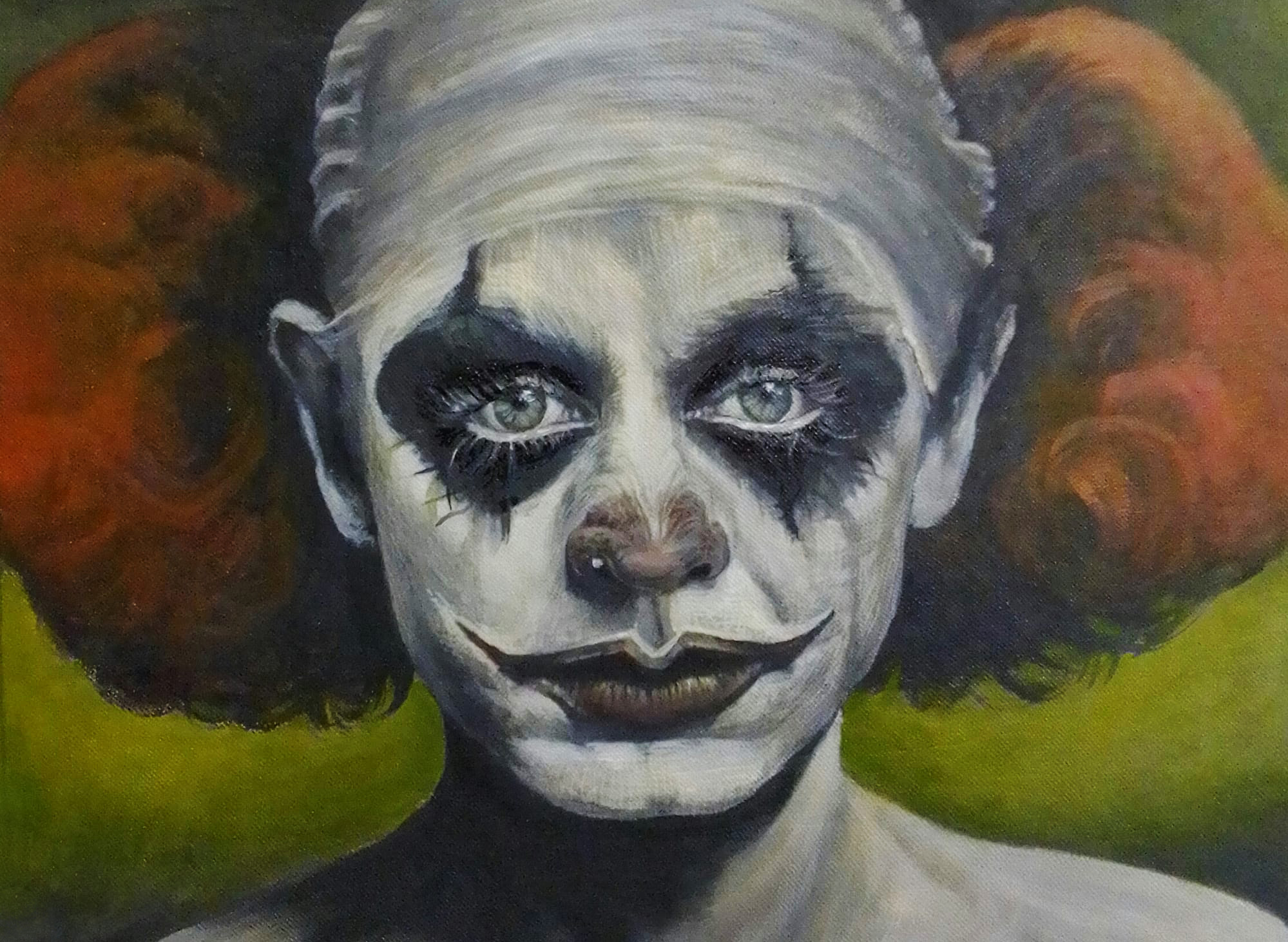
Liusia Nykyshyna. Clown, 2021 / Facebook, Sil-Sol
There are countless strange and unusual phobias in the world. Human beings are wired to fear anything that may threaten their health or survival, whether it is falling from a great height or being bitten by a spider. Yet there is a category of phobias that, at first glance, poses no direct danger to a person. One such unusual fear is coulrophobia, the fear of clowns.
Indeed, how can a character who is meant to be cheerful and friendly, whose very purpose is to entertain children and adults alike, become a source of terror for some people, triggering panic the moment they appear? Researchers at the University of South Wales (United Kingdom) help us explore the origins of the fear of clowns, how many people are affected by this phobia, and what we should really be afraid of.
No clown looks funny. That’s the whole point. People laugh when they see them, but only out of sheer nervousness. Clowns exist for one purpose alone: once you’ve seen one, whatever happens to you afterward, you’ll greet it with the joy of a newborn. It’s comforting to know that somewhere in the world there’s someone who’s having a much worse time than you are
Terry Pratchett
WHAT IS COULROPHOBIA?
C
oulrophobia is the scientific term for the fear of clowns. It is surprisingly common among both adults and children. Recent studies have found that approximately 53.5% of people either dislike clowns or experience some degree of fear when they encounter them, while about 5% suffer from a genuine phobia, experiencing intense panic at the sight of these heavily made-up entertainers.
THE CAUSES OF FEAR OF CLOWNS
Once you’re dressed in a clown suit and wearing a rubber nose, nobody knows who you are underneath
Stephen King
The researchers conducted a highly detailed survey of 528 people who were afraid of clowns to varying degrees. The questionnaire included a list of statements and questions addressing different aspects of people’s attitudes toward clowns. For example, statements such as “I feel anxious when I look at a clown” and “I cannot read a clown’s facial expression” referred to their appearance, while the statement “I am afraid that a clown will do something unexpected” concerned the unpredictability of their behavior. Based on the survey results, researchers from the University of South Wales in the United Kingdom identified several reasons why people develop this phobia. The first is the unusual appearance of clowns. Their faces are almost always covered with a thick layer of makeup, they wear wigs, and they may sometimes have various deformities of the face or body. This can trigger the “uncanny valley” effect, in which people feel uneasy when looking at an object or image that behaves almost like a human being but is not entirely real. This effect is often mentioned in discussions of the fear of robots, but it is also directly relevant to coulrophobia.

On a subconscious level, people may also feel aversion toward disproportionate facial features or imagine illnesses concealed beneath a clown’s heavy makeup, further fueling feelings of unease and uncertainty about the intentions hidden behind the mask. Another major reason for the fear of clowns, according to researchers, is the unpredictability of their behavior. We are naturally wary of the unfamiliar, and when something is deliberately concealed from us, it tends to evoke negative emotions. Clowns can also be unsettling because of the way they behave — their abrupt shifts in emotional expression, occasional bizarre jokes and inexplicable tricks, and, above all, the fact that no one knows what a clown might do next. That uncertainty can be deeply unsettling. One of the most significant factors contributing to the development of coulrophobia is a negative childhood experience involving a clown. A frightening encounter or an ill-judged joke may leave a child with lasting psychological trauma. Such an experience can remain vividly remembered for years, and even in adulthood the person may still be unable to overcome the discomfort or fear triggered by the sight of clowns.
CULTURE AND COULROPHOBIA
These, however, are far from the only reasons why people develop coulrophobia. The influence of films, books, comic books, and television series in shaping a negative perception of clowns should not be underestimated. Although modern popular culture portrays clowns in both positive and negative roles, we tend to remember the “evil” clowns far better than the “good” ones. Iconic characters such as Pennywise from Stephen King’s It and the Joker from the Batman comics have cemented the enduring image of the “killer clown”, leaving a lasting impression on generations of audiences. Yet this archetype predates contemporary popular culture by a long way. The history of sinister clowns goes back to the nineteenth century. Edgar Allan Poe’s horror short story Hop-Frog tells the tale of a dwarf jester who was hated and despised at the royal court. Seeking revenge, he tricked the king and his courtiers into dressing in elaborate masquerade costumes before trapping them and burning them alive. Another example of the sinister clown in the arts is the opera Pagliacci, whose protagonist is a clown who commits a horrific crime by murdering his wife and her lover. An even closer real-life counterpart to the terrifying clown archetype is Jean-Baptiste-Gaspard Deburau, the French mime best known for creating the iconic character of Pierrot. According to his biography, he once struck a boy on the head with his walking stick after the child mocked him, inflicting a fatal injury. And this is far from the most disturbing example of a crime concealed behind the mask of a “cheerful clown”.

Meet John Wayne Gacy Jr. — a community leader and political activist who, in his spare time, performed as a clown at children’s parties. In reality, however, this seemingly cheerful entertainer was a brutal serial killer and rapist with a profound lack of empathy and pronounced sadistic tendencies. He murdered 33 young men, several of whom have never been identified. It is no surprise that newspapers dubbed him the “Killer Clown”, and that his image became deeply embedded in popular culture. His story has inspired several films, has been referenced in dozens of songs, and served as the basis for Terry Sullivan’s true-crime book. According to a popular legend, Stephen King even drew inspiration from Gacy when creating the character of Pennywise. Whether or not that is true, such cases demonstrate the very real danger that can sometimes lurk behind a clown’s cheerful face, jokes, and magic tricks. One would like to believe that the words of the protagonist in the film My Name Is Clown are true: “As a clown, you may hurt yourself to make others laugh, but you would never hurt someone else to make yourself happy”. Perhaps, then, we should overcome our fear and allow ourselves to appreciate the work of clowns — performers who deserve the chance to be understood for who they truly are.
When copying materials, please place an active link to www.huxley.media
Select the text and press Ctrl + Enter