MUMMY’S BOYS

Still from The Fabelmans / IMDb.com
In May, almost unnoticed against the backdrop of major political events, threats, and shelling, Ukraine celebrated Mother’s Day — a local version of the international holiday that has been observed here since 2000 and worldwide since 1914, when U.S. President Woodrow Wilson officially proclaimed the second Sunday of May a national holiday honoring all American mothers. In tribute to this quiet yet important occasion, we recall how great filmmakers have paid homage to their own mothers. Reflecting on their relationships with them, they turn them into prototypes for their characters and sometimes even cast them in their films. So, here are Alfred Hitchcock, Martin Scorsese, Steven Spielberg, Hayao Miyazaki, Ridley Scott, Quentin Tarantino, and their mothers.
W
ithout Elizabeth Scott, a British actress, there would have been no Scott brothers: Tony and Ridley. This strong-willed and determined woman played a pivotal role in shaping the creative character and work ethic of her sons, raising them with absolute discipline and rigor. Ridley Scott repeatedly noted that his mother was the unquestioned “boss” of the family and the person who instilled in him a firm set of principles. Her strength and independence inspired the director’s most memorable female characters — from the courageous Lieutenant Ripley (Sigourney Weaver) in Alien (1979) and the selfless Louise Sawyer, played by Susan Sarandon in the feminist road drama Thelma & Louise (1991), to, of course, Jordan O’Neil (Demi Moore), who trades the comfort of a desk assignment for the ordeal of becoming G.I. Jane. It is hardly surprising that, when his mother passed away, Scott dedicated himself not to some sentimental melodrama but to his most adrenaline-fueled work — the military epic Black Hawk Down (2001).
Quentin Tarantino owes no less to his mother and openly adores her. It was Connie McHugh who nurtured young Quentin’s love of cinema, allowing him to watch adult films at the famous Tiffany Theater on Los Angeles’s Sunset Boulevard. “I loved all those great movies, but there was a special thrill in seeing them in a theater, surrounded by adults laughing hysterically, intoxicated by their own shamelessness. And can you imagine how much I enjoyed going to school the next morning and describing those scenes to my classmates, who couldn’t even dream of seeing The French Connection , The Godfather or The Wild Bunch”, Tarantino recalls. “Because I was allowed to watch things other kids weren’t, my classmates thought I was incredibly sophisticated. And at the time I was watching the boldest films of the greatest era in Hollywood history, so, damn it, they were right”.
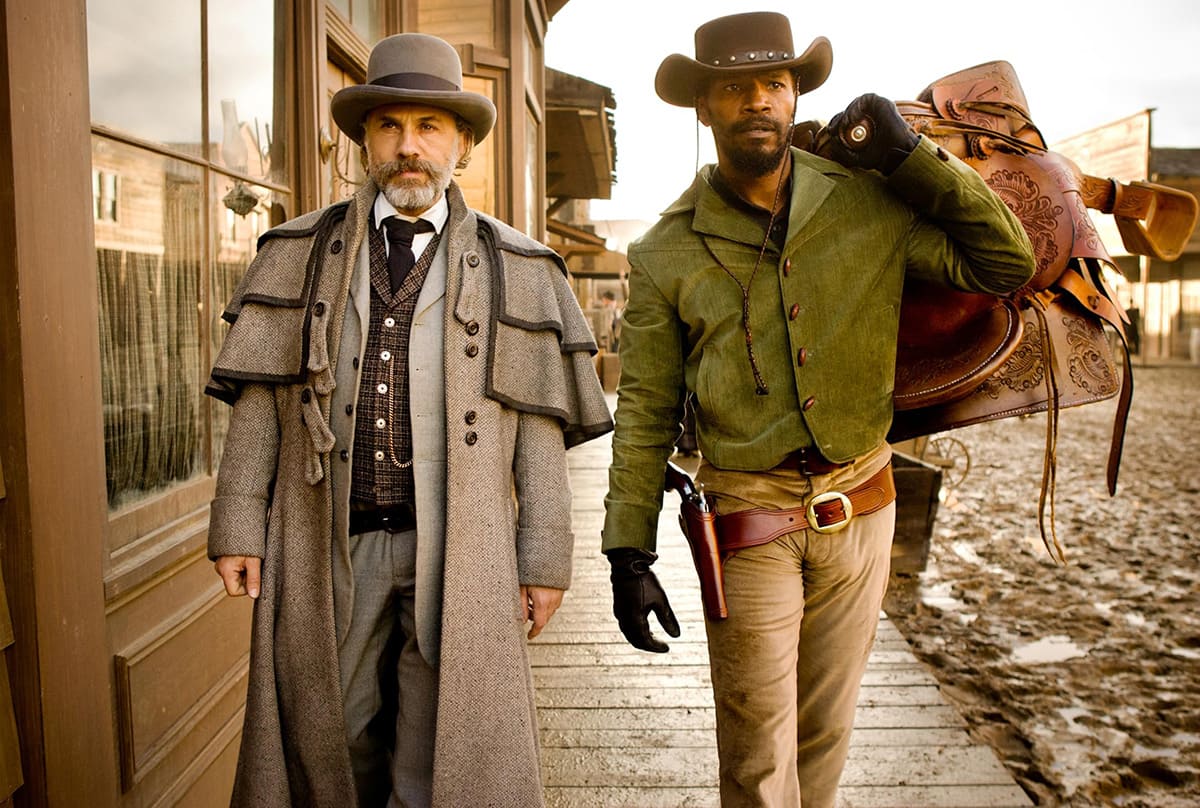
Having gone down in film history as a master of rewriting, subverting, burying, and resurrecting entire genres — from crime pulp fiction and Hong Kong action cinema with its exploitation roots to the Western and the war film — the real Tarantino did not begin with Reservoir Dogs. He began at the Tiffany Theater, where he went hand in hand with his mother. It was she who instilled in him that tenderness toward cinema and his unwavering faith in his own creative power. In doing so, she indirectly helped her son overturn the very coordinates of cultural hierarchy, proving that Piranha 3D carries just as much cultural value as 2001: A Space Odyssey. “Once, when I realized I was allowed to do things other children weren’t, I asked my mother why. She replied: ‘Quentin, I worry far more when you watch the news. Movies won’t hurt you’”. “Spot on, Connie!” Tarantino writes about that period of his life in Cinema Speculation. As a grateful son, Tarantino cast his beloved mother in his neo-Western, auteur Grand Guignol Django Unchained (2012), giving Connie a small role as a gang member killed in an explosion.
His mother, no less, shaped the career of the great Alfred Hitchcock. Known for making memorable cameo appearances in his own films, the director of Vertigo (1958) and Rear Window (1954) brought his mother to the screen not literally, but through a reflected image. Do you remember the shy Norman Bates from the classic thriller Psycho (1960)? The mother whom he loves so obsessively in the film was inspired by Hitchcock’s own mother, a woman whose character was every bit as complex in real life. Their relationship was profound, yet often difficult and emotionally demanding. It is to her that we, the audience, owe all those fears and phobias that Alfred Hitchcock so masterfully wove into his films.
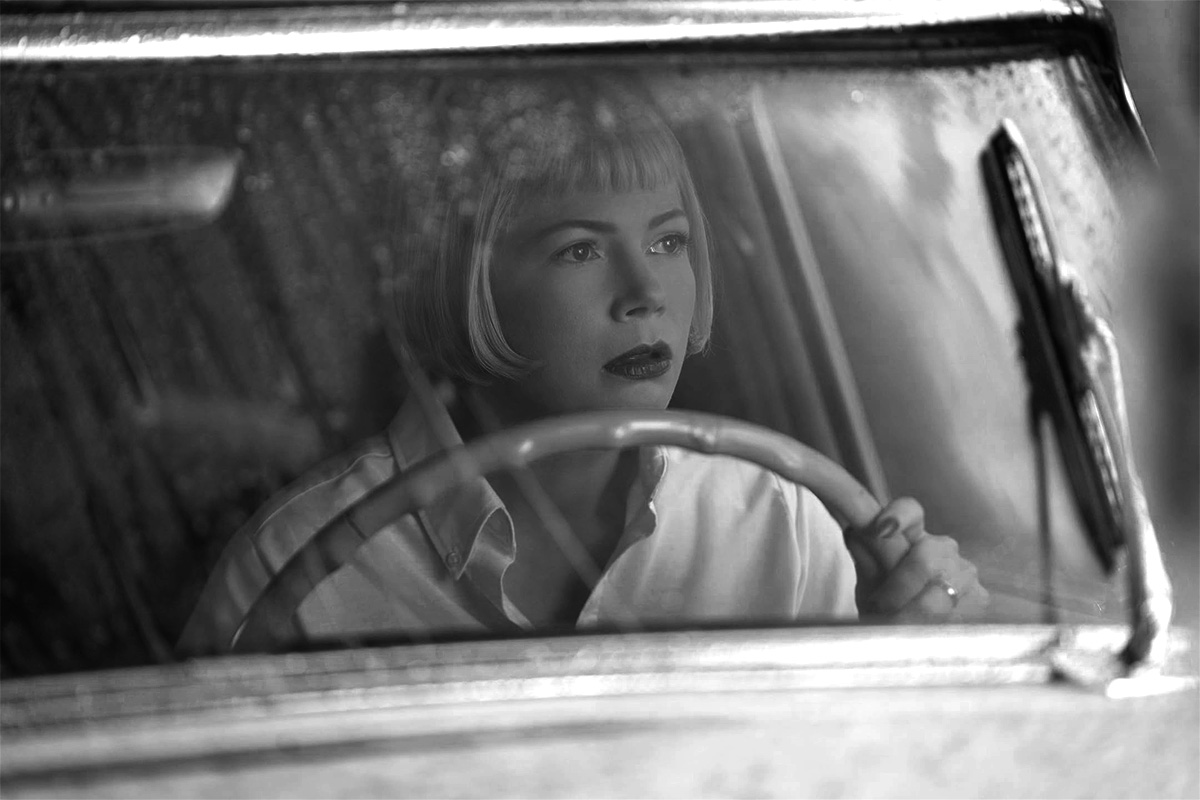
Steven Spielberg has called his mother “the most important emotional core” of his life, something without which it is impossible to imagine his creative universe. Eccentric, free-spirited, contradictory, and deeply attuned to art, Leah Adler appeared in her son’s Close Encounters of the Third Kind (1977) as one of the passengers. She also inspired the character of Peter Pan in Hook (1991), portrayed on screen by Robin Williams. In 2022, Leah was brought to life once again when Michelle Williams portrayed her in her son’s film The Fabelmans. The actress captured her in all her complexity — unsparingly and objectively, exactly as Spielberg demanded. To this day, the director continues to grapple with the trauma of his parents’ divorce, returning to it again and again throughout his films. In The Fabelmans, he stripped away all metaphor and concealment. A mother falls in love with her husband’s best friend and ultimately leaves her family for him. Young Steven comes to understand the truth through the lens of a movie camera while developing footage from a family picnic. Those childhood wounds ultimately enabled Spielberg to create not merely films, but masterpieces in which millions of people around the world have recognized something of themselves.
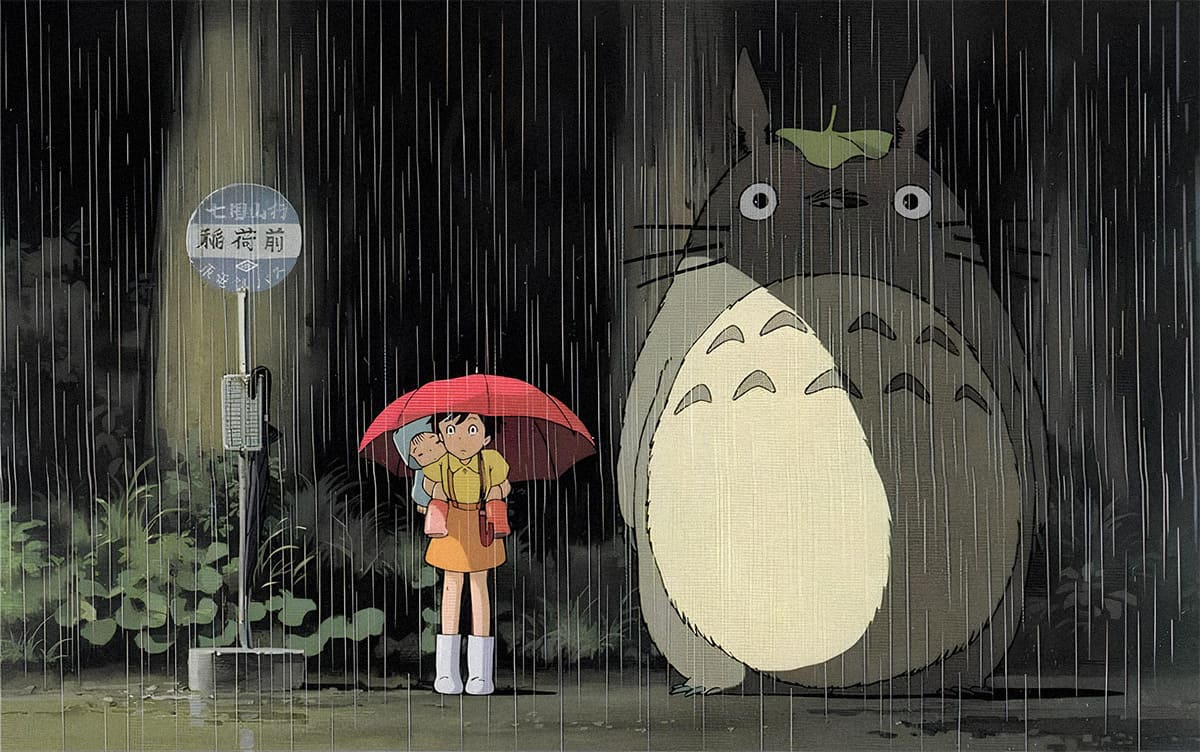
The image of the mother occupies one of the central places in the artistic universe of Hayao Miyazaki — the legendary Japanese animator, writer, and manga artist, an Academy Award winner honored “for profoundly influencing global animation, inspiring entire generations of artists to work in the field, and illuminating its boundless potential”. Recurring throughout his work from film to film, the maternal figure in Miyazaki’s art is rooted in his own childhood. His mother suffered from spinal tuberculosis and was therefore forced to spend long periods in the hospital. As a child, Miyazaki longed for something he was largely denied — his mother’s embrace. The severe pain she endured often prevented her from holding her son in her arms. When Hayao grew up and became a filmmaker, he drew what he had missed so deeply as a child.
The mothers in his animated films invariably embrace their children. This is especially evident in My Neighbor Totoro (1988), perhaps the director’s most personal work. In the film, the mother of the two young protagonists — sisters living with their father in a rural house — suffers from tuberculosis and spends much of her time in the hospital, where her children and husband visit her. Miyazaki later admitted that had the protagonists been boys, the film would have been too painful for him to make. In Castle in the Sky (1986), Dora, the leader of the air pirates, was modeled after Miyazaki’s mother. His brother, however, insists that the resemblance lies not in Dora’s appearance but in her character. In Ponyo (2008), Miyazaki’s mother inspired the character of Toki, an older woman in a wheelchair. The director’s childhood anguish also found expression in his most celebrated and acclaimed film — Spirited Away (2001), winner of the Golden Bear at the Berlin International Film Festival and the Academy Award for Best Animated Feature. There, the young heroine Chihiro, having finally found her parents at the end of the story, clings desperately to her mother’s hand, determined never to lose her again.
Martin Scorsese also owes his career choice to his mother. From an early age, Catherine Scorsese took her son to the movies, supported him in everything he did, and later agreed to appear in his films — from his student projects to his acknowledged classics. She appeared in roughly ten of her son’s films, beginning with the debut short It’s Not Just You, Murray! (1964) and ending with Casino (1995) and Goodfellas (1990), where she was given a substantial role as the bustling, temperamental Italian mother of Joe Pesci’s character. Whether in these films or in the documentary essay Italianamerican (1974), Catherine Scorsese essentially played herself without embellishment — an American of Sicilian descent who grew up in New York’s Little Italy. This very neighborhood serves as the setting for all of her son’s early films.
Catherine Scorsese proved so convincing on screen that she began receiving invitations from her son’s filmmaker friends. She appeared in Francis Ford Coppola’s The Godfather Part III (1990), Brian De Palma’s Wise Guys (1986), and Abel Ferrara’s China Girl (1987). In her honor, Scorsese named his production company Cappa Productions — Cappa being Catherine’s maiden name. Later, after her passing, he dedicated his monumental epic Kundun (1997) to her memory.
The luminous image of the mother often reflects the artists who bring it to life on screen and their destinies and worldview. Yet the role of a mother is far more important than symbolism. Great films, like love itself, are created not through directorial techniques but through the heart — and that is something only a mother can teach.
When copying materials, please place an active link to www.huxley.media
Select the text and press Ctrl + Enter