ODESSSIADA: “I AM VIENNESE”

Art Design: Huxley.media
The International ODESSSIADA Short Story Competition, organized by Huxley.media in partnership with the World Club of Odesa Citizens, has come to a close. The competition received 102 short stories from authors representing cities across Ukraine and other countries. Particularly meaningful was the fact that, during this challenging time for Ukraine, the competition brought together more than one hundred writers, introduced Odesa to new literary voices, and continued the city’s long-standing tradition of vibrant literary expression.
Today, we continue publishing the works of the competition laureates. We present the story “I Am Viennese” by second-prize winner Anna Mikhalevskaya (Odesa).
We congratulate the author on her well-deserved award and invite our readers to discover her work.
#1
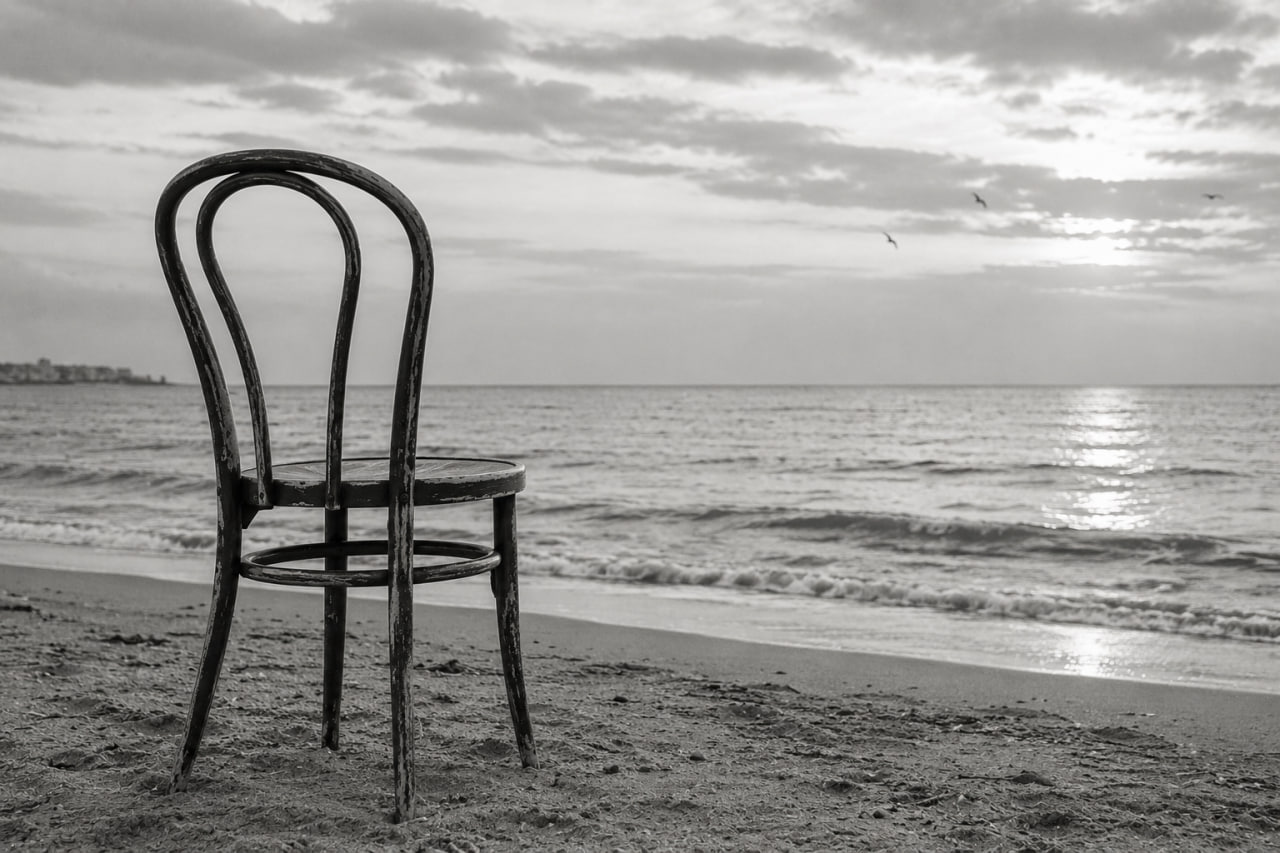
The sea is gray, steely. It beats against my legs as though it has grown cramped in its vast nest and longs to climb ashore, to escape the boundaries drawn by nature.
I understand you, my friend. I want to escape from myself too. But where can an old Viennese chair go when there is nothing Viennese left in it? Just Ukrainian reality: a broken seat, a frame instead of a backrest, and four unsteady legs. At least they are all still mine. In wartime, that is an important qualification.
Imagine that — a wreck like me ended up on the shore of a beach in Arcadia. I still cannot believe it… And yet I had every chance of becoming garbage — the café where I had been living out my final days in the cleaner’s utility room burned down. For six months I lay buried beneath rusty rebar, charred beams, and melted plastic tables.
By winter, they began clearing the rubble, and a guy in paint-splattered trousers dragged me out onto the shore. An excavator was piling up a pier into the sea, workers were bustling around, and I kept waiting for them to throw me onto a bonfire or something of the sort. But the guy placed me at the water’s edge, sat down on the side, lowered his head into his hands, and did not even look at the sea. He got up heavily and lingered beside me for a long time, as though he wanted to say something. In the end, he never did.
In the morning, a heavy hand in a work glove came down on my backrest. Onto the fire, I thought, bracing myself again. But someone’s deep voice rumbled: “Let it stay. Vovchyk left for his unit yesterday. Remember me, he says, if anything happens…”
I, for one, will certainly remember Vovchyk.
And I will also remember how ducks were washed ashore — the birds became trapped in an oil slick and slowly died. Trying to save and warm them, people gathered the ducks into boxes. Then they loaded them into cars and took them away. The other birds on the beach — they did not manage to save. At night, I watched the rest quietly and meekly slip away. Inevitability. They had nowhere to go, just like me. Four legs rooted in the frozen sand.
Snow settles on the beach and hardens into a crust. Seagulls sit on the shore — the red spot on their yellow beaks like a warning signal — even they are in no mood to hunt. There are no people. The waves are washing away the newly built pier.
Waiting and a drawn-out uncertainty.
All this has happened before.
#2
My life began amid conversations.
The things men discuss while taking hold of my backrest to offer a lady a seat or hang up a frock coat. Or leaning forward in an argument and shifting their weight onto the edge of the seat, as if that were the most important argument of all. Or playing poker and leaning back so far that my rear legs press into the marble floor and the seat creaks, giving away the whole truth. I do not know how to bluff. But who cares about that at Café Fanconi? Here, the same wagonload of bricks can be resold a dozen times, and everyone will be satisfied.
There are many of us Viennese chairs at Fanconi. The hall is filled with the familiar creak of hundreds of backrests, the shuffling of legs. I keep to myself, listening to the patrons, looking out at the street, and waiting for something. What? I do not know myself.
The day is in full swing. Those who arrived in the morning are still sitting there, sheltered behind newspapers and loud conversations. The door hinges sing — new visitors are at the entrance. The waiters greet each one without showing either surprise or confusion.
A woman enters, accompanied by a gentleman. She has an elaborate coiffure of blue-black hair, white feathers in place of a collar, and an unmistakably Italian accent, though she has yet to utter a single word.
“The prima donna!” comes a loud whisper from the next table.
“And what tune will she sing about this?” At the other end of the room, a stout man waves a newspaper over his head; his bowler hat has slipped to the back of his head, and his moustache bristles with indignation.
“Why would she care about your Dreyfus. He is Alfred, after all, not Alfredo,” his table companion replies conciliatorily, drawing on his cigar.
“He is not mine, he is ours!” the stout man persists. “Today they put a Jew on trial somewhere in France, and tomorrow the same thing will happen in Odesa!”
A couple of tables away sits a young man in spectacles. He raises his watery eyes toward the stout man. Stares at him intently. It is late autumn, already chilly, yet his frock coat is far too light and patched all over. The young man lowers his head and, pushing aside his cold tea and the latest issue of The Leaflet, hurriedly writes something in a notebook. His slender fingers are stained with ink.
The prima donna smiles at her gentleman companion, oblivious to the argument she has caused. She likes éclairs and an elegant life.
“Grain has fallen again,” begins a patron at the table by the window.
“And you would rather it went up?” A man in a fine suit turns toward his neighbor. “An agreement can always be reached. What are your terms?”
The group at my table is arguing fervently about some fire: either a warehouse in Peresyp or a courtyard in Moldavanka. The waiter brings them hot chocolate:
“Here you are, messieurs,” he says, deftly setting out the cups. “And as for the fire, they were burning leaves at the summer houses in Fontan. No casualties.”
“Thank you, my good man,” one of the patrons eagerly joins the conversation. “Perhaps you also know who the anarchists are planning to assassinate next? Sadi Carnot was only the beginning.”
“I do,” the waiter replies with a polite smile. “But we do not serve such news at our establishment. Please excuse me.”
My life began amid conversations, but later everything was different.
#3
“Fanconi” becomes something like a military headquarters. There is little talk now, and more and more whispering. Men sit down heavily in uniforms dusty from campaigns. They do not look around, they do not look out the windows. They stare with unseeing eyes toward the place where tomorrow might have been. But none of us has a tomorrow.
Through the café window, the street looks gray. Even when the chestnut trees are in bloom. And the apple trees shed their petals. And the sun is so dazzling that I am moved farther away from the window. The grayness seeps from the people themselves. Women walk with lowered shoulders, their eyes cast down. Every second man is in military uniform — as though it constrains not only his movements but the very essence of life.
More and more often, a saber clinks at a visitor’s side; it is no longer left in the cloakroom, as was customary before. And a revolver is placed on the table — drawing it from a holster takes too long, and shootouts happen every day.
“Who are our guests today?” a former stockbroker quietly asks a former grain merchant.
“Denikin’s men,” the other replies, tipping his hat in greeting to an officer in a British-style service jacket.
“Think the leather jacket won’t be needed anymore, comr… Monsieur Schatz?”
“Oh, I don’t know. You can see for yourself — the show goes on!” Monsieur Schatz points to a Frenchman in a gray-blue uniform. A brand-new rifle and a helmet polished to a shine are proudly displayed on his table.
Everyone is ready for war, only no one knows exactly whom they are fighting. Power in Odesa changes hands more often than the waiters at “Fanconi.” The Bolsheviks stage one shootout after another — we Viennese chairs take our share of the damage too. Then the Whites put us back in our old places, without noticing how pitiful we now look. The forces of the Ukrainian People’s Republic close the café. The French and Greeks reopen “Fanconi.” Kotovsky’s gang arrives. Leaves. The Bolsheviks return.
By then, people have forgotten what chairs are for. They strike our backs while proving their truth. They fire into our backs while destroying those who have a different truth. They place us close together so they can whisper a sentence. They carry us out onto the bridge and build barricades. They lean on us while taking aim at people. They hide behind us, ducking from return fire. Everything collapses, crashes down, thunders, and explodes. My wooden joints creak under the strain. Days cease to exist. Night brings no relief.
Bonfires blaze all around. And I am already prepared to become fuel for their orange tongues… But in a brief, blind pocket of calm, a child comes to me. A little girl burrows beneath my overturned seat as though inside a cocoon, and I can feel her living warmth.
A young woman in a moth-eaten coat runs up:
“How did you get here? Where are your parents?”
The girl says nothing. “Run, quickly! My wooden insides scream. No one here knows how to talk anymore, only how to shoot!” The woman seems to hear me.
“All right, come on!” She grabs the child, hesitates for a second, then pulls me out of the heap of debris. “Hmm, still intact! You’ll come in handy!”
The girl skips along, barely keeping up with my new owner’s long strides. Happily, I dangle from her arm. For the first time, someone truly needs me!
#4
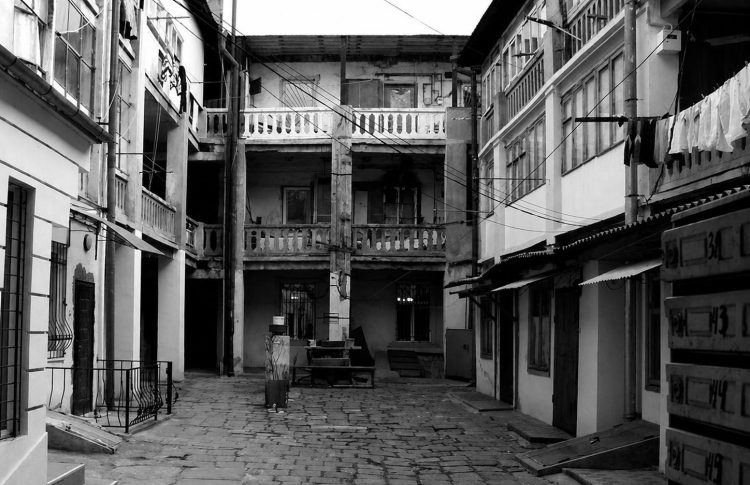
The house on Gogol Street smells of kerosene, onions, and Soviet newspapers. First they are read, then reread, then spread on the windowsill to make it warmer to sit on, or used to wrap a hunk of bread, or to wipe washed windows dry, or folded into a sun hat. People have little left that is truly their own. Even their private lives are served by public news.
I am the exception. I belong only to my two mistresses — Maria the elder and Maria the younger — and I am their inviolable property. The woman who picked us up, unable to think of a name for the homeless little girl, gave the child her own.
The apartment house on Gogol Street is overcrowded. Its furnished rooms have been divided and subdivided. A Red Army soldier who reads pamphlets with quotations from Trotsky at night and a ruined Greek who has lost his bakery maintain an eloquent silence on opposite sides of a flimsy partition. Lidochka, governess to a professor’s daughter, hears choice obscenities from the neighboring corner — Vasilisa, a dockside girl, and her lover are discussing their plans for the evening. Maria the elder and Maria the younger live in half of a bedroom; they share the other half with a Jewish watchmaker and his family. In the middle of the window opening stands a wall one brick thick. The right side of the window belongs to the Jews. The left — to the Marias.
And I get the observation post.
The days pass one after another. People carry bundles, drag furniture. When the same spring bed has been hauled back and forth across all of Odesa a dozen times, the great migration suddenly comes to a halt. Signs appear, carts laden with goods hurry away from workshops, women put on colorful headscarves.
Maria the elder brings home a gramophone and places it on my seat. The needle drops onto the record. “Heart, don’t you long for peace…” Maria the elder dances a few steps as she dusts the table. Maria the younger sways to the rhythm as she dips her pen into the inkwell. A couple out in the street sings along.
I could listen to the gramophone until the end of the time allotted to chairs. But then the radio appears and drowns out its voice. I know all the words, but their meaning escapes me. And not only me. People stop beside the loudspeaker and listen closely. They probably want to understand too, and with the effort they seem to fade, becoming indistinguishable from one another.
Maria the younger grows up; now she is Mashenka. She has a suitor — Lev, the watchmaker’s son, the neighbor from the right side of the window. Maria Pavlovna leans against the windowsill, and together we watch the couple, holding hands, pass through the gates and dissolve into the August evening. A year later, through those same gates, the Romanians will take Lev away to send him to the ghetto, and Mashenka will never see her husband again.
With the first bombings, I am carried down into the basement. The two Marias are now equally grown. The gramophone was sold long ago, the black bread has been eaten. Their only possession is a stack of newspapers, but even those are running out. Soon there will be nothing left to burn for heat. There is me, of course. But Maria Pavlovna refuses even to hear of such sacrilege.
Leaning against the damp wall, the neighbors sit in the basement and listen to the earth shudder. When it becomes unbearable, someone begins to sing: “There is a city I see in my dreams…”
#5
“The war is over! The war is over!” — I hear people shouting.
Alas, I have been forgotten in the basement and cannot share their joy.
I remain underground all through spring and summer. There, too, I hear the drumming of the autumn rains. For the first time, I feel something like resentment. And unease. My mistresses — what has become of them?
I am dragged back into the light of day by some boorish fellow; he can barely stay on his feet, but on the whole he maintains a steady course toward Privoz. We have not even reached the flea market, and I am already thoroughly soaked in the alcohol fumes of his breath. Fortunately, the man quickly sells me for next to nothing to a small, wiry woman.
She deftly picks up her new purchase and, as she walks to her courtyard on Komsomolskaya Street, which she still calls Staroportofrankovskaya, keeps murmuring under her breath: “No man is an island, entire of itself…”
The woman’s name is Kitty. She teaches foreign literature. And she often talks aloud to herself, as though she were still standing at the lectern.
Kitty knows a thing or two about Viennese chairs. She likes us far more than Soviet stools. She refines me in her own way — paints me white. And places me beside the bed so that, before going to sleep, she can lay stacks of samizdat pages on my seat with a tired hand. That is how I become acquainted with prewar Hemingway and prerevolutionary Maugham. And learn to listen for the tolling of bells.
All the clocks in the apartment keep the wrong time. My time is measured in books. Oliver Twist and The Three Musketeers, The Red and the Black and Vanity Fair, Madame Bovary, The Moon and Sixpence, A Farewell to Arms. Hemingway is coming into fashion. The neighbor, Sergei, wears turtleneck sweaters and grows a beard.
“Looks like it’s time for me to take on my fish,” Kitty says one day. The next day, she moves closer to the sea, to Fontan. She gives her old furniture away to the neighbors. Now canvas backpacks, coils of coarse rope, and metal mugs are tossed onto me. Sometimes they place a guitar on me; sometimes someone sits down to sing. Sergei starts: “Why are you standing on the trail? Why don’t you want to go?” His friends, in the same sweaters and equally bearded, join in: “We have to finish the song. We need to be less sad.”
In our cramped company — Sergei, two friends, me, a couple of stools, and port wine — we discuss inspiring things: Gagarin’s flight, the image of the raven in Edgar Allan Poe’s poem, plans for a winter trek in the Caucasus, where to get a down jacket, and which canned food is best to take. We discuss Lyuda and Sveta. All three men like both girls, and they cannot agree on who should court whom. I try to creak out some suitable piece of wisdom — I have picked up phrases from Kitty for every occasion in life — but my voice is drowned out by a fit of romance: “My darling, my forest sunshine…” Then we talk about friendship — real friendship between men. And no one mentions either Lyuda or Sveta anymore.
The romance comes to an end, and Sergei marries Ira. His boys, Zhorik and Yurka, are growing up. During the holidays, I am carried out into the front garden — the boys play Durak, slamming aces and threes down hard onto my seat.
It seems the wars are over. It seems they are gone forever. Children are taught chemistry and physics, they devour science fiction, they play football, badminton, and Cossacks and Robbers. They do not want to eat porridge and steal sweets their parents have hidden away. They write greetings to one another: “I wish you peaceful skies, clean water, and no trouble at all,” and, fortunately, they do not fully understand what that means.
One day Kitty comes to visit Sergei. She is very old — it is clear that her dialogue with the fish did, after all, take place. Kitty demands that I be returned home, sits down in front of the television, but all that is showing is Swan Lake.
“Everything repeats itself,” Kitty says, then gets up and says goodbye. “I wanted to see my courtyard… Thank you!”
Yurka and Zhorik drag me back into the front garden. They set up a cassette player and switch it on.
“Blood type on my sleeve, my serial number on my sleeve…” Tsoi sings hoarsely.
#6
I while away the time in a corner of the kitchen — pots and old basins are placed on me. Ira is forever threatening to throw out “this piece of junk.” By the way, meet my new name. But Sergei will not let her. He touches the interwoven curves of my back — lightly at first, then grips them until his knuckles turn white. Sergei still has not chosen between Lyuda and Sveta, although one of them fell to her death in the mountains and the other is being treated for drug addiction in a clinic. And he misses the Caucasus. And the guys. And the ease with which the hardest choices were once made. I remember everything. And he knows it. And keeps me hostage.
Sergei retires, the boys grow up. Everyone lives together, but they hardly speak to one another. Each of them now has a personal computer. The family retreats to separate corners with pieces of hardware in their hands, and just try taking one away — they will growl like a dog when someone tries to snatch a bone from under its nose. They leave the television to me — and for hours it bellows in the kitchen in the voices of deputies from the Verkhovna Rada. They call it the Orange Revolution.
The television breaks, but the habit of shouting remains. Sergei, Ira, Yurka, and Zhorik argue themselves hoarse — who supports whom and whose side they are on. If they asked me, I would tell them there are no sides. And that wars are not won; they are stopped out of exhaustion. But no one can make out my elderly creaking anyway.
Zhorik brings home an orange flag. Yurka — a red-and-black one. Sergei — a white-and-blue one. Ira remembers me, sits down wearily, and leans back against my backrest. For the first time she realizes: there is something she is incapable of throwing out of the house. Even if she publicly burns those scraps of different-colored cloth.
I am moved closer to the window — Sergei lowers himself onto me with a groan and sets his crutch beside him. He broke his leg in a scuffle, he is confined to the house, but he wants to know what is happening outside. There are unusually many people in our small courtyard. Rough people, hunched over, with heavy eyes. Alien to our city. Fragments of Zhorik’s words reach me: “Football match… fans… Trade Unions House… burned alive.” Yurka has been detained. Ira turns whiter than the paint Kitty used long ago to cover my scars. Zhorik stands before her just as pale. Only a strange, wild spark smolders in his eyes.
Chairs are not supposed to be capable of such things, but I can distinctly feel a thick black cover being pulled over my old wooden frame — so that I am no longer myself, so that my absurd shape will not remind anyone of what someone wants to forget. So that I cease to be Viennese and become ordinary furniture.
Some supreme cleaner pulls the same cover over the people and the entire city.
This has happened before. More than once. But now the cover seems thicker, the human figures seem smaller. And the city seems to be melting away. The House of Scientists sways, the monuments to the Duke and Pushkin grow dim until they disappear altogether, the white stone of the Transfiguration Cathedral blackens with soot. The sea cannot be seen; it is blocked by a palisade of ugly buildings that seem to reach the sky. So that those standing behind them will never see the dawns. Will not remember how it all began. So that no one will tell them about Ginestra. So that they will not understand that they are walking over an ancient necropolis. So that they will not realize that they themselves are already dead.
I am frightened, but the people are not. They are under the anesthesia of ignorance. A pity nothing like that is provided for chairs. I wish I could have a talk with Freud’s couch — I wonder how it dealt with traumatic experience?
I warm my bones in the corner beside the hot radiator. New Year with the family, listening to conversations about the opera house and The Nutcracker. Christmas. Kutia, varenyky, and candles on the table. From every phone, in every possible rendition: “Shchedryk, shchedryk… Christmas is here, bringing good cheer… A swallow has flown in.”
But instead of a swallow, the first medical mask comes to rest on my backrest. The family coughs, clutching convulsively at my seat… Hospitals, medical certificates, life in confinement.
And just as everyone breathes a sigh of relief — it is over! — the first explosions sound.
War comes fully into its own.
#7
Now I live outside. Nadya has spread a rug woven from scraps over my seat; cats sleep on it. We keep each other warm, and during explosions I do not shake quite as badly. The cats arch their backs in displeasure and snort, showing their contempt for Shahed drones and KAB glide bombs.
“Oh, in the meadow, a red viburnum…” — a little girl next door begins in a thin voice. She can be heard clearly through the open window.
When the war began, Sergei’s family emigrated to Germany. I asked them to send my regards to the Thonet factory, though they probably could not make out my creaky voice. Everything has a beginning, and everything has an end. I am inevitably approaching my final point. I do not want to leave like this — as a heap of wooden pieces tossed into the trash while death dances around me. I do not. But can I change anything?
The neighbors linger beside me, talking. “The war will end soon,” they say. “By summer at the latest.” By summer, nothing ends. But people get used to it, as they always have. Barricades, after all, are also a kind of living space.
Nadya gets a job as a cleaner at a café on the coast. And she takes me there. I stand in the utility room, growing accustomed to the darkness and desperately loud music. Drunken patrons bang their glasses down on the counter. The glasses beat out a roll, the rhythm growing faster and faster. Voices drown in the chorus of Nirvana’s hit: Here we are now, entertain us. I feel stupid and contagious … I remember the entire repertoire of the ’90s that I managed to learn with Yurka and Zhorik. Sex, drugs, and rock’n’roll . Eternal values…
I watch the seagulls lift off from the shore and, for once in my life, feel freedom.
I have lost everything and everyone — there is no need to expect things to get worse.
Young men walk past, solitary figures with their eyes fixed on their phones. They do not see the seagulls, do not hear the waves striking the shore, and seem not even to breathe.
“Does she like me?” a young man asks his phone and waits for the neural network to answer.
Somewhere on another beach, she is walking and asking the chat the same question.
I know this city too well. I remember all its hands… Well, no one can take that away from me.
A woman appears on the shore. She comes closer and looks for a long time. Not at her phone, not at someone beside her, but at me.
“A Viennese chair!” she says in surprise.
If I could, I would tell her a long story. But all I am capable of now is simply being. And believing that something will remain after me, too.
When copying materials, please place an active link to www.huxley.media
Select the text and press Ctrl + Enter