ODESSSIADA: “Why God Doesn’t Play Dominoes in Moldavanka”

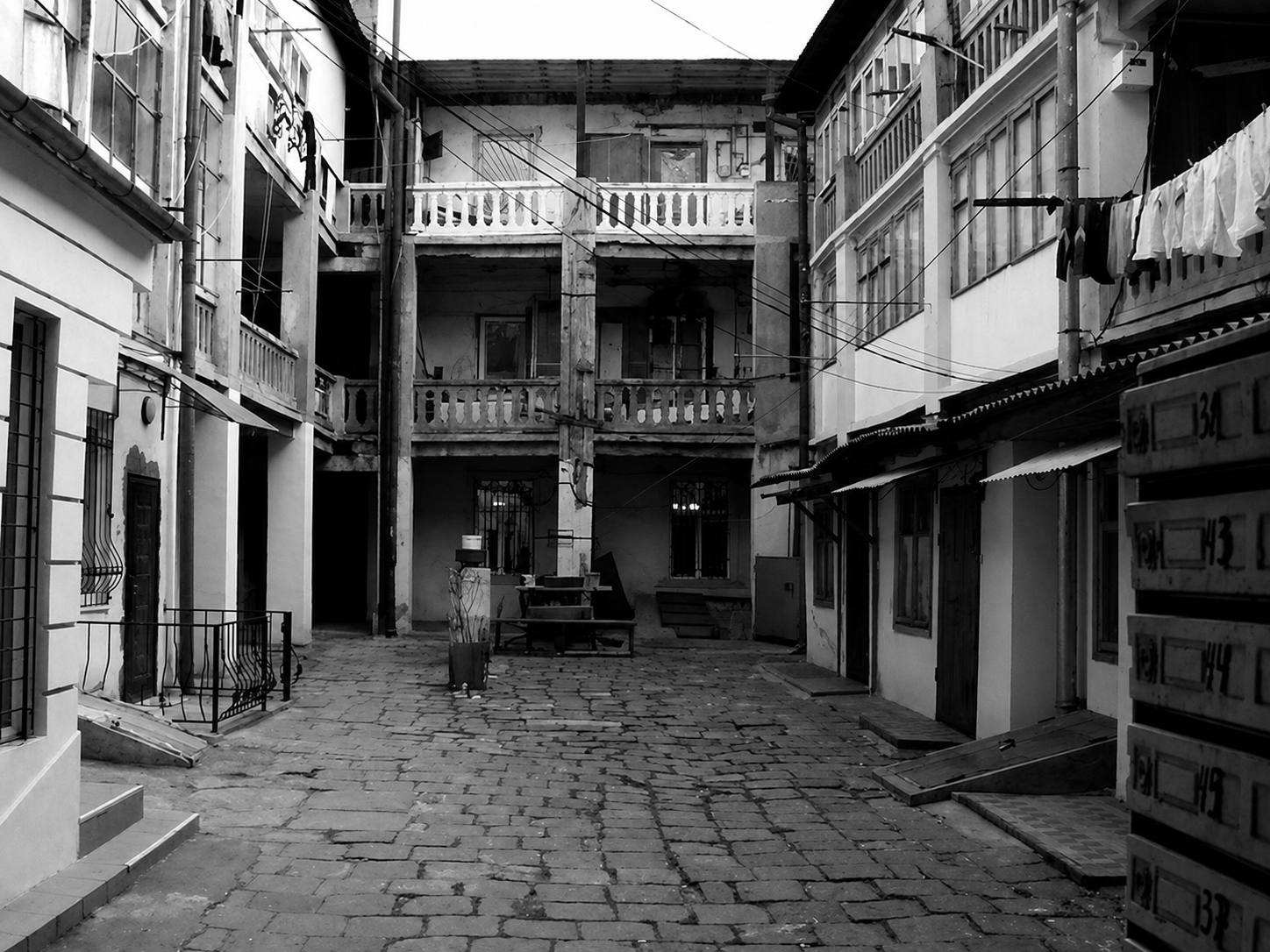
Art Design: Huxley.media
The International ODESSSIADA Short Story Competition, organized by Huxley.media in partnership with the World Club of Odesa Citizens, has come to a close. The competition received 102 short stories from authors representing cities across Ukraine and other countries. Particularly meaningful was the fact that, during this challenging time for Ukraine, the competition brought together more than one hundred writers, introduced Odesa to new literary voices, and continued the city’s long-standing tradition of vibrant literary expression.
Today, we begin publishing the works of the competition’s laureates. We are pleased to present the winning story by Yaroslav Sydorenko (Kropyvnytskyi), “Why God Doesn’t Play Dominoes in Moldavanka.” We sincerely congratulate the author on this well-deserved victory and invite our readers to discover the story that the jury recognized as the finest among all the competition entries.
I
n June 2026, silence disappeared from Odesa.
Not the silence that comes before a thunderstorm, when even the sparrows fall quiet to listen as the sky draws a breath. Nor the silence that elderly women shake from their tablecloths each evening in the courtyards of Moldavanka. It was the deeper, more ancient silence that lived in the old wells of Italian courtyards, in the cracks of shell limestone, in the pauses between the heartbeats of the city. It simply gathered its modest belongings — a scrap of the evening sea breeze, the echo of footsteps on cobblestones, a forgotten barrel organ chord — and left without explaining itself to anyone. In its place, it left behind a strange low-frequency hum, heard only by cats, antique dealers, and an elderly piano tuner from Peresyp.
The cats behaved most strangely of all. Sema Katsnelson’s ginger tom spent three days perched on a windowsill, tilting its head at such an angle that it seemed to be catching a radio signal from another dimension. A gray stray from Pryvoz suddenly began walking only backward. And Madame Finkelstein’s cat gave birth to kittens with four pairs of ears. Although the veterinarian explained it as a genetic anomaly, the neighborhood decided it was a sign.
The antique dealers sensed their merchandise beginning to tremble ever so slightly. Antique clocks all started losing exactly forty-seven seconds a day. Every single one of them. At the same time. As though someone had bitten a tiny piece out of every day and hidden it inside their cheek.
Mark Abramovych Shvartsman, a retired architect and a man who regarded reinforced concrete as a personal insult and plastic windows as a sign of moral decline, stood in the middle of his office on Hretska Street and felt the floor trembling ever so faintly beneath his feet. He was sixty-eight years old. He wore hats that had gone out of fashion under Brezhnev, come back into fashion, gone out again, and returned once more — while he had simply never taken his off. His face resembled a map of the old city: deep wrinkles like streets, and a nose jutting out like the cape at Velykyi Fontan.
In his hands he held an old copper key that had suddenly begun to vibrate. So suddenly and unmistakably that Mark Abramovych nearly dropped it. The key belonged to no door in the building. He had found it inside a wall during renovations thirty years earlier. It had been hidden in a niche, wrapped in a 1913 issue of the newspaper Odessky Listok, alongside a small note that read: “Turn left. But not now.” Mark carried the key in the pocket of his jacket the way other people carried cigarette cases or photographs of their grandchildren.
Now the key was vibrating, and Mark could feel that vibration in every bone, every tooth, every cell of his body — a body that knew this city better than any Google Maps ever could.
“You see, Lyova,” he said to the plump ginger cat, who was eyeing the key with visible suspicion, “if Odesa starts vibrating in the key of A, it means someone is trying to rewrite its score. And I won’t allow anyone to play out of tune in my city. Here, even false notes have to be in the right key.”
Lyova — a cat with a biography that would make any adventure novel envious — merely flicked one ear. He had entered Shvartsman’s life five years earlier by climbing through an open transom window with the confidence of someone returning home from a business trip. He was ginger, overweight, missing a piece of his left ear, and possessed the look of someone who had figured everything out about the world, decided it wasn’t worth the trouble, yet stayed out of pity.
“You know what, Lyova,” Shvartsman added, putting on his hat, “a house doesn’t stand because its walls hold it up. A house stands because it has an idea. Take away the idea, and the walls become nothing more than stones. Well, someone is stealing the idea from our city. And I won’t let that happen.”
He knew that every city had a “zero point” — the place where everything began, where its heartbeat was loudest. In Odesa, everyone thought it was the monument to Duke de Richelieu. But Mark Abramovych knew the truth: the city’s true center was hidden in an unremarkable courtyard on Kolontaivska Street, where beneath an old mulberry tree stood a rusty domino table. No one had played there for twenty years, yet no one had ever dared remove the forgotten tiles. That was where the vibration was leading him.
Lyova jumped down from the armchair and walked toward the door. Then he stopped. Turned around. It was one of those rare moments when a cat looked at a human being with something that might almost be mistaken for respect.
“Yes,” said Mark Abramovych. “You’re right. We have to go. But first I’ll take an umbrella. Because even if Odesa is falling apart, an Odesan should never get caught in the rain.”
The street greeted him with one of those unmistakable Odesa summer mornings when the air was so thick with scents that you could eat it with a spoon. It smelled of acacia blossoms, the sea, someone’s borscht from the fourth floor, sun-warmed asphalt, and that elusive blend of hope and nostalgia that only southern cities know how to make.
The city was alive. It always had been — even when it was dangerous, unreasonable, and entirely contrary to common sense. Odesa had the peculiar habit of shining brightest precisely when someone was trying to extinguish its light.
On the way, Mark Abramovych ran into Madame Berson. Or rather, Madame Berson ran into him — she had an uncanny ability to appear in people’s paths with the inevitability of climate change.
Sofia Markivna Berson, the widow of a late dental technician, was a monumental woman. Not in terms of size, but in terms of presence. Whenever Madame Berson entered a room, the air instinctively made way for her.
She carried two mackerel with such solemnity that they might have been a scepter and an orb. The fish were wrapped in a newspaper, and Mark Abramovych managed to read the headline: “Artificial Intelligence Predicts Rising Prices of…” The rest was hidden beneath a fish’s tail.
“Mark, have you seen the color of the sky?” Madame Berson asked without slowing her pace. “That’s not a sky — that’s some cheap social media filter. The Lord is clearly cutting back on pigments this season.”
“Madame Berson,” Shvartsman replied, adjusting his hat, “the sky is simply adapting to our mood. We’ve become too transparent. The world has learned to read our thoughts through Wi-Fi, and now the sky is afraid of disappointing us.”
“Oh, Mark, don’t get me started! My daughter-in-law makes borscht without beets. Without beets! She calls it deconstruction. I told her, ‘Deconstruction is when you tear down a building. Are you saying you’ve demolished the borscht?’ She says, ‘Mama, it’s a trend.’ I tell her, ‘A trend is when a lot of fools do the same thing and think they’re being original.’ Philosophy is all well and good, Mark, but the fish isn’t going to fry itself. Though these days, nothing surprises me anymore.”
“Madame Berson,” Shvartsman said, trying to steer the conversation elsewhere, “tell me, did you happen to hear a strange sound this morning? A kind of low hum…”
Madame Berson stopped. For the first time since they had begun talking, she truly stopped — her feet, her voice, even the mackerel became perfectly still.
“A hum?” she repeated, her voice suddenly quieter. “Yes, Mark. I heard it. At four in the morning. I thought it was an earthquake. But then I went to the window and saw… I saw all the acacia trees on our street shed their blossoms at exactly the same moment. Every single one. All at once. As if someone had pressed a button. And they didn’t fall, Mark. For a second, they just hung there in the air. Hanging there like little umbrellas. Then they drifted down to the ground and arranged themselves into a pattern. I looked down from above, and do you know what it was? A musical staff. The acacia blossoms lay across the sidewalk like musical notes.”
Shvartsman placed a hand on Madame Berson’s shoulder.
“You may well be the most important witness in a matter concerning the fate of this city. Take good care of your mackerel, and don’t tell anyone about the blossoms. Not yet.”
“They say they were selling shrimp at Pryvoz yesterday that spoke French,” she added as she walked away. “Nonsense, of course. Who in Odesa would want to listen to French when we’ve got our own surzhyk?”
Shvartsman watched her go, smiling. Odesa’s resilience had always been precisely this: the ability to turn tragedy into a joke and the apocalypse into an opportunity to debate the proper recipe for forshmak. By 2026, after everything the city had endured, that irony had become its armor — armor through which not even the strange hum could penetrate.
His father used to say, “Mark, do you know what makes Jewish humor different from any other kind? We don’t laugh instead of crying. We laugh because we are crying. It’s not an alternative to tears. It’s their continuation.”
Before reaching Kolontaivska Street, Shvartsman stopped by the courtyard of Fima Horodetskyi. Ephraim Borysovych was a man without a defined occupation but with a very definite calling: he knew everything. Information flowed to him the way water flows to the lowest point.
Fima was sitting in the courtyard on a folding chair, reading a printed newspaper.
“Mark Abramovych!” he called out. “Have you heard about Polyakov? The one who owns the stationery shop. Yesterday he closed the store at three in the afternoon and went to Lanzheron. Sat down on a bench and stayed there until dark. Just sat there looking at the sea. Then this morning he told his wife, ‘Roza, we’re living inside a music box. And someone has broken the mechanism.’”
Shvartsman felt the key in his pocket pulsing more intensely.
“Fima, what about you…? Did you hear anything? This morning. A sound, as though the city itself were groaning.”
Fima removed his glasses — a gesture that, for him, always signaled the beginning of a serious conversation.
“Mark Abramovych, I didn’t just hear it. I saw something. Last night, at exactly 3:17 — I know the time for certain — my grandfather Borukh appeared to me. Not in a dream. I wasn’t asleep. He was standing in the corner of the room, looking at me. He said only one word: ‘Key.’ Then he disappeared. But the smell of Kazbek tobacco, the kind he used to smoke, remained behind. They haven’t made that tobacco since the eighties.”
Shvartsman tightened his grip on the key in his pocket. It was hot.
“Fima, tell me, did your grandfather Borukh know anything about that courtyard on Kolontaivska Street? The one with the domino table?”
Fima put his glasses back on, then took them off again, wiped them carefully, and put them back on — a whole ceremony in itself.
“Grandfather Borukh played dominoes there every Saturday from 1962 to 1978. There were four regular players, and one man everyone called the Maestro. I know nothing about him. Grandfather never liked talking about him. Only once he told me, ‘Fimka, the Maestro isn’t a man. The Maestro is Odesa itself, sitting down to play with us. And Odesa always wins, because it knows which tiles we’re holding before we do.’”
Shvartsman thanked him and walked on.
The courtyard on Kolontaivska Street greeted him with silence. The very silence that had vanished everywhere else. Here it had not merely remained — it had concentrated itself, becoming so dense that Shvartsman could physically feel himself stepping into it, as though wading into water. The air was cool — impossibly cool for the sticky June heat of Odesa. It carried the scent of something older: stone, time, something reminiscent of the smell of very old books.
The mulberry tree was still there — old, gnarled, its bark deeply furrowed like the face of a sage. Its shadow looked wrong — far too long for that hour of the day, falling in a direction that seemed to defy the laws of physics.
A man was sitting at the domino table.
He wore a white linen suit that looked impossibly clean for the lush June season — as though someone had cut his figure out of a fashion magazine and pasted it into an old photograph of a communal apartment. His face was unremarkable — and that was precisely what made it so strange, because no human face is ever truly unremarkable. His was a blank page.
Only the eyes stood out. Gray. Transparent. Bottomless — like the wells where silence had once lived.
He wasn’t playing dominoes. Instead, he was arranging small glass marbles across the tabletop. Each one was about the size of a large pea, perfectly transparent yet somehow filled with something — light, mist, memories?
“You’re late, Mark Abramovych,” the man said without looking up. His voice was peculiar — clear as distilled water, and just as devoid of flavor. “The city has already begun to separate into layers.”
“Who are you?”
The man raised his head. His gaze swept over Shvartsman like an X-ray beam — carefully, indifferently, seeing everything.
“I am the Tuner. Odesa is an enormous mechanical organ. Every street is a pipe, every square a bellows, every courtyard a resonating chamber. And every resident is a key. Living, warm, unpredictable. It was magnificent — until you humans began pressing every key at once. The result was noise. Not the kind of noise I was used to — the shouting from balconies, the arguments at Pryvoz. This noise is different. It’s like a crack. And it’s spreading. A little more, and the organ will fall apart.”
“A crack in what?”
“In the fabric. The invisible fabric that binds everything together: the past to the future, the living to the dead, stone to memory. Right now you experience it as a hum. It will get worse. First the smells will disappear. Then the colors. Then the faces. And eventually the city will simply forget itself. It will become indistinguishable from any other place.”
Shvartsman sat down.
“I’m here to remove what is unnecessary. To restore harmony. To bring silence back. To eliminate the noise.”
“And by ‘noise,’ you mean us?”
The Tuner smiled.
“Not you. Your mistakes. Your contradictions. Your foolish decisions, your habit of loving and hating at the same time, believing and doubting, building and destroying. Everything you call living, I call making noise.”
A chill ran through Shvartsman. Not from fear — from recognition. He had met people like this before: people who wanted to organize everything, correct everything, make everything “right.” People who looked at a crack in a wall and saw a defect instead of character.
“You want to erase us? To eliminate the ‘noise’? But our noise is life! Our shouting from balconies, our arguments, our laughter — that’s the melody of Odesa. Without that noise, this would be nothing but a pile of stones by the sea. A beautiful pile. Photogenic. But dead.”
The Tuner picked up one of the glass spheres and held it before Shvartsman’s eyes. Inside it, Mark saw the Odesa Opera House.
But there were no people.
Only perfect architecture in perfect silence.
The columns stood in flawless symmetry. The stucco gleamed. Everything was perfect.
And dead.
“Look how beautiful it is,” the stranger whispered. “No chaos. No mistakes. No cracks. Only pure form.”
Mark stared into the sphere.
For a moment, he felt the temptation.
Because it truly was beautiful.
So beautiful that it hurt.
A perfect Odesa without pain, without fear, without loss.
An Odesa of dreams.
Then he noticed something.
In that perfect Odesa, there were no shadows.
The buildings stood there, but they cast none.
And he understood: without shadows, there is no depth. Without depth, there is no truth.
“You know,” he said, gently lowering the sphere, “once my father took me to Pryvoz when I was a little boy. I saw Aunt Sonya selling apples. They were crooked, bruised. Right next to her was a new stall selling perfect apples — smooth, shiny, identical. I wanted the shiny ones. My father bought the crooked ones instead. I asked him why. He bit into one and handed it to me. Then I understood. The shiny ones had no smell and no taste. The crooked ones tasted the way apples are supposed to taste — sweet, tart, real. Since then, I’ve known one thing: perfection is always suspicious.”
Shvartsman understood who sat before him.
Order itself.
Or perhaps the Absolute.
A force that had decided beauty mattered more than meaning, form more than chaos, eternity more than the fleeting moment.
But Shvartsman was an Odesan.
And every Odesan knows that the finest order is well-managed chaos. The best borscht is the one where someone forgot the bay leaf, added something unexpected instead, and somehow made it even better. The finest buildings are the ones constructed not strictly according to plan, but through inspiration.
“Do you know why our staircase is called the Potemkin Stairs?” Mark asked. “Not because Prince Potemkin ever walked on them — he never did. They were built fifty years after his death. They’re called that because, from the top, they appear endless — you stand above and see only the landings. From below, you see nothing but steps, one continuous wall of steps. It’s an illusion. A brilliant architectural illusion. And do you know something? Odesa itself is built on illusions. Every one of them is a lie. And every one of them is the truth. At the very same time.”
He took the vibrating key from his pocket and placed it on the table.
The copper flashed in the unreal light of the courtyard.
“You’re trying to tune an instrument that works only when it’s out of tune. Odesa was never meant to be a harmonious city. Just look at the map! Hretska Street, Yevreiska Street, Arnautska Street, Moldavanka — every street here belongs to a different people, a different language, a different way of slicing an onion! And out of that chaos — out of quarrels over clotheslines, weddings where five different nations celebrate together, courtyards where Abram borrows salt from Mykola, and Mykola visits Abram for Passover — out of all that emerged something that cannot be designed.
A soul.
You can’t simply draw a soul, can you?
You can draw a perfect body.
But the soul lives precisely where proportion breaks down.
Where the line isn’t quite straight.
The vibration of the key instantly spread to the glass spheres. They trembled, then began to move slowly across the table. At first, they rolled at random. Then they aligned themselves into lines, into patterns, into something resembling musical notation. They began to dance, producing a delicate chiming sound — and within that chiming Shvartsman heard a melody. An old, forgotten melody once played by barrel organs on Deribasivska Street a hundred years ago.
“You cannot ‘clean up’ our city,” Shvartsman said, his voice growing stronger with every word. “You can only love it. Love it together with its dirt, its audacity, its ability to cheat you and then feed you moments later. Together with its grandmothers, who know everything better than you do, and its cats, who know everything better than the grandmothers. Together with its scorching summers and its icy winter winds. Together with its port that smells of oil and dreams, and its catacombs where a darkness older than the city itself still lives. Together with its incredible, unreasonable, stubborn hunger for life. Because that’s the point: we don’t live correctly. We simply live. And if you take away the noise, you’ll take away the soul. All that will remain is your perfect emptiness.”
The Tuner sat motionless, and Shvartsman saw a shadow pass across his face.
Not the shadow of a cloud.
The shadow of doubt.
One of the glass spheres cracked.
Softly.
Almost tenderly.
And through the crack escaped a sound — a sound that filled Shvartsman’s eyes with tears.
It was the voice of a child singing “Ah, Odesa, Pearl by the Sea…” hopelessly off-key, gloriously off-key, yet with such joy, with such happiness, that even the old mulberry tree seemed to lean closer.
The sphere in the stranger’s hand cracked further, and light began to pour from it.
Warm.
Pink-orange.
Like an Odesa sunset.
The hum in the air changed.
It became a voice.
Then thousands of voices.
The walls of the courtyard trembled with laughter as the voices of countless Odesans — past and future — merged into a single living chorus.
The voice of a fish vendor at Pryvoz:
“Fresh gobies! Fresh gobies!”
The voice of a little boy running and laughing because a pigeon had landed on his head.
The voice of a woman calling her cat:
“Barsyk! Barsy-y-yk!”
The voice of the sea breaking against the stone.
And the voice of Richelieu:
“What have I created? Something impossible. And yet… it works.”
“You’re going to lose,” Mark Abramovych said, feeling the key grow hot, almost red-hot. “Because in Odesa even death begins by asking, ‘And what’s in it for me?’ And while it’s bargaining, we still have time to watch one more sunset, kiss someone one more time, laugh one more time.”
He took a small piece of shell limestone from his pocket.
“Do you know what Odesa is built from? Shell limestone. Stone made from millions of dead mollusks. Dead, do you understand? And yet from their remains a city was built, overflowing with life. There’s your philosophy: death is not the opposite of life. Death is the material from which life builds itself. Your perfect emptiness isn’t eternity. It’s simply a beautiful death.”
The Tuner rose to his feet.
His figure began to blur, becoming transparent like sea foam. Through him Shvartsman could see the courtyard wall, the old graffiti reading “Odesa Is Mama,” and a cat sitting on a windowsill.
“Perhaps you’re right. Or perhaps you’re simply afraid of emptiness, like all human beings. You fill it with noise because otherwise you’d have to face it alone.”
“Then we make tea. Or pour ourselves some brandy. Depending on how deep the emptiness is. Then we call a friend and ask, ‘So, how are you?’ And the friend replies, ‘Oh, the usual. Still alive.’ And we say, ‘Well, that’s something to be grateful for.’ And the emptiness retreats. Because it isn’t interested in us. We’re far too noisy for it.”
“But I leave you a choice. Turn this key clockwise, and the city will become eternal. Frozen at its finest moment. No pain. No fear. No loss. Turn it the other way, counterclockwise, and everything will remain as it is. Dangerous, noisy, unpredictable. Painful. Mortal. But real.”
He vanished.
Quietly, without spectacle.
He simply ceased to exist.
Mark Abramovych Shvartsman remained alone in the middle of the courtyard.
In one hand he held the burning key. The copper had heated to the very color the sky takes on in the final second before sunset.
In the other, he held the shattered glass sphere.
Warm light still seeped through its crack, accompanied by the sound of that child’s song.
The remaining twelve spheres lay upon the domino table.
Inside each was a fragment of Odesa: Pryvoz, the deserted Potemkin Stairs at night, a courtyard in Moldavanka with someone playing a guitar, Lanzheron Beach where a little girl was building a sandcastle.
The hum was gone.
In its place came that true Odesa silence — the silence woven from a thousand muted sounds: the distant horn of a ship, the rustling of acacia leaves, someone’s prayer, someone’s laughter.
Mark Abramovych walked to the gate and looked out onto the street.
Life was going on.
Madame Berson was arguing with a newspaper vendor.
Somewhere, a steamship sounded its horn.
A woman was hanging laundry from a balcony.
A little boy ran by laughing.
A black cat leaped from a windowsill and walked away with its tail held high.
Mark knew what he had to do.
He had known ever since the day his father handed him that crooked apple at Pryvoz.
But his hand hesitated.
For just a second.
He thought of Raya, his wife, who had died three years earlier.
“Mark, I’m not knitting a scarf. I’m knitting time. Every stitch is a minute I’ve spent with you.”
If he turned the key clockwise, Raya would be alive.
Forever.
But motionless.
Like a butterfly trapped in amber.
No.
Pain is not the price of imperfection.
Pain is proof that you are alive.
That you still have something to lose.
And perfect eternity without breath is not life.
It is a photograph.
You cannot embrace a photograph and expect it to embrace you back.
He turned the key counterclockwise.
And the courtyard filled with sound — not the hum, but the true, living, chaotic music of Odesa.
Somewhere, a dog barked.
Somewhere, a door slammed shut.
Somewhere, someone laughed.
Somewhere, someone said, “I love you.”
Somewhere else, someone said, “Pass the salt.”
Both sentences were equally important.
All the glass spheres cracked at once.
From each of them escaped its own melody — and together they became a song that can only be heard once in a lifetime.
The key grew cool.
The note — “Turn left. But not now.” — had finally found its moment.
Someone had known.
A hundred years earlier.
Lyova was waiting for him at the door.
He looked at Mark with that familiar expression — wise, indifferent — and walked into the kitchen. Then he sat down beside his food bowl.
“You’re right, Lyova,” Mark Abramovych said as he poured the cat’s dinner. “Philosophy is all well and good, but dinner still has to be served. Even if you’ve just saved a city from eternity, a cat still wants to eat. And that’s the true order of things. Not a dead, perfect order. A living one. Hungry. Impatient.”
Lyova ate.
Outside the window, Odesa hummed.
Imperfectly.
Without harmony.
Hopelessly off-key.
Beautifully.
And somewhere far away, the Tuner in the white linen suit sat alone in an empty room, listening to that noise.
For the first time in thousands of years, he smiled — not because he had to, but because he wanted to.
“Perhaps a false note is the right note after all.
You simply have to know how to listen.”
And he listened.
When copying materials, please place an active link to www.huxley.media
Select the text and press Ctrl + Enter


