ОH, LOVE: She Conquered Her Husband but Lost to Her Son

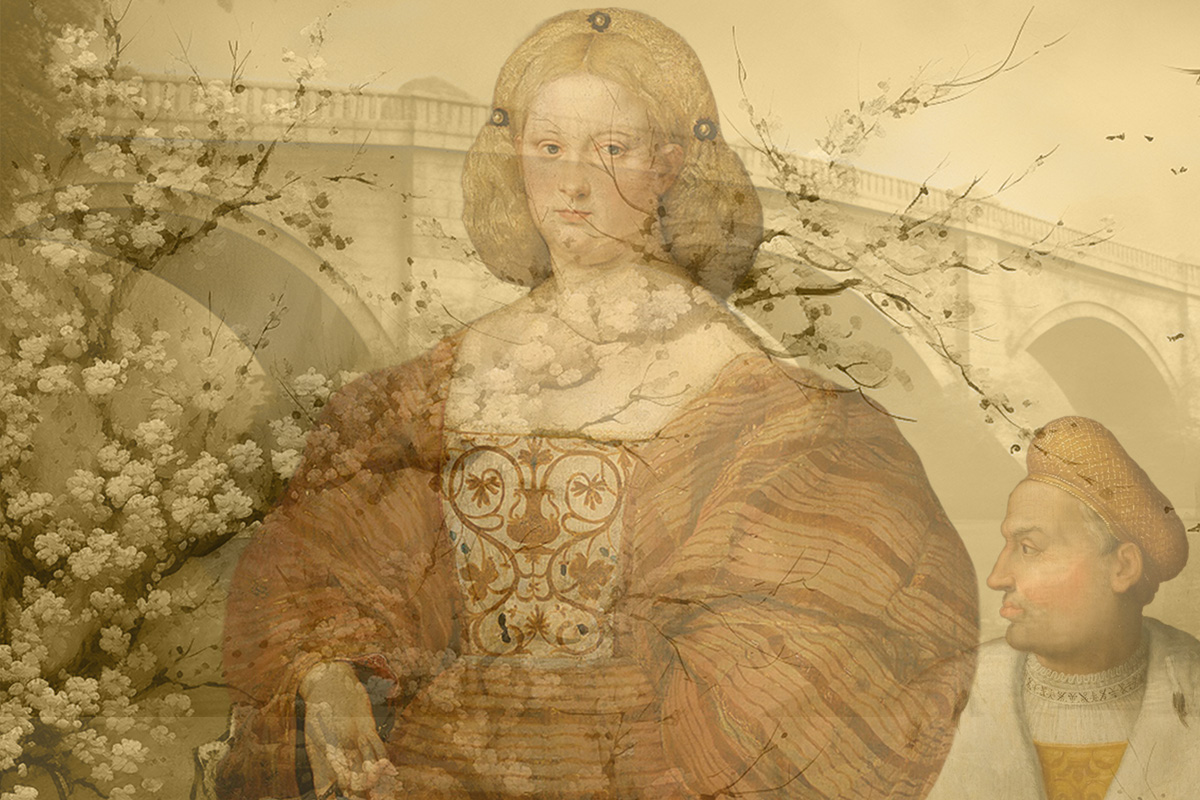
Art design: huxley.media via Photoshop
WHERE TO LOOK FOR A WIFE
T
he desire to marry one’s prince off specifically to a foreign princess rather than to a homegrown duchess has its positive sides. The mutual enrichment of cultures, already seriously hindered by chauvinism and rigidity, usually receives considerable additional impetus from such marriages. Books read in childhood, household conveniences already invented but still insufficiently familiar in her new country, dishes from the cuisine she grew up with, laws and institutions already established in her former homeland but unfamiliar in the new one — all of this accelerates progress, while also inevitably provoking resistance from those accustomed to the old ways. That resistance takes different forms: silent sabotage, court intrigues, monstrous tales about the supposedly satanic nature of foreign influences and, of course, of the woman who brings them with her… And it can all end in very different ways. Including in the case of Bona Sforza — the Milan-born Queen of Poland.
FROM ITALY TO POLAND
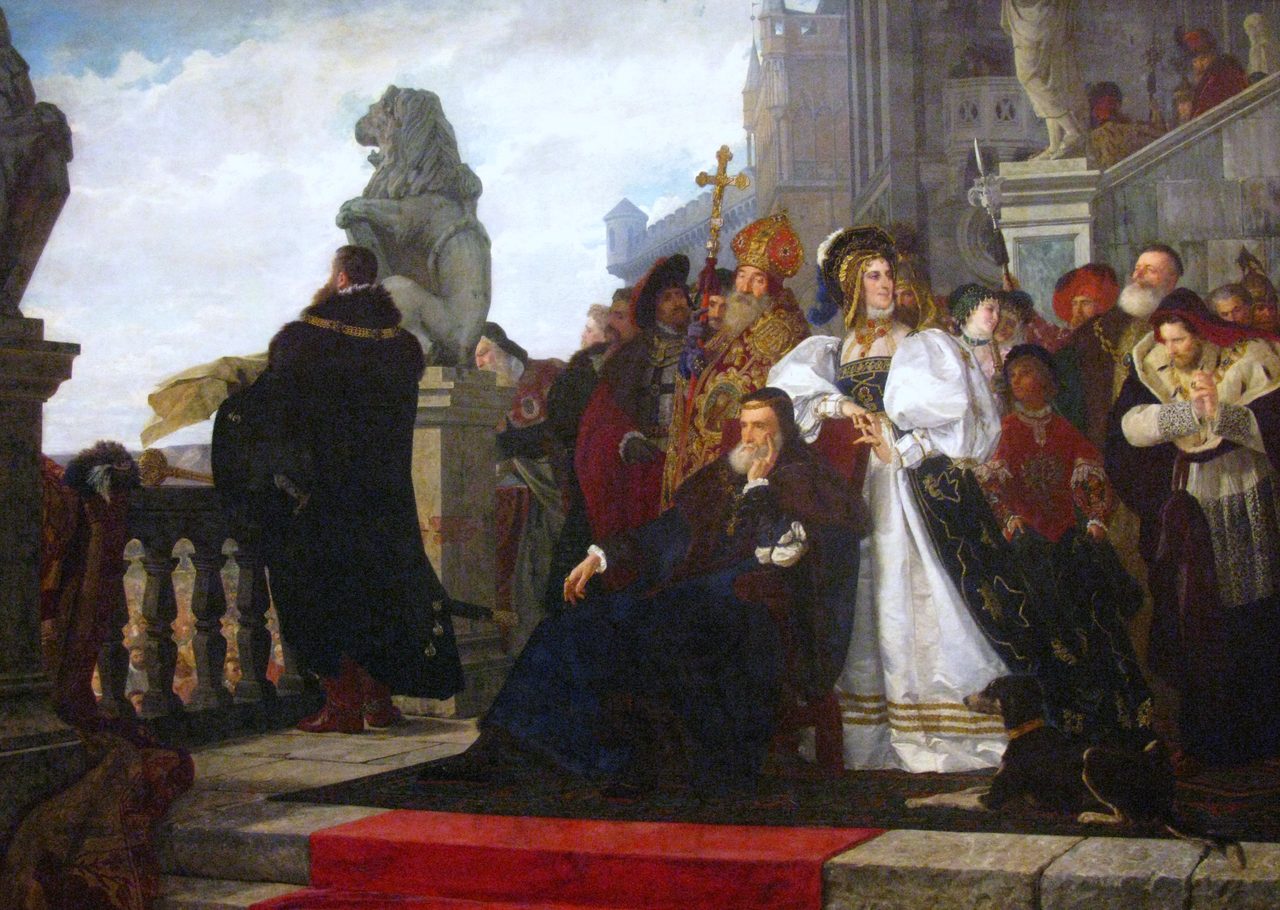
At the beginning of the sixteenth century, the Grand Duchy of Lithuania and the Kingdom of Poland, united by a personal union, lost their queen: Barbara Zápolya, the first wife of King Sigismund, died. Barbara had borne Sigismund only daughters, which, under the rules of the time, left both crowns without an heir. A new queen was needed, and quickly: the king was already in his fifties, and there was no time to lose. Finding princesses as prospective brides was not particularly difficult in those days, since the territory of present-day Germany alone contained hundreds of states, while Italy had dozens — there was no shortage of choice. One of the largest and most prominent states on the Italian peninsula was the Duchy of Milan. Its rulers traced their lineage back to a condottiero, the son of a peasant, Muzio Attendolo, who earned the surname Sforza (“Strong”) because he was able to leap into the saddle of a warhorse while wearing armor — at least forty kilograms of it. A bride from Milan was guaranteed to come from a noble family, with immense wealth, the highest culture, and an excellent education. Her age was ideal as well — twenty-four: on the one hand, she was still very much of childbearing age; on the other, by the standards of the time, she was already considered somewhat past her prime, so she was unlikely to be overly choosy. And her name was a good one too: Bona — meaning “good”.
EXPORTING INNOVATIONS
A whole host of innovations traveled north across Europe together with the young queen. Naturally, someone from the warm south was hardly going to give up the fruits she had been accustomed to since childhood, and so oranges, lemons, almonds, figs, olives, and raisins first appeared on the royal table and then on those of the nobility. The fact that forks were already being laid on those tables was also thanks to her. And from the cages of exotic birds decorating her chambers came words uttered in an almost human voice: “Polly is a fool!” (although presumably it was first Il pappagallo è uno sciocco! in Italian, then Papuga jest głupcem! in Polish, and Papūga yra kvailys! in Lithuanian…). Incidentally, thanks to the influence of the queen’s ladies-in-waiting from her homeland, women at court quickly began dressing in open gowns with lavishly low necklines. But these were merely details. What unquestionably deserves credit was Bona’s introduction of the progressive reforms of the time throughout her domains — granting towns Magdeburg rights, establishing fairs, and even introducing tax holidays. And, incidentally, she did so with the full support of her husband — in their relationship, she was clearly the one who played first violin. And here is another colorful culinary detail: the Polish method of preparing certain soups and borschts uses vegetable broth as a base, and in Poland this mixture of vegetables is called włoszczyzna — literally, “the Italian”. Make no mistake: it was that very Italian woman.
FAMILY SUCCESSES — AND MORE BESIDES
There were no delays when it came to producing an heir to the throne either. Over the course of eight years, Bona bore Sigismund six children, including the long-awaited son, who was named Sigismund Augustus. Three of her daughters became queens: Anna — Queen of Poland, Isabella — Queen of Hungary, and Catherine — Queen of Sweden. The fourth, Sophia, became “only” Duchess of Brunswick, though that was hardly insignificant. Her second son, Wojciech Albert, however, was born prematurely and did not survive. During a royal hunt, the pregnant Bona refused to stay behind, and a wounded bear frightened her horse so badly that she was thrown from the saddle. But by then the succession had already been secured. Bona had fulfilled her duty as queen, yet that was clearly not enough for her — her energetic nature demanded action. Her contemporary, Petrus Roysius, even composed a Latin epigram about a chess kingdom in which the king barely moves across the board while the queen races all over it — and everyone at the time knew perfectly well what that queen’s name was. None of this interfered with family life. Intelligent and highly educated Bona — as a child, she had even met Leonardo da Vinci himself — made genuinely useful and modern decisions, while the aging provincial in the crown quietly rejoiced at how clever his wife was. If that is not an ideal marriage, then what is?
A BLACK CLOUD
Were Polish and Lithuanian ladies pleased with such energetic activity? Apparently not — perhaps out of envy? The folkloric image of this dynamic queen could hardly have been darker. Consider the legend that, in order to preserve her youth and beauty, she supposedly washed herself in the blood of virgins. That story alone blames her for the horrific murder of 300 innocent souls — and that is far from all. According to another legend, Bona kept a personal harem of young officers, and they certainly had no time to get bored there: just as you were about to finish off a bottle or sit down for a game of cards, you would already be summoned to an orgy — back to work… If the queen was allowed such liberties while other ladies were not, wouldn’t that be enough to make them resentful? According to this legend, King Sigismund discovered this entire team of his voluntary “assistants” and ordered them all executed. But Bona somehow miraculously persuaded him to spare numbers 3, 9, and 27 on the list — which is supposedly why toasts bearing those numbers should be raised to beautiful ladies. The third one is indeed true; as for the others, few ever lasted that long… And the story of how Bona failed to seduce a group of monks and, in revenge, ordered them flayed and had a bridge built from the resulting material — a bridge along which she supposedly enjoyed taking walks — is, to my mind, a little too much even for the Middle Ages. I might still consider a bridge made of bones, but a bridge made of human skin is simply excessive.

HOW TO LOVE YOUR CHILDREN
As is often the case with Italian women, Bona adored her children — with the kind of suffocating love that makes one all the more grateful for her energetic nature, which at least forced her to spend some of her time on something else. She managed to have her son confirmed as Grand Duke of Lithuania and his father’s co-ruler at the age of just nine, and a year later as King of Poland as well. This gave neither her nor him any additional real power, while clearly alarming those who were already dissatisfied. A title, however, was the easier part: an authoritarian mother could perhaps calm down a little after giving her son as much power as she possibly could. But what was she to do about the fact that another woman would inevitably appear at her son’s side — his wife, who would claim at least some share of his love? For mothers like this, the very thought is unbearable. And so it proved to be — apparently in all three cases out of three.
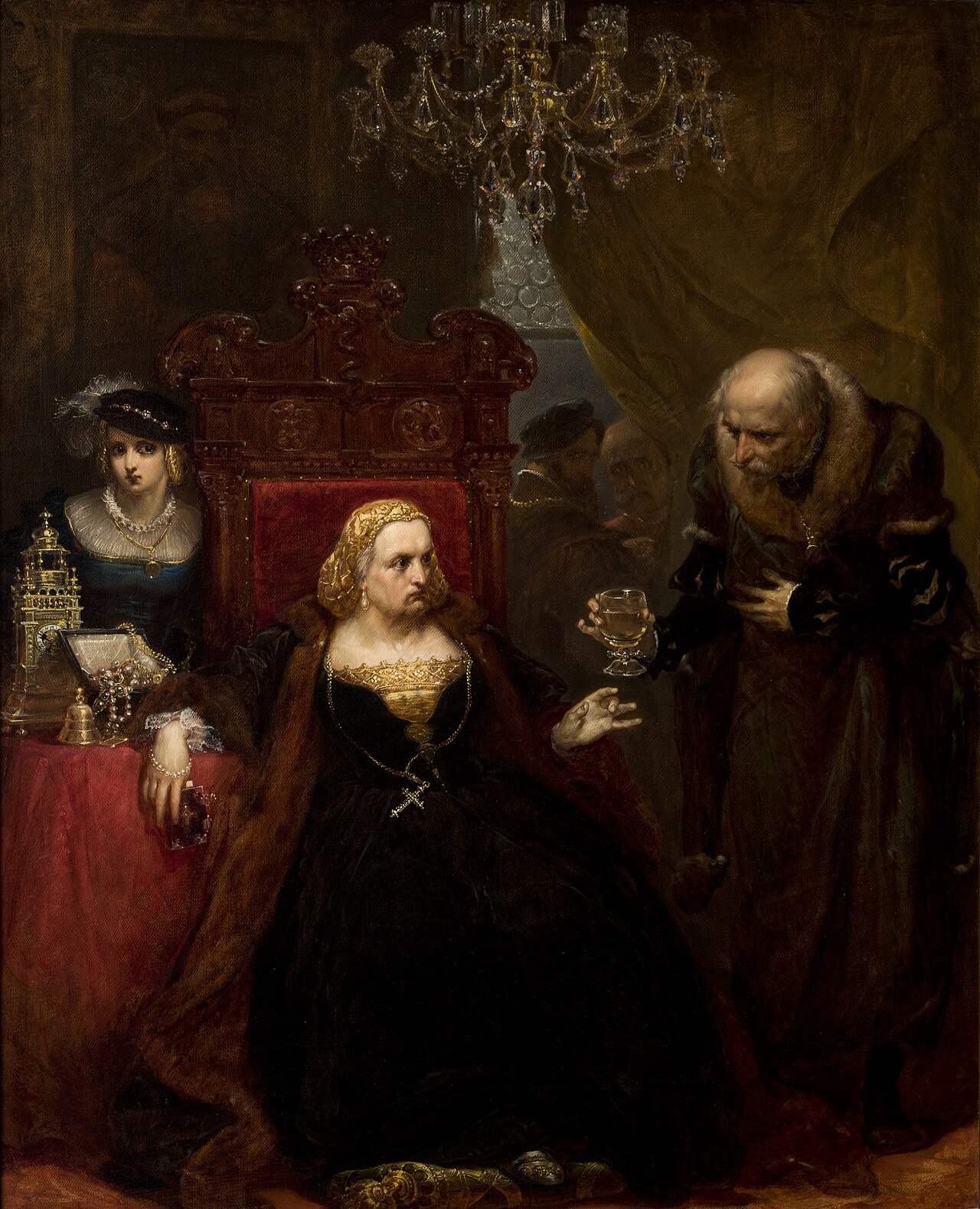
In 1548, at the more than venerable age of eighty-one — especially by the standards of the time — Sigismund died, and his twenty-eight-year-old son, Sigismund Augustus, became sole ruler of Poland and Lithuania, after having spent eighteen years as co-ruler. By then he had already been widowed once, and I very much fear that, in his view, the only virtue of that wife — Princess Elisabeth of the powerful House of Habsburg — was her early death. Even then, rumors circulated that there was more to the death of the not-yet-twenty-year-old princess than met the eye, especially given that her mother-in-law, who made no secret of her hatred for Elisabeth, was related to both the Medici and the Borgia — families regarded even in Italy as the foremost masters of poison. There was, of course, no evidence, but there was certainly no shortage of gossip…
ROMEO AND JULIET
Sigismund Augustus then made his choice again — this time it was Barbara Radziwiłł, the young widow of a prominent Lithuanian magnate. It was a passionate romance marked by strong feelings: their correspondence has survived, leaving no room for doubt. But mothers like Bona always know better whom their precious child ought to marry — and it is invariably not the woman the unfortunate child actually loves. Bona wanted her son to marry the only daughter of Albert of Hohenzollern, hoping this would give him a chance of inheriting the Prussian throne. Her son was not persuaded. Sigismund Augustus married in secret, without making the necessary concessions to the nobility, and then spent considerable time securing approval of their union from the Polish and Lithuanian Sejms. Barbara was crowned two years after the wedding, but survived her coronation by no more than five months. It was perfectly obvious who would be suspected of yet another poisoning: relations between Bona and Barbara had been dreadful while Barbara was alive. Modern scholars, however, believe that Barbara died of cancer — described by contemporary physicians as “a hard abscess below the navel”. Perhaps so, but writers, playwrights, and artists, who have long portrayed Sigismund Augustus and Barbara as the Polish — or Lithuanian, or Belarusian — Romeo and Juliet, clearly had no desire to exonerate Bona. The version favored by these artists would hardly have pleased the queen…
THE LONG-AWAITED SEPARATION
What could have made relations between mother and son even worse? His third marriage, of course — he married Catherine of Austria, the sister of his first wife and herself a young widow. He was clearly no longer interested in his mother’s advice on the subject, which, after the story of his previous marriage, could hardly have surprised anyone. Catherine’s relationship with her mother-in-law was no better than usual. Not long after the wedding, Sigismund Augustus himself asked the pope for a divorce, claiming that he had been deceived about her pregnancy, but permission was denied. He spent most of his life living apart from his wife and died childless, after which the Jagiellonian dynasty lost the Polish crown. Nor did he seem to grow any fonder of his mother. When Bona decided to leave the country, he calculated how much money and how many estates would disappear with her and forbade her departure — at least, with all the property that belonged to her.
According to historians, she managed to overcome this prohibition only thanks to the intervention of her royal friends — her sister-in-law Mary Tudor of England, her daughter Isabella of Hungary and, possibly, even the legendary Hürrem Sultan, known in our tradition as Roxelana, with whom she had maintained a friendly correspondence for many years. Most of her property had to be left behind, but when she departed into exile in 1556, she was accompanied by twenty-four wagons carrying gold, silver, and jewels alone, while the carts laden with furniture, porcelain, and everything else were beyond counting. Bona was clearly delighted to be able to take her wealth with her, but perhaps that very wealth was what ultimately destroyed her.
A DARK FINALE
The wealthy Bona lent Philip II of Spain the astronomical sum of 420,000 gold ducats — roughly €180 million in today’s money — and the king apparently decided that repaying it would be too costly. It was cheaper to bribe Bona’s physician, who poisoned her for a considerably smaller sum. This is difficult to prove conclusively, but most contemporaries were convinced that this was what had happened. Her son gave his unloved mother a rather modest burial. Her coffin nearly burned in a fire caused by a candle that fell after the funeral ceremony. Much later, her daughter Anna Jagiellon, who, like her mother, became Queen of Poland after marrying Stephen Báthory, finally commissioned a magnificent tomb for her in the Italian city of Bari, Bona’s hereditary possession. So who, after all, lies buried there? A progressive politician, a treacherous poisoner, a happy wife, an unhappy mother, a dreadful mother-in-law, an innocent victim — or a little of everything? Or perhaps simply another person of the Renaissance, excessive in everything, both in virtues and in flaws? Perhaps all of the above. Only, as always, one cannot help feeling sorry for the children…
When copying materials, please place an active link to www.huxley.media
Select the text and press Ctrl + Enter