OH, LOVE: the king is a lawyer’s son and the queen is a tavern keeper’s daughter


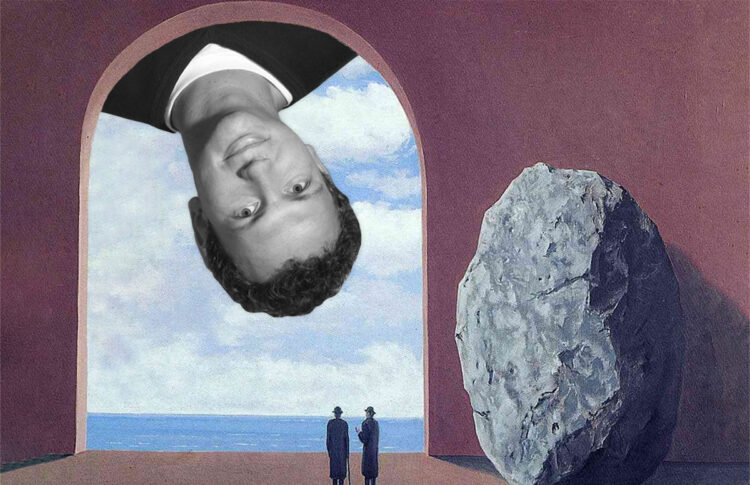
Art design: huxley.media via Photoshop
NO FURTHER MOVE
He had no real chance of a significant career in royal France — the son of a provincial lawyer, the grandson of a tailor, and the great-grandson of a weaver. On top of that, he was the fifth son — in Charles Perrault’s tale, the eldest son of a miller inherited the mill, the middle one got a donkey, and the youngest, third, received a cat. What would be left for the fifth? A mouse, at best…
Where could a fifth son go? The simplest path — the army; they’d take anyone who wasn’t an invalid. There were no special units in the royal army yet, and the fact that the recruit’s ancestor was not native French but Swedish by birth wasn’t considered compromising (how important that detail would later become, no one could have known — and even if someone had told them, they wouldn’t have believed it). He was a brave man, far from a fool, clearly able to follow orders (the most important trait for a military career), and he quickly rose to the rank of sergeant. What then?
Then — nothing, a dead end. No prospects: he wasn’t a chevalier, and without noble status, he could never become an officer. He served faithfully, fenced brilliantly, was obedient and brave — none of it mattered; without a noble patent, the system didn’t work. The highest he could rise was to become an orderly to the regimental commander, the Marquis d’Ambert. With such a modest income, he couldn’t afford to be picky about housing — he rented a room in the house of a Marseille tavern keeper, François Clary, and that was good enough.
By the way, his surname — Bernadotte — didn’t sound particularly French, but his first name was perfectly traditional: Jean-Baptiste. But it was 1789, and, following the fashion of the time, he added the classical name Jules — in honor of Julius Caesar. Interestingly, the name he chose wasn’t that of a republican like Gracchus, as Babeuf had done, but of a true emperor. Perhaps that wasn’t a coincidence?
FLIRTATIONS
Life at the Clarys’ was good: the room was cozy, the landlord agreeable, and his daughters charming and sweet. In southern France, everything ripens quickly — including girls — and soon the Clary sisters had suitors. Interestingly, they were brothers. The suitor of the older sister, Julie, was named Joseph, and you’ll easily guess the family name once you hear the name of the younger sister’s suitor — Napoléon.
In a bourgeois family, romances are expected to end in marriage. In 1794, Joseph married Julie (incidentally, the marriage was long and harmonious). But with Napoléon and Désirée, things turned out to be more complicated. Napoléon even formally proposed to her, and they were considered engaged. Then, suddenly, they drifted apart like ships passing in the night — and no one really knows why.
Could it be that Napoléon’s rise in status raised his standards for his bride’s pedigree? Unlikely — what made the daughter of a wealthy merchant less suitable than the widow of a revolutionary general, Joséphine de Beauharnais, who had no money, a theatrical temperament, and such questionable connections that she could have easily ended up at the guillotine with her new relatives?
It seems Napoléon needed a phase-shifted force of nature, not a respectable merchant’s daughter — and there were even whispers that Papa Clary himself said one Bonaparte in the family was quite enough… The engagement was broken. So — no throne for poor Désirée? Hold on a moment and listen to what happened next.
Careers during the Revolution were unpredictable: Napoléon’s path became outright legendary, but Jean-Baptiste Jules Bernadotte’s rise was quite remarkable as well. He, too, soon became a family man — marrying the woman abandoned by his friend: Désirée Clary.

THE CALL OF ANCESTRAL HOMELAND
So what does it come down to: Napoléon gets the best of everything, and Bernadotte — only the leftovers? Let’s not jump to conclusions — there’s still plenty left. Bernadotte is among the first to become a Marshal of France, fights bravely, holds the center in the brutal Battle of Austerlitz, and receives the title of Prince of Pontecorvo — quite a career.
Napoléon doesn’t shortchange his old friend; Bernadotte receives ranks, titles, orders, and a lifelong pension of 300,000 francs. Napoléon even chooses the name for Bernadotte and Désirée’s firstborn — Oscar — borrowing it from the wildly popular «Poems of Ossian» by Scottish author Macpherson, a brilliant literary hoax he passed off as an ancient Celtic epic. Whether Napoléon was showing affection for his old comrade or for his former fiancée remains unclear. But does it really matter…
Meanwhile, in 1807, the Swedes tried to support the Prussians, defeated by Napoléon, landing on the Baltic coast — only to be immediately captured by none other than Bernadotte. He treats the prisoners in exemplary fashion — with leniency, courtesy, and utmost humanity. The Swedes appreciated such conduct: in the war with Russia, they were so moved by General Kulnev’s humane treatment of Swedish prisoners that the Swedish king simply forbade firing on him — during wartime! As for Bernadotte, news that one of his ancestors was Swedish certainly didn’t hurt his reputation either.
Around the same time, Russia seized Finland from Sweden. King Gustav IV Adolf was overthrown, and the throne passed to Charles XIII, who by then was completely senile. The crown prince died, Charles XIII had no children — and none were expected. So who would inherit the throne? Well, here was the perfect candidate! A Marshal of Napoléon himself, with Swedish ancestry, and even married to the former fiancée of the great emperor — that was considered a bonus too. If only he would agree — and not just him, but also his emperor…
The Swedes approached Napoléon directly for permission, and it seems he didn’t want to stand in the way of the man married to the woman he had left behind. Bernadotte needed to convert from Catholicism to Protestantism — no problem there; he wasn’t worse than Henry IV, who changed faith four times. Napoléon demanded one predictable thing — a commitment not to join any anti-French alliances. Bernadotte gave a firm «no»! And the dreaded tyrant Napoléon quietly nodded in acceptance — even signed a formal document stating that Bernadotte owed nothing whatsoever to France. That’s how enduring old love can be! No wonder everything that followed turned out to be the worst possible scenario for Napoléon.

THE CAREER OF A TURNCOAT
Bernadotte immediately takes on royal duties, even though he’s technically still only Crown Prince — Charles XIII is already beyond public appearance… He is ostensibly participating in Napoléon’s blockade of England (who’s going to check?), but has already made a deal with the British: he’ll seize Norway — then part of Denmark, Napoléon’s ally — and no one will object. He had earlier promised Russia never to demand Finland back under any circumstances (had Napoléon known that, our hero would never have seen the Swedish throne).
Napoléon is displeased as it is, and shows it by unceremoniously stripping Bernadotte of Swedish Pomerania — the last remnant of Sweden’s Baltic empire. But he miscalculated if he thought Bernadotte would take it lying down — after all, they were cut from the same cloth, once courted the same woman, and, formally speaking, Bernadotte had won…
By the way, that woman is no longer Désirée Clary — she’s now Queen Desideria, and her husband, now a newly minted Protestant, has changed his name too: he is Carl Johan. After all, calling a Swedish king Jean-Baptiste Jules would, at best, be ridiculous.
After Napoléon’s invasion of Russia, Bernadotte openly joined the coalition against him and entered the war. It was he who first advised the Russian diplomats not to offer Napoléon a decisive battle, but rather to lure him deep into the country — so it turns out the architect of the victorious strategy wasn’t Kutuzov after all…
Meanwhile, Napoléon keeps making blunder after blunder, uniting the world against him. Even Sweden, among others, fights against him in the monumental Battle of the Nations — and Napoléon suffers his first truly decisive defeat. After the fall of Paris, Bernadotte rushes there immediately, with his wife of course — someone is going to inherit power in France after Napoléon. Why not him?

POSTWAR ALIGNMENTS
Bernadotte’s expectations didn’t come true — the French saw him as a traitor and had no intention of offering him the crown. Marshal Lefebvre’s wife called him a turncoat to his face, in front of a large crowd, and no one came to his defense. French officer Marbot said, «It was a Frenchman, whose crown was won with French blood, who dealt us the final blow,» — and that reflected the general sentiment.
No one offered him the French throne — it would have been a flimsy proposition from the start. Austria even questioned his right to the Swedish throne, but Russia and Britain, with whom he had arranged everything in advance, defended him. In the end, he wouldn’t rule France — it was enough that they let him keep Sweden. Time to settle in…
Bernadotte returned to Stockholm, while Désirée lingered in Paris — and it turned out to be very ill-timed: the Hundred Days began, Napoléon was emperor again, and his former fiancée — now the wife of his fiercest enemy — was within his reach. So how did he deal with her? He didn’t — didn’t lay a finger on her. Perhaps he simply didn’t have time, or perhaps the guilt of Lieutenant Bonaparte toward the tavern keeper’s daughter he once abandoned was too strong… Let’s give him the benefit of the doubt — even emperors deserve a charitable thought now and then.
By the way, Queen Desideria didn’t return to Stockholm right away — she remained in Paris for several years. Rumor had it the real reason was her feelings for Armand Emmanuel de Richelieu, France’s prime minister after Napoléon’s fall and, incidentally, the governor of Odesa, who had done much to develop and prosper the seaside city.
She expressed those feelings in a peculiar and highly visible way: constantly looking for reasons to cross paths, yet never once starting a conversation — simply gazing at him with lovestruck eyes, creating such awkwardness that the duke would quickly excuse himself. He tried to treat it with humor, calling her «my mad queen,» but nothing ever came of it — it all remained within the bounds of social decorum. What it really was — no one can say now. Only in 1823 did she return to Stockholm to join her husband on the throne, as if nothing at all had happened.
THE KING OF SWEDEN
Bernadotte settled into his new kingdom — after 1818, when Charles XIII died — no longer as crown prince but as the legitimate king. At first, this southerner suffered from the harsh Swedish climate, describing the local nature in letters as gloomy, grim, and lifeless, and lamenting the absence of green grass even in early April. Harder still was the fact that he didn’t speak a word of Swedish and had to communicate with the world mostly through his polyglot prime minister, Marcus Brahe. He was often ill, and snide critics even dubbed his reign «bedridden.» But what were the results?
Bernadotte immediately reduced the number of conflicts to the bare minimum. The Swedish Pomerania, taken by Napoléon and then returned to him, he wisely exchanged with Denmark for Norway, ending Norwegian attempts at independence with a swift and nearly bloodless campaign — and keep in mind: this was the last war in Swedish history. For over two centuries now, the country has known peace, and it’s hard to say that it’s done them any harm. Bernadotte’s subjects gained prosperity, invented the Swedish match and the Swedish wall bars, and their brave officers were content with their sons becoming industrialists and merchants… Long live the king!
If anything worried Bernadotte, it was the Swedish weather. He once asked the Spanish ambassador Moreno for advice on how not to shiver for his life in such a climate. The ambassador replied, «Wear galoshes, sir — it’s the best way to survive in this country.» Bernadotte took the advice to heart and even put his royal guard in galoshes. When asked why, he gave his famous answer: «So that Europe never again hears the thunder of Swedish boots.»
Thus he lived on — industrious, prosperous — until the age of 81. There’s a beautiful legend that when his body was being washed, they found a faded tattoo on his chest reading «Death to kings!» — no proof exists, but in republican days, anything was possible… And Queen Desideria outlived even him, reaching the age of 83, surviving their son Oscar, and dying during the reign of their grandson, King Charles XV, in 1860.
And had she married Napoléon — at best, she might have been empress until 1815, though even that’s unlikely: she was far too proper a bourgeois girl to hold on to such a prize. So perhaps she did the right thing by not clinging to a fiancé who left her and trying to mend what was shattered — someone better will come along, and all your descendants will be kings for two hundred years, if only you choose wisely!
When copying materials, please place an active link to www.huxley.media
Select the text and press Ctrl + Enter