ONE STEP AWAY FROM READING MINDS: ultrasound “telepathy” blurs the line between science and science fiction

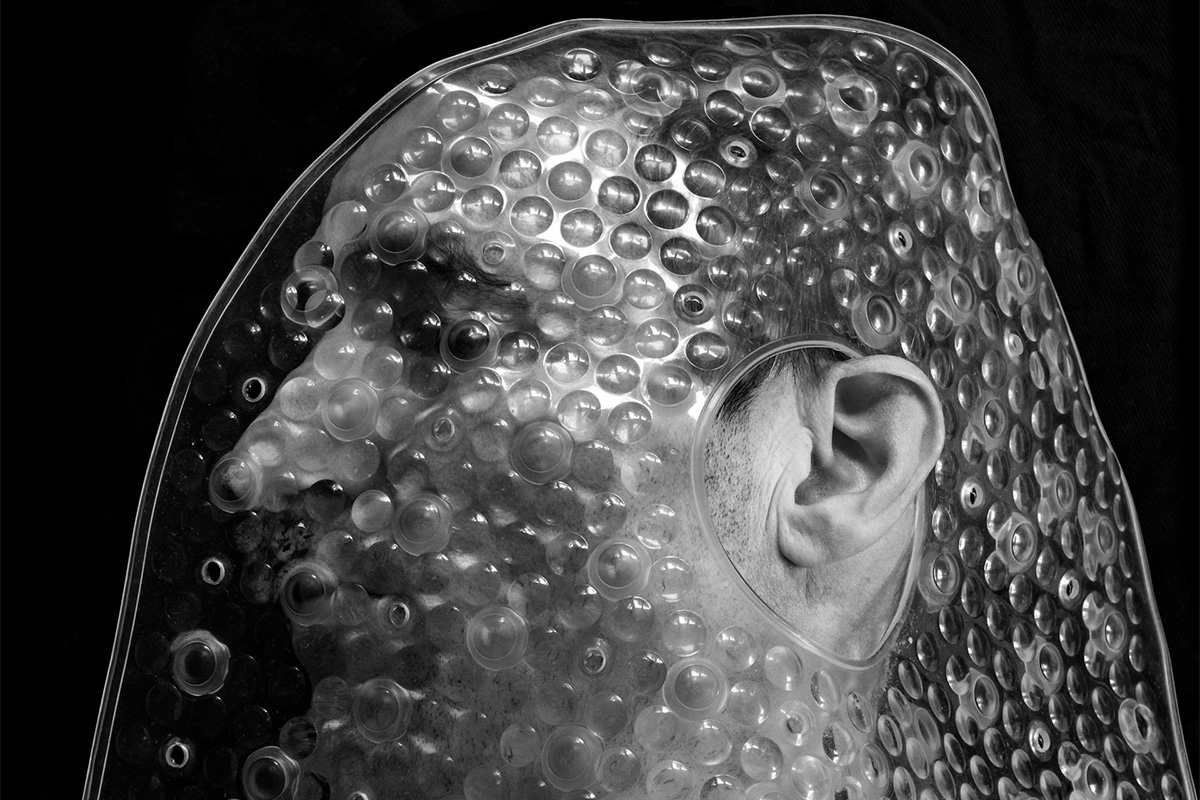
Photo by Sebastian Schuster on Unsplash
Traditionally, the idea of telepathy — that is, reading another person’s thoughts from a distance — belonged to the realm of science fiction. Today, however, it is appearing with increasing frequency in press releases from Silicon Valley startups. Recently, Merge Labs announced plans to use ultrasound to “read thoughts” and treat mental disorders — without implanting electrodes into the brain. The scientific journal Nature asked the obvious question: how feasible is this, really?
ARE ELECTRODES NO LONGER NECESSARY?
S
cientists at the research company Merge Labs say the project is still at an early stage of development. Yet there is nothing inherently fantastical about the technology itself. Today, brain implants already help people with severe disabilities regain the ability to speak and even sing in near real time. But the company proposes taking a somewhat different path: learning to “read” thoughts and treat mental disorders without deeply implanting electrodes into the brain. To do so, it plans to use ultrasound. Experiments with high-frequency sound waves beyond the range of human hearing began at the beginning of this year. So far, however, their results and objectives have been described only in fairly general terms.
CAN IT OUTPACE ELON MUSK?
It should be noted that the brain–computer interface (BCI) market is expanding rapidly. The new startup has already raised $252 million in investment, including funding from OpenAI, the world-renowned San Francisco-based artificial intelligence company. The project positions itself as an alternative to Elon Musk’s Neuralink, whose devices can record and modulate the brain’s electrical activity and are already undergoing clinical trials involving patients. All of this sounds extraordinary. Which makes this the right moment to examine how firmly such technological breakthroughs are grounded in established scientific evidence.
THE ADVANTAGES OF ULTRASOUND
Merge Labs is developing ultrasound-based methods for imaging and modulating brain activity. Unlike stationary electrical devices implanted in the brain, ultrasound waves can monitor much larger areas of the brain and stimulate multiple targets, potentially helping to treat a wide range of disorders. Artificial intelligence will also apparently be used to decode brain activity.
NEURAL ACTIVITY CAN BE “READ”
Conventional ultrasound imaging essentially works like sonar. By reflecting off tissues, sound waves make it possible to see what is happening inside the body. Functional imaging is more complex: it analyzes changes in the frequency and amplitude of ultrasound reflected from moving objects. The more active neurons become, the more oxygen they require, which in turn produces changes in blood flow that can be used to infer brain activity. In addition, if several beams are focused on a single point, they can alter the pressure around neurons and affect the rate at which they fire. Merge Labs is likely planning to combine this focused ultrasound with sonogenetics — an approach that uses genetic engineering to make cells more sensitive to sound waves.

THE LIMITATIONS OF ULTRASOUND
Ultrasound can read information from the brain at high spatial resolution (around 0.2 mm). But this type of readout is relatively slow because blood flow is only an indirect measure of brain activity. In other words, using ultrasound for fast and effective real-time interaction with the brain is quite difficult. Nevertheless, Merge Labs continues to develop this approach for brain–computer interfaces. Researchers are already using an ultrasound device to interpret intended movements in monkeys and to detect brain activity underlying human actions such as playing the guitar and participating in video games.
WHAT SUCH DEVICES COULD BE USED FOR
Beyond brain–computer interfaces, ultrasound opens up possibilities for a wide range of therapeutic applications. It can be used for deep brain stimulation in the treatment of epilepsy and conditions that affect several areas of the brain, such as tinnitus, severe depression, addiction, and eating disorders. Focused ultrasound can be applied in the treatment of neurological diseases. Sonogenetics makes it possible to use ultrasound to selectively target specific neurons rather than merely stimulating the area around an electrode, as happens with implanted electrical devices. Potential applications include sonogenetics, vision restoration, and cancer treatment.
WHAT ROLE WILL ARTIFICIAL INTELLIGENCE PLAY?
OpenAI has stated that AI will play a central role in ultrasound technologies. Brain–computer interfaces (BCIs) are being presented as a new and “natural” way for people to interact with AI. In the future, the development of scientific foundation models and large-scale generative AI algorithms could help decode human intentions from brain signals. Of course, if this technology ever reaches the point of “reading thoughts”, its use would immediately raise a host of ethical concerns. However, the researchers at Merge Labs themselves acknowledge that the project is still far from completion. Even so, some experts, commenting on the scale of investment in the project, have optimistically argued that, in reality, anything may be possible.
Original research:
When copying materials, please place an active link to www.huxley.media
Select the text and press Ctrl + Enter