NOBEL PARADOXES — 2025: more politics, less peace and literature

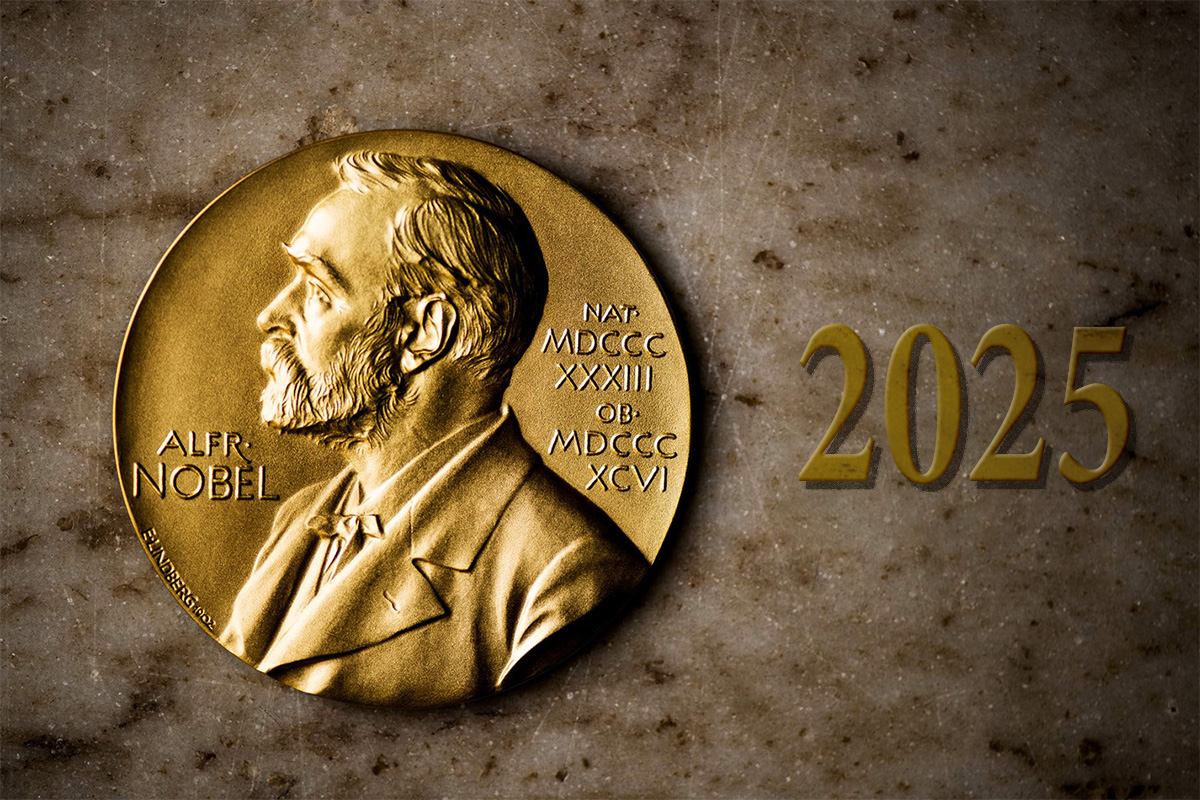
Photo by: Oleksandr Makhmud, 2018. Art design: Olena Burdeina (FA_Photo) via Photoshop
No sooner had the solemn music faded in the Stockholm Concert Hall, where the annual Nobel Prize ceremony takes place, than a diplomatic scandal erupted. The Venezuelan government announced the closure of its embassy in Norway — apparently in protest against awarding the Peace Prize to Venezuelan opposition leader María Corina Machado.
THE NOBEL PEACE PRIZE: THE PRIZE TRUMP REALLY WANTED

C
ommenting on the closure of the Venezuelan embassy, the Norwegian Ministry of Foreign Affairs reminded that the awarding of Nobel Prizes is independent of the Norwegian government. The Nobel Committee, in turn, stated that the prize was not an «anti-Venezuelan act». On the contrary, it was awarded to Machado for her «tireless work in promoting democratic rights for the people of Venezuela and for her efforts toward a just and peaceful transition from dictatorship to democracy». However, the Venezuelan government’s views on dictatorship and democracy apparently differ from those of the «committee members».
To be fair, the Nobel Committee’s decision disappointed quite a few people. As is known, there were as many as 338 candidates for the 2025 Peace Prize! Among the nominees was Yulia Navalnaya, wife of the late Russian opposition leader Alexei Navalny, who died in prison. She was one of the bookmakers’ favorites. But perhaps no one was more upset than U.S. President Donald Trump, who openly declared that he was a contender for the award.
And why not, as American television hosts joked, if even Obama has a Nobel Peace Prize, though he did nothing to earn it? The real irony, however, lies in the fact that the current U.S. president could not possibly have been considered for this year’s award — it recognizes achievements made in 2024. Meanwhile, Trump’s peace initiatives, regardless of how one may judge them, began only in 2025, following his official inauguration.
MACHADO MANAGED TO TURN IT AROUND…
Trump’s statements following the Nobel ceremony hardly matched the image of a peacemaker. He first proclaimed that Maduro’s days as Venezuela’s president were numbered and announced plans for a military operation against the «narco-state», then later expressed doubts about the wisdom of direct confrontation. In any case, the situation turned out to be quite peculiar: María Corina Machado and Donald Trump ended up not only as rivals but also as allies in their opposition to the Maduro regime. A White House representative even reproached the Nobel Committee for «placing politics above peace».
To get out of this awkward situation, Machado in turn declared that she was dedicating her award «to the suffering people of Venezuela and to President Trump», the latter «for his contribution to the cause of democracy». Trump proudly reposted this message on his social network, Truth. Thus, if viewed informally, it turned out that the American president and the Venezuelan opposition leader had, in a sense, shared the prize—three ways, if one counts the suffering people of Venezuela as well.
However, setting aside the contest with Trump, it must be admitted that María Corina Machado’s biography is quite «Nobel-worthy». Her family’s troubles with the regime began back under President Hugo Chávez, who expropriated her father’s business.
HUGO CHÁVEZ CALLED HER A FLY
Machado holds a degree in industrial engineering, a master’s in finance, and is a graduate of the American Ivy League’s leadership training program for global political leaders. After founding the non-profit organization Sumate, she focused on election monitoring and became actively involved in the movement to remove Hugo Chávez from the presidency of Venezuela. From then on, meetings at the highest levels in the White House alternated with legal prosecution at home.
However, this did not stop Machado from becoming a member of parliament, where she continued her relentless criticism of Chávez’s regime from the rostrum. The Venezuelan president was quick to retaliate, rejecting Machado’s proposal for public debates by declaring that «the eagle does not hunt flies». He again accused her political organization of receiving funding from the United States.
The conflict between the government and the opposition was so intense that it often escalated into mass brawls in parliament, during which Machado sometimes suffered serious injuries. Things did not get easier under Chávez’s successor, Nicolás Maduro. After María Corina addressed the UN «as Panama’s representative» with a report on Venezuela’s situation, she was first stripped of her parliamentary seat, then accused of plotting a coup and attempting to assassinate Maduro, and finally banned from running for office altogether.
FORCED EXILE
All this unfolded against the backdrop of a severe food shortage and the introduction of a rationing system. The authorities blamed the United States, claiming it had launched an «economic war» against Venezuela. The opposition and Machado, in turn, blamed Maduro’s regime.
In 2023, she announced her candidacy for the presidency, calling for cooperation with the United States and criticizing Venezuela’s rapprochement with Russia. That same year, a court once again banned her from participating in any elections or holding public office for the next 15 years.
The subsequent events are well known from the news: Maduro won by an 8 percent margin, his opponents alleged widespread fraud, and their claims were supported by the United States. Mass protests erupted, followed by a crackdown on prominent opposition figures, many of whom went into exile.
Machado, however, continued her struggle against the regime in a semi-underground capacity, urging her supporters to boycott the presidential elections. During one of the protest rallies, María Corina was kidnapped by unidentified individuals, who later filmed a series of videos with her before releasing her. For security reasons, Machado now lives outside Venezuela but continues to defend freedom and democracy.
THE NOBEL PRIZE IN LITERATURE: KRASZNAHORKAI — THE PROPHET OF THE APOCALYPSE
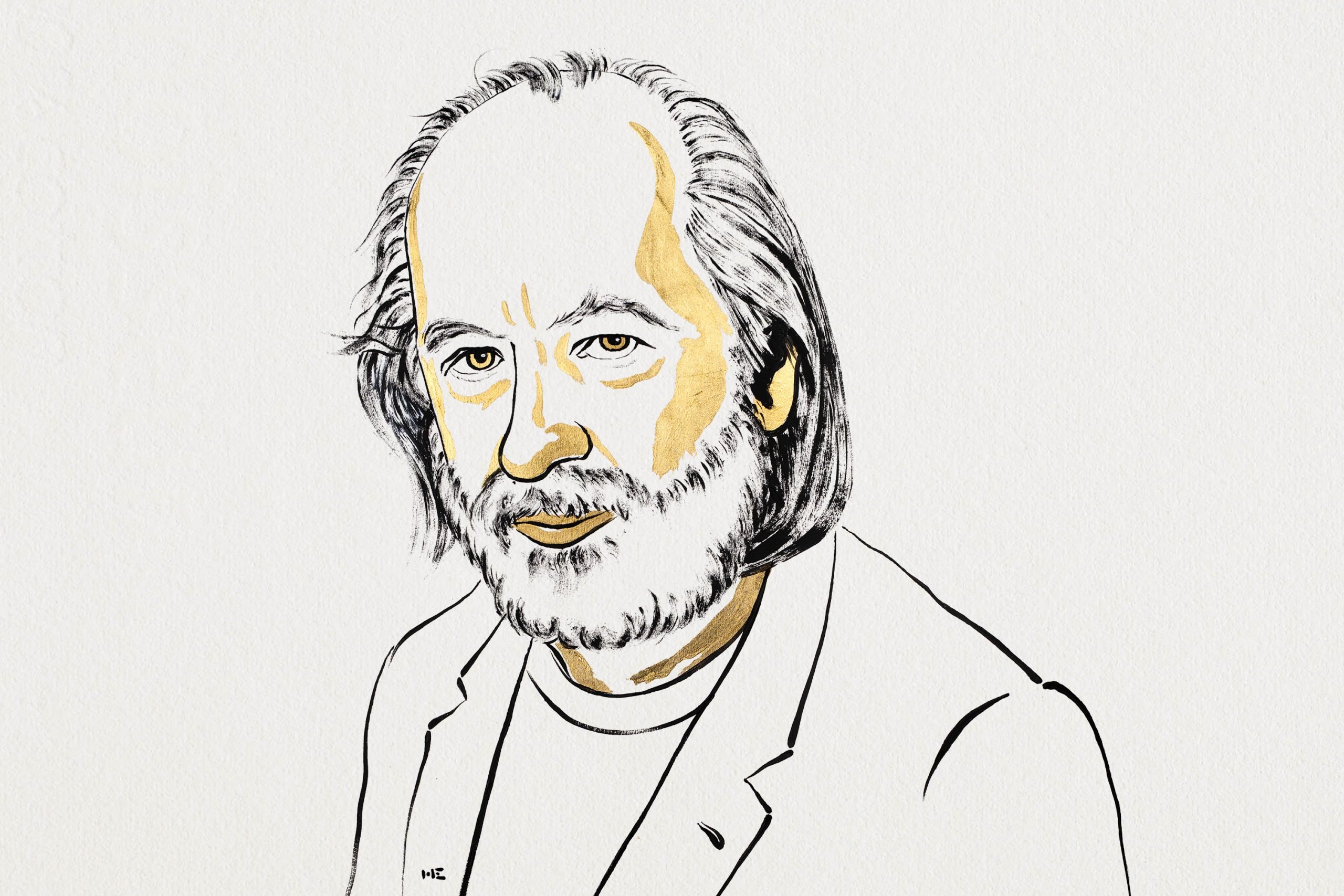
The biography of the 2025 Nobel Laureate in Literature may be less turbulent than that of the Peace Prize winner, yet suspicions of political undertones have not been avoided here either. Hungarian writer László Krasznahorkai became the 17th author of Jewish descent to receive the Nobel Prize in Literature and the second Hungarian writer ever to be honored with it.
The first was Imre Kertész, who wrote about the Holocaust and regarded his Jewishness as «a defining factor of his destiny». Krasznahorkai, meanwhile, was awarded the prize «for his gripping and visionary works that, in an age of apocalyptic terror, affirm the power of art».
The author is often compared to Gogol and Melville, Borges and Beckett, Kafka and Bernhard — for his penchant for absurdism and grotesque excess. Krasznahorkai has repeatedly confessed that he would never have begun writing without his encounter with Russian literature, naming among his predecessors not only Gogol but also Bulgakov and Dostoevsky.
Critics note that he seems to transplant 19th-century characters into modern realities and circumstances. As a result, his works emerge as «compelling and visionary creations affirming the power of art amid apocalyptic horror». And since humanity today hardly suffers from a shortage of apocalyptic sentiment, Krasznahorkai’s works feel strikingly relevant — even though the peak of his fame at home came in the 1980s, when Hungarian filmmaker Béla Tarr adapted his novels Sátántangó and The Melancholy of Resistance.
ONE SENTENCE — ONE NOVEL
The English-speaking world discovered Krasznahorkai only in the 2000s. In 2015, he received the International Booker Prize, and in 2025, the Nobel Committee hailed him as «a great epic writer of the Central European tradition».
However, for most readers, getting acquainted with his work requires considerable effort. The plot in his novels is often purely formal. Krasznahorkai’s texts are complex, rich in quotations and references to other works, and filled with endlessly long sentences. For example, in his novel Sátántangó, inspired by his memories of participating in the castration of piglets, there is a chapter consisting of a single sentence stretching over 14 pages. His novel Herscht 07769 is, in fact, one single sentence spanning 400 pages.
Krasznahorkai’s prose is also marked by deep gloom, hopelessness, and existential doom. It paints a bleak vision of our civilization’s future: nothing can save it, and things will only get worse. «The heavens are sad» — this epigraph from his novel War and War aptly captures the writer’s prevailing creative mood.
ANOTHER «POLITICAL» LAUREATE?
Since 1987, László has not lived in his homeland and has spoken extremely critically of Hungarian Prime Minister Viktor Orbán, calling his regime «a madhouse with an inhuman face». He also rejects the Hungarian government’s neutral stance on the war between Ukraine and Russia. Despite the harsh criticism directed at him, Orbán still found the strength to congratulate the writer on his Facebook page — though briefly and formally — calling him «the pride of Hungary, the first Nobel laureate from Gyula». «Congratulations!» the prime minister added.
The fact is that in April 2026, Hungary will hold elections, which, according to Orbán, will decide «the nation’s future, its freedom, and sovereignty». For the EU leadership, the Hungarian prime minister, with his strongly sovereigntist tendencies, remains a highly inconvenient partner. It is likely that Brussels expects the newly crowned Nobel laureate, Krasznahorkai, to play the role of an unyielding critic of the «Orbán regime» ahead of these elections. One can only regret that politics has lately become the spoonful of tar that too often spoils the taste of the Nobel honey.
- NOBEL PRIZES 2024: The Literature Prize for «A Unique Understanding of the Connection Between the Soul and the Body»
- NOBEL PRIZES 2024: Economics, Medicine, and the Peace Prize
When copying materials, please place an active link to www.huxley.media
Select the text and press Ctrl + Enter