PARASITES OR ALLIES: Survival Lessons from Microbes


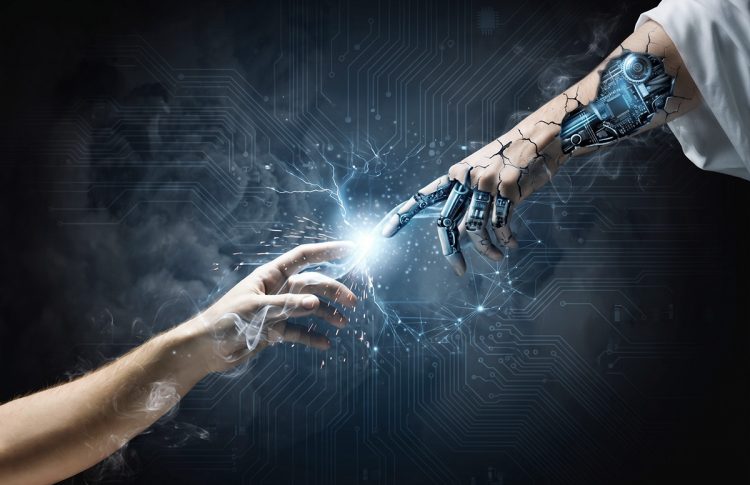
Photo by masakazu sasaki on Unsplash
The familiar world around us rests on a foundation invisible to the human eye — from bacteria and greenhouse gases to artificial intelligence. That is why it often seems to us that everything happens as if by itself. But if we overcome the anthropocentrism of our worldview, we can uncover colossal resources for development. In particular, this concerns technologies based on microbial activity, which could save us from economic and environmental collapse.
CASTING ASIDE PREJUDICES
T
his theme is explored in a new book by the brilliant writer Peter Forbes, Thinking Small and Large: How Microbes Created and Can Save Our World. Forbes generally tends to view the reality around us from an unusual angle. In his previous bestseller, Dazzled and Deceived, he described how art and nature joined forces in the service of war. Drawing inspiration from mimicry in the animal world, biologists and artists made a huge contribution to the history of military camouflage. Thus, in the twentieth century the British Royal Navy relied on the advice of zoologists, while the French army hired Cubist artists. Forbes has not abandoned his habit of dismantling prejudices in his book about microbes, which was published in 2025. He urges us to overturn our perception of microbes and see them not as enemies, but as allies.
WE BREATHE THANKS TO MICROBES
Doing so is not easy, because since the time of the first pioneers of microbial theory, such as Louis Pasteur and Paul Ehrlich, microbes have become for us almost synonymous with the word «disease». This view was reinforced largely thanks to the classic work of microbiology, Microbe Hunters, published in 1926 by Paul de Kruif. But factual evidence shows that microbes have from ancient times been on the side of life rather than opposed to it. For example, they enriched the Earth with oxygen through photosynthesis, as a result of which our planet acquired an atmosphere in which aerobic life could develop. Moreover, microbes have not withdrawn from these processes to this day. They continue to regulate the biogeochemical cycles of carbon and nitrogen that sustain climate stability and the productivity of the planet’s ecosystem.
THEY DO NOT LIVE IN US FOR NO REASON
Microbes are key components of all complex organisms, including ourselves. Back in 1967, microbiologist Lynn Margulis put forward a revolutionary hypothesis: microbes helped shape the Earth, and it is to them that we owe the origin of complex life. Life emerged on the basis of ancient symbiotic communities. At some point in evolution, cells engulfed bacteria, forming «energy centers» — mitochondria in animals and chloroplasts in plants. We literally depend on the microbes that live in our intestines or on our skin. They not only feed and reproduce in different parts of our bodies, but also protect us from disease.
MICROBIAL TECHNOLOGIES
When speaking about global environmental problems, people usually focus on what is visible — the loss of biodiversity, environmental pollution, climate change, greenhouse gas emissions. Almost no attention is paid to disruptions of microbial balance. In particular, the fact that ocean warming disrupts the symbiosis between corals and microalgae, puts reef ecosystems at risk. Yet microbes themselves can point the way out of many emergency situations. Since microbes generate weak electrical currents, they can be used to convert carbon dioxide into biofuel. This is a source of renewable energy no worse than the sun or wind, and it does not require expanding the production of solar panels and wind turbines. Nitrogen-fixing bacteria, by converting inert atmospheric nitrogen, can free agriculture from synthetic fertilizers, which demand large energy inputs, contribute to greenhouse gas emissions, and pollute the environment.
NANOMACHINES THAT GENERATE PROFIT
Modern advances in genetic engineering make it possible to create cereal crops that possess these bacterial talents — that is, can autonomously convert atmospheric nitrogen into forms necessary for their own growth. Using the term «nanomachines», Forbes paints vivid futuristic pictures in which scientists design new molecular systems. At the same time, there is no need to «reinvent the wheel»: it is enough to use biological principles that have long been established in the course of evolution.
For example, the enzyme nitrogenase, which is essential for nitrogen fixation, has been used by bacteria for billions of years. Innovations of this kind can increase productivity and ensure sustainable economic growth, create new industries, and open up new markets. As an example, Forbes cites an experiment conducted in Brazil. There, farmers abandoned the use of synthetic fertilizers and switched to co-cultivating soybeans with nitrogen-fixing bacteria. This saved Brazilian farmers more than 15 billion US dollars in a single season, while simultaneously reducing greenhouse gas emissions.
WE ARE NOT THE CENTER OF THIS WORLD!
So why, then, are such technologies so difficult to implement? Forbes sees the main problem in corporate inertia, which perpetuates environmentally harmful practices. In addition, there is the inertia of public perception, which still views microbes not as allies, but as enemies. Much of the world we are accustomed to lies beyond our understanding. Humans have evolved too far to easily grasp the «middle scale» — to truly comprehend what is happening to trees, fields, and rivers. For the most part, we are excessively «human-centric». That is why understanding atoms and ecosystems — moving to macro- and microscales — requires a different, more complex mode of thinking.
LEARN SURVIVAL FROM MICROBES
In essence, Forbes invites us to abandon naive arrogance. At first glance, humanity seems far more intelligent and powerful than microorganisms. But consider the fact that microbes have faced planetary catastrophes more than once, long before humans appeared. They survived them successfully and will most likely continue to live after we are gone. The question is: which of the two — microbes or humans — should really be considered the true planetary parasites? Forbes believes that we must learn from microbes in order to evolve ethically and economically. And this, without endangering our species or the planet, can only be achieved through a rational symbiosis with the Earth.
Original research:
When copying materials, please place an active link to www.huxley.media
Select the text and press Ctrl + Enter