READER REVIEW: “THE KURIADIS SISTERS” BY SONYA KAPINUS

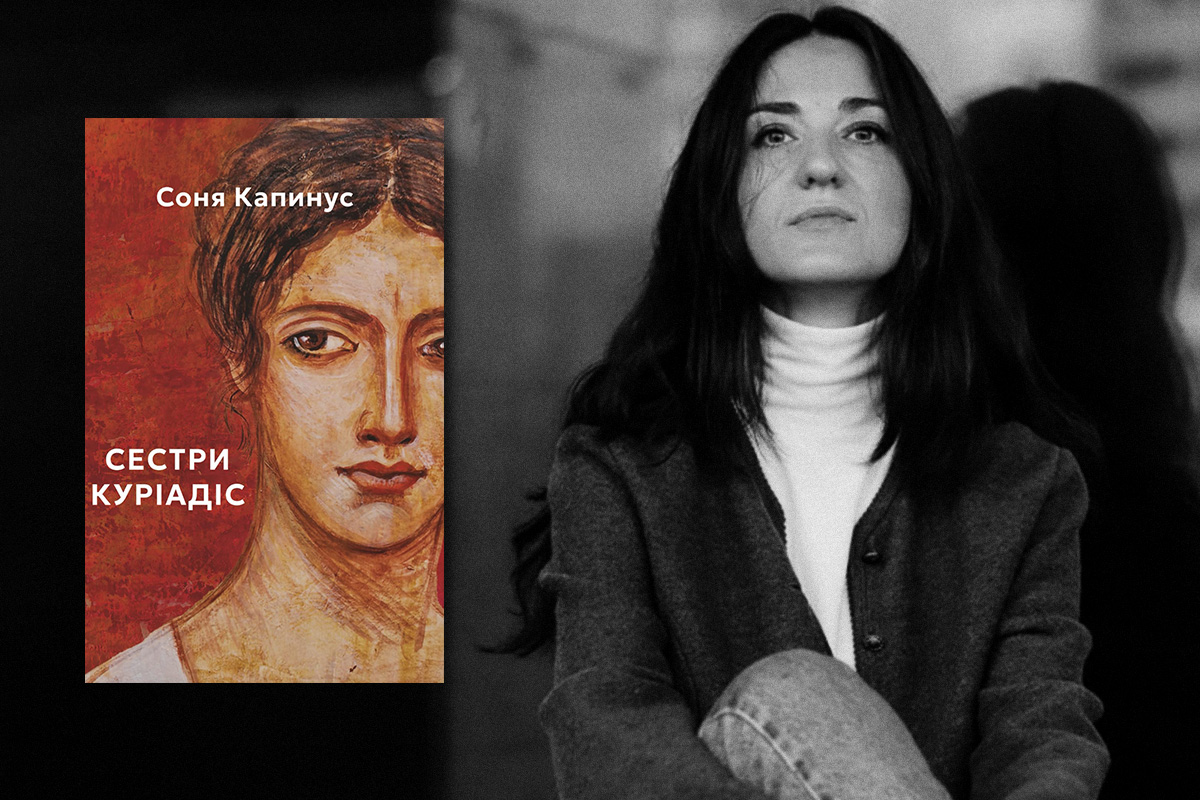
Sonia Kapinus / Photo from personal archive
When I picked up this book, I expected to read a carefully crafted historical narrative. Knowing from the author’s first novel, White Rabbits, how skillfully she works with her material, I already had one foot in 1920s Batum, gathering all my seriousness in preparation for confronting this difficult chapter of human history. But I had no need for seriousness.
“The Kuriadis Sisters” is not quite a novel at all. It is more of a game: a play on words, a game the characters play with one another, a game the author plays with the reader. Nothing in this text happens the way it is supposed to. Everything is placed differently each time, and you are left to figure out for yourself what for and why. The Kuriadis sisters do not ask whether you are ready or not, what you want or do not want — they take you by the hand and lead you into their impossible magical world, more real than anything else on earth. And there, you have to seek Death’s advice, because there is no one else to ask.
The book may appear to be written in prose, but its structure is distinctly poetic. There are deliberate repetitions that establish a rhythm — both semantic and stylistic. At first, the repetitions are surprising, but then you begin to anticipate them involuntarily and rely on them like milestones. Descriptions of appearance recur — for example, each sister arranges her hair in her own way. And this, too, partly reveals her character. Interestingly, the further the protagonist goes, the more freedom the sisters’ hair acquires. It begins with Daria — a crown of braids on her head; moves on to Lydia — a braid falling between her shoulder blades; and ends with Ksenia — hair cascading in waves over her shoulders. It is symbolic and beautiful.
The repetitions follow a triadic code — three sisters, Death visits the protagonist three times, three times the protagonist tries to marry one of them, three times he falls in love with different women. There are many characters in the novel, but not all of them have names. We do not even know the protagonist’s name. We have to make do with a description overheard in the landlady’s gossip — the city boy. Incidentally, neither the landlady, nor the landlady’s daughter, nor the old woman, the landlady’s mother, has a name either. And the most despicable villain in the novel — the man with the receding hairline — is nameless as well. Did the author simply forget? No. There was simply no room for precision and certainty in this story. They would have ruined everything. And yet, despite the gaps deliberately left by the author, the text remains remarkably cohesive.
“The Sisters…” has a highly dynamic plot, an excellent adventure storyline, and vivid, expressive characters. And not a single superfluous word! Batum is alive and recognizable — the city itself, the personalities of its people, their speech, and the atmosphere of the era are all conveyed with great accuracy. There is unmistakably historical truth in the text, unpleasant and sorrowful as it may be. And the magical element — very powerful, pronounced, active — seems to envelop that truth, surrounding it, trying to heal the characters’ suffering. Not to make them look away, not to help them escape into oblivion, but precisely to heal people, to teach them to be strong, to prevail where prevailing seems virtually impossible.
And then the sisters appear — young women with desires and passions of their own who have no intention of giving up, just as goddesses never did. One line, casually dropped closer to the end, stayed with me: “You can endlessly watch fire, water, and the Kuriadis sisters getting their way”. Despite every obstacle and convention, despite a cruel age and unfavorable circumstances — they succeeded.
But we must remember that sooner or later, even from a healing myth, one still has to return to life. To grow up, to measure dreams against reality. To let go of what is impossible. To accept what is possible. And, having finally come of age, to build one’s earthly happiness. This is exactly what happens to the sisters.
Such an ending becomes a kind of meeting point between the characters and the reader. We recognize our own coming of age, while at the same time being given the chance to immerse ourselves once again in the magic of youth, to feel its power, and then return to ordinary life with its long-forgotten colors illuminated anew.
When copying materials, please place an active link to www.huxley.media
Select the text and press Ctrl + Enter


