REVELATIONS IN SCIENCE: Iron Men in Iron Armor Behind Iron Fortresses

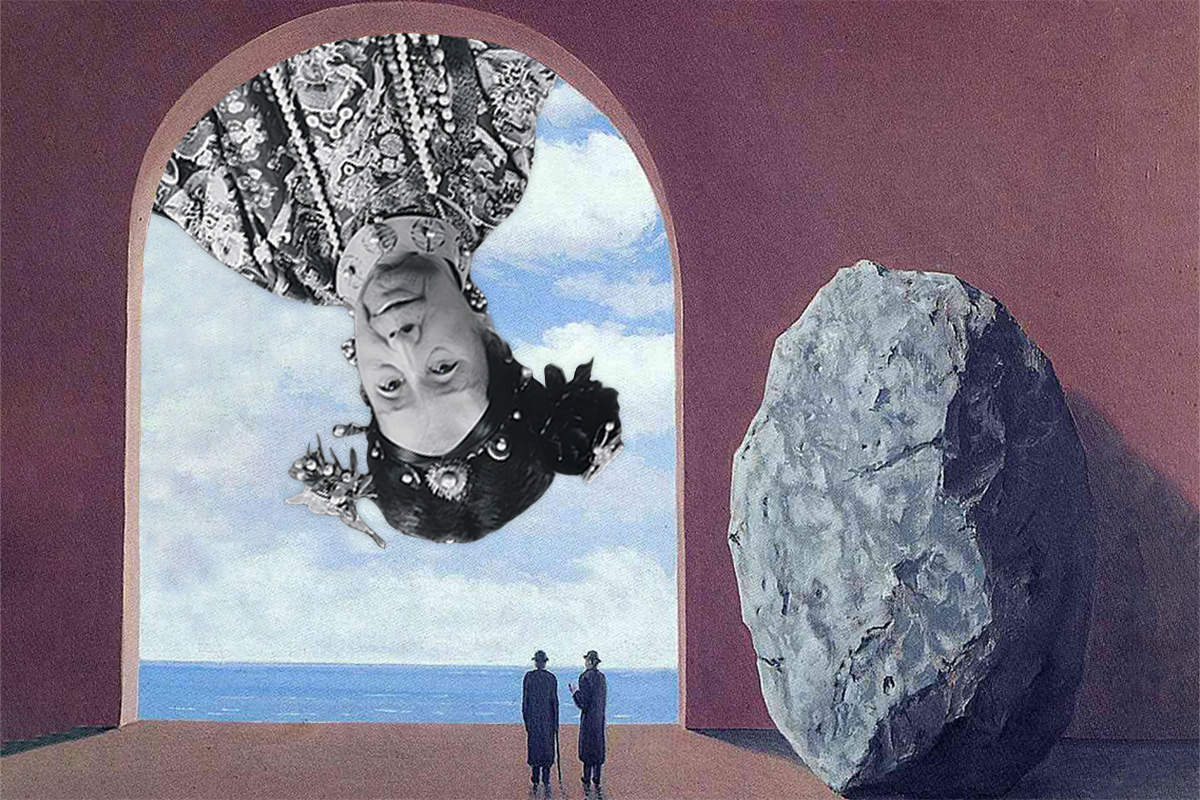
Art design: huxley.media via Photoshop inspired by René Magritte’s painting Portrait of Stephy Langui, 1961
LESS OPTIMISM
Generally speaking, we are far too optimistic in assuming that science will always prevail over pseudoscience. Yes, science reveals patterns that genuinely exist, unlike pseudoscience, which could not care less whether anything resembling its profound “revelations” actually exists anywhere in the world, even for an unlimited amount of money — as long as enough people can be persuaded that it does.
We tend to cling to the dangerous belief that distinguishing between the two is not particularly difficult: after all, scientific theories correspond to experimental results, whereas pseudoscientific ones do not. But what on earth makes you think anyone will actually show you the experimental results? They will simply tell you that the findings are such and such — or perhaps something entirely different. And how will you verify where those data came from, or whether they will ever be returned to the place they supposedly originated?
Thus, the pseudodata of pseudoscience can become a very real force that compels society to take it seriously. Admittedly, with certain nuances: pseudoscience is usually very poor at healing — or disastrously poor — but it is remarkably effective at killing. It can also spark wars with alarming ease, as happened at the very beginning of the last century (1899–1901) in what was then the world’s most populous country. That country was China, united as one vast empire, formally ruled by the emperor but in reality controlled by the Empress Dowager Cixi — a formidable figure, to say the least.
WEST IS WEST, AND EAST IS EAST…
If, in the eighteenth century, encounters between the civilizations of East and West could literally be counted on one’s fingers, the nineteenth century saw the Pacific Ocean cease to be an insurmountable barrier for European ships. Of course, the Great Silk Road had functioned successfully for millennia, satisfying the powerful desire of the wealthy in the Western world to wear underwear made of fabric so smooth that lice and fleas could not cling to it and simply slid off — although at an exorbitant price. There is even a theory that the Roman Empire collapsed because it transferred most of its precious metals to China in exchange for silk and never managed to produce goods of equivalent value with which to buy back its gold and silver.
But once goods began traveling to the ends of the earth by ship rather than by camel, the volume of trade increased many times over. Qualitative changes, however, proved far more difficult to achieve.
The achievements of European science and technology held little interest for the Chinese authorities — they were perfectly content with the way things were. When, at the end of the eighteenth century, the Qianlong Emperor received lavish gifts from Britain’s King George III, he was unimpressed by the clocks, telescopes, or even the firearms that did not yet exist in China. The emperor replied:
“I set no value on objects strange or ingeniously made, and I have no use for the manufactures of your country. Trembling, obey my commands and show no negligence!”
European armies were regarded with the same contempt, for the Chinese were convinced that their population was simply too vast for anyone to defeat.
By the middle of the nineteenth century, however, China had the opportunity to discover that something in its worldview was fundamentally mistaken. European technological achievements found little demand in the Chinese market — people first had to learn about them. Opium, on the other hand, encountered no such obstacles. Shamefully enough, Europe’s leading powers even went to war with China to secure unrestricted access to that enormous opium market.
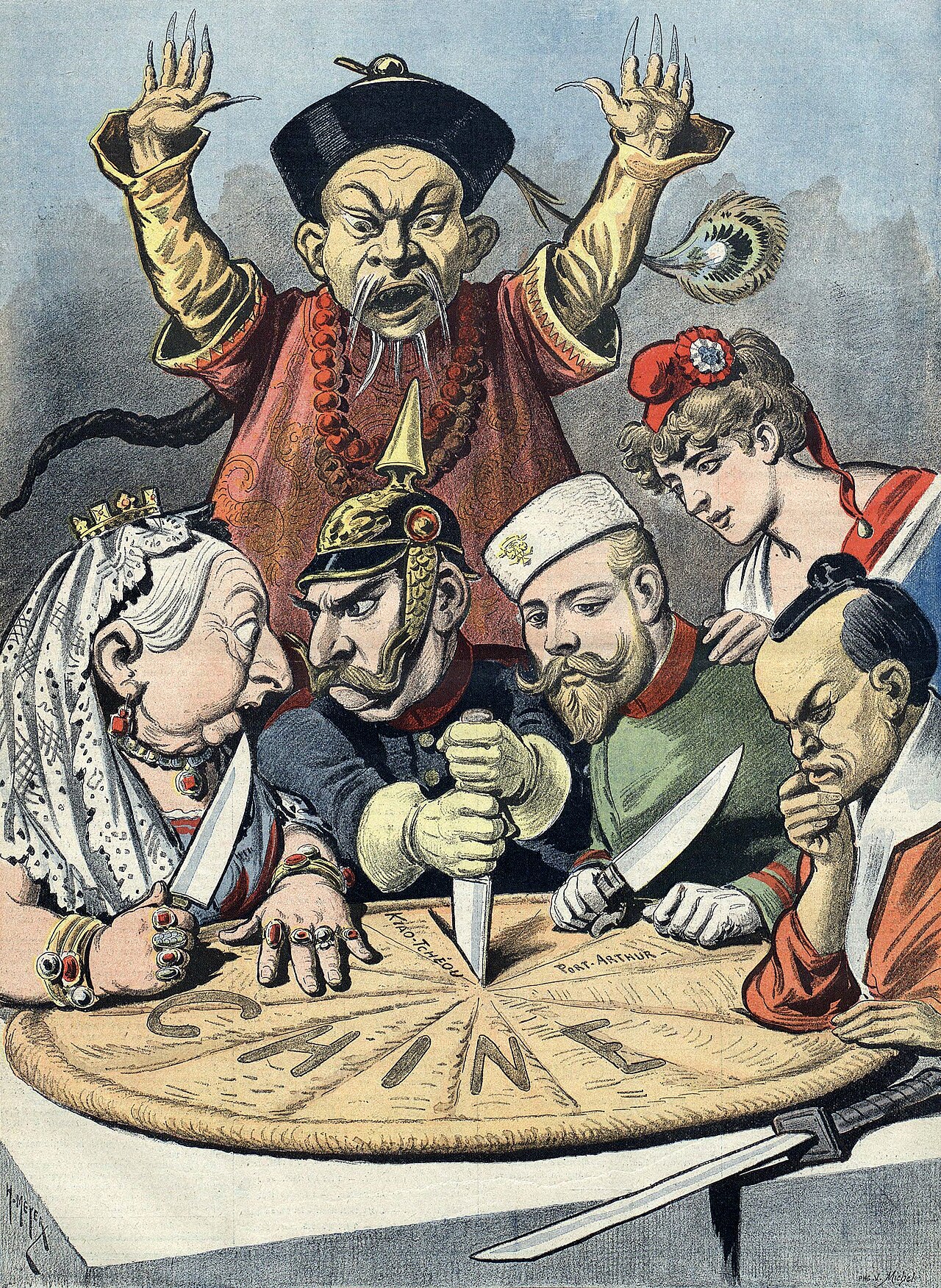
ONLY A MIRACLE CAN SAVE THEM
China suffered a crushing defeat in all of these “Opium Wars,” and Cixi, the true ruler of China, watched as the troops of the yang guizi — the “foreign devils,” as foreigners had been called in China for centuries — entered Beijing, broke into the Forbidden City, where the presence of commoners was punishable by death, and burned down the imperial Summer Palace simply in retaliation… What could Cixi have felt toward the Europeans other than hatred? Nothing at all. That, however, was of little importance. In principle, she hated everyone. Ordinary Chinese people had little reason to love the “foreign devils” either — drug dealers are rarely loved even by drug addicts themselves. There were clearly far fewer constructive ideas about how to defeat them than were needed, yet the desire to do so was overwhelming.
And when demand vastly exceeds supply, counterfeit goods and imitations inevitably seep into the market, even if they do not particularly resemble the genuine article. What the East had never lacked, however, were mystical teachings, and something was soon found that far too many people desired so intensely that almost no one had either the time or the inclination to check whether it actually worked or was merely another way of deceiving people. Sects devoted to these mystical teachings sprang up across virtually the whole of China — far too many Chinese people wanted exactly the same thing… What did these sects propose using against European armies armed with cannons, machine guns, and rapid-fire rifles? Miraculous powers, of course — nothing else could possibly help… And where were these miraculous powers to come from? What difference did it make, really, as long as enough people believed that such powers existed?
CHINA HAS FISTS OF ITS OWN
Meanwhile, China attempted to replicate Japan’s success in mastering the European legacy. In Japan, this led to a brutal civil war in which the emperor supported reform while the bureaucracy opposed it — and there the emperor won. In China, victory also went to the empress, but she opposed reform, while the relatively educated Chinese bureaucracy supported it. The empress simply appealed to the local authorities, ordering them not to obey the instructions of the clever men in the capital, and they complied. Then the army, acting on the empress’s orders, simply killed the reformers, without troubling itself too much with courts or investigations. Cixi now decided to eradicate such ideas at the root by physically exterminating those who carried them. Under her tacit patronage, the entire country became covered by a network of mystical secret societies. Most of their members — the Yihetuan — revered the shared motto “Fists of Righteousness and Harmony.” Misunderstanding the word “fist,” Europeans called them “Boxers.” Yet each individual sect usually assured those around it that it possessed its own unique magical powers, against which the Europeans would be utterly helpless.
A REMEDY AGAINST THE “FOREIGN DEVILS”
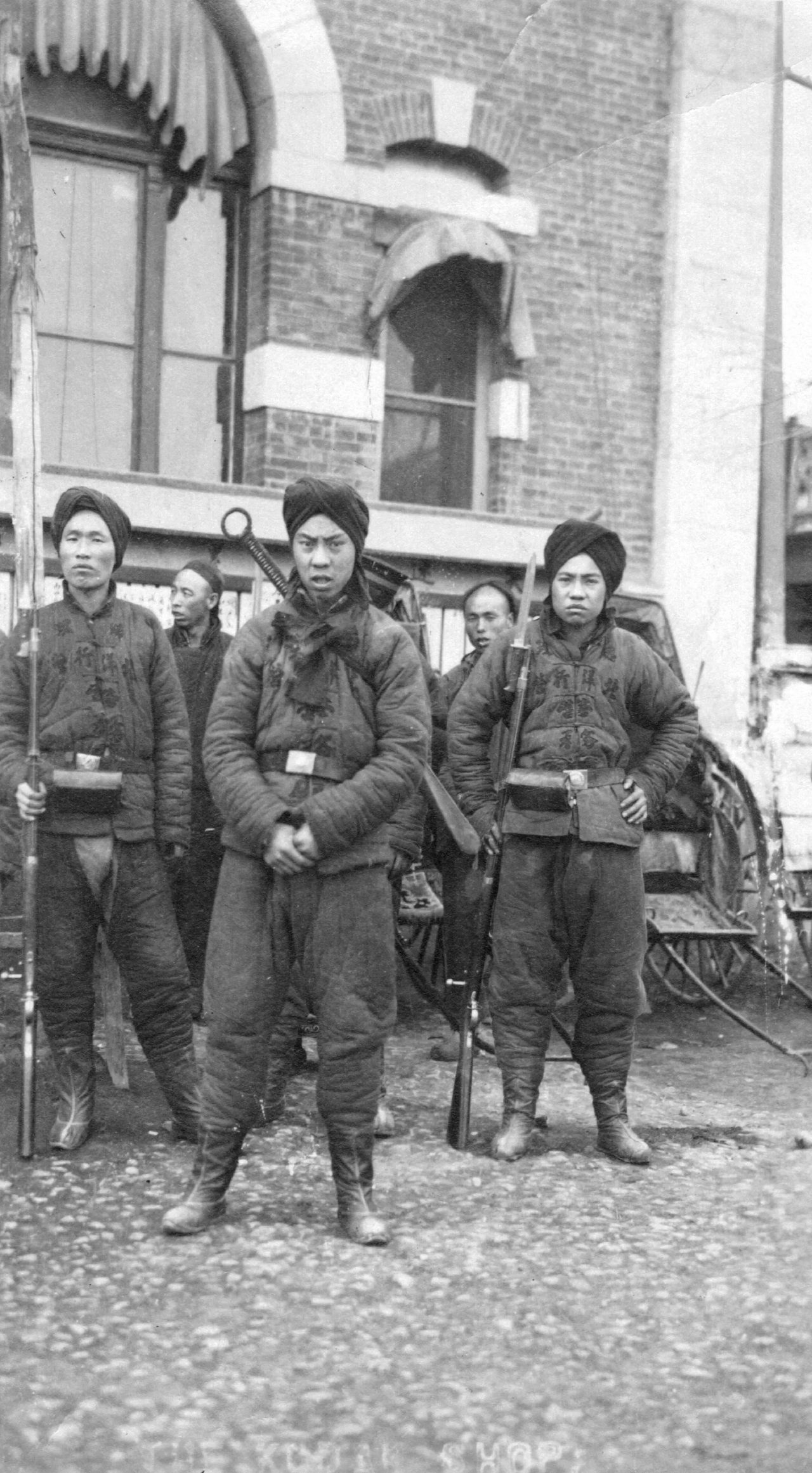
The Yihetuan included an astonishing variety of sects. There was, for example, the “Monkey” sect, whose members believed that, after reciting their incantations, they would be able to leap over houses — something the “foreign devils” were obviously incapable of doing. There was also the “Fox” sect, whose followers knew magical formulas that supposedly endowed them with extraordinarily sharp eyesight. In short, even a fraction of these spells, they believed, would be enough to strip the “foreign devils” of their technological advantage, because the foreigners, of course, did not know the incantations. And thanks to these spells, enemy bullets simply could not strike the Yihetuan — who would dare doubt such a thing? The incantations themselves were not even particularly complicated; the important thing was to memorize them and recite them at the proper moment. Here is one of them, if you are curious: “Open, gate of the northern cave, and reveal the Buddha who commands firearms. The Iron Deity sits within the Iron Shrine upon the Iron Lotus Throne; iron men in iron garments stand behind iron fortresses.”
Recite it, and let those ridiculous yang guizi burst themselves trying to fire their foolish rifles and machine guns: every single bullet would either bounce harmlessly off the brave Yihetuan or vanish into thin air. No one even thought of questioning it. How could such a thing happen at all? Anyone who doubts it should recall the crowds of followers of Maria Devi Christos or Grigori Grabovoi. Have you really never seen such things before, or do you believe there is some fundamental difference between their credulity and that of the Yihetuan?
WAR
With the direct support of government troops, Yihetuan detachments began killing foreigners living in China without regard for social status, sex, or age. Among the victims were the German ambassador and numerous missionaries. At first, they even achieved a certain degree of success — no one had expected such an outbreak of violence.
Mass hysteria is a dangerous thing. Very few people are capable of noticing that if they constantly hear, shouted loudly enough and often enough, “They are our enemies forever — treacherous, stupid, and evil!”, “There will be no peace until every last one of them is destroyed!”, or “They lie about everything, while the words of our leaders are sacred truth!”, then eventually they will hear nothing else.
Time and again, the Yihetuan mobs saw with their own eyes that European bullets did not disappear into thin air but continued to kill them. Did they stop believing their leaders? They did not.
All the Europeans sought refuge in Beijing’s Legation Quarter, which the Yihetuan, together with the empress’s troops, proceeded to besiege. They bombarded the almost defenseless enclave with whatever weapons they had at hand and stopped only when Cixi complained that the noise was giving her a headache.
To save their citizens from a horrific death, eight European powers launched a war against China — a conflict that Soviet historiography had no hesitation in calling a colonial war. Yet, for some reason, not a single one of the Yihetuan’s magical incantations worked. They were in despair, having been told that there would be no rain until every European in China had been exterminated. Still, they continued to launch suicidal attacks because they believed their own predictions, while dismissing every contradictory fact until the very last moment — until their virtually unarmed crowds were simply shot down at point-blank range.
And how did Cixi protect herself from all this? Very effectively. She suddenly declared that the Yihetuan were rebels who all had to be destroyed, and by her order the imperial army switched sides and joined the European powers. Only then did the most skeptical among the Yihetuan begin to suspect that there might have been something wrong with their magical spells. Those who could flee did so. Those who could not… you can imagine the rest.
PEACE TERMS
The negotiations that ended the conflict resulted in China paying an indemnity of approximately 17,000 tonnes (!) of silver, along with a host of accompanying humiliations, but Cixi was not particularly troubled by any of it. She declared that she had always fought against the Yihetuan, and the same people who had resisted European armies by chanting incantations about iron men in iron garments believed her just as readily as they had believed those spells.
China’s conservatives, however, no longer had the power to obstruct European innovations, and it became clear almost immediately that these innovations did China no harm at all, while bringing considerable benefits. Before long, people stopped recalling the Yihetuan uprising altogether, which is understandable: who enjoys remembering their own gullibility, malice, and stupidity?
They were wrong to forget it. Such things should not be forgotten, precisely so that they are not repeated. One must be able to recognize how such an atmosphere is created, why it is created, and how it ends. Had China remembered this lesson more clearly, many nightmares might never have become reality. But was China the only place where this mattered?
The teachings of the Yihetuan were, of course, pseudoscience in its purest form. All its defining features were present: belief in nonexistent authorities supposedly capable of solving any problem, however difficult; a pathological rejection of all criticism; confidence that merely belonging to the movement would resolve many issues, provided one believed sincerely and never attempted to verify anything; contempt and disrespect for every opponent; and a complete lack of interest in their arguments from the outset.
There is no need to look as far as China to find such things. They can be found much closer to home.
When copying materials, please place an active link to www.huxley.media
Select the text and press Ctrl + Enter


