SCHRÖDINGER’S CAT’S BOX IS GROWING: How Large Can the Quantum World Become?

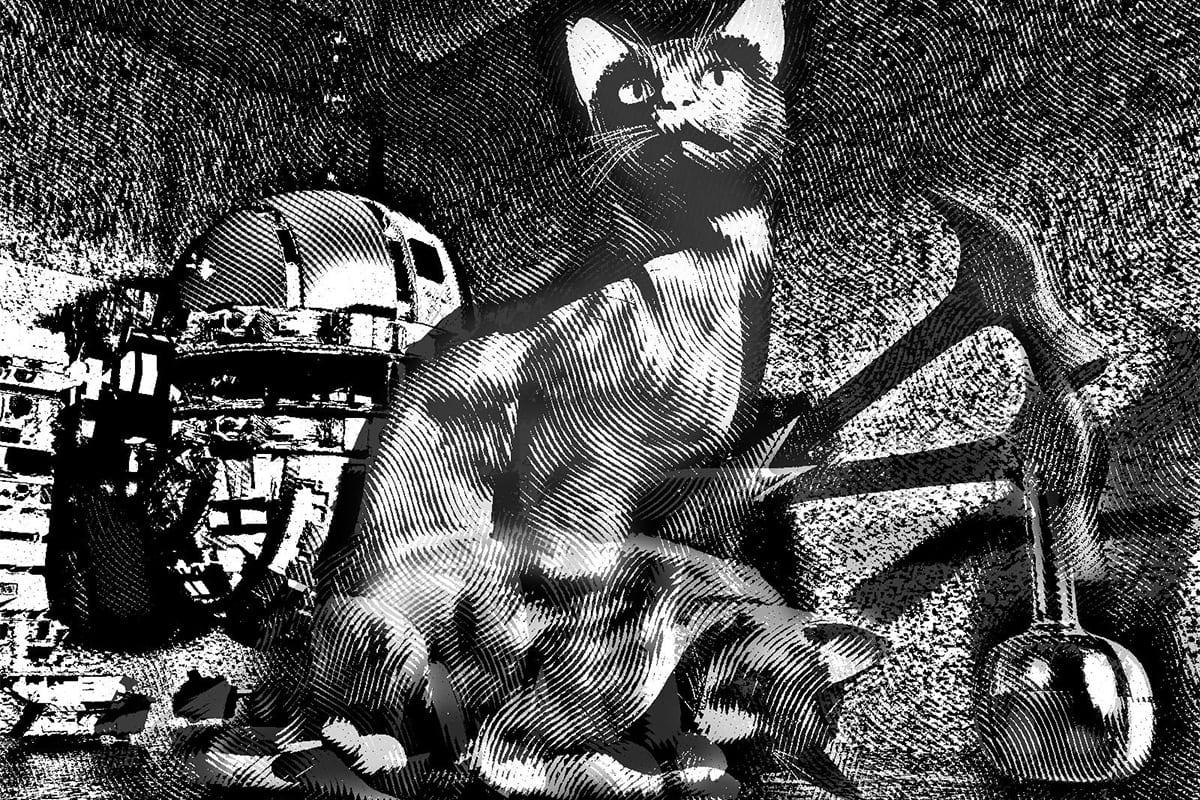
Photo source: orbitline.org
A hundred years ago, quantum mechanics burst onto the scientific scene as a theory that calculated brilliantly while refusing to explain. It could predict the behavior of particles with unprecedented precision, yet left the most fundamental question unanswered: what does it all mean? Since then, quantum equations have become an indispensable part of modern civilization, while bewilderment has remained their constant companion.
THE LARGEST “SUPERPOSITION” IN HISTORY
T
oday, a century after the birth of quantum theory, physicists are once again returning to the same question — only now with experiments that until recently seemed impossible. One of them was conducted at the University of Vienna and became the largest attempt to date to test just how far “quantum weirdness” can be stretched before it gives way to the familiar classical world. The Viennese research team succeeded in creating the largest spatial superposition ever achieved. To recall, physicists use the term superposition to describe the state of a microscopic particle before its position is measured. In other words, it is a state that defies ordinary intuition, in which an object can be said to exist in several places simultaneously.
HOW “WAVES” AND “PARTICLES” CREATE PATTERNS
To achieve this, the researchers placed clusters of metallic sodium — each containing about 7,000 atoms — into a state of superposition. Each cluster measured approximately 8 nanometers across. They can be thought of as microscopic “particles” that, while in superposition, simultaneously behave like “waves”. The scientists found that these “waves” and “particles”, although representing the same physical object, propagated along spatially separated paths. They even measured the distance between the alternative positions in the superposition: 133 nanometers. Remarkably, these two paths interfered with one another, continuously overlapping to produce a characteristic interference pattern. It is precisely this pattern that provides the experimental evidence that the object was indeed in a state of superposition.
WHERE IS THE BOUNDARY BETWEEN THE TWO WORLDS?
All of this sounds like science fiction. But quantum mechanics has always been a profoundly strange theory. Its equations contain no obvious boundary at which one could say: beyond this scale, the weirdness ends. Even more astonishing is the fact that despite the pervasive uncertainty of the quantum world, the everyday world we experience appears stable, predictable, and conspicuously non-quantum. Tables do not pass through walls, cats do not exist both alive and dead at the same time, and ordinary objects do not dissolve into spatial uncertainty. This gap — between the universality of the equations and the familiarity of everyday experience — remains one of the central mysteries of modern physics. The Austrian team’s experiment with sodium clusters is an attempt to probe the boundary between the quantum and the classical worlds — if such a boundary exists at all.
PHILOSOPHY WITH AN ENGINEERING DIMENSION
By mass, such clusters are comparable to large protein molecules or the smallest viruses. And if quantum mechanics continues to operate flawlessly even at this scale, it suggests that the familiar “classical world” may not be fundamental reality after all. What if it is merely a convenient approximation of reality — one adapted to the way we perceive the world? The significance of the University of Vienna experiment, however, extends far beyond the philosophical foundations of physics. It also points toward its practical future. Consider quantum computers, whose development has brought modern science to the threshold of a new technological era. They are widely expected to become humanity’s next major technological breakthrough. Yet such computers are impossible without maintaining collective quantum states involving millions of interacting elements.
DOES A HARD QUANTUM “LIMIT” EXIST?
If nature imposed a strict limit beyond which superpositions inevitably collapsed on their own, the prospect of large-scale quantum computing would be cast into serious doubt. Engineers developing quantum computers would face a fundamental obstacle. Fortunately, experiments like the one conducted in Vienna suggest otherwise. At least on the scales explored so far, nature shows no sign of “switching on” a classical mode of behavior.
SCHRÖDINGER’S CAT AS A METHODOLOGICAL TRAUMA
In 1935, Erwin Schrödinger proposed his famous thought experiment involving a cat. Few people today remember that his intention was not to clarify quantum mechanics, but to ridicule and parody the prevailing interpretations of the theory. As the story goes, the cat, sealed inside a box with a radioactive atom and a vial of poison, was considered both alive and dead until the box was opened and an observation was made. Nearly a century later, this seemingly playful thought experiment has lost none of its relevance. On the contrary, physicists are moving ever closer to its literal realization — albeit without involving living creatures.
MOST SCIENTISTS REJECT THE IDEA OF A QUANTUM “LIMIT”
In reality, quantum states usually collapse because of interactions with their environment — light, heat, or stray gas molecules. This process is known as decoherence. There are, however, alternative theories suggesting that quantum states collapse spontaneously once they reach a certain scale or intrinsic “limit”. According to a 2025 Nature survey, however, only 4 percent of physicists consider such models convincing. The overwhelming majority disagree. But how can we determine who is right? Only through experiment — by continually pushing the boundaries of what is experimentally possible. That, however, is far easier said than done.
TWO YEARS OF NOISE AND SILENCE
Creating such a large superposition demanded almost monastic patience from the researchers. The sodium clusters were cooled to 77 K (−196 °C) and sent through an interferometer composed of three laser gratings under ultra-high-vacuum conditions. Understanding every technical detail requires specialized knowledge. But the scale of the scientific effort can be appreciated from one simple fact: the slightest disturbance — a microscopic vibration, a tiny shift, or a stray particle — would destroy the effect, forcing the experiment to start all over again. In the end, the team spent nearly two years before observing a genuine signal. Prior to that came “thousands of hours” spent studying patterns, trajectories, and background noise without the slightest hint of interference. The researchers were close to despair, but ultimately their extraordinary perseverance paid off.
A RECORD — BUT NOT THE LIMIT
The resulting superposition exceeds previous achievements by a factor of ten in terms of macroscopicity — a measure that combines the object’s mass, the separation between its quantum states, and the duration of those states. It is not the most massive system ever placed into superposition, but it is among the most spatially ambitious. The next steps promise to be even more challenging. Heavier objects have shorter wavelengths, making quantum effects increasingly difficult to detect. Yet the authors of the study remain optimistic: only fifteen years ago, the experiment they have now accomplished was widely regarded as fundamentally impossible.
WHAT IF LIFE COMES NEXT?
The team is already considering extending its research to biological objects. As mentioned earlier, some viruses are comparable in size to the sodium clusters used in the experiment. Because viruses are far more fragile, working with them will be technically much more demanding. Even so, the idea no longer seems like science fiction. Strictly speaking, viruses occupy a controversial place in biology and are not universally regarded as living organisms. Nevertheless, an experiment of this kind would mark a symbolic milestone, carrying quantum interference into the realm where particle physics gives way to questions about life — even if only in strictly scientific terms. Just as it was a century ago, Schrödinger’s cat remains neither alive nor dead inside its box. The only difference is that, before our eyes, the box is growing larger and larger.
Original research:
When copying materials, please place an active link to www.huxley.media
Select the text and press Ctrl + Enter