TWO WINGS: about love, society, science, intelligence, and… a pelican


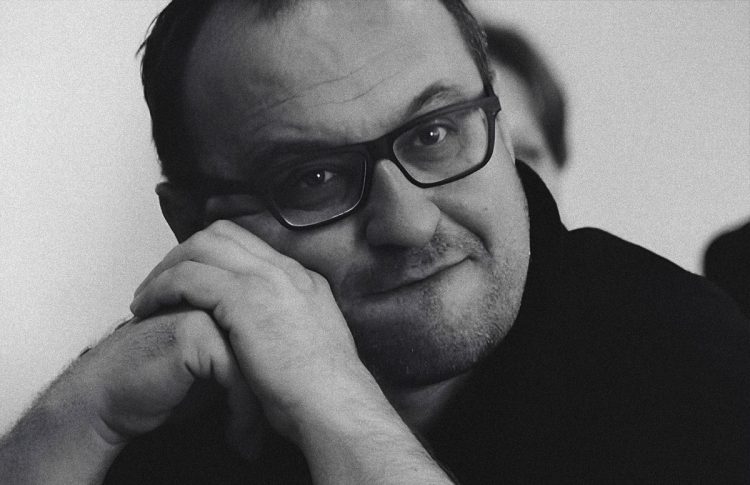
Yefim Veniaminovich Osichniuk (October 26, 1921 – April 11, 2021) – philosopher, Doctor of Philosophy
The sage Seneca, his gray hair tousled,
pronounced, as if a testament:
“Life is not measured by its length, but… by its meaning.”
Yefym Veniaminovych Osichniuk
Foreword by publisher Zhanna Kryuchkova:
The day after the first issue of Huxley was published, I received a message: “I recommend you interview one person. He’s 98 years old, a professor of philosophy with impressive distinctions, a truly remarkable individual. An incredibly fascinating conversationalist.”
And so I found myself on the way to visit a Doctor of Philosophical Sciences, author of numerous books, under whose guidance— as I would soon discover — 47 PhD candidates and 26 Doctors of Science had defended their theses.
I was going to meet a military intelligence officer who had served throughout the war and left his signature on the walls of the Reichstag.
I was going to meet a man born in a village in Vinnytsia region, who would be turning 100 in 2021.
We spent an incredible two and a half hours together.
We spoke about love, society, science, intelligence, and a pelican.
For our readers, we present the first chapter of our conversation entitled:
«MIRACLES HAPPEN OR MY PELICAN»
Yefym Veniaminovych Osichniuk greets me at the door. His movements bear the posture of a military man. He kisses my hand and invites me into his study. The first thing that catches the eye is a computer with a large monitor.
— Oh, is it yours? — I ask in surprise.
— How could I manage without it these days? It’s my main tool.
A screensaver appears on the screen — a handsome pelican against the backdrop of a body of water and fishing gear.
— Would you like me to tell you about my friend? — asks the Doctor of Philosophy.
Chapter 1 — MIRACLES HAPPEN OR MY PELICAN
I
took this photo myself. And the story behind it began four years ago. My son lives in Los Angeles. I handle flights well and travel to visit him every year for a month. I’ve been there nine times — only last year’s trip was canceled due to illness.
There’s a huge pier in the city: it stretches 250 meters into the ocean and rises 4 meters above the water. Every morning, fishermen gather there — mostly Russian-speaking Jews who moved there about 40 years ago, all of them now retired.

One morning I went to the pier. There was no one else around. I caught a small fish and waved it in the air. I look — and here comes a pelican. I tossed him the fish — he swallowed it. I threw him another — he caught it midair. I gave him my entire modest catch — thirty little fish. He ate them and disappeared behind the pier.

Then the fishermen arrived. I told them about the pelican, and they were surprised: they said they had been coming there for years and never once had a pelican approached them. Pelicans, in general, are unsociable birds — they keep their distance and avoid people.
So there we were, standing with our bait and spinning rods, chatting, when suddenly the pelican rounds the corner, takes flight, and lands on the railing — right behind my back. The fishermen were completely stunned: “Wait, are you two friends?” And I just shrugged: “No idea. First time I’ve seen him.”
I spent a month in America. Every time I showed up — the bird was already there. When I wasn’t around — he wouldn’t appear. I even came wearing different clothes, yet he still recognized me. The guys were amazed: “How does he recognize you?”
As soon as I arrive — the bird’s there. When I’m gone — he’s nowhere to be seen.
A year later, I come back and ask the fishermen: “Have you seen my buddy?”
One waved his hand: “There’s one pelican swimming out in the ocean, but far off — he wouldn’t be able to spot you from there.”
We had just set up our gear when I saw him swimming toward us. Then he took flight, circled above, and landed right behind me. I was catching fish, and he stayed close. Some new fisherman came along, also trying to offer him some fish — but the pelican refused. He’d only eat from my hands.
The third year — same story: I’m standing with my rod, and he’s right behind me. The pelican and I became a local attraction. Tourists were amazed and kept taking photos of us.
The pelican and I had become a local landmark.
But in the fourth year, I started having heart issues.
My son said, “Let’s go to the mountains, Dad.” I agreed — fishing is great in the mountains, the carp are huge! But on the way back, just a day before my return to Ukraine, I said, “Let’s stop by the pier. I want to say goodbye to my little pelican.”
We arrived, and the guys I usually fished with told me, “Ah, your friend hasn’t been seen for four months.” I said, “How can that be?”
It turned out there had been a terrible downpour. And Los Angeles is a huge city: 18 million people, millions of cars, stretching 200 kilometers along the ocean. All the filth washed away by the storm ended up in the ocean. The fish disappeared. No gulls, no pelicans — just a clean horizon.
Of course, I was upset. I said, “Tell him I said hi, if he comes back.”
I was already getting ready to leave when one of the guys stopped me: “Hey, why the rush? Stay a bit — tell us how things are, how’s Kyiv?”
We sat down on a bench and got to talking. About forty minutes later, I looked up — and couldn’t believe my eyes: a pelican was flying toward us! He landed on the pier, walked over, and… leaned against my leg. I nearly burst into tears.
All I could think was: “How is this possible? How? It’s a miracle.”
He pressed up against me — and I had nothing to give him. A Mexican fisherman came over and handed me four pieces of mackerel — he was using it for bait. I fed them to the pelican.
I stroked his head — he’s got this little crest, a sort of scruff. Then I stepped aside to look for more fish for him. I thought maybe I could buy some from someone — no one was catching anything that day.
The pelican stayed on the pier for twenty minutes and then flew away.
Before leaving, I asked the guys to keep an eye out — to see if he’d come back. I was curious.
That’s how he chose me as his friend, and our friendship has lasted four years.
The fishermen just shake their heads: so many people come and go on that pier — he doesn’t go near anyone else. When I’m there — so is he. When I’m not — neither is he.
I’ve come up with an explanation for it, though it’s a fragile one.
Remember the story journalists once reported — a military family from Kazakhstan moved to the Moscow region, and the cat they had left behind somehow found them, covering 2,000 kilometers. You’d think — how is that possible?

There’s no definitive answer yet, but I have a theory. I was once fascinated by magnetic and electromagnetic fields. I came across an article by a professor about the resonance field. He cited the example of fur seals: pups lying on the shore, while their mothers swim up and, among thousands of babies, find their own — and feed only them.
An electromagnetic field can be tracked if you have a receiver and a transmitter. When I served in intelligence, I had a radio station. Hold the frequency — you hear everything. Lose it — neither the battery hears me, nor I them.
But a resonance field doesn’t require a receiver or transmitter. It exists in the brain. And we aren’t able to detect it. If a person were to master the resonance field, they could control the minds of others from vast distances and bend them to their will. As a weapon, such a mechanism would be extremely dangerous.
If the professor is right, then the pelican and I are on the same wavelength — and we’re bound to find each other again.
Chapter 2 — TWO WINGS
Yefym Veniaminovych Osichniuk, as a former lecturer — and as we know, there’s no such thing as a former teacher — asks me:
— Tell me, in your opinion, what is the most important, fundamentally universal basis of every individual’s existence on Earth?
— Perhaps the pursuit of happiness? — I reply uncertainly.
— Throughout my life, I’ve reflected deeply on this question. I can share my concept with you.
So what, then, is the most important thing in a person’s life — that very universal foundation which ultimately defines the meaning and understanding of their existence?
As a rule, these questions are pushed aside by the search for answers to others that seem more pressing in our everyday lives.
Our awareness of this fundamental basis of real life is complicated by the fact that we do not always reflect on the very essence of life itself.
And the essence of life lies in a continuous process of satisfying, reproducing, and generating new needs — a process that occurs through constant interaction with the external world (an exchange of substances).
When this exchange and the emergence of new needs cease, life itself comes to an end.
The same applies to a human being. Our essence also lies in the continuous process of satisfying, reproducing, and generating new needs. But a human does this consciously, through production, within a system of social relations. That’s why it is commonly accepted that the fundamental basis of human existence is production. And this is correct. But production is an external factor in relation to the individual.
And no matter how much we strive to solve countless urgent problems, life compels us to think not only about these pressing issues but also about what is the most essential, fundamentally universal foundation of existence — for every individual and for all living beings on planet Earth.
This all-encompassing foundation of human existence, at every stage and level of their formation and development, is HEALTH and KNOWLEDGE.
These are the TWO WINGS that carry a person through life — from birth to their final rites.
It is time to abandon the widespread belief that the main goal in life is “power — money — wealth,” a notion that drives many to sacrifice so much in its pursuit — including their own honor, conscience, and dignity. People demean themselves or become aggressive, ready to commit any disgraceful acts (even to the point of endangering others’ lives), just to achieve their desired aim.
Without health and knowledge, the very existence of a person — and of humanity — becomes impossible.
A person with strong health and profound knowledge is capable of working wonders: delving into the mysteries of the Universe, exploring the Earth and its atmosphere, seeking to understand the universal connections and laws of reality, building cities, roads, spacecraft — capable of transforming the world and themselves.
A person with strong health but lacking sufficient knowledge is forced to navigate life through trial and error, constantly encountering insurmountable obstacles and collecting new bruises and injuries along the way. They move through life as if in a fog, hoping to find some kind of guidance to reach their goals.
A person with vast knowledge but lacking health can, at best, pass that knowledge on to someone who will put it into practice — or live in the hope that their health will return.
That is why health and knowledge are the TWO WINGS that carry a person, like a bird, throughout the entire flight of their life’s journey — from birth to their final rites.
Only through health and knowledge, drawing on the understanding of the objective laws governing the development of nature, society, and human thought, can a person transform the world and themselves according to their needs and interests.
This means that within the very complex and multifaceted system of human activity, the issue of health and knowledge — and the ways to address it — must take one of the highest priorities.
We are used to thinking of material production as the basis, the foundation for the emergence, existence, and development of society. And this is indeed true.
But it is no less true that it is healthy and intellectually developed individuals who carry out production, create new tools, implement new technologies, and realize new discoveries that accelerate the pace of development.
Only the presence of health and knowledge makes a person a creator and transformer of the world of their existence — of their own life.
This vital issue has become especially critical in Ukraine.
The country is facing a situation where neither a child nor an adult, without the necessary — often substantial — sum of money, can receive medical care, even in the most critical moments, when a patient’s life hangs by a thread.
For many doctors, the Hippocratic Oath has been cast aside. Pharmacies have turned into profit-driven offices, concealing affordable yet effective medications and selling expensive but often ineffective ones. And this crime is being committed with the silent consent of the powers entrenched in authority.
It is becoming evident: while the state spends vast sums on building Holodomor memorials — often distorting historical truth — it is, through the hands of doctors and pharmacies, carrying out genocide against all those who are ill, from newborns to the elderly.
The outgoing government, under the guise of healthcare reform and improving working conditions for medical personnel, instead of caring for the sick — was shutting down hospitals in villages.
Patients were transported to district hospitals over broken roads, only to face yet more monetary extortion upon arrival.
A similar picture has emerged in the field of education.
Capable, talented, and innately gifted children who cannot afford to pay for their studies are being lost to society — along with their potential to become highly educated, highly qualified specialists and inventors, driven by a creative thirst for scientific discovery.
In institutions of higher education, the teaching of social sciences has been drastically reduced — as if the development of society, the most complex system in the entire universe, could be governed without science.
When speaking about the future, it is essential to ensure that the remuneration of education and healthcare workers is the highest — for they do not produce things, they shape the HUMAN BEING.
We must not forget that the physical potential of a society is determined by the physical potential of the individual, and the intellectual potential of a society — by the intellectual potential of the individual.
That is why the wings that carry a person must be reliable, resilient, and strong.
When copying materials, please place an active link to www.huxley.media
Select the text and press Ctrl + Enter