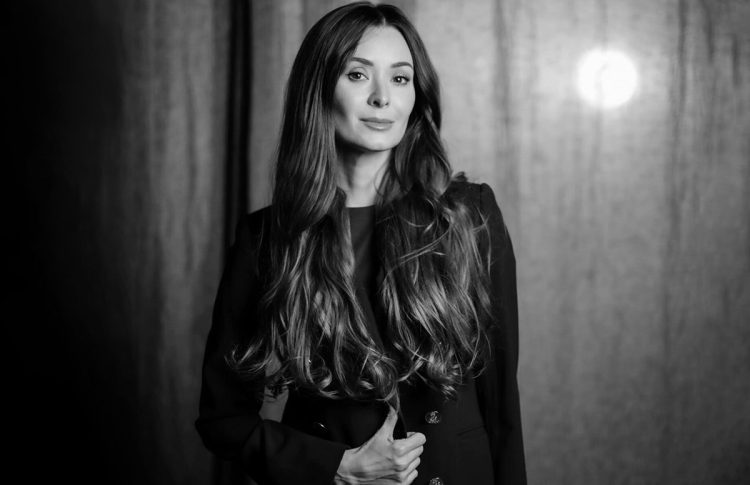
YEVHENIIA BLYZNIUK: Sociology in a World That Cannot Be Predicted

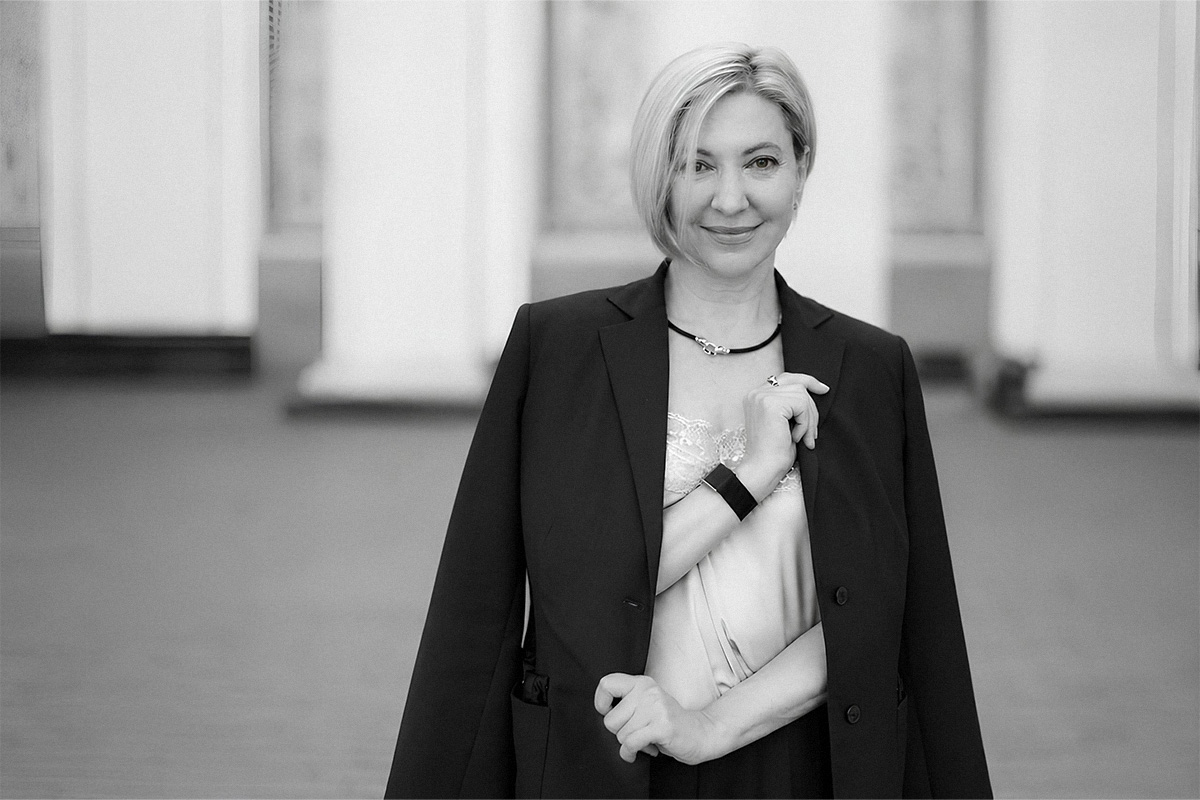
Photo from the personal archive
SHORT PROFILE
Name: Yevheniia Blyzniuk
Date of Birth: February 16, 1974
Place of Birth: Kyiv, Ukraine
Profession: Ukrainian sociologist, marketer, researcher of social processes and consumer trends
There is a long-standing dilemma in sociological practice: how to pursue speed without sacrificing depth of understanding. Behind the façade of rapid data collection, there always remains a deeper layer of fundamental social laws. In an interview for the Huxley almanac, Yevheniia Blyzniuk, founder and director of the research company Gradus, discusses the specifics of working with data, the sociology of conflict, the transformation of institutional trust, and the adaptability of Ukrainian society.
FAST DATA — “FUEL” FOR SLOW THINKING
T
he world is accelerating dramatically — driven by digital technologies, the digital environment, and social media. The demand for rapid sociological data is steadily increasing, but it does not negate the fundamental laws of society. We therefore have two different dimensions of understanding: one provides us with a rapid snapshot, while the other requires extended periods of time to integrate the available data into a broader framework for understanding social processes. Incidentally, the natural sciences develop in much the same way. Physics, for example, constantly supplements established laws and concepts with new data. Modern technological tools that allow sociologists to obtain large volumes of information quickly significantly enhance our ability to identify the points at which change enters society.
Among Gradus’s clients are Western universities that study complex social processes. For them, we carry out full cycles of rapid measurement. For example, we study the attitudes of a particular group of migrants, surveying them every month over the course of six months. Then, based on these data, researchers — working in their own slow, academic mode — draw substantive scientific conclusions about where exactly the world is heading. This is an entirely different pattern of work. In fact, our company serves as a supplier of “fuel” for large-scale sociological research. Social experiments that we conduct on behalf of universities or research institutions also serve as such “fuel”. People are placed in specifically modelled situations in order to examine their possible reactions in detail.
DANIEL KAHNEMAN’S LESSON AND THE LIMITS OF STATISTICS
Sociology never forgets the possibility of error, which is why it always seeks to account for it statistically: the larger the sample, the smaller the margin of error. Any science, of course, has its limitations. The task of a researcher is to keep pushing those limitations toward the unknown, expanding the boundaries of our understanding of social processes. The accuracy of primary data collection is extremely important because it determines the accuracy of the final conclusions. This is usually tested by how consistently the results can be reproduced in subsequent studies. There are instruments such as the well-known global international studies, including the World Values Survey.
These are thoroughly validated instruments that have been used for many years, and their results are fully reproducible. But even Nobel laureates sometimes make mistakes. A widely known example is Daniel Kahneman, who had the courage to acknowledge methodological errors in his famous work. It was a call for self-reflection on his part — to keep checking ourselves constantly. Finding an error and adjusting one’s own methodology is part of a healthy scientific process. For a true researcher, as for a samurai, there is no final destination — only the path of continuous improvement of oneself and one’s tools.
THE ROMANTICIZATION OF BIG DATA AND STEVE JOBS’S CREATIVE INTUITION
In general, uncritical thinking can be extremely costly. We remember how giants such as Google and Coca-Cola once invested enormous resources in market research and yet made serious miscalculations. This happened at the very peak of the romanticization of Big Data. The idea was that numbers, unlike people, never lie. Therefore, forecasts should be made not by asking people questions, but by relying exclusively on the analysis of their digital behavior. This turned out to be a false assumption. We can indeed identify specific digital patterns, but no amount of Big Data in itself tells us anything about motivation: why do people behave the way they do? It is no coincidence that Steve Jobs refused to make creative decisions based on opinion-poll data.
I also advise my clients against acting in this way — consumers cannot do the creative work of developing or improving a product for you. That would almost inevitably be a mistake, because it is very difficult to draw out from people what they truly want. By contrast, information about what they do NOT want will be as clear and candid as possible. If you have strong expert intuition and well-developed business competencies, you will understand what response a company should give to the needs of its target audience. Scanning “points of need” is a promising field of research. It makes it possible to model prototypes for solving a problem. Only after that does it make sense to test the finished solution on potential consumers: “What do you think of this idea?”
“SYNTHETIC” PEOPLE CANNOT KEEP UP WITH CHANGES IN REAL PEOPLE
Forecasting is an extraordinarily complex field. Once, in the early 2000s, there were genuinely high-quality forecasting tools, but back then we were dealing with stable markets. Today, our entire world is a vast field of unpredictability. Human behavior is influenced by an enormous number of factors, the context changes continuously, and those changes instantly alter subsequent reactions. It seems to me that AI can help here with processing certain large-scale models. But the range of factors that the system must take into account has to be controlled by an expert operator. An attempt to remove the human being entirely from this process carries the risk of enormous errors. Today, only the living human brain and expert intuition are capable of fully calculating, comprehending, and interpreting the complete picture of society.
There is currently a trend in the research industry toward creating “synthetic people”. These are simulators designed to reproduce in detail the thoughts, intentions, or responses of real consumers. “Synthetics” can imitate their real-life prototypes extremely well — but only as of today! In a day or two, the context will change, and the model will no longer be relevant. The living link between rapid shifts in a particular person’s moods, intentions, and everyday circumstances still cannot be fully modelled digitally. We are capable of modelling what has already happened, rather than what is unfolding right now. Our forecasts often look slightly backward, much like generals who are always preparing for the last battle.
UNEXPECTED LANGUAGE PRACTICES AMONG UKRAINIAN YOUTH
A real discovery for me was the actual language practices of Ukrainians that emerged while our company was carrying out one of its projects for the Ministry of Culture. We were trying to determine which language people use in public situations and which they use at home. It is clear that there is a very rapid shift toward Ukrainian in the public sphere — many citizens have consciously chosen this practice. At the same time, a certain inertia persists in everyday life, and many people continue to communicate in the Russian language they are accustomed to. What surprised me was that young people’s consumption of online content extends far beyond a choice between Ukrainian- and Russian-language products. In reality, young people today consume far more English-language content than Russian-language content. For me, this is an indicator of very important changes. The discussion about linguistic independence and the consistent reduction of the influence of the Russian cultural sphere now has new input data. We have a real opportunity to shift Ukrainians toward high-quality English-language content. This significantly expands the overall information space, enriching it with worldview-shaping content from the cultural sphere toward which we, as a state, aspire to move. The Ministry gained a practical understanding of which direction it can follow in its day-to-day public policy.

BYZANTINE CODES AND THE LIMITATIONS OF INGLEHART’S MAP
At one time, Ronald Inglehart’s famous cultural map (World Values Survey) sparked considerable debate. On these charts, we always found ourselves within the boundaries of a notional “Orthodox civilization”, together with Russia, Belarus, Moldova, and Bulgaria. Long before Inglehart, Max Weber had argued that the dominant religion influences the value structure of society. Researchers continue to document this influence today. Even though Europe’s “Protestant belt” has shifted significantly toward atheism and secularization, its basic cultural and mental frameworks have remained largely unchanged.
The situation in Ukraine is similar. The dominance of the Moscow Patriarchate on Ukrainian territory is coming to an end, but historically we belong to the sphere of Byzantine cultural codes, overlaid with the psychological and social traumas characteristic of the post-Soviet space. On the other hand, the enormous changes that have taken place during the years of independence distinguish Ukraine significantly from its former neighbors in the Soviet Union. It is important to emphasize that Inglehart’s model was developed when the world was entirely different, and scholars are now debating its shortcomings. Moreover, WVS data were collected before the start of the full-scale invasion, although they were published after 2022. In other words, they do not yet capture the tectonic impact of the major war, which we will see in future studies.
Numbers should not be trusted blindly; one must always understand the methodology and the context. Our world can be described by millions of different models. This could be called a form of statistical creativity. It is therefore not surprising that respected institutions sometimes publish data that appear contradictory. For example, the World Bank has two studies of inequality in Ukraine using the Gini index — one based on income and the other on consumption. When I analyze such reports and encounter conflicting findings, I always ask: “Who is the target audience for this publication?” Often, this is done in order to deliberately influence certain stakeholders who make important political and economic decisions.
OPTIMISM IN TIMES OF CRISIS. TRENDS AND COUNTERTRENDS
A sociologist often looks at the world through the eyes of a physician who sees a complex set of symptoms before them. As long as the organism is alive, it means that it is actively fighting and adapting. Do I see any incurable threats to humanity as a whole? Definitely not. Do I see serious threats to Ukrainian society? Undoubtedly, yes. They are associated with forced migration and security risks. Yet this crisis also contains a powerful positive impact. During illness, the Ukrainian organism is developing immunity — we are paying an extraordinarily high price, but we are permanently freeing ourselves from the devaluation of ourselves and our own country.
For virtually every pronounced trend in society, a countertrend emerges almost immediately. For example, social media are often believed to be eroding the culture of reading. Our research for the Ministry of Culture, however, disproves this. It is true that people have found it more difficult to engage with “a lot of text”. Yet against this backdrop, a huge number of young people are returning to “long-form reading” — large communities of readers are emerging on those very same social media platforms.
There is no single linear vector in society. Faith in the “magic” of AI is giving way to the conviction that a human being must bear ultimate responsibility for decisions made. Despite any strengthening of isolationism, digital access cannot be completely blocked — humanity has already transformed into a single global organism. This opens up enormous opportunities for mutual integration. A vivid example is the phenomenal popularity of Korean cinema. These films are watched not solely for their artistic value — they reveal a fascinating layer of a different everyday and cultural context.
SOCIAL GLUE: HORIZONTAL TRUST VERSUS SOVIET TRAUMA
Trust is an extraordinarily important subject of study because it serves as the true social glue of any state. In Western societies, not only religion but also business traditions played a major role in shaping a culture of trust over the centuries. Entrepreneurs shook hands and trusted one another’s word. If you broke your word, the entire market learned about it immediately, and your business was finished for good. In Ukraine, this natural layer was forcibly interrupted by the Soviet authorities. Yet 2014 and 2022 demonstrated that our society has not lost its unique adaptability and its ability to build strong horizontal ties almost instantly.
This type of trust is activated with remarkable speed during periods of mortal danger. At the beginning of the full-scale war, this phenomenon was striking. It has not disappeared since then, but has moved onto more systematic, institutional foundations. Of course, trust always operates in tandem with distrust — they form a dialectical opposition. This is most clearly visible in Ukrainians’ attitudes toward the authorities. Ukraine has traditionally recorded low levels of trust in state institutions and political figures. This is our historical “muscle memory”: for many generations, authority was foreign and occupying in the eyes of Ukrainians. As a result, people became accustomed to resolving everything horizontally, while trying to stay off the state’s radar.
This is precisely what Les Podervianskyi wrote about half-jokingly: Ukrainians instinctively dislike “the bosses”, unlike, for example, Russians or Chinese. Yet wartime consolidation is noticeably reshaping this tradition. Society is prepared to support the authorities on critical defense issues, but that support is never unconditional. As soon as controversial issues arise, manifestations of distrust and strict social oversight immediately come to the surface.
SOCIOLOGICAL CHALLENGES OF WAR AND DIGITAL ESTIMATION
Today, one can often hear the view that sociology is inevitably condemned to produce distorted data during wartime. On the one hand, this is indeed true. Sociologists currently find it difficult to describe the structure of Ukrainian society objectively and accurately — direct access to data collection from many social groups is significantly limited. Frankly speaking, the problem existed even before the war. The last official population census was conducted back in the early 2000s. There were political and economic reasons for the absence of comprehensive population records, but the war has made the problem as acute as possible. At the same time, the need to describe our target population remains. And we, as a sociological agency, together with the state and large businesses, are trying to meet that need. One method is the analysis of aggregated data from mobile operators, which they sell on the market. But in Ukraine, people typically have several SIM cards: some they use, while others they set aside.
We do not know for certain how closely operators’ data, or other datasets, correspond to reality. Yet I am convinced that we have no right to give up. On the contrary, while keeping all methodological limitations in mind, we have a unique opportunity to accumulate data and document the most complex social transformations caused by such an intense stress impact as the full-scale war. This is precisely what I plan to address in detail in an upcoming presentation at the ESOMAR International Congress. Humanity may at any time face a wide range of global-scale upheavals. The global research industry must be prepared for them. That is why it is highly interested in how we in Ukraine work with unprecedented challenges and constraints, and what methodological solutions we use to produce valid results.
NEW LABOR MARKET TRACKS AND TEAM BURNOUT
As we study Ukrainian adaptability during the war, we divide it into two types: constructive and destructive. In the first case, a person retains their agency, their ability to make independent decisions and critically assess the situation. In the second, adaptability manifests itself through apathy, slower reactions, and a fading of desires. Productive adaptability is most characteristic of people around the age of 30–35, who had already developed crisis-management skills for stressful situations in peacetime. By contrast, young people under 25, who lack such experience, fall into a state of apathy much more quickly.
When we measure employee productivity for our corporate clients, we see just how large the groups exhibiting counterproductive adaptability have become. Unfortunately, with each new year of the war, they continue to grow. Before the full-scale invasion, the most common request concerned the adaptation of Generation Z — employers were concerned that they differed from millennials in their uncompromising pursuit of work-life balance and their rejection of any personal discomfort.
Today, the situation has changed dramatically. Three distinct tracks of client demand can now be identified in the labor market. The first is total team burnout, which is a direct consequence of destructive adaptation. The second is the recruitment of “non-traditional” candidates who were previously not considered part of the talent pool. The third is systematic work with veterans — people with exceptionally difficult experiences who are returning to civilian employment.
Today, we have to stitch together completely different psychological worlds: employers within their teams, and the authorities within the state. Adults cannot be re-educated. But mapping social needs makes it possible to properly understand and take into account people’s true motives and pain. Sociology can provide tools for making decisions that will make the coexistence of different psychological worlds as minimally traumatic and conflict-ridden as possible.
When copying materials, please place an active link to www.huxley.media
Select the text and press Ctrl + Enter