10 LAWS OF TYRANNY: Kim Il-sung of North Korea

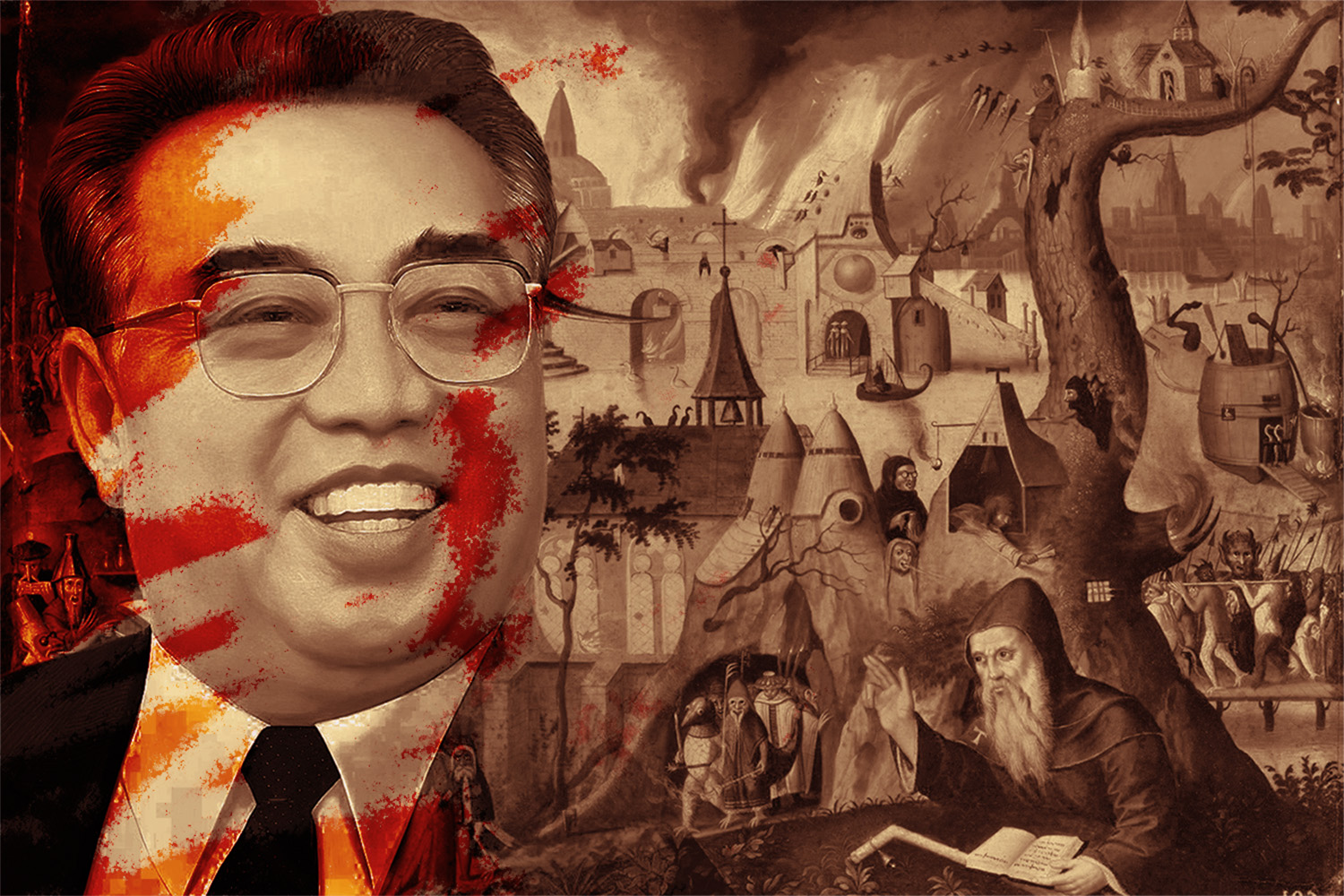
Hieronymus Bosch. The Temptation of St. Anthony, 1550 / Art design: Olena Burdeina (FA_Photo) via Photoshop
He became an almost mythical hero within North Korea yet remained little known elsewhere, having isolated his country from the outside world. His government exerted near-total control over the lives of its citizens, with their freedoms severely restricted.
To this day, North Korea remains one of the world’s most closed-off nations. Armed with nuclear weapons. And still ruled by the dynasty founded by Kim Il-sung
10 RULES OF KIM IL-SUNG’S REGIME

RULE 1. BE A COMMUNIST FROM CHILDHOOD
K
im Il-sung (born Kim Song-ju) (1912–1994) was born in a village in northeastern Korea near Pyongyang, in the family of a schoolteacher. At the time, Korea had been annexed by Japan. Japanese colonial rule was growing increasingly harsh, and in the 1920s, Kim fled with his parents to Manchuria, a region in northern China.
He spent the next fourteen years in Manchuria and attended secondary school in Jilin. Much of Kim’s early life remains ambiguous and shrouded in propaganda. What is likely true is that from a young age, he was a fervent anti-Japanese activist. At the age of seventeen, Kim was arrested for belonging to a radical communist youth organization.

RULE 2. BUILD A LEGEND OF A GREAT WARRIOR
After being released from prison, Kim became a guerrilla fighter and fought alongside the Chinese against the Japanese along the Korean-Manchurian border. It was during this period that he adopted the pseudonym Kim Il-sung («Rising Sun»). North Korea’s official biographers greatly exaggerated Kim’s role in the resistance.
According to one account, Kim engaged in over 100,000 battles with Japanese-Manchurian forces between 1932 and 1945 and never lost a single one. That would mean he fought more than twenty battles per day during that period!
Despite these dubious figures, Kim was indeed a notable figure in the Korean resistance movement and helped Chinese communists fight Japanese forces in the 1930s in Manchuria. When the Chinese partisans were defeated by Japan’s imperial army in 1940, he fled to the Soviet Union.
There, in the USSR, Kim Il-sung received military and political training — and fully embraced communism.
RULE 3. HIDE BEHIND A SOVIET UNIFORM
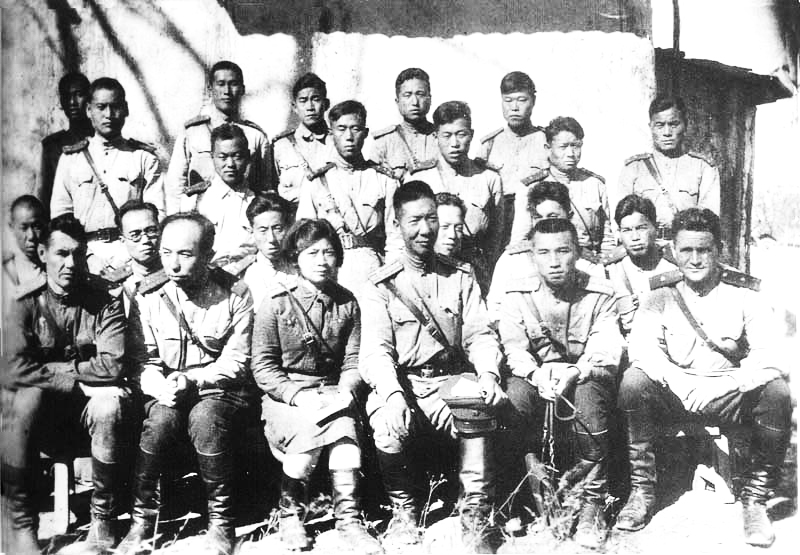
During World War II, Kim Il-sung commanded a Korean unit with the rank of major in the Soviet army.
In August 1945, Japan surrendered, and World War II came to an end. Korea was divided along the 38th parallel: the Soviet Union occupied the North, while the South was backed by the United States.
Kim returned to his homeland with other Soviet-trained Koreans, aiming to form a communist government under Soviet auspices. In October, Kim accompanied Soviet troops into Pyongyang dressed in a Soviet army uniform.
In 1948, the northern authorities held elections, resulting in the formation of a new government — the Democratic People’s Republic of Korea (DPRK). Kim Il-sung became its first Premier. It was the Soviet commanders in Pyongyang who effectively «elected» Kim.
They likely chose him because he was the highest-ranking Korean officer — and because they knew little about the other Korean candidates. Kim’s appeal to Koreans stemmed from his established ties with both the Chinese and the Russians.
RULE 4. CHERISH THE DREAM OF A UNITED KOREAN PEOPLE
As Premier of the DPRK, Kim Il-sung delivered grand speeches about reunifying the country. He dreamed of crossing the 38th parallel and conquering South Korea. He craved more power. Stalin, however, was reluctant to go to war with the United States over Korea.
But eventually, Kim Il-sung managed to persuade Stalin — through personal meetings, among other efforts — to at least approve the plan. Kim promised he could reunify Korea in just three weeks. He simply didn’t believe the U.S. would intervene. Stalin agreed.
In June 1950, Kim Il-sung invaded South Korea with weapons either bought from the Soviets or left behind by them. The invasion was initially successfu — even U.S. forces struggled to hold the line against the well-trained Korean People’s Army.
However, by September, more and more UN forces entered the war, pushing Kim’s army back north. He turned to Mao Zedong for help, and Mao, after some hesitation, sent 260,000 Chinese troops in support of North Korea.
Seven months later, the warring sides had returned to nearly the same position they started from — near the 38th parallel. Kim’s dreams of reunification had collapsed. The war devastated North Korea’s economy.
Kim Il-sung set about rebuilding it — while tightening his grip on power. He sealed off the DPRK from most external contact. Foreign newspapers were banned, and only state-run radio was permitted. By 1959, private land ownership had been abolished and farmland collectivized. Ninety percent of the industry was state-controlled.
RULE 5. CREATE THE GREATEST PERSONALITY CULT OF ALL TIME
After the Korean War ended in 1953, Kim Il-sung led a communist, militarized government that banned all forms of opposition. He didn’t hold back when it came to titles — calling himself the Great Leader, the Sun of the Nation, and more — demanding that the people see him as nothing short of a god. A staunch Stalinist, he deeply admired Stalin’s methods for solidifying absolute power.
The «Great Leader» of the DPRK had a powerful presence and was a gifted orator. He frequently embarked on «tours» around the country — usually from one of his villas to another (he had about ten). Along the way, he met with citizens. Refusing to travel by car or plane, he conducted all his journeys in a heavily armored train.
The cult of personality was drilled into the minds of North Koreans by rewriting the leader’s biography and enforcing ideological devotion. According to The New York Times, citizens were encouraged to spend two to four hours a day reflecting on their leader’s teachings. Among all national holidays, Kim Il-sung’s birthday was celebrated as the most important.
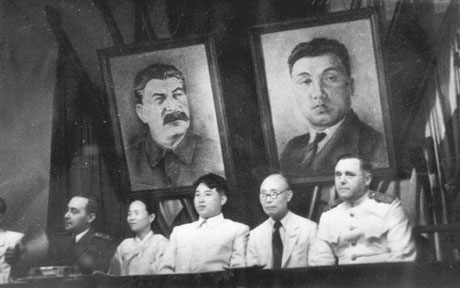
Kim Il-sung surpassed even Stalin and Mao Zedong in building a cult of personality. By the turn of the 21st century, every household in North Korea displayed portraits of Kim Il-sung and his son, Kim Jong-il — the new leader of the country. People bowed to these images every morning and evening.
Kim Il-sung’s writings — twenty-seven volumes of his teachings — became a core part of the national education system. In kindergartens, children recited thanks to the leader for their «happy childhood.» Everywhere Kim Il-sung visited, memorial plaques were promptly installed.
People were even afraid to think ill of him, convinced he could read their thoughts…
He was portrayed as a resistance hero, a great thinker (surpassing Marx and Lenin), and a brilliant theorist in virtually every field of human activity — political, economic, social, cultural, and artistic. This is what absolute power can lead to.
RULE 6. INVENT YOUR OWN IDEOLOGY
In 1955, Kim Il-sung introduced Juche — a political ideology and a religion at once. He defined it through three core pillars: political independence, economic self-sufficiency, and military self-reliance. Juche was a fusion of Marxism-Leninism, Korean mythology, and Confucianism.
From 1953 through the 1970s, Kim focused heavily on developing heavy industry and collectivized agriculture. He successfully mobilized people to work overtime. At the time, North Korea was considered a model of state-controlled development and was even economically ahead of South Korea.
Many scholars believe the concept of Juche emerged at a moment when the North Korean leadership sought to distance itself from the Soviet Union and China, both economically and ideologically.
The isolation of North Korea became a source of national pride, and for Kim Il-sung, it was a powerful tool to suppress public dissent.
RULE 7. CLASSIFY YOUR PEOPLE TO SERVE YOUR NEEDS
Under Kim Il-sung, North Korea became a true dictatorship, allowing no disagreement with the government. All 22 million citizens were classified based on their loyalty to Kim Il-sung. The «core class» (25%) lived in major cities, enjoyed better jobs, education, and food. The «wavering class» (50%) had second-rate housing and jobs, and their loyalty was monitored by internal security services. The «hostile class» was sent to forced labor, with most of its members confined to remote rural areas.
According to Amnesty International, during Kim’s rule, tens of thousands of dissidents and political enemies were imprisoned in labor camps, and a vast number were executed.
Some were executed within the camps, though the exact number remains unknown. Kim Il-sung personally oversaw the secret police, known as the Bureau of Protection and Security, which tracked the movements of every citizen — even within individual villages. Every person had an identity card and needed official permission to leave their residence or work zone.
RULE 8. BUILD YOUR OWN STATUE IN EVERY COURTYARD WHILE YOU’RE STILL ALIVE
By the 1970s, Juche as an economic strategy was already in decline. Kim Il-sung was allocating 25% of the national budget to military expenditures (compared to 4% in South Korea). His focus on heavy industry and military spending led to a severe shortage of domestic goods. Living standards rapidly deteriorated as crop yields and labor productivity fell.
At the same time, spending on monuments to the «Great Leader» soared. Pyongyang alone saw the installation of around 30,000 statues of Kim Il-sung. Figuratively speaking, there was one in nearly every courtyard.
For his 60th birthday in 1972, Kim erected a massive bronze statue of himself. For his 70th, he unveiled a triumphal arch — taller than the one in Paris. He also inaugurated the 170-meter-tall Monument to the Juche Idea, composed of 25,500 white granite blocks — one for each day of Kim Il-sung’s life from birth.
RULE 9. TURN YOUR COUNTRY INTO A NUCLEAR POWER
Starting in the late 1960s, Kim Il-sung actively supported international terrorism — primarily targeting South Korea. He backed spy networks, underground movements, and assassination attempts against South Korean leaders.
To strengthen North Korea’s global standing, Kim established diplomatic relations with over 130 countries in the Global South. North Korea became a major supplier of weapons to governments and revolutionary groups in Africa, Asia, and Latin America. In the 1980s, Kim Il-sung supplied arms to Iran during the Iran-Iraq war, as well as to Libya and Syria.
In 1994, Kim launched a nuclear energy development program. He also ordered the beginning of work on a ballistic nuclear missile program.

RULE 10. PREPARE YOUR COUNTRY FOR YOUR «ETERNAL» RULE
In 1972, Kim Il-sung ordered the adoption of a new constitution, which made him the permanent President of the country. Until then, he had served as Chairman of the Cabinet of the DPRK.
Thanks to his efforts, North Korea was admitted to the United Nations in 1991. That same year, he appointed his son as head of the armed forces and declared him his successor.
Even after his death, Kim Il-sung remained the head of state — because, according to a 1998 constitutional amendment, he was proclaimed the «Eternal President of the DPRK.»
THE END OF THE DICTATOR
Kim Il-sung died of a heart attack on July 8, 1994, at the age of 82.
After his death, his body was placed in a transparent sarcophagus inside the Kumsusan Palace of the Sun. The nation observed a mourning period of three years. Only after that did full power pass to Kim Il-sung’s eldest son, Kim Jong-il.
And who knows — perhaps Kim Il-sung still rules North Korea to this very day…
10 LAWS OF TYRANNY: Francisco Franco of Spain
When copying materials, please place an active link to www.huxley.media
Select the text and press Ctrl + Enter


