10 LAWS OF TYRANNY: Mao Zedong of China

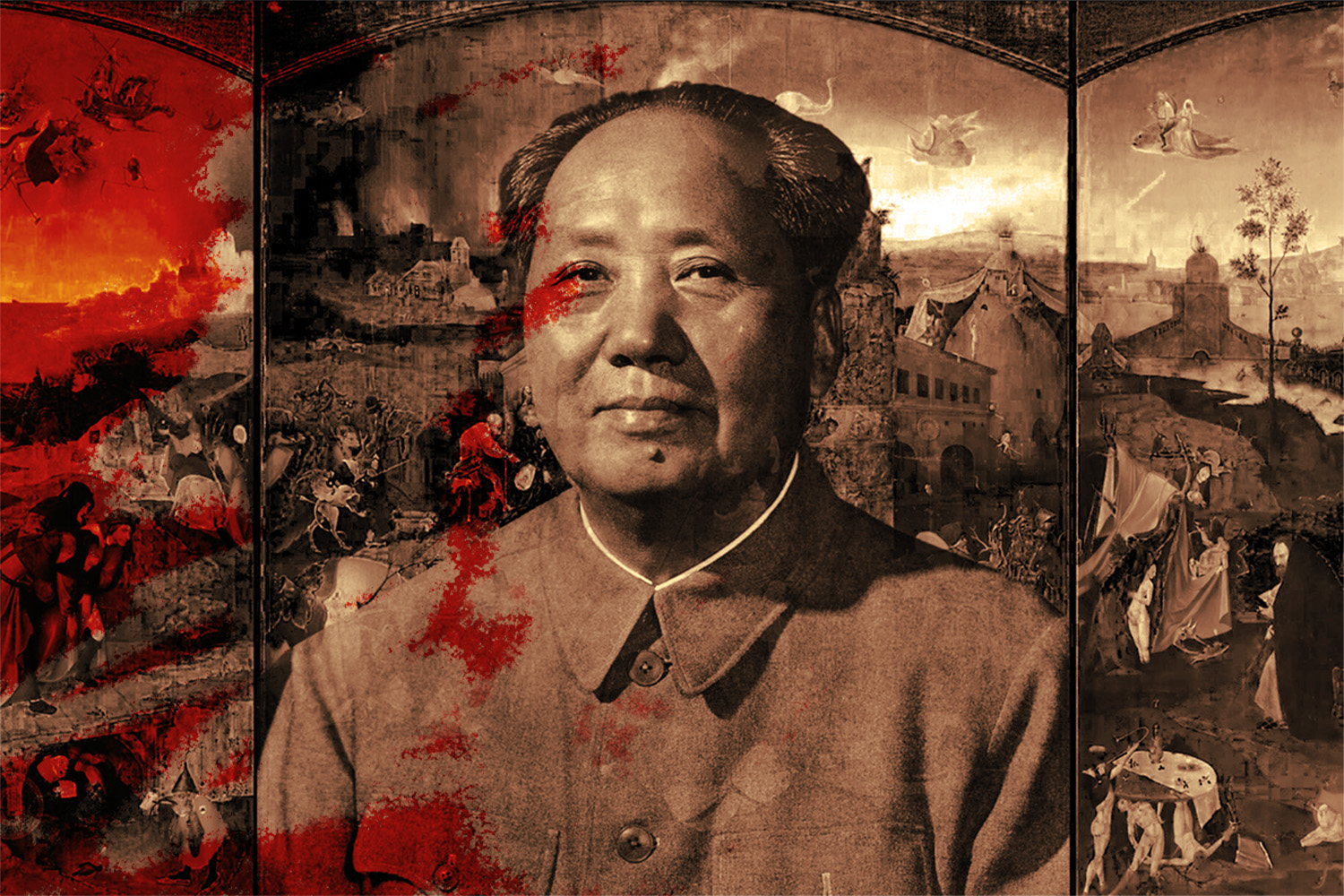
Hieronymus Bosch. The Temptation of St. Anthony (triptych), 1505–1506 / Art design: Olena Burdeina (FA_Photo) via Photoshop
What if we try to name the deadliest mass killer of the 20th century? Do you think it was Hitler? Or Stalin? No. His name was Mao Zedong.
According to the authoritative The Black Book of Communism, written by a group of French authors, around 65 million Chinese people died as a result of Mao’s repeated attempts to create a new «socialist» China. Any Chinese citizen who did not follow his path was executed, imprisoned, or starved to death.
I am a lonely monkey, wandering under a tattered umbrella, without God and without law
Attributed to Mao Zedong
10 RULES OF MAO ZEDONG’S RULE
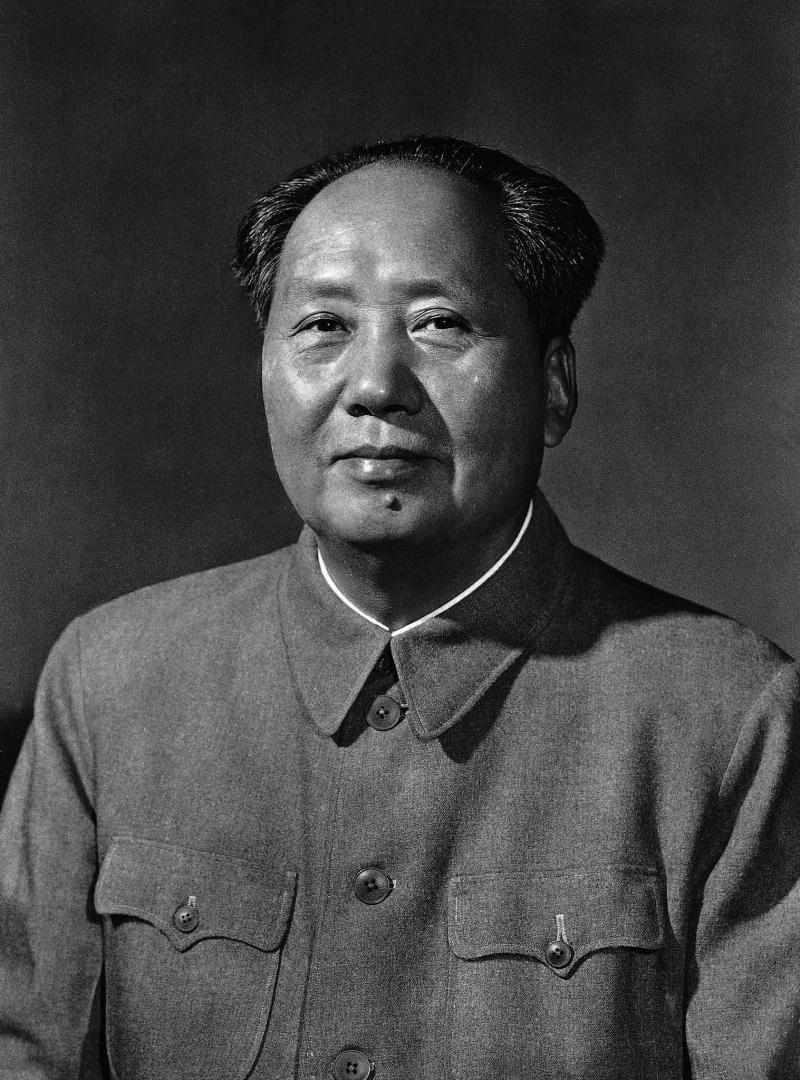
RULE 1. LEARN TO MANIPULATE PEOPLE FROM CHILDHOOD
M
ao Zedong (1893–1976) was born in China’s Hunan province into a well-off family. His father was a Confucianist, and his mother was a Buddhist. In raising their son, his parents emphasized traditional values. At the age of eight, Mao was sent to school, where he received a classical Chinese education; he memorized many Confucian texts, mastered calligraphy, and hand-copied numerous poems by ancient poets.
Even as a teenager, Mao realized he could manipulate people. He first tested this skill on his own father when the latter tried to punish him. After that, Mao left home and continued his education in the provincial capital of Changsha, where he was introduced to revolutionary ideas.
On October 10, 1911, when a revolution broke out to overthrow the Qing dynasty, 18-year-old Mao gained his first military experience. He joined the fight on the side of the republicans, who defeated the imperial forces and established the First Chinese Republic on February 12, 1912. That marked the end of Mao’s military service.
After finishing regular school in Changsha, Mao entered Peking University in 1918, where he worked for six months as an assistant to the university librarian — who happened to be Li Dazhao, one of the future founders of the Chinese Communist Party (CCP). Mao had a chance to continue his studies in France, but it would have required manual labor to support himself — something he had loathed since childhood.

RULE 2. USE COMMUNISM FOR YOUR OWN ENDS
By the early 1920s, Mao had come to believe that only a Russian-style revolution could fundamentally change the situation in China. By 1924, he was a recognized member of the Chinese Communist Party (CCP). After years spent studying the revolutionary potential of the countryside, in 1927, Mao declared that a rural uprising could mobilize tens of thousands of peasants.
Taking part in the CCP’s internal power struggle, Mao set out to develop a new form of Chinese governance — communism. This idea made Mao a unique figure within the party and brought him absolute power in the CCP by 1943.
RULE 3. FIND A PATRON FOR YOUR IDEAS
In October 1949, Mao Zedong founded the People’s Republic of China (PRC), transitioning from head of the CCP to Chairman Mao, leader of the new republic. The Soviet Union recognized the PRC, and later that year, Mao made his first visit to the USSR. The visit lasted two weeks.
A treaty of friendship, alliance, and mutual assistance was signed with Stalin. The USSR provided China with long-term loans and helped build its industrial base. In its early years, PRC policy was, as Mao later put it, «copied from the Soviets.» For the next 11 years, Soviet funding supported the young communist-leaning Chinese state.

RULE 4. CREATE COMMUNES AND TURN PEASANTS INTO STEELMAKERS
Mao launched the «Great Leap Forward» program (1958–1960) and introduced rural communes. Millions of Chinese were forcibly relocated into these communes, delivering a blow to small farmers.
According to a book based on extensive research in Chinese archives, Mao Zedong was responsible for the deaths of 45 million people between 1958 and 1962 alone. The book Mao’s Great Famine: The History of China’s Most Devastating Catastrophe (2010), was written by Dutch historian Frank Dikötter, a professor at the University of Hong Kong.
«As soon as you start collectivizing everyone — as in the army — when you begin herding people into massive people’s communes and collectivizing everything, you take away their land, their homes, their livestock, their tools; nothing is left, there’s no incentive to work, the profit motive vanishes. All that’s left is the stick; coercion and terror become the foundation of the regime, and you must force starving people to go to the fields and work for you», Frank said in an interview.
Mao’s program was driven by ideological zeal and propaganda but had no practical sense. The peasants had no experience in cooperative farming or production. Then things escalated. Peasants were led to believe they were steelmakers — and began producing steel in their courtyards using homemade furnaces fueled by firewood, which led to deforestation. Later, Mao forcibly relocated peasants to cities — leaving the fields untended.
Widespread poverty and famine followed, with more than 30 million people dying. The «Great Leap Forward» turned out to be nothing more than a dictator’s catastrophic mistake.
RULE 5. DEATH TO SPARROWS, OR THE BIRD GENOCIDE
As part of the «Great Leap», on February 12, 1958, Mao Zedong signed a decree ordering the extermination of all rats, flies, mosquitoes, and sparrows in the country. Sparrows, he claimed, were major pests in agriculture. And the Chinese, as one, leapt into action to follow the order to the letter… The war on flies, mosquitoes, and rats didn’t go well — not everyone was equipped for that. But the sparrows weren’t so lucky.
People of all ages went out into the streets, shouting, whistling, waving sheets, banging drums. The poor sparrows, unable to land and incapable of staying in flight longer than 15 minutes, fell from the sky from exhaustion — and were promptly finished off. In just three days, around a million birds were killed in Beijing and Shanghai.
In less than a year, China had two billion fewer sparrows. The people rejoiced like children. This was blind faith in a foolish idea. Opponents of the extermination could be branded «anti-party elements» — naturally, there were none.

In 1959, in a country without sparrows, the harvest was impressive — even the skeptics were surprised. True, there was an increase in caterpillars, locusts, and aphids, but people considered it a minor drawback. However, just a year later, the pests had multiplied and were devouring everything in sight.
Now, Chinese citizens were pulled from work and school to collect caterpillars. It had no effect — the insects kept reproducing. Caterpillars and locusts feasted freely while the country descended into a terrible famine.
It was then that party officials finally realized the cause. China turned to the USSR and Canada for help — requesting they urgently send sparrows. The birds were delivered to China by the trainload. With an abundance of free food, the sparrows thrived — and quickly resolved the crisis. Since then, sparrows have been loved and respected in China.
RULE 6. TO ELIMINATE OPPOSITION, CALL IT A CULTURAL REVOLUTION
The «Cultural Revolution» (1966–1976) in China was launched by Mao Zedong in 1966 with the goal of creating a «new human being». The mission was to destroy old customs, old ideas, old culture, and old habits — and replace them with Mao’s own ideology. The revolution was also meant to purge opponents within the Communist Party.
This gave rise to youth militias formed by students and schoolchildren — the Red Guards (hongweibing). They became notorious for their brutality and total disregard for human rights. In essence, they were an army of revolutionary terror.
At first, they targeted teachers and university professors, but soon, they went after everyone indiscriminately. Looting, beatings, torture, and physical extermination of people became their «work». The Red Guards unleashed terror across all spheres of life and nearly the entire country. The state system collapsed, as even party officials became their victims.
All theater performances were banned except those written by Mao’s wife. Temples, monuments, books, and statues were destroyed.
Realizing the scale of the chaos, Mao eventually brought in the military and quickly dealt with his former «assistants in power». The leaders of the factions were executed, and the rest were exiled to remote rural areas.
During the Cultural Revolution, between 1.4 and 1.6 million Chinese were killed.
RULE 7. FORCEFULLY IMPOSE YOUR THOUGHTS ON EVERY CHINESE CITIZEN
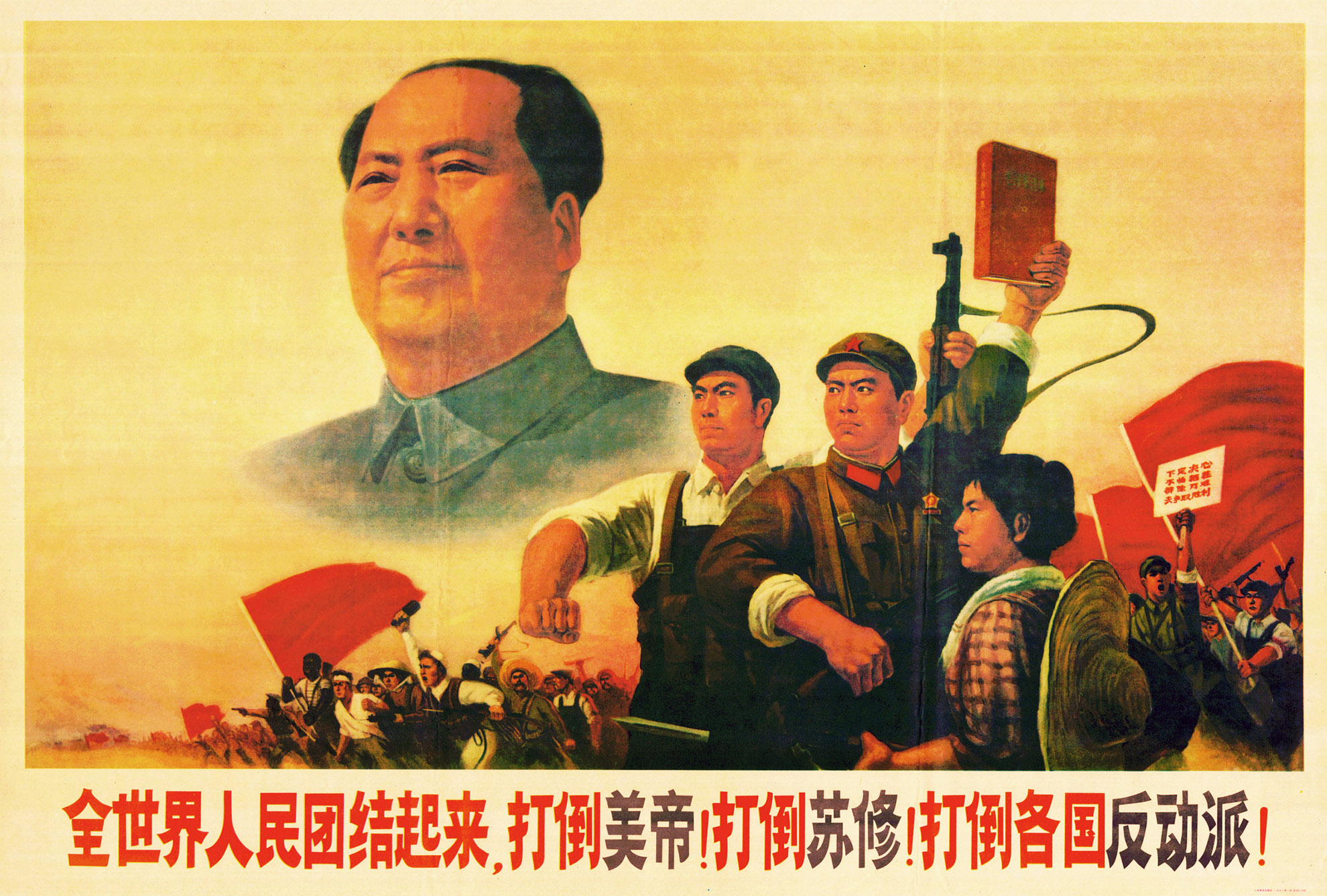
Mao’s Quotations from Chairman Mao Tse-tung (also known as the Little Red Book) was mandatory for every Chinese citizen to possess. But not only to carry — one was expected to memorize it. This collection of texts, speeches, and slogans was first published in 1966. Red Guards would greet one another using quotations from it.
They would also swarm onto buses and quiz passengers on Mao’s sayings. If someone failed, they were dragged out and beaten — often with great enthusiasm.
From 1966 to 1971, the Little Red Book reached a print run of 800 million copies — surpassed only by the Bible and the Quran.
RULE 8. IMPLANT IDEOLOGY IN THE MASSES
The lasting impact of Mao Zedong’s influence is that the People’s Republic of China remains, to this day, firmly gripped by communist ideology. Mao’s unwavering belief in communism established a system that has endured in China for generations.
The Chinese Communist Party still maintains a complete monopoly over political power and control of productive resources. Under Mao — and even long after — political dissent remains unacceptable in China.
On Tiananmen Square (one of the largest in the world), where Mao proclaimed the founding of the new republic, his portrait still hangs above the main gate. It was here in 1989 that the Communist Party brutally suppressed a protest led by Beijing students, killing hundreds of demonstrators.

RULE 9. BE A BORN PERFORMER
A Soviet intelligence officer once wrote that Mao Zedong had a magnetic presence that captivated everyone around him; at the sound of his voice, crowds would descend into hysteria. He was a born actor, effortlessly playing the roles of friend, teacher, and truth-telling tribune denouncing his enemies. Mao could charm, terrify, and deceive — but in everything he did and said, there was nothing personal. And yet, Mao’s best conversational partner was often just Mao himself.
RULE 10. LIVE LIKE A GOD
And Mao did — like a god on earth: a vast room with lantern-like windows from which he observed adoring crowds below, drawing energy from their worship and seeming to grow younger before their eyes.
Mao had all the sparrows in the country killed, used the Red Guards to purge the party elite — and got away with it. These antics only prolonged his political life. He destroyed millions of lives, yet the people continued to believe in him — and pray to him.
THE END OF THE DICTATOR
Time took its toll. Headaches, insomnia (lasting ten days at a time), impotence (and how he loved women!). The diagnosis was simple — Mao had become a neurasthenic. He lost faith in the future, feared his comrades, and feared loneliness. In the past, power had compensated for all of this. But in the end, even power proved to be an illusion — despite Mao having become the absolute master of China. After an assassination attempt, his hands began to tremble. It was Parkinson’s disease, and Mao could no longer actively participate in politics.
Mao Zedong died on September 9, 1976. His embalming was poorly done, and the body began to decompose quickly.
The village boy from Shaoshan had achieved everything he dreamed of — he became an emperor and a god, and his memory will live on for hundreds of years. But one thing the boy never considered was the price of that dream.
10 LAWS OF TYRANNY: Fidel Castro of Cuba
When copying materials, please place an active link to www.huxley.media
Select the text and press Ctrl + Enter


