10 LAWS OF TYRANNY: Fidel Castro of Cuba


Hieronymus Bosch. The Haywain, 1510–1516 / Art design: Olena Burdeina (FA_Photo) via Photoshop
He ruled for 49 years. He turned the country into economic ruins and violated every possible freedom — freedoms for which thousands fled in search of a new life. He created concentration camps and introduced a food rationing system that remains in place to this day. This is the «lawyer for the poor» from the island of Cuba.
10 RULES OF FIDEL CASTRO’S RULE
RULE 1. USE JESUIT KNOWLEDGE FOR DICTATORSHIP
F
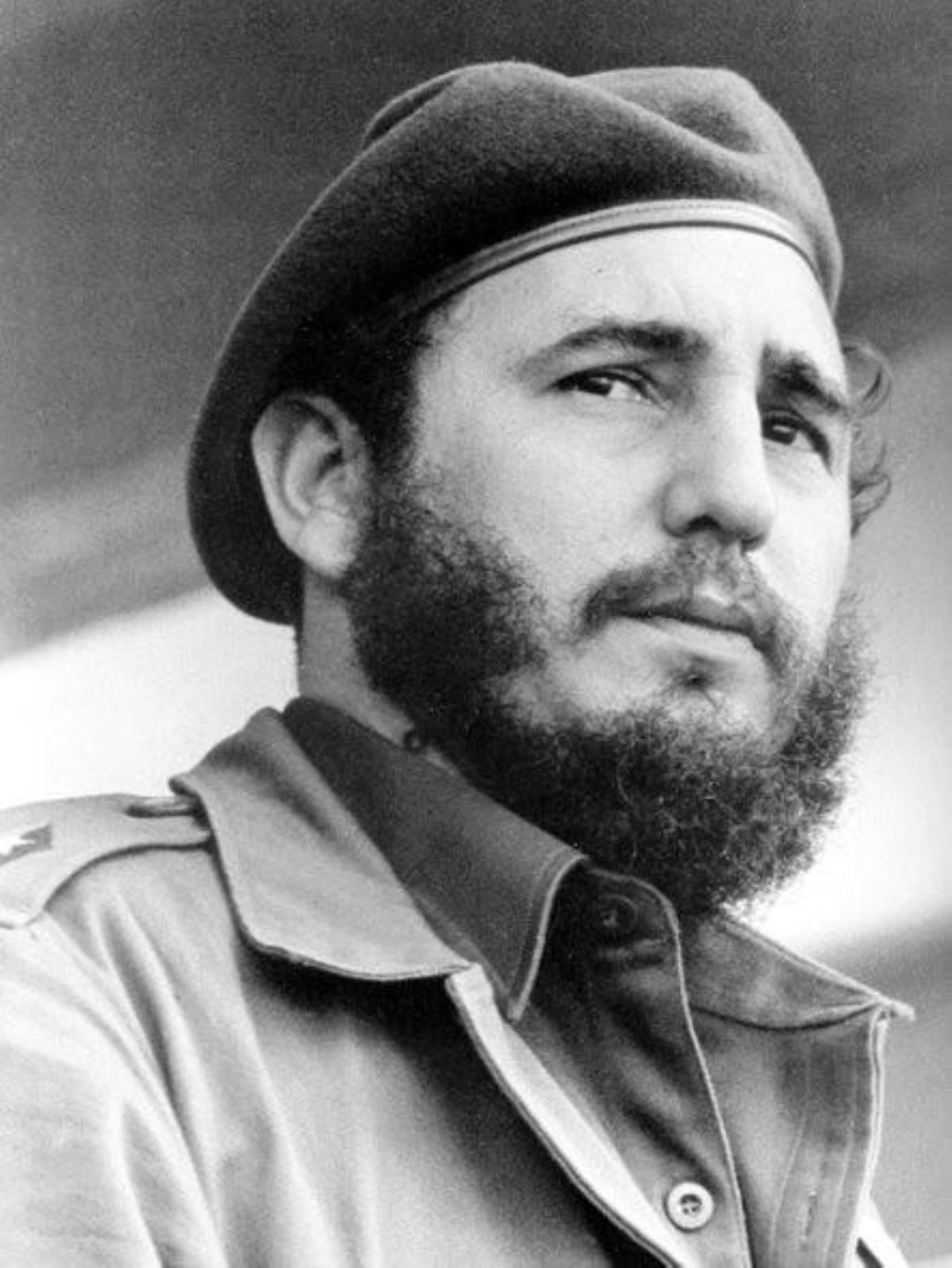
idel Alejandro Castro Ruz (1926–2016) was born into the family of a wealthy sugarcane plantation owner in Cuba. He first studied at a Jesuit school in Santiago, then at a Jesuit college in Havana. He was named the top student-athlete in 1943–44. As it turned out, the first to introduce Fidel to revolutionary ideas were the Jesuits.
In 1945, Castro entered the law faculty of the University of Havana. From his early years there, he became passionate about politics, and in 1947, he went to the Dominican Republic to overthrow General Rafael Trujillo. The following year, he traveled to Bogotá, Colombia, planning to attend a student congress — but ended up taking part in street riots. It was on the streets of Bogotá that Castro received his revolutionary baptism.
After graduating from university in 1950 and later completing postgraduate studies to become a Doctor of Law, Castro began practicing as a lawyer in Havana. His clients were mostly the urban poor.
RULE 2. TAKE THE PLACE OF THE PREVIOUS TYRANT
On March 11, 1952, a military coup took place in Cuba — power was seized by General Batista. He acted like a dictator, abolishing the 1940 Constitution. Under Batista, Cuba was a country with typical colonial dependence on the United States. Nearly 70% of the island nation’s economy was controlled by American capital.
Castro set himself a goal — to overthrow Batista’s regime. He gathered like-minded people, 160 desperate fighters, and on July 26, 1953, led a squad to storm the Moncada Barracks in Santiago de Cuba. This date is considered the beginning of the Great Cuban Revolution.
Batista was not overthrown, many revolutionaries were killed, and Castro fled, but he and his brother Raúl still ended up behind bars (they were sentenced to 15 years). Two years later, the brothers were released under amnesty and went to Mexico, where Fidel formed a revolutionary group of Cuban exiles called the «26th of July Movement».
By the late 1950s, civil war had begun in Cuba. The year 1958 became decisive. Batista realized he was beginning to lose; by the end of the year, the rebels launched an offensive in four directions (one led by Castro, another by Che Guevara), and the dictator had no choice but to flee.
In early January 1959, Fidel Castro, leading the rebel army, took power on the Island of Freedom — and remained in control for the next 49 years.

RULE 3. BE READY FOR UNLIMITED POWER
As early as 1957, during an interview with journalist Herbert Matthews of The New York Times, Fidel declared: «I’m not interested in power. After the victory, I will return to my village and practice law».
A good dictator decides for themselves how many votes they should receive in an election. Sometimes, 99% is enough. In 2008, during the parliamentary elections, Raúl and Fidel Castro each received a desired 99% of the vote in their respective districts
When Castro came to power in 1959, he was supported by the majority of Cubans: he promised to restore the 1940 Constitution, establish an honest administration, reinstate civil and political freedoms, and carry out reforms.
However, once he took control of Cuba, he focused on something else entirely: he nationalized the country’s industry and private trade, carried out radical land reforms, and expropriated American-owned enterprises and farmland.
The United States did not like any of this. First, they broke off economic relations with Cuba, and in January 1961, they severed diplomatic ties as well.
In April of the same year, the U.S. government secretly organized a force of 1,500 Cuban exiles (trained by the CIA) to overthrow Castro’s government, but the troops who landed in the Bay of Pigs were defeated by Cuban armed forces.
RULE 4. IGNORE HUMAN RIGHTS
Human rights on the Island of Freedom were violated from the very first day of the revolution. In essence, the revolution was a takeover and usurpation of power in the country by a handful of adventurers. They acted solely in their own interests. And human rights? Cubans had neither political nor economic rights.
Cuba did not sign the conventions adopted by the international community through the International Labour Organization. People often worked for little or no pay. Most survived only thanks to help from relatives abroad. So, all the revolutionary promises made by Fidel more than 60 years ago remained only on paper.

RULE 5. DO NOT KILL THE COW
In 1963, Castro’s regime banned Cubans from killing cows or selling beef without state permission. Dairy products were also restricted. Farmers were fined for slaughtering livestock and typically kept just one cow — because if a second one suddenly died, the authorities would immediately launch an investigation.
So farmers had to get creative: they hid newborn calves, raised them in secret, and if one died, replaced it with another. Some, risking up to 15 years in prison, turned to cattle rustlers.
In 2021, due to the COVID-19 pandemic, Cuba announced the lifting of this ban as part of a reform to address the country’s food shortages. Farmers were promised the right to manage their livestock freely — but only after fulfilling state quotas and only if it didn’t lead to a reduction in herd numbers.
RULE 6. BE BORN UNDER A LUCKY STAR AND FEAR NO ASSASSINATIONS
From childhood, Castro loved setting records. Later, he accidentally ended up in the Guinness Book of World Records — twice. One entry names him as the person who survived the highest number of assassination attempts — 638. The other records him as the speaker of the longest speech in the history of the UN. This happened in September 1960 — Castro’s address to the UN General Assembly lasted 4 hours and 29 minutes.
As for the assassination attempts, they occurred under every U.S. president during Castro’s rule, were initiated by the Americans, and included sniper shots, explosives hidden in shoes and baseballs, poison in cigars, and more — but not a single one was successful.
Fidel’s security always stayed one step ahead. Or maybe he really was born under a lucky star. Castro once joked that if assassination attempts were an Olympic sport, he would have won the gold medal.
RULE 7. CREATE YOUR OWN GESTAPO
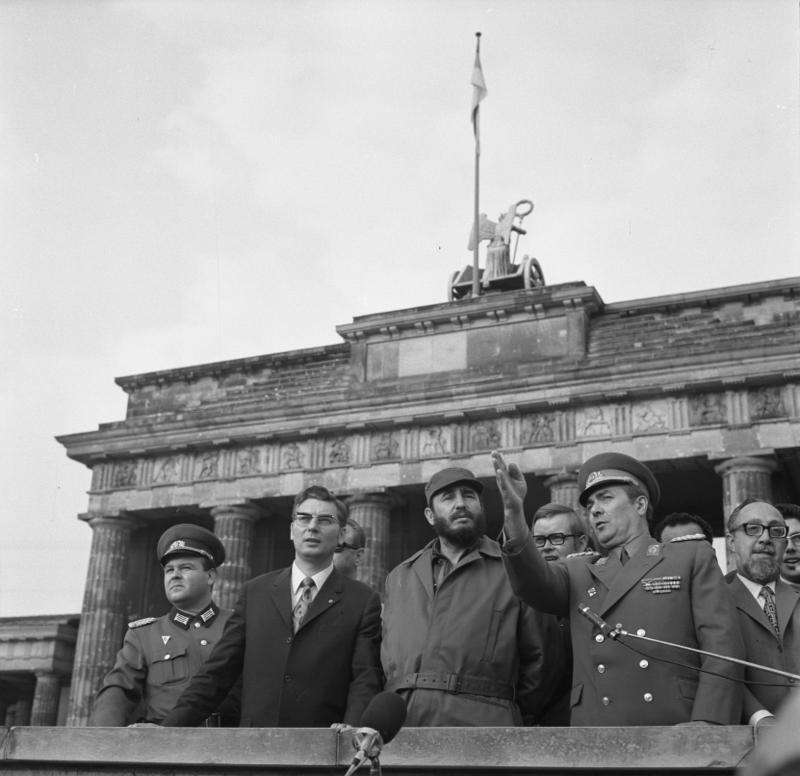
Under a communist dictatorship, strong repressive structures are essential. Such a regime cannot be defeated by peaceful democratic means. The opposition doesn’t have the strength to dismantle a hermetically sealed militarized state. Castro quickly established an efficient intelligence service.
Cubans called the Department of State Security (DSE) the «Red Gestapo». Its task was to infiltrate any organizations opposed to Castro’s rule — and then destroy them. Modeled after the Soviet system, the DSE was headed by Ramiro Valdés, a close associate of Castro. It had divisions for monitoring state employees.
The 3rd department oversaw people in culture, sports, and the creative professions; the 4th focused on organizations tied to the economy and the ministries of transport and communications. The 6th tapped telephone conversations, and the 8th monitored mail — effectively violating the secrecy of correspondence.
The DSE kept Castro’s ruling system in check. This department was a world of its own, wielding unlimited power.
RULE 8. CREATE A BRUTAL ALTERNATIVE TO MILITARY SERVICE
Castro subjected the population to terror from the very beginning of his rule. He did this through the structures he created — the DSE and the so-called Military Units to Aid Production. Since 1959, more than half a million people passed through prisons and concentration camps in Cuba; between 15,000 and 17,000 regime opponents were executed.
What were these Military Units to Aid Production (active from 1965 to 1968)? Another Soviet-style structure? No. They were the brainchild of Fidel Castro — a purely Cuban invention. In essence, they were concentration camps where «unreliable» youth deemed unfit for military service were sent.
This included people who refused military duty on the grounds of conscience, religious individuals, homosexuals, intellectuals, farmers (opposed to collectivization), and anyone labeled «antisocial» or «counterrevolutionary».
Over 30,000 people worked for free on state farms, 12 hours a day, seven days a week. The most «unreliable» prisoners were sent to the harshest sites: from sugar plantations to stone quarries. Any protest organizers were dealt with mercilessly by the guards.
RULE 9. FIND A «COMMUNIST BIG BROTHER»
Cuba began purchasing weapons from the Soviet Union, and soon, the USSR became one of its main allies and trading partners. Fidel Castro’s Cuba supported pro-Soviet revolutionary forces in the Third World — Angola, Ethiopia, Libya, Nicaragua, Syria, and others.
The USSR financed troop deployments, trained Cuban officers, essentially directed Cuba’s foreign policy, and used its human resources in various armed conflicts.
In 1962, the Soviet Union secretly deployed ballistic missiles in Cuba, which were discovered by an American reconnaissance plane. The standoff between Cuba and the U.S. reached a peak and brought the world to the brink of nuclear war.
The Cuban Missile Crisis ended after tense negotiations when the USSR agreed to remove its nuclear weapons from Cuban territory in exchange for Kennedy’s promise to withdraw American nuclear missiles from Turkey and not attempt to overthrow Castro’s regime.
Various embargoes imposed by Washington severely weakened Cuba’s economy. But even after the collapse of the USSR, Castro remained loyal to communist doctrine.

RULE 10. HAND OVER POWER TO A TRUSTED RELATIVE IN TIME
In late July 2006, Fidel Castro temporarily transferred power to his brother Raúl while recovering from surgery. It was the first time he handed over control of the country to anyone, even if only temporarily. In February 2008, the comandante officially announced he would not seek another presidential term, saying his strength was no longer the same…
In Cuba, a system was created that could be called a «communist monarchy». Fidel Castro abdicated in favor of his brother — and that marks the beginning of a dynasty.
THE END OF THE DICTATOR
In April 2016, 89-year-old Fidel Castro gave a speech at the 7th Congress of the Communist Party of Cuba. On August 13, 2016, the entire country celebrated the comandante’s 90th birthday, and on November 25 of the same year, Fidel Castro passed away.
He lived a long and at times remarkable life — 49 of those years as a dictator.
Among the Cuban regime’s greatest «achievements» were its propaganda machine, which manipulated the people, and its system of total control over the population. If you dared not attend the farewell ceremony for Fidel… you’d be blacklisted immediately.
When recalling the man who shaped today’s Cuba, many quote a line from his famous courtroom speech: «History will absolve me». Cubans still live in poverty. The food rationing system is still in place. In elections, they can only vote for candidates appointed from above. And there is no alternative.
10 LAWS OF TYRANNY: Adolf Hitler from Germany
When copying materials, please place an active link to www.huxley.media
Select the text and press Ctrl + Enter


