11 QUESTIONS FOR UKRAINIAN SOCIETY: What Wartime Ukraine Really Wants

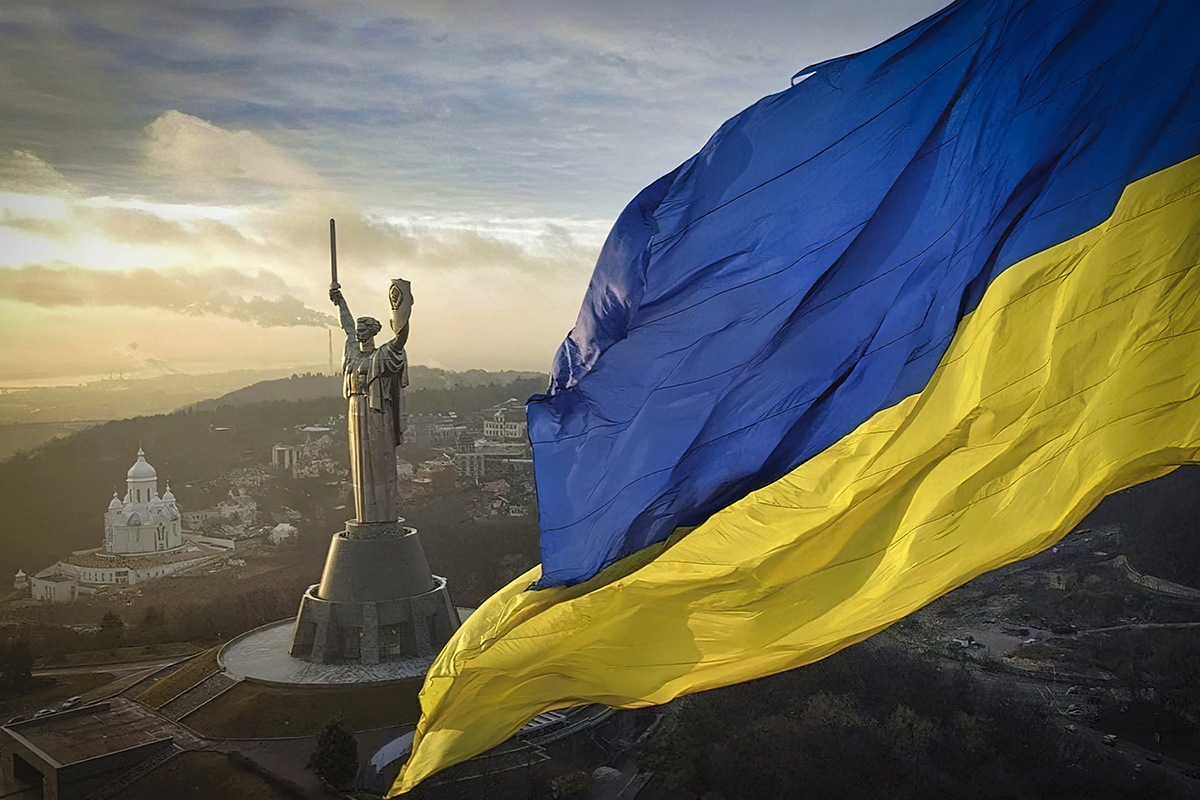
Photo by Rostislav Artov on Unsplash
What happens to a nation during war? What do Ukrainians live and fight for, and what kind of future do they dream of? The editorial team of the Huxley almanac decided to find out by initiating a nationwide sociological project, “11 Questions for Ukrainian Society”. We did not measure the ratings of parties or candidates — we spoke about the image of Ukraine’s future…
The study, conducted for the almanac by the authoritative sociological company Gradus, revealed an unexpected picture. During the war, Ukrainians are actively reflecting on the image of Ukraine, its elite, leadership, culture of memory, and values. At the same time, contrary to all the laws of extreme circumstances, they refuse to turn war into a way of life.
There is no dominant public demand for geopolitical grandeur, an authoritarian “strong hand”, or the transformation of the country into a permanent military barracks. The individual, human dignity, and freedom remain the highest values for Ukrainians. This material is for those who want to examine in detail the key paradoxes of the nation’s sociological portrait.
The “Research Profile” and information about the sociological company are provided at the end of the material.
A NEW DEMAND: FROM MILITARISM AND TECHNOCRACY TO ETHICS AND DIPLOMACY
W
ho should stand at the head of the state at a moment of supreme existential challenge? In different historical eras, nations have answered this question in different ways. The twentieth century showed that during periods of imperial collapse, wars, and revolutions, public consciousness can easily slip into archaic patterns — into the search for a charismatic “leader”, “messiah”, or uniquely qualified “professional” capable of finding quick and simple solutions to complex problems. However, an analysis of responses to the question, “What professional experience should a person have in order to become the best president for postwar Ukraine?” produced an unexpected result. A specific demand for postwar leadership is taking shape in Ukrainian society. When the war ends, for 26% of Ukrainians, the professional background of the person who takes the helm of the state will not be decisive — only their personal qualities will matter. This is, on the whole, unsurprising: decades of populism have discredited professional political status.
For 26%, what matters is not the sphere from which the leader comes, but who that person is as an individual. Ethical requirements clearly dominate, and this raises doubts that political strategists’ familiar bet on “technocracy” will work this time — it is clearly insufficient to shape the image of a national leader. Interestingly, the second most popular option is a diplomat (23%), followed by an economist (21%). This suggests that many Ukrainians associate the country’s postwar development and survival with the future president’s ability to build international cooperation while defending Ukraine’s agency and security through diplomatic means. The share of support for an economist indicates just how substantial the traditional demand for economic recovery remains.
Politicians and military figures unexpectedly received 20% and 19%, respectively, in this ranking. Apparently, society is feeling the effects of fatigue both from the cynicism of political games and from the traumatic reality of war. These two categories, which traditionally occupy a central place in the public sphere of a country at war, are likely to give way in postwar Ukraine to ethics, diplomacy, and economics. The age and regional breakdown of this choice is particularly revealing. Demand for a military president is predictably high among young people aged 18–24 (30%). Young people are more focused on security because, if fighting becomes necessary, it is they who will have to do it. However, as respondents grow older, this demand declines somewhat: to 23% among those aged 25–34, to 19% among those aged 35–44, and to 13% among respondents aged 45–54. In the 55–60 age group, the figure stands at 17%. The older generation articulates a much clearer demand for a politician (27%), an economist (25%), and a diplomat (24%), demonstrating a desire for the peaceful normalization of life. Overall, none of the four vectors — diplomatic, economic, political, or military — dominates radically. Ukrainians see the country’s postwar recovery as an immense effort that must proceed simultaneously across all major areas.
THE ETHICAL PROFILE OF POWER: STRENGTH ABROAD, LIBERALISM AT HOME
If we analyze the data presented above together with the responses to the next question — “Which qualities do you consider most important for the president of Ukraine?” — the portrait of the “ideal leader” takes on a complete form. The first question in the study showed that the largest share of respondents favored the leader’s personal qualities rather than formal “professionalism”, although 74% did support the need for a certain degree of professional experience. The second reveals the value architecture of the postwar “political contract”. We see two key leadership qualities taking priority, with almost identical levels of support: 58% — the ability to ensure the country’s security; 57% — respect for freedom, dignity, and human rights. Behind this result lies a fundamental conceptual paradox of a society at war.
We are faced with two seemingly difficult-to-reconcile tendencies: a strong capacity to repel external threats and a liberal commitment to internal freedom. Paradoxically, they coexist in the minds of Ukrainians. Society refuses to accept the false dilemma of “security in exchange for freedom”. The ideal head of state is expected to defend the country’s security in foreign policy while remaining sufficiently democratic at home to guarantee citizens’ rights, dignity, and freedoms. To act in accordance with this “two-sided” value core, the national leader must possess a specific set of essential qualities. Forty-six percent believe that the president must have the ability to build cooperation with international partners, which apparently correlates to some extent with the demand for a diplomat as president. For 43%, the leader’s moral legitimacy is exceptionally important: they expect an impeccable reputation and high moral standards.
The extent to which Ukrainians recognize the danger of internal divisions and prolonged confrontation is reflected in the number of respondents who named the ability to unite society around a common goal as one of the future president’s most important qualities — 39%. Geopolitical and strategic thinking was important to 37%, while the ability to achieve goals was important to 32%. Interestingly, an understanding of culture, history, and spiritual identity (20%), as well as pragmatic decision-making (19%), appear near the bottom of the list. Thus, humanitarian concerns give way to basic existential needs — survival, freedom, and justice.
The demographic and regional breakdown of these data reveals important nuances. The demand for ensuring security is relatively high across all macro-regions — from 53% in the west to 62% in the east. However, this indicator also has a generational dimension. While 54% of respondents aged 18–24 consider the ability to ensure security important, the figure rises to 65% among those aged 55–60. At the same time, respect for freedom and human rights is most highly valued by the most economically and socially active Ukrainians: 60% among those aged 25–34 and 59% among those aged 35–44. The gender breakdown is as follows: women attach slightly greater importance to security — 60% compared with 56% among men — while support for human rights and international diplomacy is equally high in both groups. These results point to the maturity of Ukrainian society. Ukrainians are not prepared to blindly entrust the head of state with responsibility for their fate and categorically do not want to see a dictator in the presidency. Society is looking for a strong institutional arbiter who combines firmness on external security issues with liberalism in domestic policy.
RECONFIGURING THE ELITE: FROM CAPITAL AND POWER TO SERVICE AND KNOWLEDGE
Who should constitute the state elite, enjoy the highest social status, and receive high levels of remuneration? The answers to this question point to a specific demand for the formation of a postwar social contract. For decades, the notion of elitism was associated with privileged access to power, financial capital, and media influence. During the war, it has been subjected to a ruthless public reassessment.
The top five groups whom Ukrainians today consider the nation’s elite are:
- military personnel and veterans — 36%;
- doctors — 34%;
- school and university teachers — 24%;
- scientists — 21%;
- engineers — 19%.
We can see that Ukrainians’ perception of “elitism” is not based on the possession of significant assets or high administrative positions. Elite status is granted first and foremost to two categories of citizens. The first consists of those who physically defend and save lives in the present — the military and doctors. The second consists of those who shape the human and technological capital of the future — educators, scientists, and engineers. It is telling that entrepreneurs — people who create jobs and contribute tax revenues to the budget — rank only after the top five, with 15%. This leads us to an important sociocultural conclusion: in the eyes of Ukrainians, political and economic influence is not synonymous with public recognition.
Possessing capital or access to power does not in itself confer a moral right to elite status. In the eyes of society, such status must be earned through direct public benefit, risk, and service. The war has created a social hierarchy based on merit and sacrifice rather than money and power. The military have rightly taken first place in this hierarchy: Ukrainians have granted the highest symbolic and social credit of trust to those who have assumed the greatest existential risk for the survival of society.
At the same time, groups that previously laid claim to the status of public elites have found themselves at the opposite end of the hierarchy. Only 6% of Ukrainians are prepared to include civil servants among the elite, 7% volunteers and activists, and 5% cultural figures. The majority of citizens deny them elite status. Perhaps the reason is that bureaucrats, activists, and artists are perceived more as “cogs” in the state system — service elements of an old hierarchy that is no longer relevant?
It is also worth noting that the question of elite status included the criterion of “a high level of remuneration”. This may explain why the top positions were occupied by professions that command exceptional public respect but have for many years been undervalued by the state. Scientists, for example, ranked fourth, despite the fact that science has traditionally been an underfunded sector in Ukraine. On the other hand, the low assessment of civil servants can be seen as a manifestation of the crisis in public administration and personnel policy. Ukrainians demand high moral standards and effective management from them, yet at the same time deny them respect, trust, and decent remuneration.
HUMAN-CENTEREDNESS: LIFE IS MORE IMPORTANT THAN TERRITORY
What is the highest value for a state in wartime: human life and dignity or the territory of the state? The answer to this question became the project’s ethical dividing line and its most powerful finding. Ukrainian society provided direct evidence of its deeply human-centered values. Over the years of war, a solid consensus has emerged: the individual is the highest priority. For 70% of respondents, preserving life and dignity is the supreme value; 21% favor preserving territory, while 8% found it difficult to answer. Life and dignity as an absolute value lead in every macro-region without exception: 65% in the west, 66% in the north, 69% in Kyiv, 72% in the south, 71% in the east, while the figure reaches 74% in the center. Such unity demonstrates that this is not a random fluctuation in public sentiment, but a stable national value priority.
This choice does not imply a rejection of strong defense capabilities or a devaluation of sovereignty, since the data presented earlier clearly demonstrated that citizens expect the head of state, first and foremost, to ensure their security. In the minds of Ukrainians, the military are the elite of the nation, while state sovereignty is an unquestionable priority. Yet the right of every individual to life, dignity, and freedom is more important than the military and administrative machinery. Moreover, the assessment of how that machinery functions depends entirely on how effectively it is able to guarantee this right.
Ukrainian society is human-centered. It demonstrates a lack of continuity with the totalitarian and imperialist tradition in which territory and the abstract “greatness of the state” were always placed above an individual human fate. Territory is no longer perceived as a sacred idol demanding unquestioning sacrifice. It acquires meaning only as a safe geographical, social, and legal space in which a free person endowed with dignity can live. The state, in turn, is understood not as the “master” of the land, but as an institutional instrument created to protect society and its citizens. Demographic analysis underscores the resilience of this humanistic choice.
The option “preserving life and dignity” leads across all age groups, reaching its highest levels among the most socially active categories: 25–34-year-olds (73%) and 35–44-year-olds (72%). At the same time, the value placed on territory is somewhat higher among the older generation, reaching 30% among those aged 55–60; even here, however, human life prevails by a two-to-one margin (64%). Men (71%) and women (69%) are virtually unanimous in placing life above territory.
THE LANGUAGE LANDSCAPE: IDENTITY WITHOUT XENOPHOBIA
What language do you usually use in everyday life now? By asking this question, the researchers sought to capture everyday language practices and compare them with attitudes toward national and cultural diversity. It turned out that Ukraine’s language landscape is complex, yet at the same time fairly stable. After the start of the full-scale conflict, the shift to Ukrainian in everyday communication occurred on a massive scale — it was one of the ways Ukrainians created distance between themselves and the aggressor country, unwilling to have anything in common with it. Our study confirmed this trend.
The statistics on language practices were distributed as follows:
- 35% of respondents speak only Ukrainian in everyday life;
- 20% — mostly Ukrainian;
- 28% — Ukrainian and Russian equally;
- 11% — mostly Russian;
- 4% — only Russian.
In other words, 55% of all respondents said that they live in a predominantly or exclusively Ukrainian-speaking everyday environment. The age trend is consistent: the younger the respondent, the more likely Ukrainian is to be their everyday language. In the youngest group (18–24), 41% communicate only in Ukrainian and another 24% mostly in Ukrainian. Thus, almost two-thirds of the younger generation have established Ukrainian as the norm in everyday communication, while only 9% in this age group speak exclusively or predominantly Russian. Among the oldest respondents (55–60), the proportions are different: 29% speak exclusively Ukrainian and 17% mostly Ukrainian. Functional bilingualism remains common among 35% of the older generation, while 18% speak only or mostly Russian in everyday life.
In the west of the country, the majority — 73% of respondents — speak only Ukrainian, while another 15% speak mostly Ukrainian. In the east and south, functional bilingualism remains the most widespread pattern: 41% in the east and 42% in the south use both languages equally. In Kyiv, the rate of bilingualism is 32%, while a predominantly or exclusively Ukrainian-speaking environment encompasses 51% — roughly half of the capital’s residents.
THE RESOURCE OF INCLUSIVITY: ATTITUDES TOWARD NATIONAL AND CULTURAL DIVERSITY
An interesting picture emerges from the responses to the question about attitudes toward national and cultural diversity. Nearly 59% of Ukrainians view such diversity positively or rather positively. Another 19% are neutral toward it, and only 15% express a rather negative attitude. Just 5% favor greater homogeneity. This indicates a high level of tolerance toward other cultures and nationalities as a fundamental worldview. For example, the significant role played by the Ukrainian language among young people is not accompanied by a demand for national isolation or cultural insularity: among respondents aged 18–24, 60% view diversity positively or rather positively.
Ukrainians affirm their identity through the natural choice of their native language, while at the same time demonstrating a high degree of inclusivity, which emerges here as a nationwide norm. Significantly, there is no regional divide on this issue. A positive attitude toward national and cultural diversity prevails in every macro-region without exception and varies within a narrow range: from 56% in the eastern regions to 57% in Kyiv and 64% in the south.
GEOPOLITICAL CHOICE: SUPPORT FOR NATO AND THE ZONE OF UNCERTAINTY
Citizens’ attitudes toward Ukraine’s possible accession to NATO reveal a high level of consensus on this issue, while at the same time presenting a multilayered picture of public sentiment. Overall support for NATO integration stands at 59.6%. 31.1% fully support it, 28.5% rather support it, 10.2% rather do not support it, 10.5% do not support it at all, and 19.7% found it difficult to answer. A clear majority of citizens favor joining the Alliance. However, the combined share of NATO opponents and those who remain uncertain is 40.4%. Nearly one in five citizens remains in a zone of uncertainty, turning the issue of Euro-Atlantic integration into a space for discussion that requires a deep understanding of the actual conditions and guarantees involved, rather than merely populist statements and loud slogans. The analysis revealed two key fault lines — geographical and gender-based.
The western region stands out for its level of firm support: 73% chose either “fully support” or “rather support.” In the east, unequivocal support stands at 23%, while 30% of residents of the eastern regions oppose joining NATO and another 25% find it difficult to answer. In Kyiv and the central, southern, and northern regions, support ranges between 58% and 61%. The gender divide is as follows: 39% of men unequivocally support joining the Alliance, while among women, 25% choose an uncompromising “yes”. At the same time, women show a broad area of uncertainty — 26% found it difficult to answer, compared with 12% of men — which is associated with a heightened focus on the risks of escalation. The age breakdown shows the greatest enthusiasm among young people aged 18–24, with 40% expressing full support and 9% opposition. Among those aged 35–44, opposition to joining the Alliance reaches its peak at 24%.
REJECTION OF PERMANENT MOBILIZATION: REFUSING TO BECOME A “SECOND ISRAEL”
In public discourse, the idea of transforming the country into the “Israel of Eastern Europe” was long presented as the only possible survival scenario. However, society itself approaches the direct replication of this model with caution.
Responses to the question of whether Ukraine should develop according to the Israeli model of permanent mobilization readiness were distributed as follows:
- 32.8% are prepared to support development along such a model, but adapted to Ukrainian conditions and the country’s course toward the EU;
- 26.2% rather do not support it, believing that Ukraine needs its own security model;
- 16.6% consider the Israeli model the most realistic;
- 12.2% believe that it is categorically unsuitable;
- 12.2% found it difficult to answer.
These results show that there is no public consensus around the idea of a “besieged fortress”. The overwhelming majority either demand substantial adaptation of this model or explicitly insist on creating Ukraine’s own authentic security system. In total, about 38.4% reject the Israeli scenario in its classical form. Citizens recognize that the Israeli model emerged under different geopolitical conditions. The formula of public demand can be expressed as follows: yes to a strong, modern army; no to transforming the country into a permanently mobilized society. The socio-demographic breakdown confirms this attitude. Direct support for the Israeli model is least popular among young people aged 18–24 (18%) and the older generation aged 55–60 (14%).
The idea of developing Ukraine’s own model is strongest among those aged 25–34 (29%). The Israeli scenario is supported by 20% of men, with another 35% choosing “rather yes”, while women give priority either to a unique national model (29%) or remain in a zone of uncertainty (15%). Demand for an authentic Ukrainian model is high across all regions — from 23% in the west to 28–29% in Kyiv and the south. Ukrainians are convinced that the army should protect peaceful life, not turn war into a permanent way of life. Ukraine seeks to become not an eternal frontier under a state of emergency, but a secure European space dedicated to constructive development.
CULTURE OF MEMORY: THE LIMITS OF HATRED AND THE SEARCH FOR A POST-TRAUMATIC NORM
Can a person relinquish hatred after the war without betraying the memory of the victims? Psychologically, this is the most difficult question in the study. Behind it lies a profound socio-psychological contradiction. While the nation demonstrates a rational consensus regarding institutional arrangements, elites, and fundamental values, an ethical conflict emerges in the realm of collective emotions.
The data revealed a deep divide in the emotional sphere:
- 33.5% believe that people will most likely be unable to relinquish hatred, regarding such a step as a betrayal of those who died;
- 21.6% found it difficult to answer;
- 18.8% believe that a person is more likely to be capable of relinquishing hatred;
- 17.0% are certain that a person definitely will not be able to do so;
- 9.1% believe that a person definitely will be able to do so.
In total, more than half of society — 50.5% — believe that relinquishing hatred while remaining faithful to the memory of the victims is either probably or absolutely impossible. Only 27.9% allow for the possibility of psychological liberation from the effects of hostility, while 21.6% remain suspended before this ethical abyss. In their rational aspirations, Ukrainians express a demand for constructive development, humanism, and an open world in which human dignity and life are the highest values. Yet on the emotional and ethical level, exactly half of society sees no way to separate the sanctity of memory from all-consuming hatred of the enemy.
During war, hatred performs an existential function — it serves as a mobilizing resource and an adaptive defense mechanism. However, in the transition to peaceful reconstruction, ressentiment and the inability to transform this affect may become the principal barrier to a return to normal life, turning into a source of neuroses and social discord. This trauma also has a generational dimension: the youngest group, aged 18–24, shows the greatest belief in the possibility of ethical transformation — 32% chose the “yes” options.
As age increases, pessimism grows: among those aged 35–44, 51% deny the possibility of relinquishing hatred, while in the 55–60 age group the figure rises to 54%, with only 4% believing in the possibility of forgiveness. Women feel this irresolvability more strongly: 53% are convinced that relinquishing hatred is impossible, compared with 48% of men. The most uncompromising fixation on hatred is observed in the south (55%), while in Kyiv the zone of uncertainty reaches its highest level (25%). Ukrainian society has yet to develop a new culture of memory — a form of historical reflection that will preserve a sacred reverence for great acts of heroism and sacrifice while at the same time freeing the living from the paralyzing effect of hatred.
ARCHETYPES OF THE FUTURE: “HOME” VERSUS “FORTRESS”
Survey participants were asked to choose the metaphorical archetype that most accurately reflects their vision of Ukraine’s future. Among the ten proposed conceptual constructs, a clear hierarchy emerged:
- Ukraine as a home — 30.3% (a country where people want to live, grow, and return);
- Ukraine as a mother — 18.0% (a country that protects its people, land, history, and dignity);
- Ukraine as a phoenix — 17.1% (a country rising from the ruins and becoming stronger);
- found it difficult to answer — 7.8%;
- Ukraine as a garden — 6.1% (a country people want to nurture and pass on to future generations);
- Ukraine as a warrior — 5.9%;
- Ukraine as a fortress — 5.7%;
- Ukraine as a laboratory of the future — 5.2%;
- Ukraine as a bridge — 3.1%.
The paradox is that in a country at war, the metaphors of rigid militarism (“warrior”, “fortress”) and technocracy (“laboratory”) proved to be in little demand. Society distinguishes between the immediate tasks of survival and ultimate meanings. Militarization is perceived as a necessary measure, but Ukrainians refuse to make military conflict part of their deeper identity. The Ukraine of the future is envisioned as a humanistic triad — a welcoming “home”, a caring “mother”, and a “phoenix” rising from the ashes. The first archetype leads across all age groups: it is chosen by 40% in the east, 36% in the north, 30% in both Kyiv and the center, and 27% in the west. The choice of “home” becomes a collective manifesto: the war is being fought to reclaim the right to a safe space for life and development.
TWENTY YEARS FROM NOW: THE ECONOMY AND THE RULE OF LAW AS TOP PRIORITIES
What do citizens want their country to look like twenty years from now? The results formed a clear and logically structured hierarchy:
- 65.9% — a country with a high level of economic development;
- 55.6% — a rule-of-law state with independent courts and equality before the law;
- 47.6% — a strong state with a powerful military;
- 45.8% — a state with a high level of social justice;
- 36.5% — a country with a high level of education and culture;
- 36.3% — a country of science, technology, and innovation;
- 23.1% — a country with a strong national identity;
- 20.9% — a free society with broad individual rights;
- 18.9% — an influential international player.
These data allow for a fundamental conclusion: Ukrainians want to see their country not as a “great geopolitical power”, but as a well-functioning, secure, and prosperous state. Before our eyes, society’s focus is increasingly shifting away from geopolitical status toward the quality of life within Ukraine itself. The demand for a “diplomat-president” suggests that future leaders critically need geopolitical expertise — without it, the country cannot be guaranteed sustainable security. At the same time, grand geopolitical metaphors — “Europe’s shield”, “outpost of democracy”, “leading security provider”, “sanitary cordon”, “buffer zone” — resonate only weakly with society. The survey shows that the main priority should be not the country’s abstract place on the world stage, but prosperity, order, and high standards of living within the state itself.
The sequence of tasks facing the country is structured quite rationally: prosperity, rule of law, security, justice, education. The economy is regarded as the foundation of sovereignty, followed by the rule of law as a guarantee of dignity and protection against corruption, and only then by the country’s “external armor” — a strong state and military. Young people aged 18–24 place greater emphasis on innovation and development (economy — 51%, courts — 46%, military — 46%, education — 46%). The older generation, aged 55–60, is more focused on order and security (courts — 67%, justice — 60%, military — 58%). Women attach slightly greater importance to economic prosperity (69%) than men (62%).
STUDY CONCLUSIONS
The aggregated sociological data make it possible to construct a coherent portrait of Ukrainian society. If we consider all 11 questions as a comprehensive checkup of the social organism, what emerges is a nation undergoing a profound transformation. Ukrainian society categorically refuses to accept war as a natural way of life. This existential confrontation is being waged not for the sake of becoming a permanent barracks or retreating into isolation, but in order to return to normality — to the possibility of building a safe, prosperous, law-governed “Ukrainian home”. During the war, Ukrainians have managed to overcome most of the traditional historical divides: there is no regional split over the priority of life over territory; the shift toward the Ukrainian language is occurring naturally while a high level of cultural inclusivity is being preserved; society rejects oligarchic notions of elite status, granting the highest standing instead to those who protect lives and shape the country’s intellectual potential. The only deep wound that remains is the ethical trauma of memory: emotionally, people find it extremely difficult to separate it from a justified sense of hatred. Nevertheless, there is hope that this divide, too, will eventually be overcome. Society’s immunity to authoritarian myths, its recognition of the absolute value of human life, and its orientation toward constructive development all point to a high level of civic maturity within the nation.
RESEARCH PROFILE OF THE SOCIOLOGICAL PROJECT “11 QUESTIONS FOR UKRAINIAN SOCIETY”
- Geography of the study: Ukraine (all macro-regions: west, center, north, south, east, and the city of Kyiv, excluding temporarily occupied territories and areas of active hostilities).
- Target audience: Ukraine’s civilian population aged 18 to 60.
- Sample size: 1,223 respondents (representative national sample).
- Data collection method: self-administered questionnaire in a mobile application (CAWI — Computer-Assisted Web Interviewing).
- Gender and age quotas: distribution by gender (women — 57%, men — 43%) and five age groups (18–24, 25–34, 35–44, 45–54, 55–60 years).
- Regional quotas: proportional distribution of respondents across six macro-regions.
- Statistical margin of error: the theoretical sampling error does not exceed ±2.8% at a 95% confidence level (excluding the design effect).
- Fieldwork period: 26–27 May 2026.
ABOUT THE RESEARCH COMPANY
Gradus is one of Ukraine’s most technologically advanced and innovative research companies, specializing in rapid panel-based sociological and marketing research. It was the first company in Ukraine to build a representative national online panel based on its own mobile application, enabling real-time snapshots of public opinion with exceptional precision. The company’s high quality standards and innovative research methods in times of crisis and war are regularly presented at leading international professional platforms. In particular, its methodological case studies on data collection amid large-scale migration and in the absence of a population census are presented at ESOMAR congresses — the world’s leading association for public opinion and market research professionals. The company serves as a research partner to leading think tanks, international academic institutions, and major national forums such as the Kyiv International Economic Forum (KIEF). By combining scientific rigor with digital speed, the company’s data provide a reliable foundation for decision-making and in-depth analysis in leading Ukrainian publications, including Huxley.
When copying materials, please place an active link to www.huxley.media
Select the text and press Ctrl + Enter


