ARCHITECTURE OF SHADOWS: The Paradoxes and Myths of Contemporary Ukrainian Freemasonry

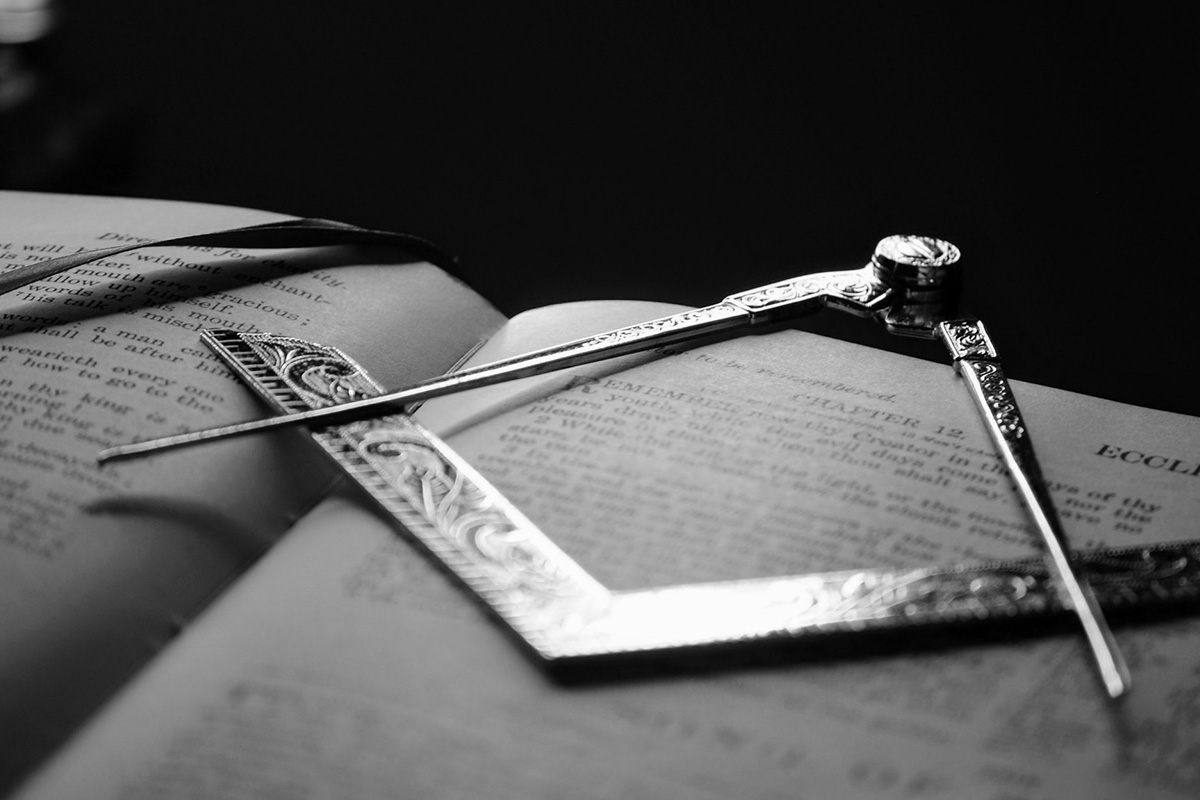
Photo by Jim Robinson on Unsplash
Freemasonry is surrounded by countless myths, and Ukrainian Freemasonry is no exception. Yet one thing is indisputable: Freemasonry is an extraordinarily fascinating, though still little-known, part of our history. In the Ukrainian lands, it has long existed at the intersection of geopolitical forces, imperial prohibitions, intellectual pursuits, and conspiracy theories. While in Western European countries the tradition of the Freemasons gradually became institutionalized over the centuries, and some Masonic organizations today maintain a far more public presence, the history of Ukrainian Freemasonry is more like an underground river: it disappeared under the pressure of bans and repression, later resurfaced during periods of political liberalization and revolution, and then was once again forced into the shadows.
THE FIRST UKRAINIAN LODGE
F
or a long time, the history of the Masonic movement in the Ukrainian lands was associated primarily with major cultural centers — Kyiv, Lviv, and Odesa. However, the first lodge known to researchers was established not in one of these future metropolises, but elsewhere entirely. In 1742, Polish nobles founded the “Three Brothers” Lodge in Vyshnivets, Volhynia. Oksana Kryzhanivska, a scholar of the history of Freemasonry, lists it as the first among the lodges that operated in the Ukrainian lands between the eighteenth and twentieth centuries. Today, Vyshnivets is a settlement in Ternopil Oblast. This fact is interesting in itself: the ideas of European Freemasonry reached the Ukrainian lands not only through the largest urban centers. During the second half of the eighteenth century and throughout the nineteenth century, lodges emerged in Lviv, Kyiv, Kremenchuk, Zhytomyr, Odesa, and other cities.
Freemasons left a noticeable mark on the cultural history of Ukrainian cities. On their buildings, we can see the compass, square, radiant delta, columns, or certain geometric proportions. All of these do indeed belong to the symbolic vocabulary of Freemasonry. Although, of course, the mere presence of such elements on a façade does not prove that the building was created as a Masonic site. Such a conclusion requires documentary evidence concerning the architect, the client who commissioned the building, or the structure’s intended function. Another phenomenon, however, is far better documented: Masonic lodges became places where Enlightenment, liberal, republican, and federalist ideas circulated, later playing a significant role in the political life of the Ukrainian lands.
FROM THE DECEMBRISTS TO THE KOBZAR
Freemasonry was one of the intellectual milieus associated with the formation of secret political societies in the first half of the nineteenth century. First and foremost, the Decembrists should be mentioned here. Although the Decembrists and Freemasons should not be equated, some future Decembrists did indeed have Masonic experience, while the organizational culture of secret societies inherited certain elements of the Masonic tradition. At the same time, Decembrist organizations pursued explicitly political goals, which regular Freemasonry as such did not. The Southern Society of the Decembrists, as well as the Society of United Slavs, operated in the Ukrainian lands. Their members opposed autocracy and discussed various projects for restructuring the empire. Masonic lodges served as centers through which ideas of liberty, fraternity, constitutionalism, and civic equality had previously spread. The Decembrist uprising was defeated in December 1825. However, the tradition of secret intellectual and political associations did not disappear afterward. And here we come to one of the most fascinating, yet at the same time most mythologized, topics in the Ukrainian history of Freemasonry — Taras Shevchenko’s alleged membership in a lodge.
WAS SHEVCHENKO A FREEMASON?
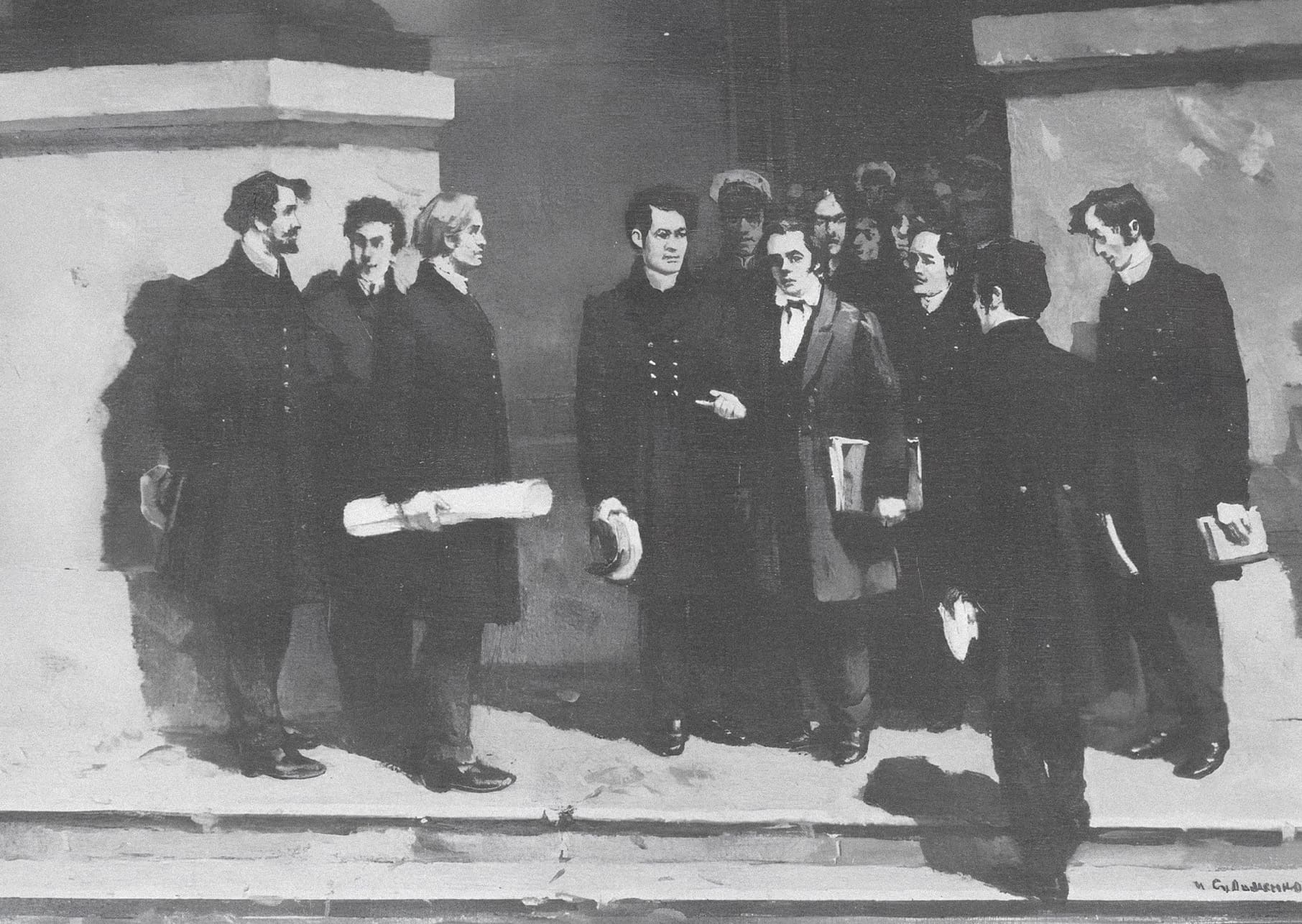
For a long time, numerous assumptions have arisen regarding Shevchenko’s connections with Freemasonry. One can even encounter claims that Freemasons allegedly arranged for the poet to be bought out of serfdom or that Shevchenko himself was a Freemason. There is no documentary evidence of this, nor could there be. There is no reliable evidence either that Shevchenko was initiated into Freemasonry or that he attained any particular Masonic degree, since only a free person could become a Freemason. However, there is sufficient evidence that his release from serfdom in 1838 was an organized Masonic action. Therefore, theories about Shevchenko’s Freemasonry should be regarded as historiographical hypotheses, since the prerequisites for membership did not exist. Yet there is another, far more interesting and better-documented connection. Shevchenko was close to the circle of the Brotherhood of Saints Cyril and Methodius — a secret intellectual society formed in Kyiv in late 1845 and early 1846.
Contemporary researchers emphasize that even the question of Shevchenko’s formal membership in the society is not entirely clear-cut: no formal documents confirming his admission have survived, although his close ideological and personal ties with the members of the Brotherhood are beyond doubt. Among the key figures in this circle were Mykola Kostomarov, Mykola Hulak, Vasyl Bilozersky, and other representatives of the Ukrainian intelligentsia. The Brotherhood of Saints Cyril and Methodius was not a Masonic lodge. However, it was clearly strongly influenced by ideas associated with the “Masonic circle”: universal human brotherhood, freedom, the moral improvement of the individual, and the transformation of society. These ideas took shape within the broad intellectual landscape of the European Enlightenment, Romanticism, and Christian humanism, which Freemasonry brought together within itself. It is therefore more appropriate to speak not of “Shevchenko’s Freemasonry”, but of a certain affinity with the Masonic intellectual tradition.
MORE THAN JUST AN “IDEOLOGICAL CONNECTION”?
But Shevchenko’s connection with the Freemasons should not be reduced solely to “ideological parallels”. The themes of struggle against tyranny, the fight for the freedom of the individual and the nation, moral responsibility, and personal dignity undoubtedly occupy a prominent place in the Kobzar’s work. The same was true of the Freemasons with whom Shevchenko personally interacted during his travels across Ukraine. The Masonic affiliation of some of them is well documented. The most reliable example is Illia Lyzohub. Shevchenko’s academic biography explicitly identifies him as a member of the Kyiv Masonic lodge “United Slavs”. This is a historical falsehood. During his stay in Sedniv, Shevchenko did indeed visit the Lyzohub estate and painted portraits of its owners, Andrii and Illia. His first journey in 1843–1844 appears even more interesting.
Taras Shevchenko became extremely active within the circles of the Left-Bank nobility and intelligentsia, among whom, of course, were documented members of Masonic lodges. All of them exerted a certain influence on his views. In other words, Shevchenko was never merely an outside observer of the Masonic milieu. His academic biography reconstructs this circle of acquaintances in detail. However, the Masonic lodge “United Slavs” operated in Kyiv from 1818 to 1822, after which Freemasonry in the Russian Empire was officially banned by decree of Alexander I. Thus, when the lodge was closed in 1822, Taras Shevchenko, who was born in 1814, was only eight years old and was living as a serf in a village in the Cherkasy region.
FREEMASONS AND THE UKRAINIAN NATIONAL MOVEMENT
By the late nineteenth and early twentieth centuries, Freemasonry increasingly intersected with the intelligentsia, entrepreneurs, landowners, politicians, and public figures. Many members of the philanthropic elite were Freemasons and actively supported Ukrainian cultural, educational, and publishing projects, such as Prosvita, the Shevchenko Scientific Society, and Ukrainian periodicals as a single coordinated “Masonic program”. At the beginning of the twentieth century, this “intersection” became particularly visible in politics. During the Ukrainian Revolution of 1917–1921, figures whom researchers associate with Masonic structures found themselves in different — sometimes even hostile — political camps. This is precisely why the history of Ukrainian Freemasonry during this period undermines the popular conspiracy theory of a single secret center supposedly directing political affairs. Freemasons could be political opponents of one another. Such was the case, for example, with Pavlo Skoropadsky and Symon Petliura (incidentally, the political views of the well-known Freemason Mykhailo Hrushevsky on the building of Ukrainian statehood differed from those of both men).
HETMAN SKOROPADSKY AND THE FREEMASONS
One of the central figures in this history was Pavlo Skoropadsky. Sources and historiography link not only him but also his entourage to Masonic structures, while among the leading figures closest to the Hetmanate were individuals whose Masonic affiliation is documented much more thoroughly. One such figure was Serhii Morkotun, who headed the “Narcissus” chapter and was preparing the establishment of the “Grand Lodge of Ukraine — United Slavs”. According to historians, the activities of this “Grand Lodge” are often regarded as having existed primarily “on paper” or as having had a limited organizational character due to the turbulent events of the Ukrainian struggle for independence. The Masonic presence in the state institutions of the time was indeed significant. The *Encyclopedia of Modern Ukraine* states that Freemasons accounted for at least one-third of the ministers in the governments of the Hetmanate period.
Some researchers cite even higher figures for particular periods: historian Viktor Savchenko, for example, writes that in one of the Hetmanate governments, half of the 14 ministers were Freemasons, while in the subsequent government they accounted for around one-third. This is why the assertion that Masonic circles exerted significant influence on the political elite of the time is entirely justified. But does this mean that Ukraine was then governed from a single secret center by some kind of “Masonic government”? History indicates that it was not. The political conflict between Skoropadsky and Symon Petliura demonstrates just how different the political positions, destinies, and aspirations of people associated with the Masonic community could be.
SYMON PETLIURA AND THE FREEMASONS
Symon Petliura occupies a special place in the history of Ukrainian Freemasonry. His ties to the Masonic movement can be traced much more clearly than, for example, those of Taras Shevchenko. During the revolutionary events, Petliura became one of the leaders of the faction of Ukrainian Freemasonry that opposed Skoropadsky. After power passed to the Directorate, representatives of this community assumed a number of key government positions. Sources name Volodymyr Chekhivsky, Viacheslav Prokopovych, Andrii Livytsky, and other figures among them. Once again, this demonstrates the paradox of Ukrainian Freemasonry: membership in the brotherhood by no means guaranteed political unity. Following the defeat of the Ukrainian Revolution, some Masonic structures moved abroad. Along with the political émigrés, documents, ritual objects, and traditions of Ukrainian Freemasonry also found their way abroad. Symon Petliura played a major role in this process.
It was Petliura who, in 1919, established the “Grand Lodge of Ukraine of St. Andrew the First-Called” in Kyiv and became its Grand Master. This continuity would later have a significant influence on the revival of modern Ukrainian Freemasonry. Following the defeat of the Ukrainian Revolution and the onset of Soviet occupation, the core of the organization left Ukraine. Its life in exile went through several key stages. Initially, Ukrainian Freemasons gathered in Poland (Warsaw, Tarnów, and Kalisz), where the Ukrainian-Polish lodge “Unity” operated. In 1925, following Symon Petliura’s move to Paris, the Supreme Council of the Grand Lodge of Ukraine was established there, bringing together émigré Freemasons from France, Switzerland, Poland, Romania, and Austria. After Petliura’s tragic assassination in 1926, the prominent public figure Yakiv Kotliarevsky became Grand Master of the Lodge.
“VOICE OF UKRAINE” IN PARIS
On January 17, 1966, Lodge “Voice of Ukraine” No. 117 was founded under the auspices of the Grand National Lodge of France. It operated in Ukrainian and became one of the important centers for preserving the Ukrainian Masonic tradition in exile. Its significance extended far beyond ritual life itself. At a time when the legal operation of Masonic lodges in Soviet Ukraine was impossible, the Paris-based organization maintained the institutional memory and continuity of the tradition. Among the founders and first active members of Masonic Lodge “Voice of Ukraine” No. 117 in Paris was a prominent group of Ukrainian intellectuals, public figures, and artists living in exile. They formed the core of the lodge after working in the French lodges “Astrea” and “Gamayun”. It was these individuals who preserved Ukrainian Masonic traditions in Europe and later, in the early 1990s, helped bring them back to Ukrainian soil.
The key figures who stood at the origins of the organization were:
- Serhii Tatarula (1911–1971) — the first Worshipful Master (head) of the “Voice of Ukraine” Lodge.
- Bohdan Fedenko (1924–1989) — a prominent publicist and public figure who headed the lodge as Worshipful Master from 1967 to 1969.
- Yaroslav Musianovych (1915–1999) — an active member of the Ukrainian diaspora in France and a physician, who served as Worshipful Master of the lodge from 1970 to 1972.
- Liubomyr-Yevhen Huzar (1911–1995) — a prominent public and political figure and longtime director of the only Ukrainian newspaper in Paris, Ukrainske Slovo (“Ukrainian Word”) (importantly, he should not be confused with the religious leader Cardinal Lubomyr Husar).
- Aristide Virsta (1922–2000) and Temistocle Virsta (1923–2017) — artist brothers. Temistocle Virsta was a world-renowned Ukrainian painter, sculptor, and architect who spent almost his entire life in France; Aristide Virsta was a musicologist and violinist.
In the 1990s, new Ukrainian Masonic lodges began to emerge, making it possible to establish a District of the Grand National Lodge of France in Ukraine, and in 2005 the Grand Lodge of Ukraine was created. This date effectively marks the beginning of a new institutional stage in Ukrainian regular Freemasonry.
UKRAINIAN FREEMASONRY TODAY
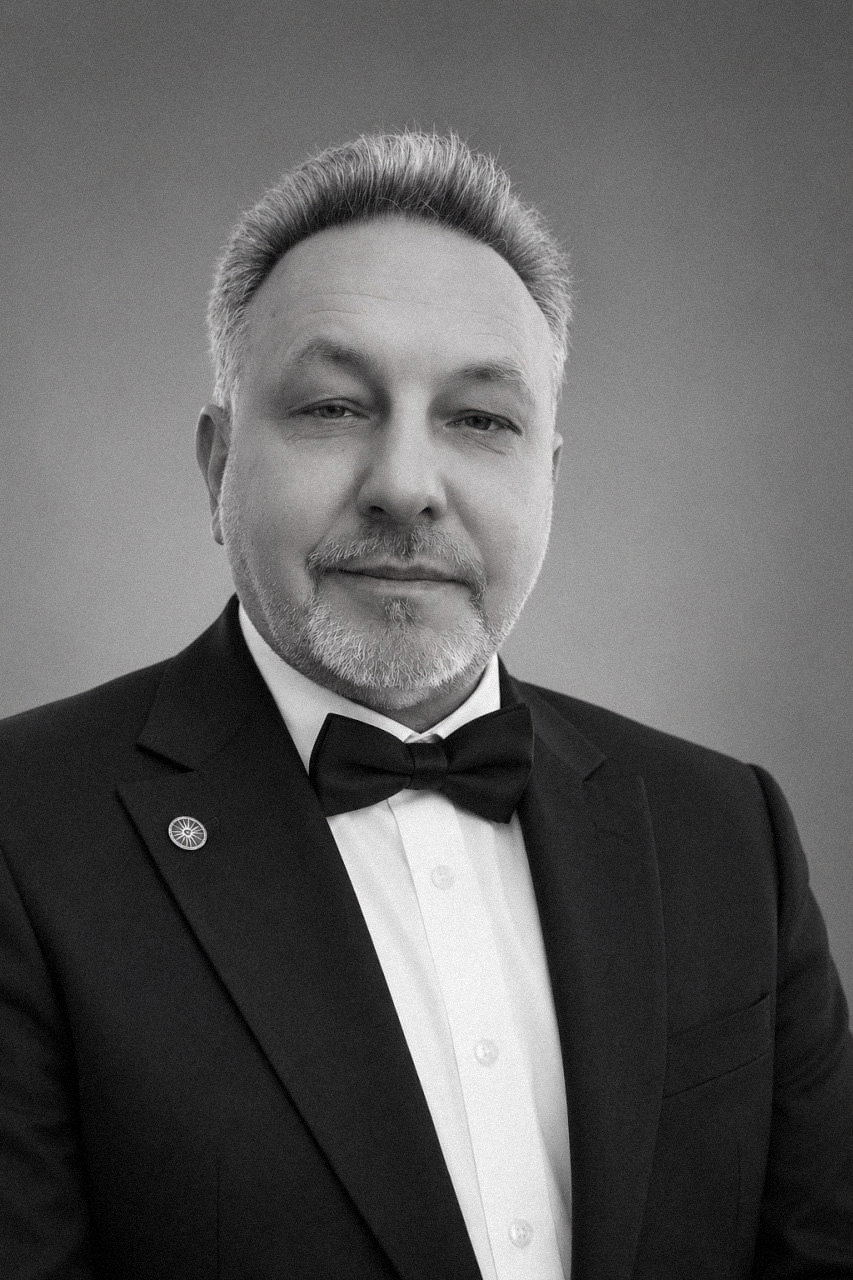
The history of Ukrainian Freemasonry shows that it has never existed in a vacuum. At times, its development depended on the tolerance of the political regime and the state’s attitude toward independent associations, as well as on wars, revolutions, and the level of trust within society. This is why the closed nature of Ukrainian lodges today has not only a ritual but also a historical explanation. To better understand this, we spoke with Serhii Sarafaniuk, founder of the Museum of Contemporary Freemasonry in Odesa. In his view, the relatively low level of public visibility of modern Masonic organizations in Ukraine, compared with those in Western Europe and North America, has very specific reasons. In many Western countries, Masonic organizations have become considerably more open in recent decades: they maintain public websites, provide information about their charitable work, history, and the principles of Freemasonry, and organize tours and informational events. In Ukraine, the public presence of the Grand Lodge of Ukraine is much more restrained. The personal details of most members are not disclosed, while public communication primarily concerns the organization’s history, principles, and activities. This raises an obvious question: why does Ukrainian Freemasonry not follow a model of much greater openness?
SECRECY AND A BROKEN TRADITION
One of the answers lies in history. From a historical perspective, the secrecy of Ukrainian Freemasonry can be viewed not as evidence of some hidden power, but as a strategy of institutional self-preservation. This becomes clearer when the Ukrainian situation is compared with that of the West. Western European Freemasonry has more than three centuries of continuous institutional development. The United Grand Lodge of England traces its origins back to 1717. The Ukrainian tradition developed quite differently. Imperial bans in the nineteenth century, revolutions, and later the Soviet regime effectively destroyed the possibility of the continuous existence of Masonic institutions in Ukraine. Along with the organizations themselves, the living transmission of the tradition — its rituals, symbolism, internal culture, and institutional memory — was also interrupted. The revival began only after the collapse of the USSR. Modern Ukrainian Freemasonry is therefore a paradoxical phenomenon: it invokes a tradition several centuries old, yet its present-day institutions are relatively young. This largely explains its cautious approach to public visibility. Moreover, Ukrainian and Western European Freemasonry exist in different sociocultural environments.
INFORMATION WARFARE AND CONSPIRACY THEORIES
In a number of Western societies, Masonic organizations today are perceived primarily as historic fraternities and charitable and civic associations. At the same time, attitudes toward Freemasonry vary depending on the country, professional environment, and historical context, so it would be an oversimplification to speak of a single “Western attitude”. The situation is different in the post-Soviet space. Here, the image of Freemasonry has for decades been closely associated with conspiracy theories. Soviet, and later Russian, political culture actively used the image of secret elite organizations to explain complex social processes through the activities of hidden forces.
As a result, publicly acknowledging membership in a Masonic lodge may create reputational and professional risks for a politician, judge, military officer, or businessperson in Ukraine. Since the beginning of the Russo-Ukrainian war, another factor has emerged — security. A closed community whose members may include representatives of business, government service, the military, diplomacy, or the intellectual elite may potentially be of interest to hostile intelligence services. According to Serhii Sarafaniuk, excessive public exposure under such circumstances may create additional opportunities for information pressure, blackmail, recruitment, or smear campaigns. Disclosing information about meeting places during wartime creates not only reputational but also potential physical risks.
A STRATEGY OF “PUBLIC VISIBILITY WITHOUT FACES”
The degree of openness within Freemasonry has never been the same across different countries. It has depended on the political regime, historical experience, public attitudes, and the level of security. In this sense, the Ukrainian model is an adaptation to specific historical circumstances. According to Sarafaniuk, a particular compromise between complete secrecy and the need to maintain a presence in the public sphere has emerged in the form of a strategy that could be described as “public visibility without faces”. The Grand Lodge of Ukraine maintains public information resources where people can learn about its history, principles, structure, and activities. At the same time, the personal details of most members do not become part of its public communications. In this way, the organization simultaneously addresses two opposing objectives: it demonstrates its existence and legal status while avoiding turning its membership list into a public register.
And this is where the central paradox of contemporary Ukrainian Freemasonry emerges. The more secretive an organization is, the easier it becomes for all kinds of conspiracy myths to arise around it. Yet the more open it becomes, the greater the risks it may create for its own members — particularly in wartime. This is why Serhii Sarafaniuk believes that a transition to a significantly more open model would be possible only with the stabilization of the security situation and a gradual shift in public attitudes toward Freemasonry. Perhaps the most intriguing paradox lies precisely here: Ukrainian Freemasonry has to contend simultaneously with its own invisibility and with the consequences of the very public visibility that could overcome that invisibility.
When copying materials, please place an active link to www.huxley.media
Select the text and press Ctrl + Enter


