BORIS BURDA: How Cybernetics Ceased to Be a Pseudoscience

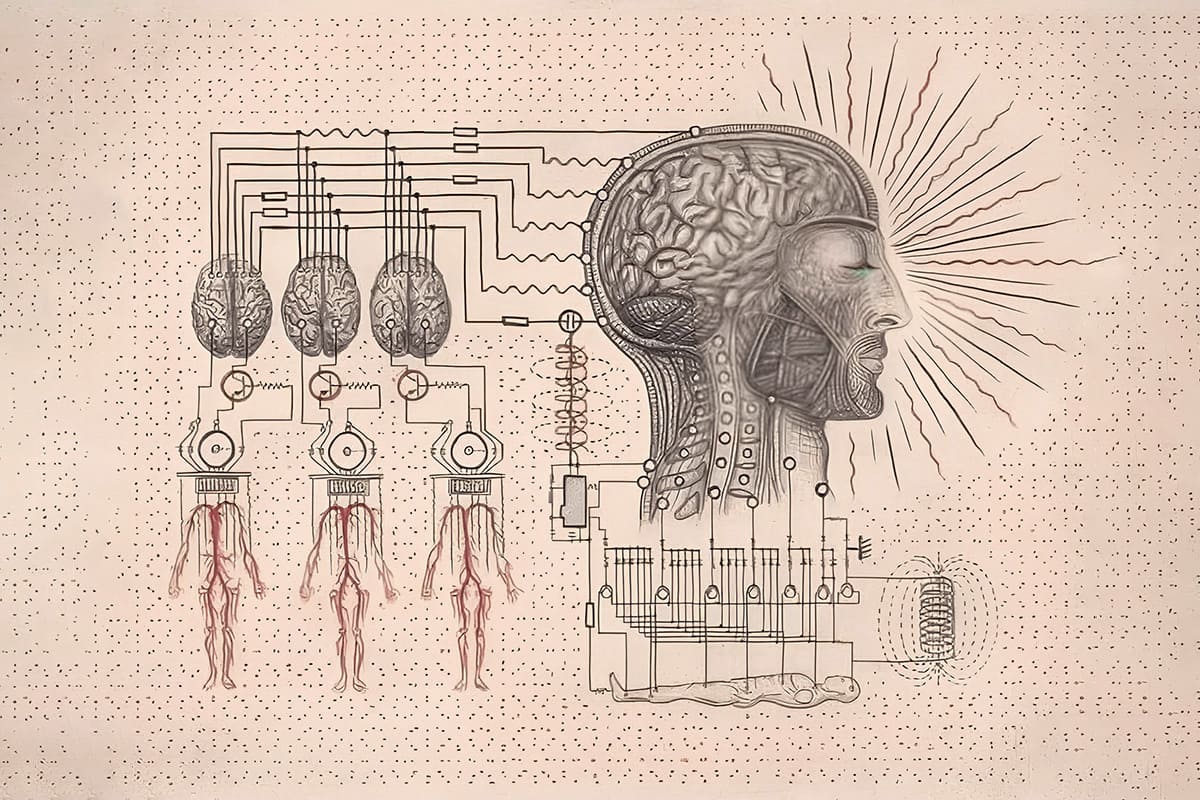
Artwork: Daniel Martin Diaz / instagram.com
ATTENTION — QUESTION!
In the foreword to the 1965 edition of Ivan Yefremov’s Andromeda: A Space-Age Tale, it is stated: “The words cybernetics and gene migrated to the pages of Tekhnika Molodezhi from the pages of…” Which magazine?
ATTENTION — THE CORRECT ANSWER!
Krokodil, of course — where else would one write about pseudoscience?
WHERE THE WORD COMES FROM
Words related to it exist in both Ancient Greek and Latin. In Latin, a ship’s rudder is gubernaculum, and the person who steers it — the helmsman, in our terms — is, naturally enough, gubernator (though we had imagined a governor to be at least a little more senior than an ordinary sailor). In ancient Greece, a skilled charioteer could be called kybernetikos — the meaning was essentially the same. Plato used cybernetics to describe the art of governing a state, which, like a ship, requires a true course. Two hundred years ago, the French scientist André-Marie Ampère, in his classification of the sciences, reserved a place for the science of proper governance and proposed calling it cybernetics as well (after all, if you give something a Greek name, everyone immediately knows it’s a science!).
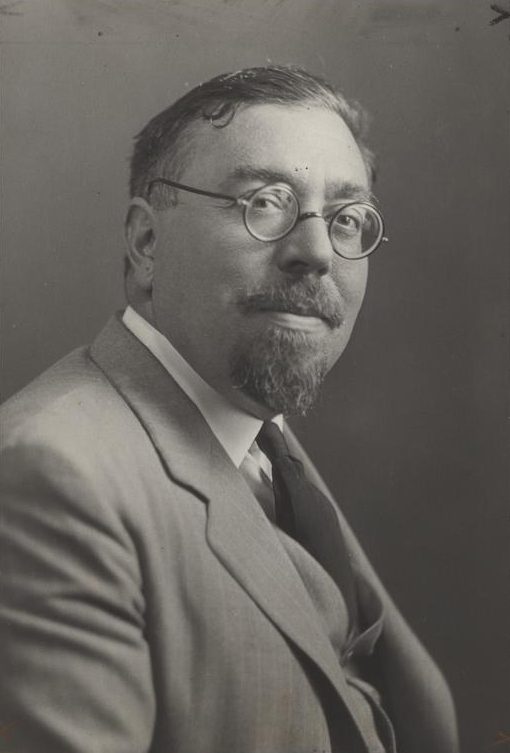
The next step in the history of the word was taken by a genuine child prodigy, who aptly titled his memoir Ex-Prodigy. By the age of one and a half, he knew the entire alphabet; at three, he was reading aloud in English; by five, he was reading in Greek and Latin. A 1906 article in the New York World modestly called him “The Most Remarkable Boy in the World.” At fourteen, he earned a bachelor’s degree from the prestigious Tufts College, and at eighteen — no typo here! — he received a Ph.D. from Harvard. He was rejected from military service in the First World War because of poor eyesight. During the Second World War, he made a wiser choice, spending the entire conflict working on the scientific principles of anti-aircraft fire control. The result of his work was a book introducing a new science — cybernetics.
AND WHY WAS IT CONDEMNED?
The book was published in 1948, a time that could hardly have been less favorable for the emergence and acceptance of a new scientific discipline in the USSR. That same year saw the infamous session of the Lenin All-Union Academy of Agricultural Sciences (VASKhNIL), where genetics was publicly denounced and effectively destroyed. At least genetics actually existed in the Soviet Union — there was something to suppress. But why wage war on cybernetics, a field that had only just appeared?
Today we associate cybernetics with computer science — a discipline of immense practical value, arguably even more important to the military than to civilians. One might think it would have been enthusiastically embraced and rapidly developed. Instead, it was branded a hostile ideology. Then again, what was the Soviet Union without its ever-present “hostile ideologies”?
As was often the case, the campaign against cybernetics began not in a scientific journal but in Literaturnaya Gazeta, a newspaper with nothing to do with science. The date was April 5, 1952.
The article was titled “Cybernetics: The Science of Obscurantists.” I know who wrote it, but I have no intention of naming the author — he does not deserve the notoriety. Herostratuses should remain nameless.
Other attacks soon followed. The roster of cybernetics’ accusers is revealing: a former Constructivist poet and co-author of the notorious book about the White Sea–Baltic Canal; a Stalin Prize laureate for organizing weapons production and a retired intelligence officer; a psychiatrist, an active opponent of genetics who never completed his doctoral dissertation and wrote under the pseudonym “Materialist.” Quite a distinguished company.
There were not actually that many of these key articles. Their purpose was simply to proclaim the official state policy on the issue — not because there were Soviet cyberneticists to fight, but because the campaign helped sustain an atmosphere of fear and obedience. After all, if an ideology does not intimidate people, what good is it? Better that everyone sit quietly.
IDEALISTS, ALIENS, PERVERTS…
So what, exactly, were the accusations against cybernetics? What was supposedly so objectionable about it? Let me answer with quotations from those very articles.
Here is one example: “The imperialists dream of a situation in which no one will threaten their rule. Robots — and only robots — suit them.” The author was the aforementioned “Materialist.”
And here are excerpts from the 1954 Philosophical Dictionary article titled “A Reactionary Pseudoscience”:
“It denies the qualitative distinctiveness of the laws governing the various forms of the existence and development of matter… It vividly expresses one of the fundamental features of the bourgeois worldview — its inhumanity.”
And it goes on like this for two full pages.
The following accusations are a bit more specific:
“The instigators of a new world war are using cybernetics in their dirty practical affairs.”
“…serves as an ideological weapon of reaction, a means of carrying out its aggressive military plans.”
Replace the word cybernetics with, say, artillery — and ban that instead! There were also grander accusations: that cybernetics was preparing humanity for enslavement by an alien intelligence. And what about the claim that it would deprive people of the ability to reproduce “the old-fashioned way”? After that, the assertion that cyberneticists advocated exterminating most of humanity no longer seemed surprising. Nor did anyone expect evidence.
One cannot help wondering who actually benefited from this campaign. The meager fees paid to the authors of those articles hardly seem sufficient to explain it. The Soviet Union itself, for one, suffered enormous harm.
Perhaps it was simply inevitable that an ignorant crowd, manipulated by self-serving liars, could not exist without pogroms and witch hunts. Perhaps that was all there was to it.
RESISTANCE
The campaign against cybernetics was pursued with less zeal than the assault on genetics. Perhaps the authorities believed the issue would simply fade away on its own, or perhaps there was too little time between the beginning of the campaign and March 5, 1953…
Stalin’s death did not put an immediate end to it, but something did begin to change. At the very least, the level of hysteria started to subside. Whenever something valuable is hidden behind a fence, sooner or later someone starts quietly kicking at the fence to see if it will fall.
One of the world’s leading mathematicians, Aleksei Lyapunov, together with Anatoly Kitov, head of the Computing Center of the USSR Ministry of Defense, organized a series of seminars on topics related to cybernetics — they even dared to pronounce the word aloud. Nothing happened. They were left alone.
Several copies of Wiener’s book also made their way into the Soviet Union. They were, of course, placed in restricted-access collections, but they were there. The book was even translated into Russian; one of the translations involved the well-known writer and dissident Lev Kopelev.
That was hardly surprising. The entire scientific world was discussing the book, and the enthusiasm surrounding it was jokingly dubbed the “Wiener disease” (fortunately, a harmless one).
Not everything went smoothly. Kitov himself paid a high price for sending Khrushchev two letters proposing the creation of a nationwide computer network remarkably similar to what we now call the Internet — decades before the Americans. His reward was expulsion from the Communist Party and dismissal from his post.
Then again, was it really such a tragedy for a scientist of his caliber to be expelled from that particular party? There is a certain logic to it.
Overall, however, the campaign against cybernetics was carried out rather half-heartedly. As far as I know, no one was even executed. Perhaps the Party leadership had more pressing concerns at the time, such as fighting among themselves for power, and simply lacked the energy to drive the campaign to its bitter end. And without a determined effort, suppressing something as genuinely useful as cybernetics proved to be surprisingly difficult.

HAPPY END?
In 1958, Wiener’s book was finally published in Russian — and no one suffered for it. A few years later, in 1961, a major collection of articles edited by Academician Axel Berg appeared under the telling title Cybernetics in the Service of Communism. It was now obvious that even the theoretical ban on cybernetics had vanished and the campaign of persecution was over.
If anyone doubts it, just watch the famous scene from the film Kidnapping, Caucasian Style, where the toast ends with the words:
“…and the princess hanged herself with her own braid out of sheer spite, because he calculated exactly how many grains were in the sack and how many drops were in the sea. So let us drink to cybernetics!”
Gaidai’s films were subjected to ruthless censorship, yet no one touched that line.
Perhaps, then, the persecution was not so severe?
Don’t be too quick to draw that conclusion. It had very real consequences.
When, in the early 1970s, the Unified System of Electronic Computers (ES EVM) — essentially a copy of IBM’s already aging System/360 architecture — became the common computer standard across the Council for Mutual Economic Assistance (Comecon), the winner of the global computer race was effectively decided. And in that respect, nothing has changed to this day.
That is the real danger of ideological decision-making. Not even because ideologues are necessarily less knowledgeable than specialists, but because the very process of making decisions becomes fundamentally distorted. It no longer needs to correspond to established facts; it only needs the approval of the boss. And the boss’s approval rarely outlives the boss himself.
When copying materials, please place an active link to www.huxley.media
Select the text and press Ctrl + Enter