BORIS BURDA: How to Build Merchant Ships Much Faster


Photo source: bigcommerce.com
ATTENTION — QUESTION!
During World War II, ensuring maritime transport was crucial for the Allied forces. German submarines significantly hindered these efforts. To counter this threat, among other strategies, it became essential to learn how to build merchant ships much faster than before. However, a large ship is an extremely complex structure, typically requiring months or even years to construct. How could shipbuilding be accelerated, not just by a few percent, but by several times?
IT WAS ALL VERY DANGEROUS
T
he three major Allied nations — USSR, USA, and Great Britain — were geographically separated, making land routes impossible. The USSR was in Eurasia, the USA in the Americas, and Great Britain was an island nation. The only way to transport vital supplies, including critical military goods, was by sea. For their enemy, Nazi Germany, the natural objective was to disrupt these maritime connections as much as possible, ideally rendering them entirely impossible.
Surface ships failed to achieve this goal, as Britain’s Grand Fleet was far superior and operated with great efficiency. German aviation also fell short, having lost the air supremacy battle in the «Battle of Britain», and its aircraft were inferior to those of the Allies.
As a result, submarines became Germany’s primary weapon for disrupting Allied shipping. Over the course of the war, Germany built 1,157 submarines — an armada of such scale that no other belligerent nation could match.

The situation truly became critical. British naval historian Stephen Roskill noted that there were significant periods during which the Nazis sank more tonnage of merchant ships than could be built within the same timeframe, while fewer German submarines were destroyed than were constructed.
This dynamic threatened Britain with famine, not to mention a collapse in military production. The Soviet Union also faced dire challenges, requiring substantial resources to sustain its war effort.
In contrast, the territory of the United States remained virtually untouched by wartime destruction. During the entire war, only four Japanese incendiary bombs dropped from a seaplane launched by a submarine landed on American soil. Two firefighters quickly extinguished the resulting fires, marking the only damage inflicted on the American continent.
America’s mighty industrial base could easily produce the materials and equipment needed for the war, but these resources were required not in the United States but in the Soviet Union and Great Britain.
LEND-LEASE
To support its allies, the U.S. Congress passed a law enabling the provision of essential military equipment and civilian supplies on loan and lease terms. In Bulgarian, this policy is aptly named «zaem-naem», a term understandable to Russian speakers. However, in Russian, it is usually referred to by the English-transliterated term «Lend-Lease», which means the same thing.
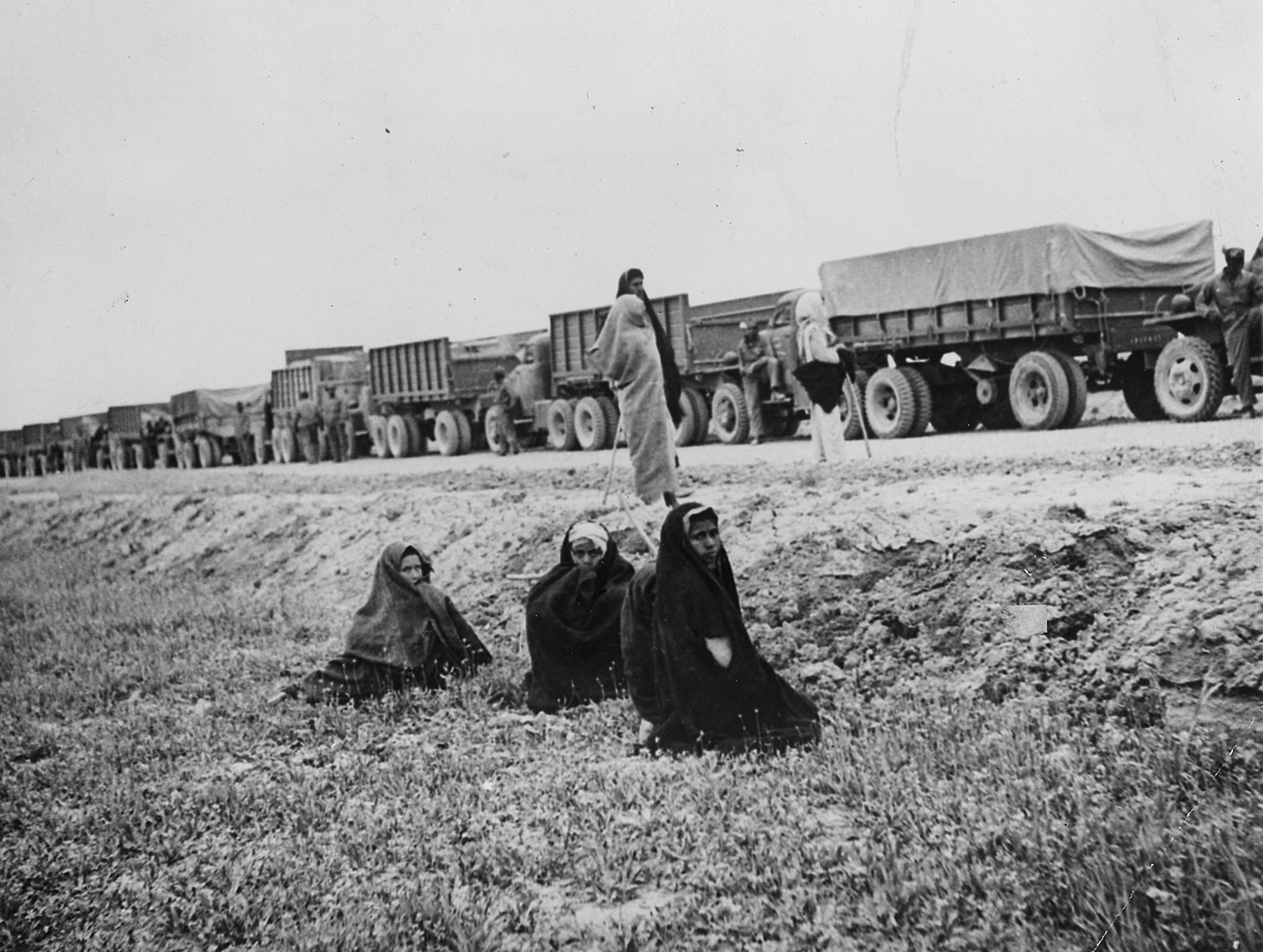
How can we measure the scale of these deliveries? After the war, Soviet historians, for ideological reasons, often downplayed their significance, while Western accounts tended to do the opposite. The figures, however, speak for themselves and are difficult to dispute. Over 17 million tons of cargo were shipped from the U.S., and more than 4 million tons came from Great Britain.
For example, Lend-Lease accounted for roughly half the amount of explosives and aviation fuel that the USSR produced independently, nearly the same amount of aluminum, 1.5 times more vehicles, 2.5 times more locomotives, nearly five times more canned meat, and even ten times more railway cars.
The total value of all U.S. Lend-Lease deliveries, calculated in contemporary prices, was equivalent to about 50,000 tons of gold — twice the combined gold reserves of all the world’s countries, including the United States. Decide for yourself whether this was a lot or a little, and while you’re at it, consider how challenging it must have been to transport such an enormous volume of cargo.
ATTEMPTS TO FIND A SOLUTION
The task was to build a large number of ships and to do so very quickly. But how? Shipbuilding was more of an art than a science. Constructing a vessel typically took months, and a large ship could take years. The famous Dreadnought, for instance, was considered a record-breaker, completed in just one year and one day. Meanwhile, the British battleship Vanguard was started in 1941 and only completed in 1946. Merchant ships were built faster, but hundreds, if not thousands, were needed.
Experience showed that a merchant ship of the required class usually took three to six months to build. «That won’t do», declared the U.S. leadership to shipbuilders. «A ship must be built in two weeks». Initially, shipbuilders scoffed at the idea, certain it was impossible — even theoretically.

But when the gentleman bailiff says, «Take a seat!» — it feels awkward to remain standing… Manager Alex Osborn convened a meeting and turned to the latest trend of the time — a newly emerging technique known as brainstorming. There wasn’t much optimism, but who knows? Maybe something might come of it.
I don’t have the minutes of this meeting, but it’s fairly clear what was discussed. They probably recalled the traditional approach of laying out a full-scale ship blueprint on the floor of a massive room (as described in Leviathan by Akunin). That method certainly wasn’t quick.
Participants with no background in shipbuilding likely brought up comparisons to car and tank production, while professionals condescendingly explained why such methods wouldn’t work for ships. However, there is evidence that a timid question was asked: «Why wouldn’t it work?» Interestingly, it came from someone far removed from shipbuilding — an engineer from a match factory, of all places. After all, if anything is produced in large quantities, it matches.
ATTENTION — CORRECT ANSWER!
If cars, tanks, and airplanes are built faster than ships, why not borrow everything possible from their production methods? They are built on assembly lines — why not ships? Let’s make shipbuilding as close to an assembly line as possible. We’ll assemble all 250,000 parts that make up a ship into separate sections weighing up to 250 tons, then transport these sections to the shipyard and piece them together on the slipway using an assembly-line approach. Instead of riveting, as was traditionally done, we’ll use welding — it’s faster and saves metal. This should speed things up significantly — let’s see just how much!
FAST AND PLENTIFUL
The speed of ship construction grew visibly. The first ship of the new series, called Liberty — symbolizing «Freedom» — took eight months to build. By the twentieth ship, the time had decreased to four months, and by the fiftieth, to less than two months! The ultimate record was achieved with the construction of the Robert E. Peary, launched less than five days after its keel was laid and departing on its first voyage just seven days later. While such speed was not sustainable for mass production, by 1943, the United States was averaging three ships launched per day.
There were several variations of the Liberty design, including Liberty tankers, coal carriers, and troop transport ships. Around 200 Liberty ships were delivered to Great Britain, and 54 sailed under the Soviet flag at various times.
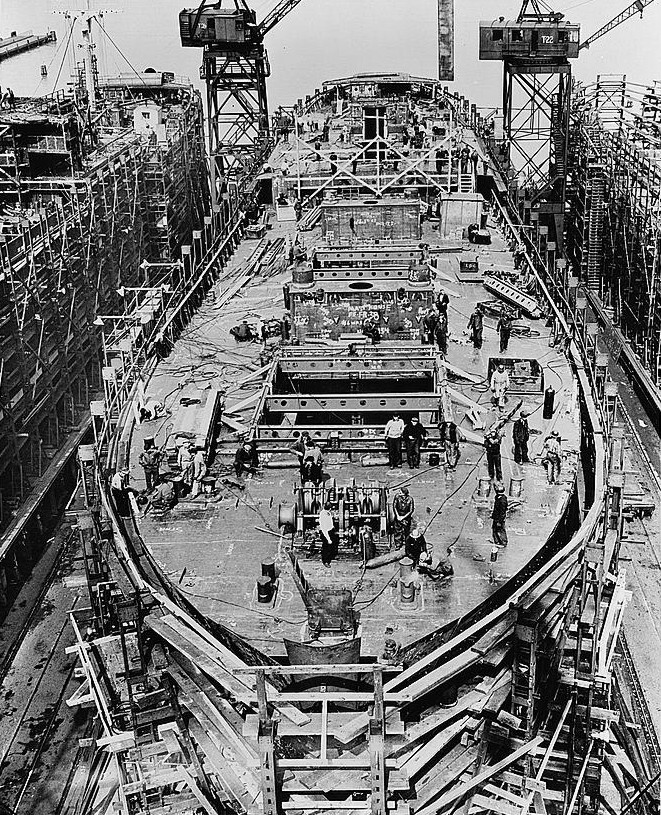
Such a ship could carry in a single voyage either 2,840 jeeps, 260 medium tanks, 535 ambulance vans, or 651,000 three-inch shells. In practice, however, the cargoes were typically mixed — a bit of everything.
There were also challenges — primarily because welding, unlike riveting, did not prevent cracks from spreading once they appeared. Several Liberty ships even broke in half due to such cracks. However, by reinforcing the hulls and improving the quality of the steel, this problem was eventually brought under control.
VALIANT AND ENDURING
The Liberty ship earned its fame in the battle between the transport vessel Stephen Hopkins and the German raider Stier, accompanied by the auxiliary ship Tannenfels. The Liberty ship had a single 102-mm gun and a few anti-aircraft machine guns, while the Stier was armed with six 150-mm guns, numerous machine guns, and two torpedo tubes — its firepower was 14 times greater than that of the Liberty.
Nevertheless, the Liberty refused to surrender and opened fire. The Stier quickly set the Liberty ablaze from bow to stern, but the transport ship kept returning fire. When the entire gun crew was killed, 18-year-old cadet Edwin Joseph O’Hara took over, firing five shots and hitting his target each time.
The Liberty sank, but so did the Stier after sustaining 16 hits. Thus, Stephen Hopkins became the first American merchant ship to sink an enemy vessel during World War II. Fifteen of its sailors survived in a lifeboat, drifting for a month before reaching the shores of Brazil. Later, three new Liberty ships were named after some of these brave men.
The Liberty ships weren’t expected to last long — they were designed with a five-year lifespan, and it was said that a single voyage would pay for their construction. However, during the war, only 253 Liberty ships were lost (around nine out of every hundred built), while the remaining fleet of over 2,000 ships continued to operate effectively.
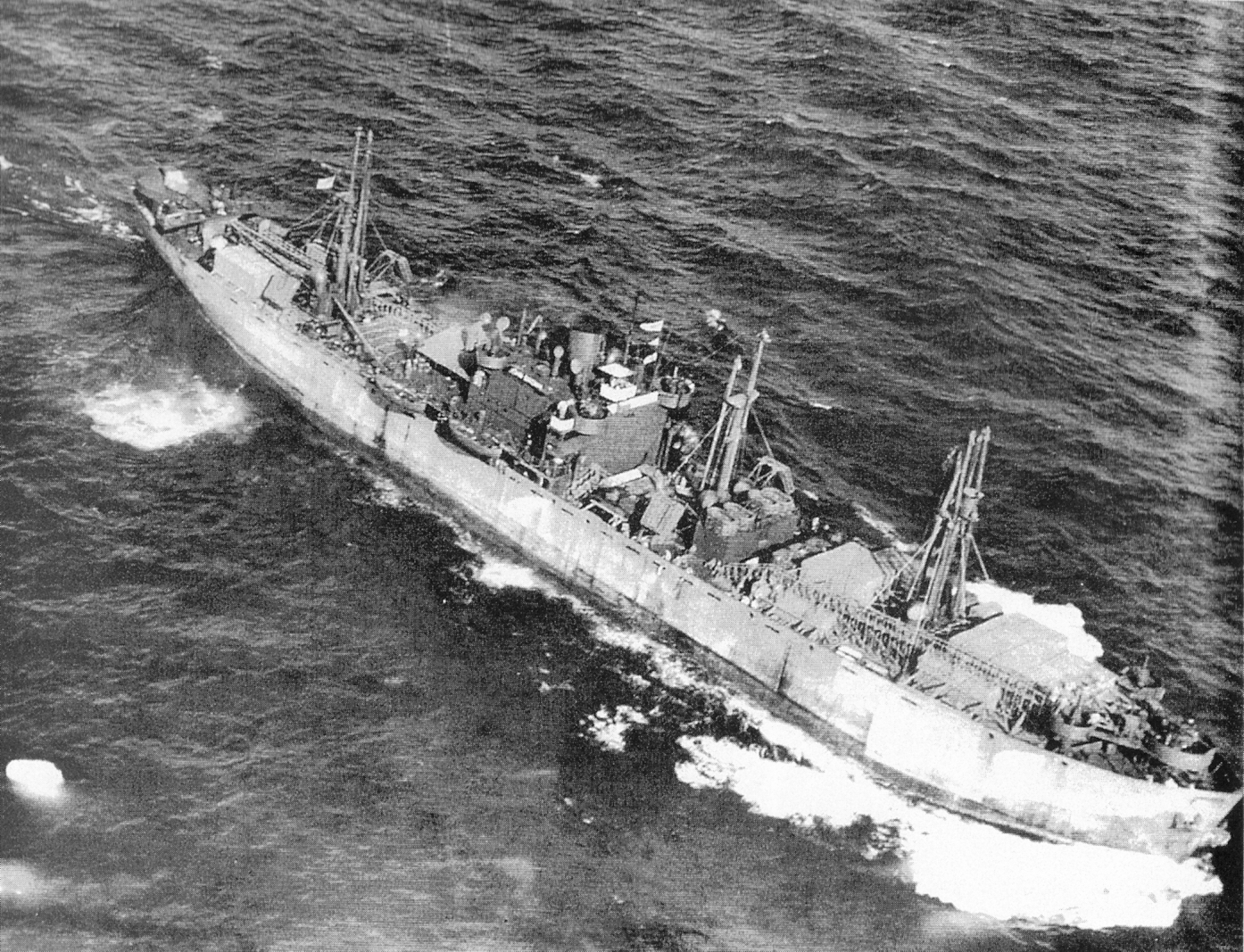
Some of the Liberty ships were sold to private shipping companies — these ships laid the foundation for the maritime empires of Aristotle Onassis and Stavros Niarchos. It wasn’t until the late 1960s that they began to fade from use, replaced by more efficient vessels. However, the term Liberty-sized cargo (referring to a 10,000-ton load) remains in use to this day.
As of 1970, approximately 200 Liberty ships were still listed in maritime registries, with some continuing to operate into the 1980s. Even now, two Liberty ships remain: Jeremiah O’Brien in San Francisco and John W. Brown in Baltimore, both preserved as museum ships and still fully operational.
A third ship, Hellas, is no longer seaworthy but serves as a museum of Greek seafaring in Piraeus. The 2,710 ships built proved their worth, demonstrating that the suggestion from the match factory engineer during that brainstorming session was truly successful!
So, when you face a problem and don’t know how to solve it, think back to how similar issues have been addressed in the past. You might find exactly what you need.
When copying materials, please place an active link to www.huxley.media
Select the text and press Ctrl + Enter