BORIS BURDA: How to Properly Armor an Airplane

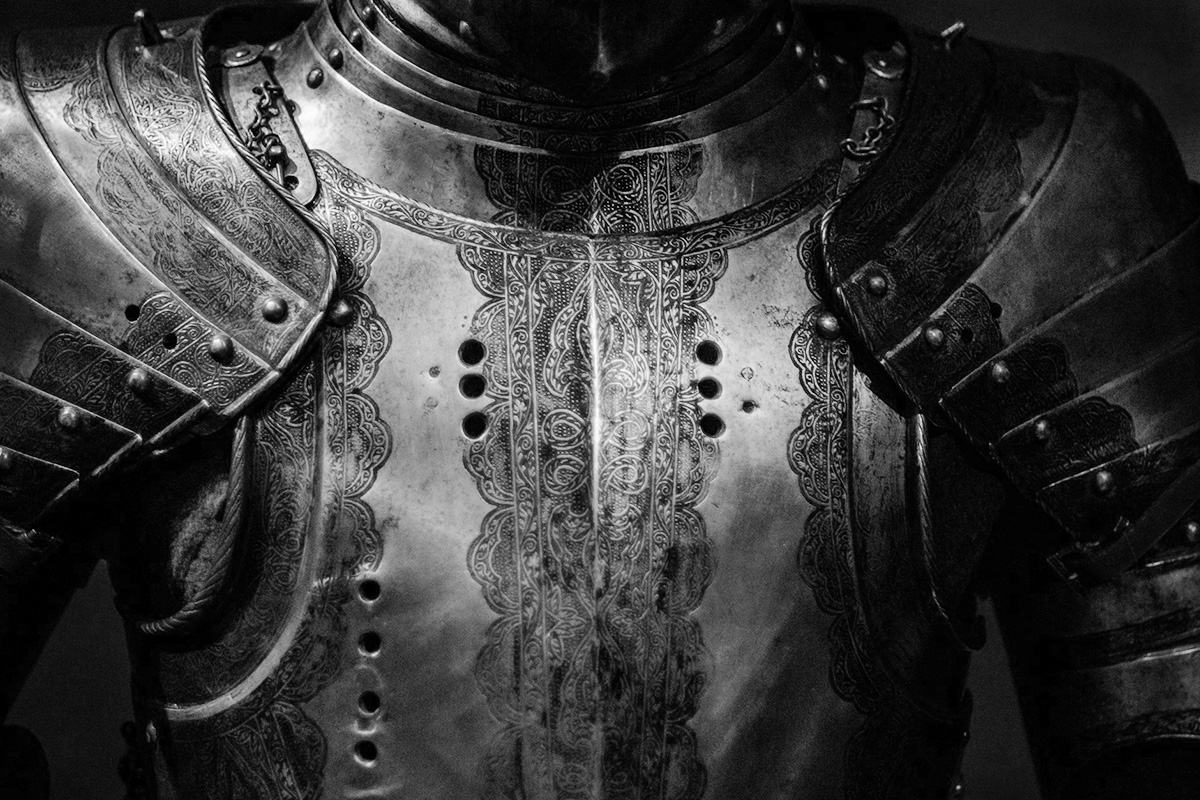
Photo by Nik Shuliahin on Unsplash
ATTENTION — QUESTION!
Knights, like any warriors, attached great importance to reconnaissance and scouting. But interestingly, despite the obvious danger, they went on such missions without armor. Why?
ATTENTION — THE CORRECT ANSWER!
According to the moral code, a knight in armor had no right to retreat.
ARMOR OR PROJECTILE?
F
or many centuries, the art of warfare was most clearly expressed in the confrontation between two opposing forces — Armor and Projectile. The Projectile delivers the most dangerous strike possible, while Armor tries to offer the greatest resistance available to it. Whoever prevails wins the military contest. The first move in this war was made by the Projectile — Armor exists only to defend against it. The materials for ancient armor were most often leather or fabric, somewhat less frequently bone plates, first used by Arctic peoples. The ancient Greek helmet made from boar tusks was very expensive and rare, but it could stop an arrow from a bow.
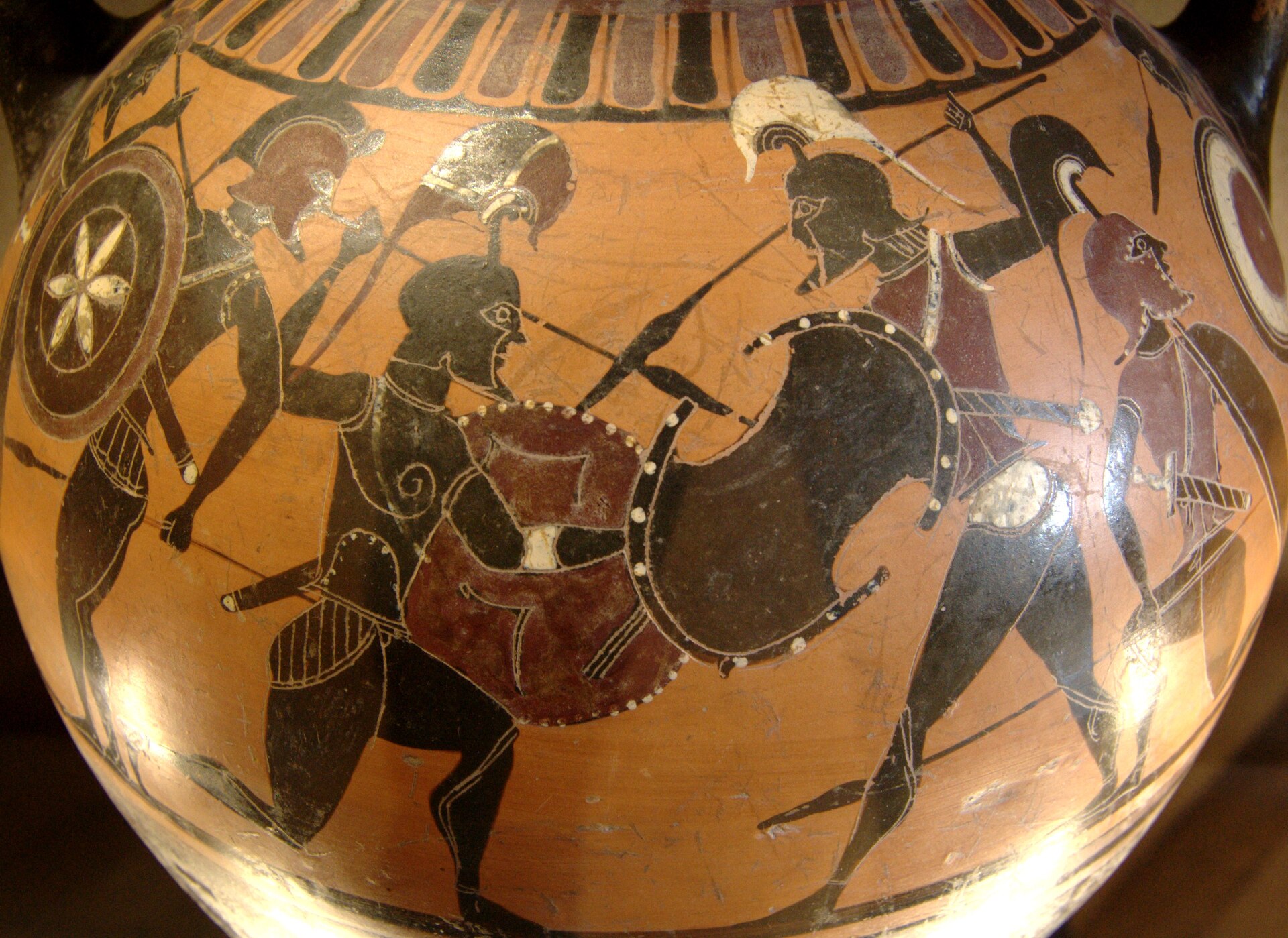
It was in Greece that the first warrior of the Age of Armor appeared — the hoplite. The hoplon was the shield of heavy infantry, up to a meter in diameter and weighing nearly ten kilograms, with comrades on both sides carrying the same shields. The hoplite wore a linothorax — a cuirass made of layers of glued linen. The only chance for enemy infantry was to flee — the armor was heavy. The Persians, opponents of the Greeks, answered with cataphracts — fully armored cavalry. Their weapon was the kontos, a huge spear more than four meters long. The warrior’s torso was protected by lamellar armor, and the face by a metal likeness of a human face. Armor protected both rider and horse. These were the tanks of antiquity…
THE AGE OF CHIVALRY
BRANCHES OF WARFARE
Battles are fought not only on land, but also at sea. Yet for many centuries, ships were not armored. They could, of course, be rammed, but naval combat most often turned into infantry combat through boarding parties. Only by the seventeenth century had naval guns grown powerful enough to demand respect. Armor’s response was explosive growth. A very revealing example was the battle between the world’s first two ironclads during the American Civil War: CSS Virginia of the South and USS Monitor of the North. For hours, the ships fired at each other point-blank. There were plenty of hits, but nothing more serious than small dents in the enemy’s armor was achieved. Quite an effort for so little result… Naval artillery increased in power, and the last two great fleet engagements in history — the Battle of Tsushima and the Battle of Jutland — did not pass without large ships being sunk by gunfire. During World War II, however, the terror of large armored warships was no longer enemy guns, but submarines and aircraft striking from a neighboring environment. And war came to the air as well.

At first, pilots simply fired at the enemy with their personal pistols — they had nothing else. A little later, aircraft were equipped with flechettes: dart-like rods with sharpened iron tips. If one fell onto a helmet, it could pierce straight through. Even bombs were initially carried by hand and thrown at the enemy’s head. Installing forward-firing machine guns on aircraft was not simple either — otherwise the plane would shoot off its own propeller blades. Only the synchronizer invented by the Dutch designer Anthony Fokker made it possible to fire through the propeller so that bullets passed between the blades. The British called it the “Fokker Scourge”, so greatly did German aircraft equipped with this improvement trouble them. But aircraft of World War I were almost never armored — every extra gram of weight had to be fought against. To combat them, enemy aircraft needed only machine guns. Heavier aircraft cannons appeared only during World War II, and powerful engines now made it possible to arm airplanes. But how exactly should that be done?
ABRAHAM WALD’S BRILLIANT SOLUTION
How to properly place armor on airplanes was ultimately suggested by a man with nothing military about him. He was unable even to finish school — he refused to attend classes on Saturdays, being a deeply observant Jew. Yet he studied brilliantly at the University of Vienna. He did not remain in Vienna for long, however — he fled to the United States after the Anschluss, and rightly so. His name was Abraham Wald, and it was to him that the American military turned with the question of how airplanes should be armored. By then, a large body of statistical data had been collected: the number of enemy hits in each zone of aircraft that had returned from combat. Most often, the wings and tail were damaged. The engine and fuel tanks — almost never.
The obvious solution seemed to be strengthening the armor of the wings and tail, since those areas were hit most often. But Wald asked whether all aircraft were being subjected to statistical analysis. He was told that everyone was measured, and as quickly as possible after landing. Wald immediately understood which aircraft were avoiding such detailed examination and ruining all the calculations — the ones shot down by the enemy, because they had clearly been hit in the most dangerous places: the engine or the fuel tanks. No statistics could account for them — no one even knew where their wreckage lay. Aircraft with holes in those zones were indeed rare because they had been destroyed. Therefore, those were precisely the areas that needed better armor.
SURVIVORSHIP BIAS
Wald’s paradoxical conclusions were not understood at first, but applying them in practice — reinforcing precisely those zones where returning aircraft showed relatively few hits — led to lower losses. Few bullet holes in a given area meant few aircraft had returned after being hit there, so that area needed stronger armor. The paradox that emerged from assessing aircraft damage data eventually received a special name: survivorship bias. People also say that dolphins push drowning swimmers toward shore and thus save many lives. However, no one counted the unfortunate swimmers they may have pushed away from shore!
The existence of such a paradox was already known to the ancient Greeks. As early as the fifth century BCE, the philosopher and poet Diagoras of Melos was told: “Honor the gods — look how many tablets in the temple give thanks for divine protection during dangerous voyages!” Diagoras replied: “And where are the tablets bearing the names of those who drowned at sea? Who could have left them?” There is a similar paradox involving the availability of information. Ask yourself: which is more common — murder or suicide? Did you decide to murder? Incorrect. Suicides are nearly twice as numerous; they are simply reported less often in newspapers. Such are the tricks of statistics. If you understand them, you may even know how to arm an airplane properly.
When copying materials, please place an active link to www.huxley.media
Select the text and press Ctrl + Enter