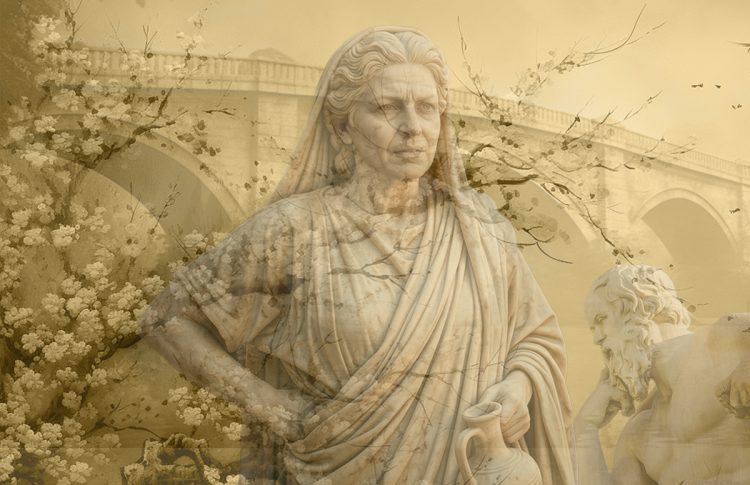
BORIS BURDA: How to Protect What Endures Everything


Japanese papier-mâché incense box (inuhariko) in the shape of a dog, 1840 / metmuseum.org
ATTENTION — QUESTION!
In Germany, it is used to make fertilizer; in Japan, construction materials and souvenirs; in Hungary, fuel briquettes; in Romania, trash bins; and in Ukraine, collectible cylinders… What is it made from?
ATTENTION — THE CORRECT ANSWER!
Why, from waste paper, of course!
NOT UNLIMITED
P
erhaps, long ago, primitive people were not concerned about whether they would always be able to take everything they needed from the environment around them. But I suspect that such confidence did not last long. They stripped a berry bush down to its branches, scared away the fish from a good cove — and that was it. Goodbye. Would they find more? Most likely, the real problems began some 7–8 thousand years ago, when people started using at least native metals (first, obviously, copper, and then silver and gold). Every single piece was precious. If a homemade object made of such metal broke, throwing it away was unthinkable — it was of enormous value! You had to make something new out of it.
Nothing changed even when alloy products came into use — bronze made of copper and tin, electrum made of gold and silver. An item that had become unusable was not discarded but turned into material for making another object. The resource required for it became secondary — thus the first recycled material appeared. For a long time, metals were the only material that, once in human hands, was used to the utmost. Vegetation was abundant everywhere; if you needed more wood, you could simply go and cut it down. There were, and still are, stones in great quantities. As for scraps of fabric, it was not always clear what to do with them — once worn out, they were thrown away. And then another kind of shortage emerged.
A SUPER-IMPORTANT MATERIAL
More than 5,000 years ago, a new and most important system of communication appeared — writing. At first, the necessary signs were scratched onto stone; then they were pressed into clay, which was subsequently fired; later, they were drawn on thin strips of Egyptian papyrus. All of this was quite costly, and there was never enough material. In 105 CE, the Chinese eunuch Cai Lun invented a revolutionary component for this purpose — paper. It is clearly no less important than stone, copper, and bronze — yes, there were the Stone, Copper, and Bronze Ages, but is our time not called the Paper Age?
The earliest paper was made from all sorts of materials: mulberry cocoons, hemp, hemp fiber, old fishing nets, ash, and rags. Even so, there was never enough of it. There has always been a shortage of material for paper, and there still is today — though now more for environmental reasons than economic ones. Where was it to be obtained? Today it seems simple, as if the idea lies on the surface. But even then people realized that if metal was hardly ever discarded and instead went back into the furnace, paper waste could likewise serve as raw material for producing paper itself. Thus, the idea of recycling — the secondary processing of raw materials — finally took shape.
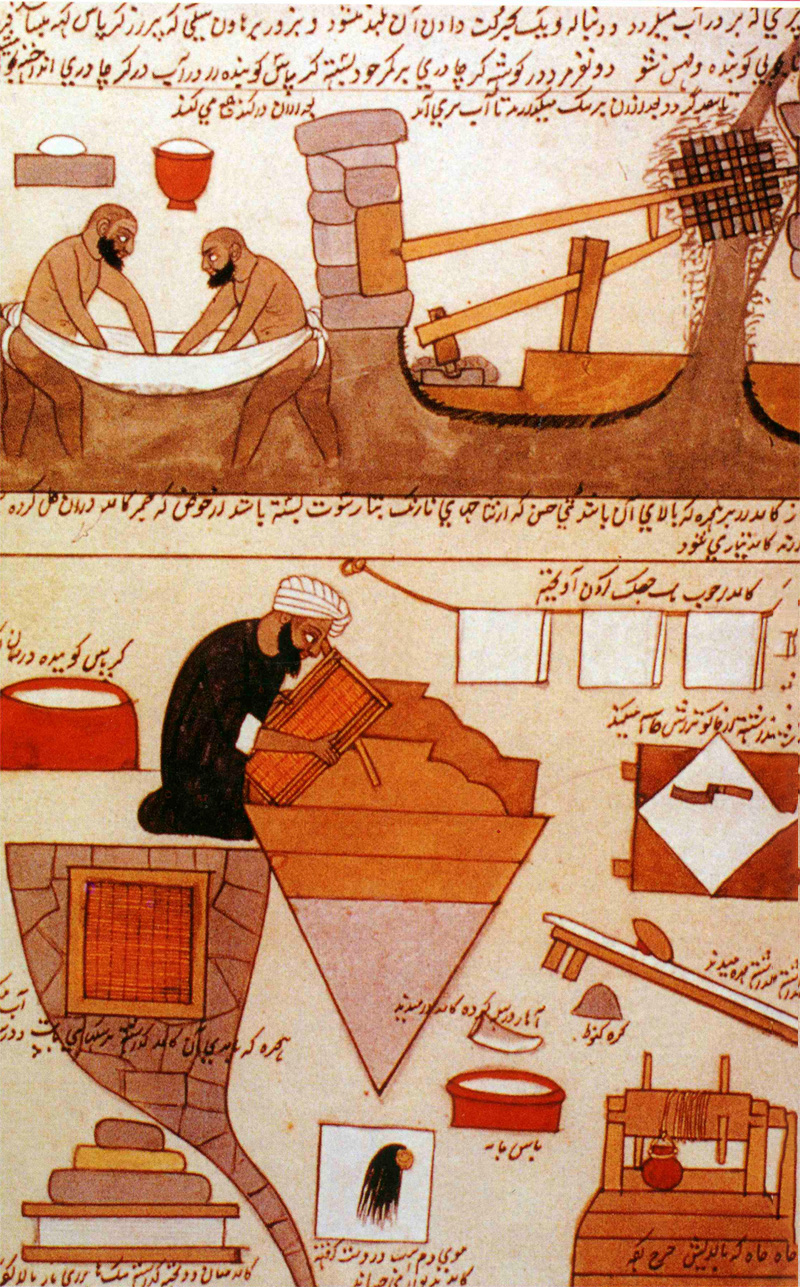
SINCE 1031 — WITHOUT INTERRUPTION
The decisive date for the new method was 1031, though by no means in China, which at the time was going through rather troubled years, but in disciplined and meticulous Japan, where the Chinese invention had long since taken root. It is difficult to find an exact reference to a specific Japanese document, yet this date appears on numerous papers. It was then that Japan officially organized the collection and recycling of old, soiled paper. Had the Japanese known Latin at the time, they might have called it «maculature» (from the Latin maculo — stain), but I believe that a word for it surely existed in the Japanese language of that era as well. Incidentally, China soon adopted a similar practice.
Europe had to wait until 1588, when the thrifty Elizabeth I of England granted tax incentives to those who supplied paper mills with old rags — the primary raw material for papermaking in regions where people had not yet mastered the efficient processing of hardwood into pulp. Mills that failed to use recycled materials were fined. Soon in France, collectors of recyclables (known there as les chiffonniers) went from door to door, offering money for scraps and remnants of old fabric and unwanted paper. Yet all of this looked like a primitive handicraft compared to the end of the nineteenth century, when the Fourdrinier brothers in England launched the first paper-making machine.
AFTER DEINKING
The new machines were already able to process wood without difficulty, but the question remained: what to do with the large quantities of paper scraps and production waste? The solution proved simple — they were returned to the production cycle. However, old written sheets and printed pages were not yet reused, as they were stained with ink. In 1774, the German jurist Justus Claproth devised deinking — a method for removing ink residues from paper pulp. This made it possible to significantly improve the quality of paper produced using waste paper. From then on, it could be used not only to make coarse packaging cardboard and papier-mâché.
Centralized collection of waste paper began worldwide and continues to this day. The global leader in this process (accounting for 50% of the total world collection) is China — a vast country with an enormous demand for packaging. China no longer has enough of its own waste paper and purchases it abroad — it has become an export commodity. Yet in terms of efficiency, Europe and Japan leave China far behind. In Germany, for example, the target of returning 85% of waste paper to production has been set — and achieved. Special blue containers are installed everywhere, and the orderly population places paper only in them. Violate the rule, and the garbage may not be collected; then do as you please.

AND THIS IS HOW IT WAS WITH US
The economic benefit of collecting waste paper became so obvious that even the USSR — where profitability was a somewhat abstract concept — decided to join the majority. There was no doubt about how to achieve this: through unpaid labor, voluntary in name, but more often compulsory. Most inventively of all — child labor. It so happened that this period coincided with my own school years. One day, when I was either in the fifth or sixth grade, we were told that there would be no classes the next day because we would be engaged in an important task for the whole country — collecting waste paper. No one knew what that was, and the teacher had to explain it to us.
Each group of three or four students was given a list of apartment buildings to visit. We rang every doorbell and asked for waste paper, explaining along the way what it meant. I will not lie — we were not chased away. Most often, people said they had already thrown everything out; sometimes they gave us something — a small pile of old newspapers, occasionally even ordinary books. Returning to school, we dumped our haul into a designated corner of the schoolyard. It lay there for quite a while and then disappeared — where to, I have no idea. This went on for a couple of years and then stopped — apparently, the losses from this initiative exceeded the gains. Just as happened with sending engineers to collective farms to help bring in the harvest.
AND IT WORKED!
In time, when it became clear that schoolchildren would not save the paper industry, someone at the top finally had to think hard and come up with a way to genuinely interest people in collecting waste paper. The solution was simple: offer them in return what was permanently scarce in the Soviet Union — good books. Why were books in short supply? The reason was obvious: enormous print runs were devoted to the works of secretaries of the Writers’ Union and all kinds of propaganda that no one read, while there was not enough paper left for truly popular literature. Now, however, anyone who handed in 20 kilograms of waste paper could purchase a book they genuinely wanted.
The first «waste-paper queen» was Queen Margot by Dumas. Later came his The Count of Monte Cristo and Twenty Years After, The Good Soldier Švejk, books by Stevenson, The Uryum River by Shishkov, works by Pikul, Kipling, One Thousand and One Nights… The print runs of these books quickly rose to three million copies, and small queues always formed at waste-paper collection points. It was by no means a foolish idea — it irritated no one, people participated of their own free will, benefiting themselves and their country, and there was no need to force anyone. I am afraid that the lack — and the belated appearance — of such ideas played a fatal role in the fate of that country. And without waste paper, even now, there is no way forward — the demand for it continues to grow.
When copying materials, please place an active link to www.huxley.media
Select the text and press Ctrl + Enter