BORIS BURDA: How to quickly extinguish any fire

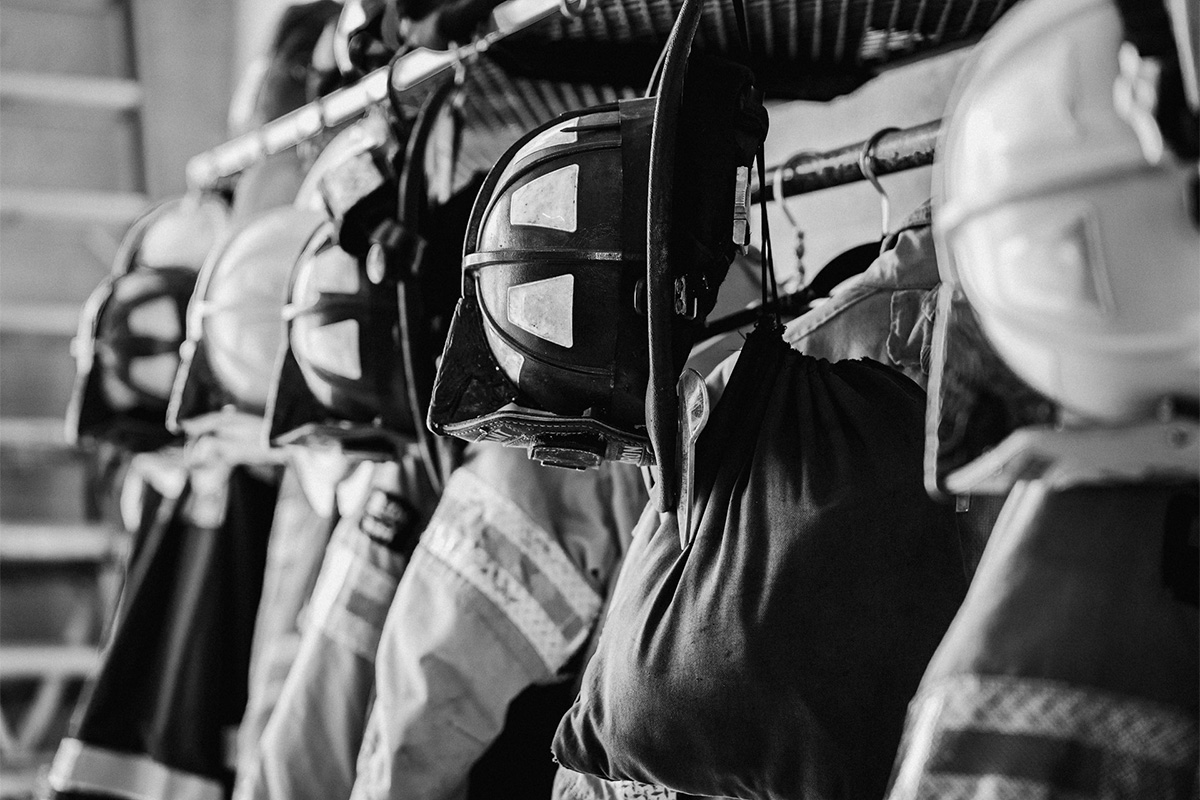
Photo by Ken Steele II on Unsplash
ATTENTION — QUESTION!
If, according to Konstantin Melikhan, love is fire, then what, in his view, is marriage?
ATTENTION — THE CORRECT ANSWER!
A fire extinguisher, of course. Any objections?
THE MOST DANGEROUS OF THE ELEMENTS
E
verything is complicated now — whether the world consists of the 118 elements of the Dmitri Mendeleev periodic table, or 17 elementary particles, or something else entirely, remains unclear. But a couple of thousand years ago, there were only four fundamental elements from which everything was made: Earth, Water, Air, and Fire (the Chinese also had Metal, but they always did things their own way). And Fire was the most dangerous of them all. Even the gods of fire in many very distant religions are remarkably similar — terrifying and dangerous. Whether it is the Japanese Katsuguchi, who killed his mother at birth, or the Scandinavian Loki, who is considered a negative character even in a pantheon where the chief god Odin calls himself Bolverk (that is, evildoer). In short, they are not to be trifled with.
The terrifying power of fire is embodied in a blaze. Fires began on Earth some three hundred million years ago, somewhere between the Ordovician and Devonian periods, and this was not entirely bad news — it meant that the percentage of oxygen in the Earth’s atmosphere had risen above 16%, because below that level, fire is impossible. In nature, fire is something ordinary and even necessary. The beginning of the life cycle of almost every mixed forest is precisely a forest fire. The giant sequoia tree can begin to grow only after a forest fire — without it, the sequoia cone will not even open and release its seeds. For everyone, fire is a disaster, but for some, it is the beginning of life…
THE DESTROYER AND RENEWER OF CITIES
The earliest known fire to destroy a city occurred about 9,000 years ago in Çatalhöyük — and it would be hard to find cities older than that. When Heinrich Schliemann discovered the city of Troy, it turned out to be a succession of cities built one atop another, and one of them had perished in flames. Jericho was clearly burned more than once, the Elamites set fire to Ur 4,000 years ago — there was no shortage of such disasters… Sometimes, fire not only destroyed a city but also renewed it. The Great Fire of London in 1666 made it possible to build the city center that has survived to this day. The Great Fire of Rome also proved beneficial — wide, straight streets appeared. And Rome’s fire brigade improved after it and acquired an almost modern form.
Moscow burned more often than it would have liked. The All Saints Fire of 1365 wiped the old Kremlin off the face of the Earth, and Dmitry Donskoy built the present one in its place. Wars caused terrible fires in 1571 (when the Tatars set fire to the suburbs), in 1611 (when the Poles practically burned the entire city), and in 1812 (during Napoleon Bonaparte’s campaign, of course)… Sometime during the Middle Ages, almost all major cities established fire brigades. By the end of the 19th century, they usually consisted of five units: water supply, hose, ladder, axe, and security. Cities had boards equipped with firefighting tools, and every firefighter knew exactly where to run and what to grab in the event of a fire.
YOU CAN’T PUT EVERYTHING OUT WITH WATER
Almost everyone imagines the main job of firefighters as simply dousing flames with water until the fire goes out. But by now we already know that this is not a universal solution. For example, burning petroleum products usually cannot be extinguished with water. Alternative means are needed — but which ones? The first device created specifically for firefighting was invented in 1715 by the German Zacharias Greyl — a 20-liter barrel of water with alum and a gunpowder charge mounted on top. You throw the barrel into the seat of the fire, it explodes, and extinguishes the blaze with water and alum. In 1734, the Englishman Ambrose Godfrey improved the device, and it came into widespread use. That same year, the German physician Fuchs proposed a new firefighting method — glass jars filled with saline solution.
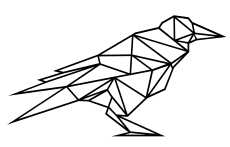
The enterprising Fuchs literally organized an advertising campaign every month, during which thousands of leaflets were distributed depicting fires being extinguished with his invention. And in 1813, the Englishman George Manby created a prototype of the modern fire extinguisher, though not a handheld one — it was large and transported on a cart. A considerable part of its weight came from a reservoir containing 13 liters of potash — by then it was already known that water mixed with potash extinguished fires more effectively. It performed quite well in practice. But it was clearly surpassed by the fully portable fire extinguisher created in 1865 by the American Alanson Cray — no delivery problems whatsoever: just grab it and put out the fire. February 7, the day the patent for it was issued, is celebrated around the world as Fire Extinguisher Day. However, an important invention for fire extinguishers was yet to come…
LAURENT
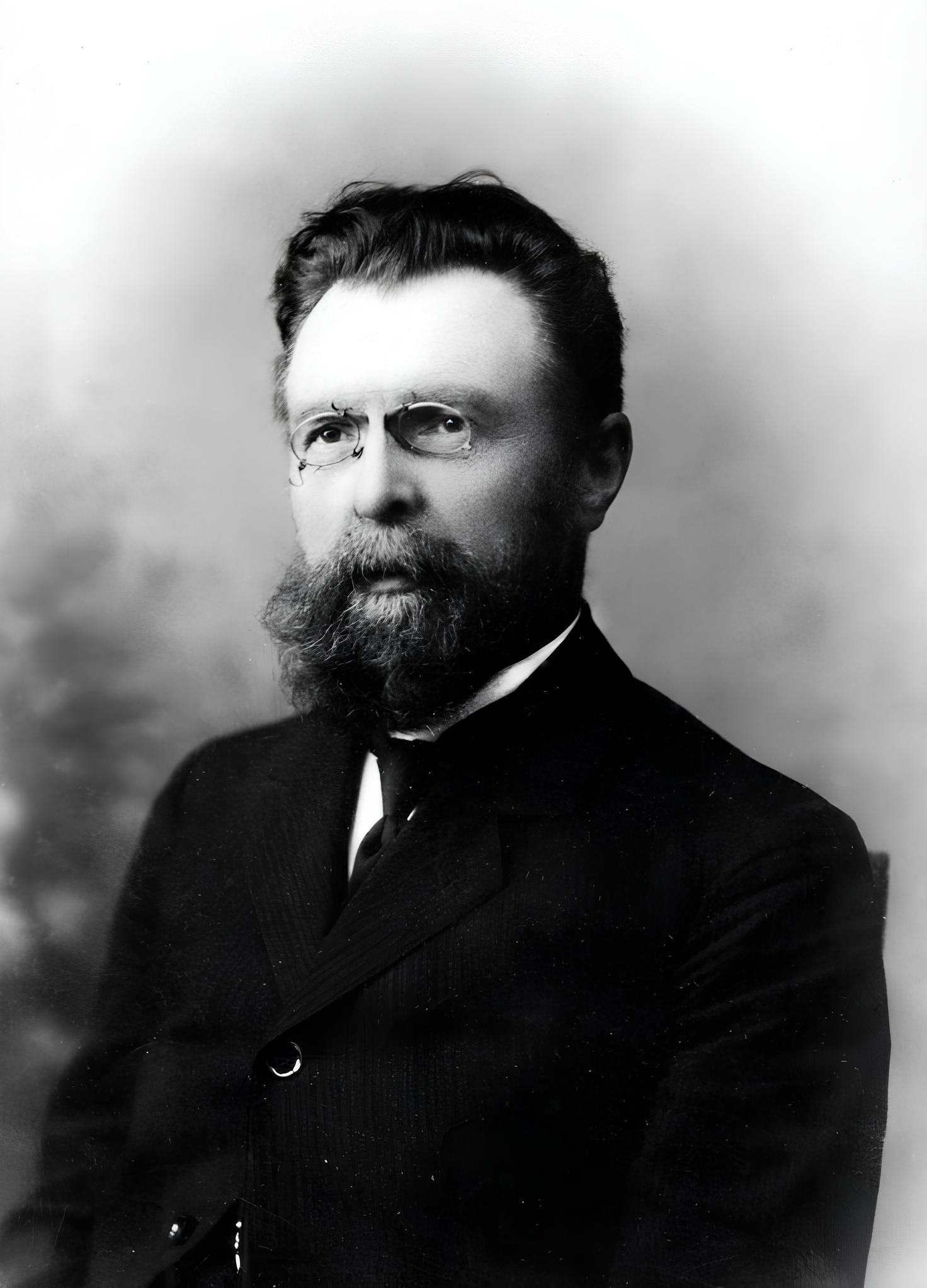
And the man who would make that invention was at the time still studying at the Richelieu Lyceum in Odesa. He was fortunate — I know this school well, I worked there a little myself, and my stepdaughter graduated from it — it is the kind of school whose students remember their education there with joy for the rest of their lives. His grandfather, a Frenchman from Lausanne, taught there. After school, Alexander Laurent studied in Saint Petersburg and Paris, and later worked as a teacher in Baku. There, he witnessed a disaster all too common in Baku — oil fires, which all existing firefighting methods of the time handled poorly. The other residents of Baku were somewhat upset by this and carried on with their lives, but he began to think.
What exactly prompted him, we will never know now. The longer versions of the legend claim that, upon seeing a bucket of burning oil, he extinguished it by pouring beer over it (from a nearby kiosk?). More modest stories say that, while looking at a beer mug full of foam, he decided that foam might help. Legends are like people: they live, reproduce, grow, and change… For some reason, it is easier to believe that he noticed how foamy sea surf extinguished burning oil, while plain water without foam did not. But the fact remains that Laurent reached the correct conclusion: foam extinguishes fire better than liquid. He patented a new method of firefighting — using foam. And for producing the foam, he proposed two methods at once — mechanical and chemical. The mechanical method involved mixing water with foaming agents and other chemical additives under pressure and pumping the mixture into the fire extinguisher, producing abundant foam afterward. The chemical method consisted of mixing two liquids at the outlet — one combined with carbon dioxide, the other with a foaming agent such as licorice, albumin, or soaproot.
EUREKA!
After enduring the requisite share of suffering in the labyrinths of bureaucracy, Alexander Laurent decided to begin producing his fire extinguishers himself. He called them “Eureka!” — remember, that was the word Archimedes shouted (in Greek: “I have found it!”) when he solved a problem that today is given to fifth-graders… During trials in 1909, the “Eureka” extinguishers competed against the German “Minimax” and “Phoenix”. The results spoke for themselves: “Eureka” extinguished a fire in a railway car in 30 seconds, “Phoenix” did it in 95, while “Minimax” failed altogether. True, in terms of convenience and durability, “Eureka” came in last — but that is understandable…
After the appearance of “Eureka”, all manner of Bucher cartridges, Garden grenades, Wiener cylinders, “Russia” bombs, and similar firefighting devices quickly disappeared — those were the names of firefighting tools of the time that failed to withstand the competition. And not always fair competition — the developers of the “Minimax”, defeated at the contest, wrote to the authorities demanding that “Eureka” be banned… Today, foam fire extinguishers of all kinds stand guard against fire in every respectable city in the world. With the exception of La Paz, the capital of Bolivia, there are practically no fire extinguishers there. It is easy to neglect the elementary rules of fire safety at an altitude of four kilometers — there is simply not enough oxygen there for a fire…
Now the fire extinguisher has even become a folkloric character. There is a humorous kenning about it — “the wolf of the death of the herd of trees”. It all makes sense: a herd of trees is a forest, the death of a forest is a fire, and the wolf of fire is the fire extinguisher itself. And in the animated film Ivashka from the Palace of Pioneers, the main character defeats a fairy-tale creature with a fire extinguisher. Which one? Zmey Gorynych, of course…
When copying materials, please place an active link to www.huxley.media
Select the text and press Ctrl + Enter


