BUILDING A LIBRARY: From «The Aeneid» and «The Cathedral» to «The Orphanage» and «Babornia»

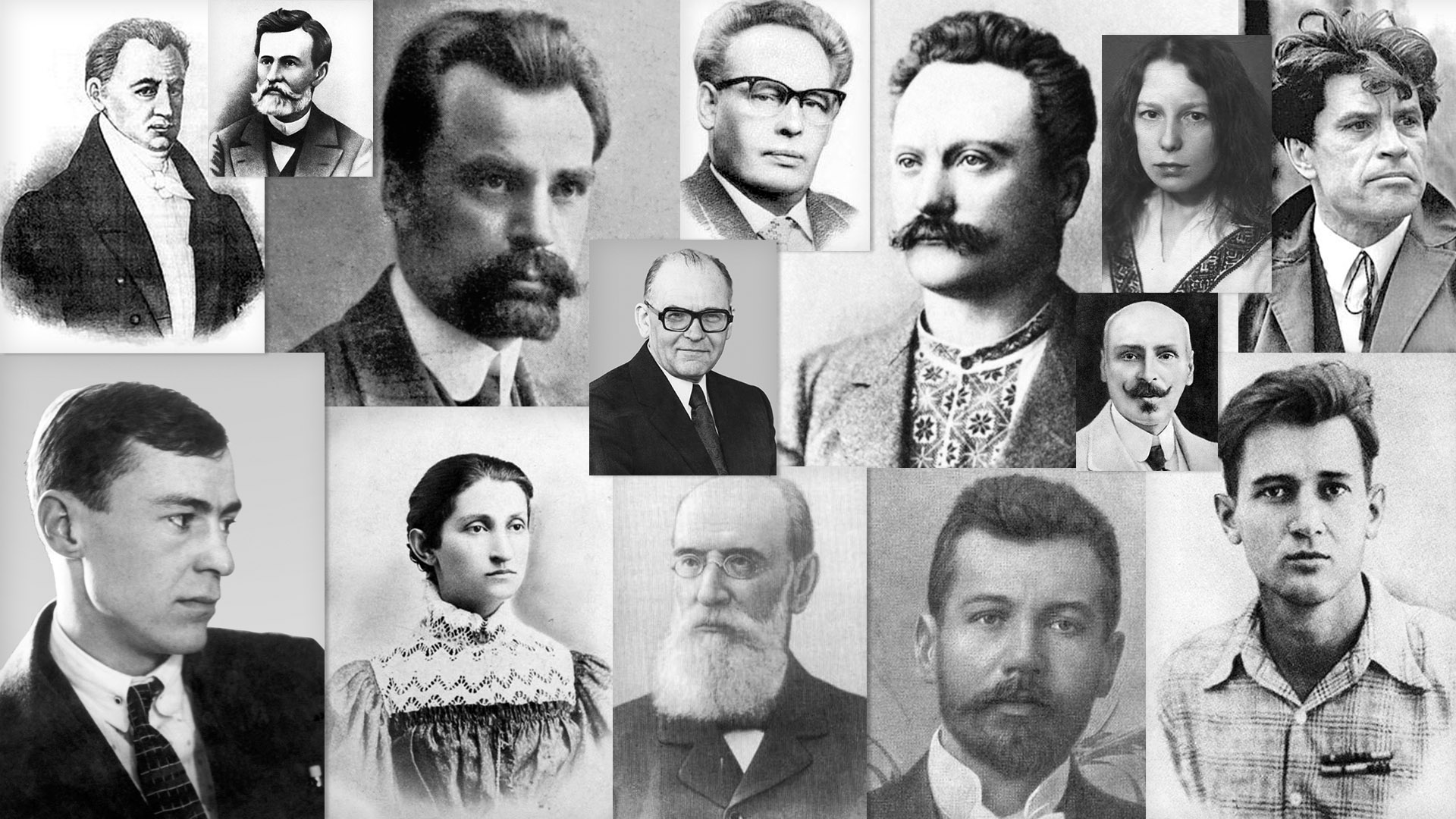
Art design: huxley.media via Photoshop
An introductory guide for those who know only that Ukrainian literature exists — as well as for those who are far more familiar with it.
The answer to the question, «What is worth reading from Ukrainian literature?» is both simple and complex. For a Ukrainian-speaking audience, a different question is more relevant: «What’s new from writer A, B, or C?» But when it comes to those who have only recently taken a serious interest in Ukrainian literature, things become more complicated.
Because in this case, «new» may refer not only to recently published works, but also to books released long ago that have still not been read. Or to texts that were read back in school years, but only as mandatory items of the curriculum.
And such works, as we know, are perceived very differently from what is read willingly and for pleasure. Taking this factor into account, Huxley has compiled its own list of must-read Ukrainian-language works created over the past two centuries and more.
#1 And it is opened by Eneida. But not Virgil’s — rather, that of Ivan Kotliarevsky. For the ancient Roman poet Virgil, the story of the prince of the burned Troy was a tale of the adventures of the ancestor of Rome’s founder. His Ukrainian counterpart, two millennia later — more precisely, in 1798 — used this classical plot to vividly, and at times humorously, recount the fate of the Ukrainian Cossacks after Catherine II liquidated the Zaporizhian Sich.
#2 Readers will also have plenty to laugh about in another classic of Ukrainian literature — Kaidasheva Simia by Ivan Nechui-Levytsky (1878). And although the center of the story truly is a single family — a father, a mother, two sons, and two daughters-in-law — the main heroine turns out to be a pear tree. It is precisely over the right to own its fruit that the final conflict of the novella erupts — a dispute over property rights. And although the little tree eventually perishes, the peace that follows its death is, in fact, a fragile truce. Because no true Ukrainian peasant will give up what he or she considers their own. Which means that sooner or later, instead of the disputed pear, an equally disputed plum tree, a raspberry bush, or a patch of land will appear.
#3 However, had the protagonist of Khiba revut voly, yak yasla povni? by Panas Myrnyi been a landowner, nineteenth-century Ukrainian literature might not have been enriched with a plot suitable for a film about the realities of the «wild 1990s» of the twentieth century. Because the writer’s arsenal contained the full set of elements required for a gangster drama. Namely: a child humiliated in childhood and born into a dysfunctional family, robbery as a means of self-realization, a love story, a rise from rags to riches, the fateful role of compromising evidence, and, of course, a crime followed by punishment.

#4 One year after The Oxen, in 1881, the first part of Boryslav Smiiietsia by Ivan Franko was published. And although it is commonly believed to be devoted to the emergence of the labor movement in the oil fields of Galicia, the greatest interest lies with those who actually developed those fields. Among them were figures who today would be called self-made men. So if you have already come to appreciate Trilogy of Desire by Theodore Dreiser, this is the place for you. Incidentally, its first volume was published 30 years later than Boryslav — which, unfortunately, was never completed.
#5 By contrast, the novella Novyna (1899) by Vasyl Stefanyk is complete and perfect in its form. The tragedy at its core was recounted to the author by one of its participants — the sister of the girl killed by her own father.
#6 The scene of the seduction of a 13-year-old girl begins the novel ‘The Village is Not People’ by Lyuko Dashvar, winner of the ‘Coronation of the Word’ award (2007). As the plot develops, the reader is drawn deeper and deeper into the atmosphere of the heroine’s native village, a mixture of unconscious debauchery bordering on innocent ignorance and love that grows into lust. Accused of promiscuity, the heroine, like her namesake in Shevchenko’s poem, is forced to flee. But in time she returns — either to become a sorceress or to leave this world forever.
#7 But if it seems to you that nothing can be more terrifying than a crime committed against a child, you are mistaken. What the ten-year-old heroine of Solodka Darusia (2004) by Maria Matios commits turns out to be even more horrific. Unaware of what she is doing, the little girl betrays her father, thereby condemning him to death. She herself is forced to pay for this act for the rest of her life — and the price exacted brings not only moral suffering, but physical pain as well.
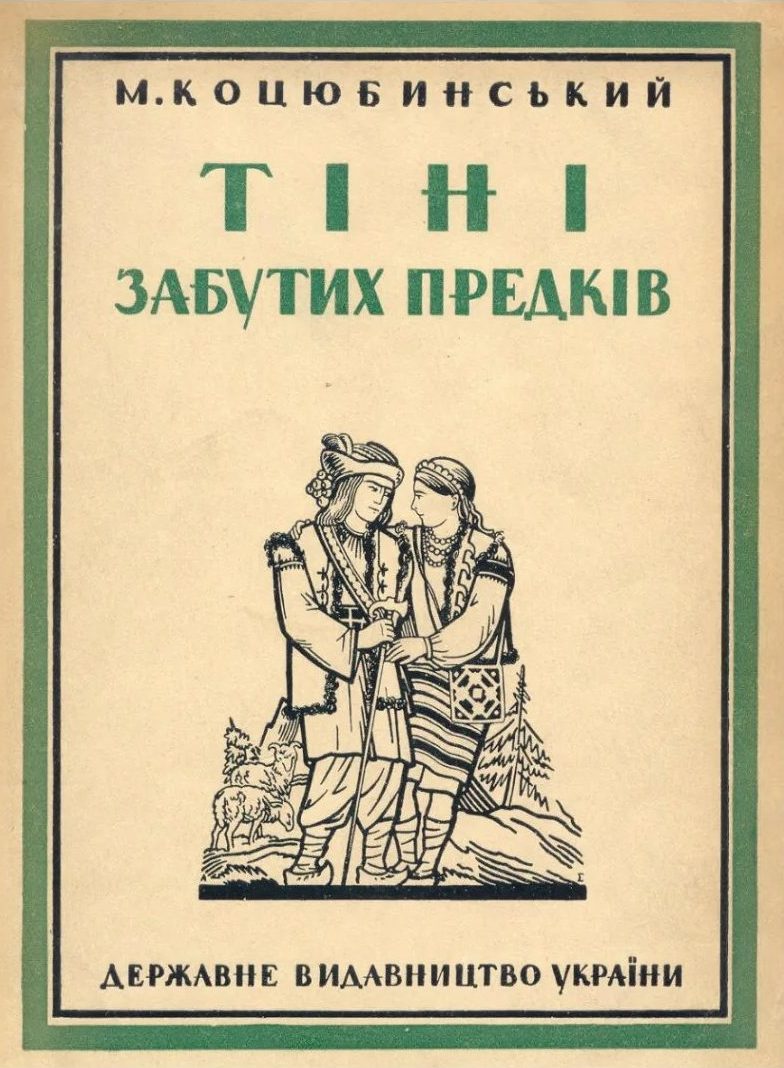
#8 Death — or rather, laughter in the face of it — brings Shadows of Forgotten Ancestors (1911) by Mykhailo Kotsiubynsky to its close. The story of the Hutsul Romeo and Juliet deserved inclusion on this list at the very least because it became the basis for the brilliant film of the same name by Sergei Parajanov.
#9 Parallel to The Shadows, yet unfolding in a completely different, intellectual milieu, runs the love story of the novel Zapysky kyrpatoho Mefistofelia (1916) by Volodymyr Vynnychenko (later the head of the First Directory of the Ukrainian People’s Republic). In fact, there is no devilry or mysticism in the work at all: the nickname is one the protagonist — a lawyer — gives himself. And while Goethe’s Mephistopheles merely assists Faust in matters of love, his Ukrainian namesake becomes a victim of his own tangled relationships with women.
#10 Meanwhile, by that time women themselves were already thinking not only about love and a successful marriage — the ultimate life goal — but also about self-realization. Like the heroine of Tsarivna (1895) by Olha Kobylianska. A young woman seriously concerned with gender inequality, she dreams of obtaining a proper education and earning her own living. Her views — exotic for that era — find no understanding among her family and close circle, so she is forced to agree to an unequal marriage, unequal in terms of age. Still, the novella’s ending is happy and decidedly optimistic.
#11 Far less optimism is offered by the ending of Misto by Valerian Pidmohylnyi. The title is no accident: having set out to conquer Kyiv, the protagonist finds himself trapped by the city instead. Outwardly, everything turns out well — a peasant’s son becomes a well-known writer. Yet inwardly there is discord and dissatisfaction, both with himself and with the dream that has come true.
The ending is open: the hero meets another love and begins work on a long-conceived book. But will he write it? After all, the events of The City unfold in 1927, when, following the unfulfilled hopes of the NEP, a course was taken toward rigid economic regulation — one of the consequences of which was the Holodomor that claimed millions of Ukrainian lives.
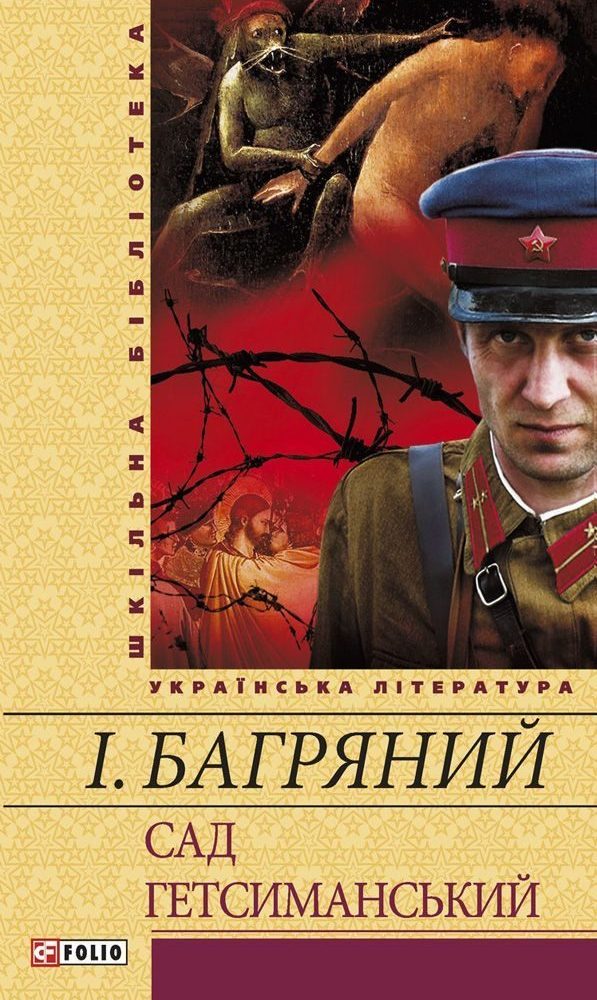
#12 And after that came the GULAG — of which Ivan Bahrianyi was an almost-inmate. Two arrests, interrogations involving torture, solitary confinement, a sentence of exile to Siberia, escape, and return to his homeland — all of this formed the basis of his novel Sad Hetsymanskyi (1950).
#13 Siberia as a place of exile is also present in one of the most beautiful novellas by Hryhir Tiutiunnyk — Try zozuli z poklonom (1976). It is about a love stronger than separation. Although separation, as the poet once said, sometimes truly turns out to be longer than love.
#14 A decade earlier, the first novel of the trilogy I budut liudy by Anatolii Dymarov was published. However, the work appeared in its entirety, without cuts, only at the beginning of the twenty-first century. The reason for the censorship was the depiction of the realities of collectivization and the Holodomor. And yet the main storyline of The People is a family one. It includes a marriage of convenience, marital infidelity, a rift between fathers and children, and a love that survived years of separation.
#15 Not years but centuries are endured by the Cossack cathedral around which the conflict of the novel of the same name by Oles Honchar unfolds — Sobor (1968). The question of whether the half-ruined structure should exist or not becomes a dilemma between preserving historical memory and striving for a future that either destroys that memory or reduces it to what today would be called a set of memes.

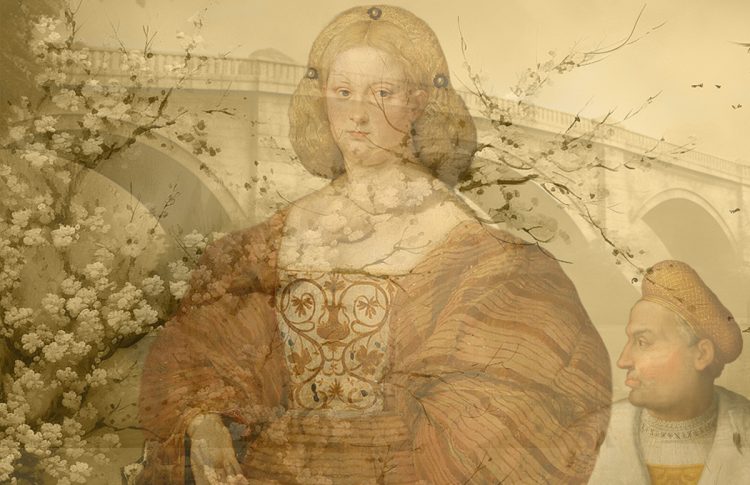
#16 And yet the first historically documented #MeToo confession may have been made by Empress Adelaide. Born the Kyivan princess Yevpraksiia, sister of Volodymyr Monomakh, in 1093 she publicly accused her husband — Henry IV, Emperor of the Holy Roman Empire — of sexual violence and debauchery. A church council condemned the conduct of the crowned abuser, and his victim returned to her homeland. This story is told in the historical novel Yevpraksiia (1975) by Pavlo Zahrebelnyi.
#17 The fact that the lives of princesses, queens, and other high-born ladies of past eras were far less idyllic than imagined by little girls dreaming of luxurious dresses and handsome princes is also explored in the novel Dama z pokrytoiu holovoiu. Femme couverte (2019) by Anastasiia Baidachenko.
Its heroine, Marguerite, was the niece of the mad King of France Charles VI, who ruled during the Hundred Years’ War. Married off while still a child, Marguerite was first sent to a remote castle — to mature to an age when the marriage could be physically consummated.
Several years later she was delivered to her husband in order to finally fulfill the very purpose for which this political marriage had been conceived: to give birth to the legitimate heirs of her husband’s title and lands. Needless to say, there was no question of lofty feelings.
Only submission to fate, to husband, and to God — and countless childbirths, exhausting or ending in premature death. Such was the fate of most noblewomen of the past. Such, or almost such, was the fate of Marguerite as well. With one exception — she dared to fall in love.

#18 Another historical novel — Mahnat (2014) by Halyna Pahutiak — is devoted to the fate of the Ukrainian diplomat, poet, publicist, and publisher Jan Szczęsny Herburt. We learn about it through the novel’s protagonist — a poor nobleman. Having accidentally ended up at the estate of the disgraced magnate, whose death was sudden and suspicious, the nameless character agrees, in exchange for decent payment, to play the role of Herburt at his funeral.
#19 Stolittia Yakova, which became the winner of the Koronatsiia slova–2016 prize, cannot be called a historical novel in the strict sense of the word. But if you want to gain an understanding of what was happening in Volhynia in the first half of the twentieth century — and at the same time grasp how a man can love two women simultaneously — do not miss the opportunity to read this book by Volodymyr Lys.
#20 Yet the object of love can take many forms — including one that ought to inspire shame. This is exactly what happens to the heroine of Babornia by Myroslav Laiuk, a novel shortlisted for the BBC Book of the Year–2016. Accidentally discovering skeletons in her own closet, an elderly schoolteacher realizes that what she had truly considered the meaning of her life and the source of her pride was not love for a hero, but love for an executioner.

#21 Once again, a family story — and once again Volhynia (1937). This time, in the eponymous epic by Ulas Samchuk. Chronologically, its events span three decades — from the beginning of the twentieth century to the 1930s. Yet for the people of Volhynia, for all Ukrainians, and, of course, for the family whose story is depicted in the novel, this period was both tragic and transformative. Notably, it was this very novel by Samchuk that was put forward for the Nobel Prize in Literature. But it did not come to pass.
#22 Another work with a historical — and also gastronomic — flavor is Felix Austria by Sofia Andrukhovych. In her portrayal, Stanislav (now Ivano-Frankivsk) at the beginning of the twentieth century is refined and gastronomically lavish. And this luxury is the creation of the hands of the main heroine — a servant and at the same time a friend to her mistress.
The relationship between these two young women can be described as friendship, codependence, and servitude all at once. The attempt to break free from it ends in tragedy — just as this story itself begins with tragedy.
In 2014, the novel Felix Austria was named BBC Book of the Year. In addition, it was included in the list of the one hundred best Ukrainian literary works compiled by the Ukrainian PEN Club. It was joined there by several of the books mentioned above: Kaidasheva Simia, Khiba revut voly, yak yasla povni?, Sad Hetsymanskyi, Misto, Zapysky kyrpatoho Mefistofelia, Eneida, Shadows of Forgotten Ancestors, Try zozuli z poklonom, and Solodka Darusia.
#23 From gastronomic variations — to a variation on the theme of music. More precisely, to the novel Mozart 2.0 (2020) by Dorzh Batu. Finding himself in contemporary New York, the composer Wolfgang Amadeus Mozart discovers that it bears little resemblance to the Austria he once knew. What is more, music in the twenty-first century sounds very different from the kind to which the brilliant composer was accustomed.

#24 Another variation — this time on a biblical theme (and how could one do without it!). The Book of Genesis. Chapter Four (1989) by Oksana Zabuzhko is the story of Cain and Abel in a world where murder serves as a pass to the status of a full-fledged member of society — and to the right to a proper name, taken from the one who became your victim.
#25 Another, no longer (anti-)utopian world becomes the new reality for the heroines of the novel Hastarbaĭterky (2012) by Natalka Doliak. The title speaks for itself: the book is devoted to women who go abroad to earn money. Each of them takes this step in pursuit of a dream. Yet only one will manage to realize it.
#26 The fate of the heroines of Frau Müller Is Not Inclined to Pay More by Natalka Sniadanko (longlisted for the BBC Book of the Year–2013) turns out more fortunate. As in Gastarbeiterki, the protagonists — two friends — leave Ukraine in search of a better life. And this search might almost be called successful, if not for the death of one of the women.
#27 The European Union becomes the setting for another novel — A Schengen Story by Andrey Kurkov (longlisted for the BBC Book of the Year–2017). Setting out to conquer the expanses of the EU accompanied by a one-legged guide, six young people have no idea that their dreams will turn out to be far more rosy than reality — and that the saying «there’s no place like home» is not so far from the truth after all.

#28 Yet the protagonist of Internat by Serhii Zhadan is forced to leave his home. The choice a schoolteacher must make after the Russian occupation of Donbas is far from simple and therefore avoided for as long as possible. But there comes a moment when the color of the flag flying over the school becomes decisive…
With this book — the twenty-eighth on the list — Huxley concludes its selection. The ordinal number, ending with neither the traditional zero nor the digit «5», is no coincidence. This list of must-read Ukrainian literary works — contemporary and classical, forgotten, once banned, and newly republished — makes no claim to completeness or absolute objectivity.
If only because such recommendations depend directly on the tastes of the recommender. And, as we know, tastes are not to be argued. Thus, the ellipsis at the end of the list not only signifies that the story continues, but also invites each of you to add your own book to that continuation.
When copying materials, please place an active link to www.huxley.media
Select the text and press Ctrl + Enter