BULGAKOV ON SCREEN: The House He Built

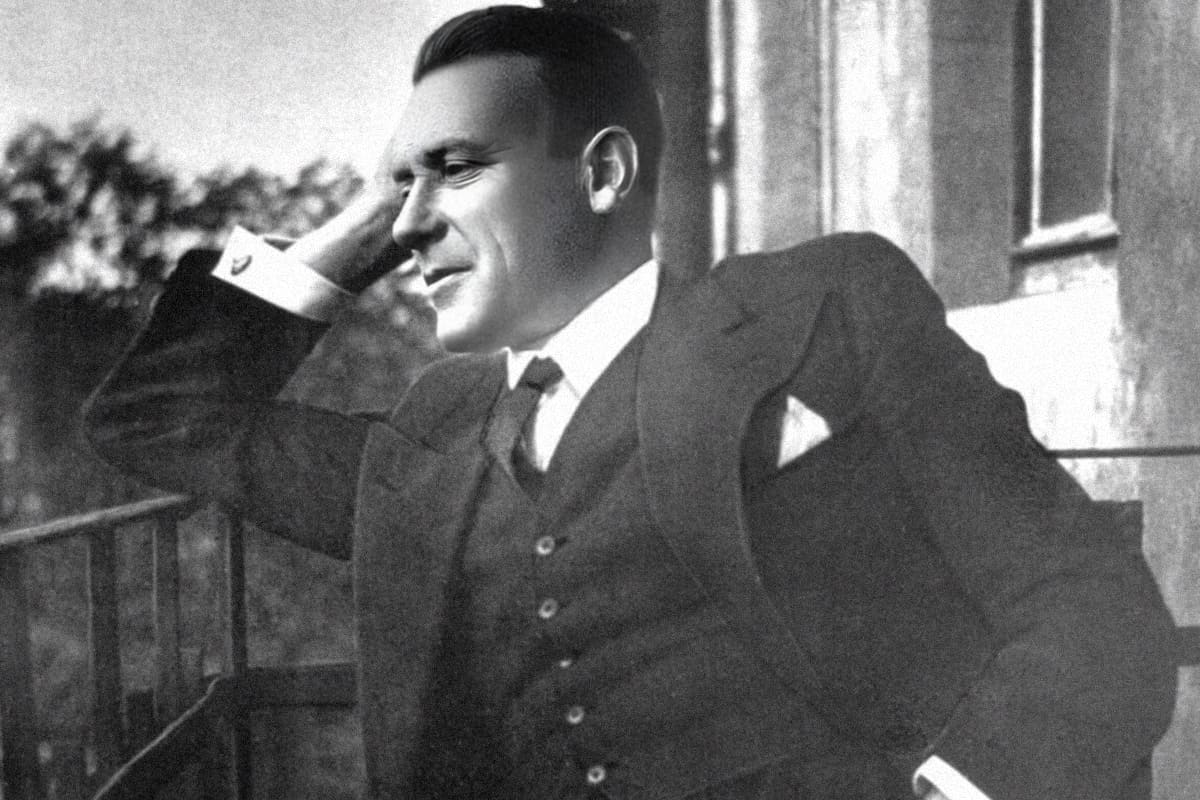
Mikhail Bulgakov / theguardian.com
Recent events surrounding the removal of the monument in Kyiv have shown that Mikhail Bulgakov is anything but a half-forgotten classic. On the contrary, he remains a thoroughly contemporary writer. And in today’s world, “contemporary” almost automatically means controversial. So what is it about this author that continues to trigger modern readers? Is it the alleged “Ukrainophobia” of his characters, or is it that sense of otherness that unsettled even Bulgakov’s contemporaries — people who likewise dreamed of settling scores with him once and for all? Their reasons, however, were different: they condemned him for being anti-Soviet. How is it, then, that today’s advocates of decommunization and anti-Sovietism see in Bulgakov not an ally — someone who relentlessly attacked and despised the Bolsheviks in his works — but an enemy?
It is worth trying to define what might be called the Bulgakov phenomenon, which, in my view, lies in the fact that through uniquely original artistic means he succeeded in interpreting the crisis of the first two decades of the twentieth century in unexpected tones and forms. Both then and now, this sharply distinguishes him from other writers of the post-revolutionary generation. It is, perhaps, precisely this quality that continues to irritate today’s revisionists. As a result, the fate of Bulgakov the novelist, no less than Bulgakov the playwright, has remained tragic even after his death. Much has been written about this — both by the writer himself and by his many scholars. What I would like to focus on instead is the cinematic nature of his prose and the screen adaptations of the books of this outstanding Kyiv-born — and therefore Ukrainian — writer.
If one looks closely, these adaptations offer an opportunity to better understand the inner world of Bulgakov’s literary originals, revealing the artistic distinctiveness of his books and the cinematic way of thinking that he possessed. This is evident, among other things, in his remarkable ability to visualize individual images, construct them through montage, create meaning by alternating visual perspectives, and sustain the rhythm of unfolding action. Moreover, the screen allows us to trace the development of the archetype of the home — the central image of Bulgakov’s artistic universe — and to analyze the cyclical composition of these adaptations as a defining characteristic of the writer’s books themselves. Thus, Bulgakov’s screen adaptations do not lead us away from the essence of his prose; rather, they help us grasp it more deeply and appreciate its stylistic and visual unity.
In Bulgakov’s case, cinema serves as an additional lens — a kind of microscope through which his literary originals can be more fully understood. A screen adaptation becomes a way of entering the work as an organic whole, bringing the text to life and revealing its unique qualities. To appreciate this, there is no need to watch all of the adaptations — there are around fifty of them, not counting short films — but only a select few. Among them are Flight (1970), directed by Aleksandr Alov and Vladimir Naumov; The Days of the Turbins (1976), directed by Vladimir Basov; and Heart of a Dog (1988), directed by Vladimir Bortko. Running through all of Bulgakov’s work is the recurring archetype of the home. In The Days of the Turbins, which tells the story of the intelligentsia during the chaos of the Civil War, the home stands as a powerful counterpoint to the surrounding turmoil. It is the only place where one can take refuge from the horrors outside while preserving the ordinary rhythms of life: the lamp beneath the lampshade, the “whiteness of the tablecloth”, the “cream-colored curtains”. For Bulgakov, the home is inseparable from the family — the Turbins — and the family, in turn, is set against the cold, impersonal, even terrifying image of the year 1918, a time that embodies horror, death, devastation, and suffering.
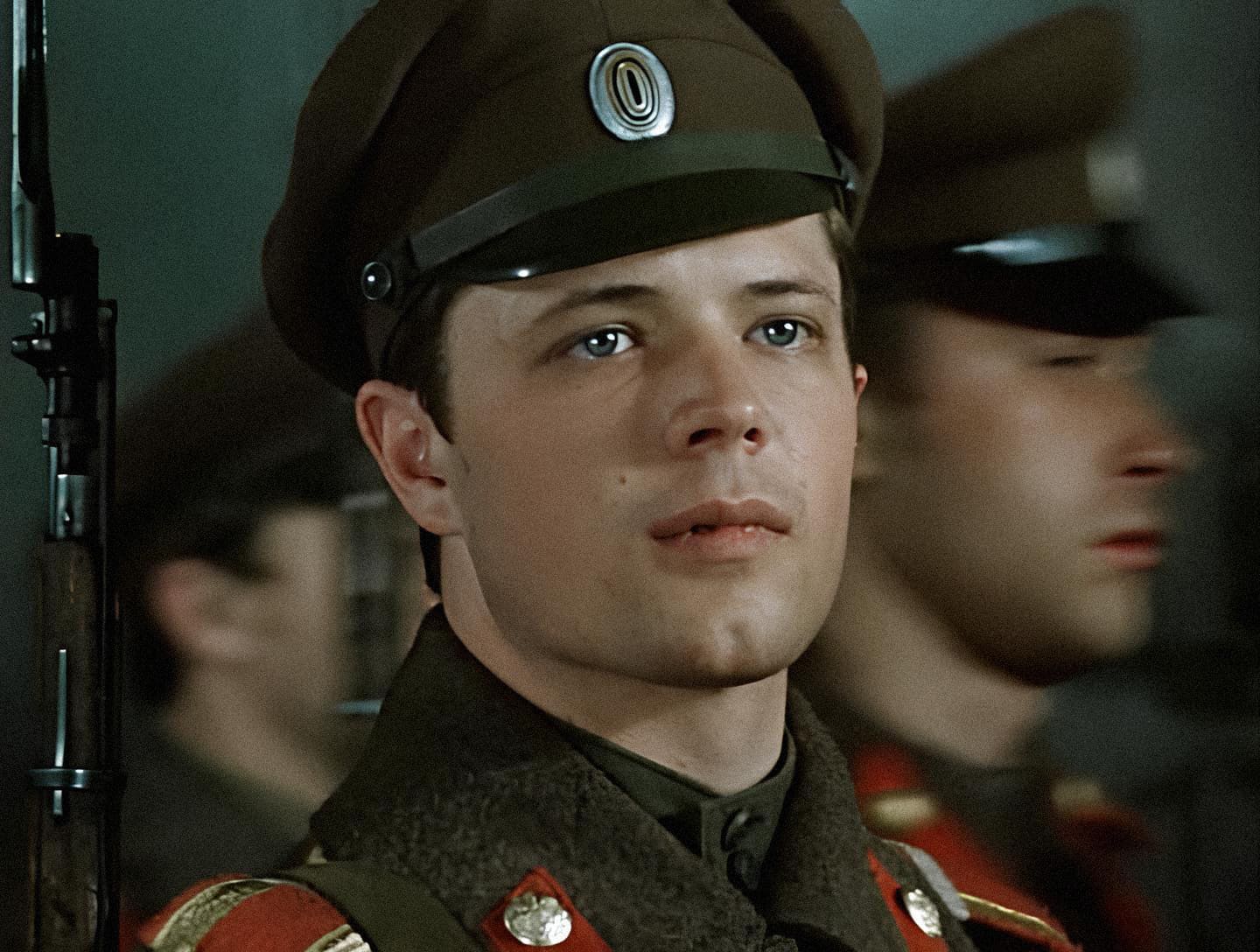
The Turbins embody Bulgakov’s ideal family — they are people of the home. Their house, warm and welcoming, is something they are prepared to defend to the very end. The Turbins’ home is a fortress, one that can only be protected through unity and mutual devotion. For Bulgakov, the family is a circle of people bound by unconditional loyalty and love. United by blood, they regard their bond as sacred. “To rise above both the Reds and the Whites with detachment” — this is Bulgakov’s visible artistic intention. The deeper meaning, however, is to portray a vanishing social class: people of inner nobility and moral integrity who gather together in the face of impending destruction because there is no place for them in the new world. In the film, the Revolution and the Civil War become a metaphor for the eternal struggle between good and evil — a terrible reckoning for human sins and crimes. Past, present, and future continuously flow into one another.
In The Days of the Turbins, one of the most striking features is the circular composition of the literary original — a highly cinematic device that greatly reinforces its central image: officers and cadets united in their determination to defend their home. The film opens with this image and closes with it, inviting the viewer to mentally compare characters, scenes, and motifs as the narrative gradually moves toward its conclusion. The film is woven from numerous storylines, one of which explores the relationship between the individual and history. Its principal theme is the fate of the intelligentsia at a historical turning point — the tragedy of human lives caught in the chaos of revolutionary upheaval — while its central image is the home, a refuge from the nightmares of the merciless world outside. The search for such a home elsewhere becomes the central concern of Bulgakov’s play Flight, adapted for the screen by directors Aleksandr Alov and Vladimir Naumov. In my view, it is the finest adaptation of Bulgakov’s prose ever made. Its protagonists are once again members of the pre-revolutionary intelligentsia who have lost everything and are painfully searching for a new place they can call home.
The filmmakers do not settle for a merely illustrative retelling of Bulgakov’s work. Instead, they lay claim, to a certain extent, to co-authorship, extending, developing, and sharpening the historical and artistic meanings embedded in the original. They did so, of course, with the approval of Bulgakov’s widow, Yelena Sergeyevna Bulgakova, who — if one is willing to indulge the mystical notion — served as a conduit of communication with the writer himself. In Flight, Alov and Naumov bring Bulgakov’s subtexts to the surface, expanding the boundaries of the play. The central figure is the White Army General Khludov, portrayed by Vladislav Dvorzhetsky — a precursor to Pontius Pilate from The Master and Margarita. An executioner and hangman, Khludov comes to a painful realization of what is happening to the empire, to its people, and to himself. His story is a tragedy of conscience, incapable of reconciling itself with violence. Around Khludov revolve the film’s other central characters: the Cossack General Charnota, played by Mikhail Ulyanov; the thieving metropolitan official Korzukhin, portrayed by Yevgeny Yevstigneyev; Korzukhin’s wife Serafima; and the bespectacled intellectual Golubkov, played by Aleksey Batalov, who is in love with her. Bulgakov would later draw on these characters in creating his Master and Margarita. Each of their intertwined journeys offers a distinct variation on the central motif of this remarkable film.

In Flight, two compositional planes unfold simultaneously. The first is the external, narrative plane: the ceaseless flight of the characters — first to Crimea, then to Constantinople, Paris, and finally back to their homeland, now under Bolshevik rule. Here, it is important to note the film’s circular structure. It both opens and closes with an extended metaphor: a snow-covered white road stretching before Golubkov and Serafima as they first depart and later return. The second plane is the flow of history itself, with its catastrophic upheavals that engulf both the guilty and the innocent. People torn from their homes, fleeing through an unending chaos. It is the movement of the crowd, swallowing the individual and taking possession of his destiny. It is no coincidence that one of the film’s most memorable episodes is the cockroach race — a metaphor for the terrifying condition of human existence in that era. The film is steeped in metaphysics — in what might be called Bulgakov’s “real unreality” — which serves as a counterpoint to the overwhelming authenticity of the events on screen. This metaphysical dimension emerges from Khludov’s dreams, underscoring Bulgakov’s conviction that dreams are reality as well, only unfolding in another world.
The central Bulgakovian image of the home in Flight — whether in the shabby boarding houses of Constantinople or the lavishly furnished Parisian apartments of the first wave of Russian émigrés — is marked by a profound sense of rootlessness. For Bulgakov, a home can only be one’s own and one alone. Any attempt to find it elsewhere is doomed to failure. Although the events and characters in Flight are depicted with a degree of historical authenticity that firmly anchors the screen action in specific historical moments, the moral and historical experience of its protagonists reaches far beyond those dates. The film concludes with its wandering heroes returning to their homeland in the hope of building a new life in their old home. This, in essence, is also what Heart of a Dog is about — a novella adapted for the screen twice: first in 1976 by the Italian director Alberto Lattuada, and later in 1988 by Kyiv-born director Vladimir Bortko.
The first adaptation became a left-wing piece of propaganda, portraying Sharikov as the victim of heartless bourgeois experimentation who ultimately finds personal happiness among the working class. The second adaptation, by contrast, became an enduring cult classic. Its lines entered everyday speech, and it remains a powerful anti-Bolshevik drama about the futile attempt to create a “new man” out of the proletarian hegemon. At first glance, the familiar Bulgakovian home seems to be present once again: the large lamp beneath its lampshade, the grandfather clock, Professor Preobrazhensky’s soft dressing gown, the stuffed owl. Yet this proves to be an illusion. To preserve what remains of his former home, the professor is forced to compromise his conscience. For Bulgakov, the Bolsheviks destroyed the home as the foundation of the family — and therefore as the foundation of society itself. Bulgakov contrasts the true home with both Soviet and bourgeois notions of mere housing. Against the warm, lived-in, seemingly timeless home of the Turbins and Professor Preobrazhensky, he sets the cramped living space of communal apartments, where existence is reduced to a struggle for square meters. It is a vivid, quintessentially Bulgakovian symbol of the Soviet home: violated, carved into tiny cubicles, stripped of its soul, incapable of protecting those who live within it or providing warmth and the irresistible sense of belonging that a true home should offer.
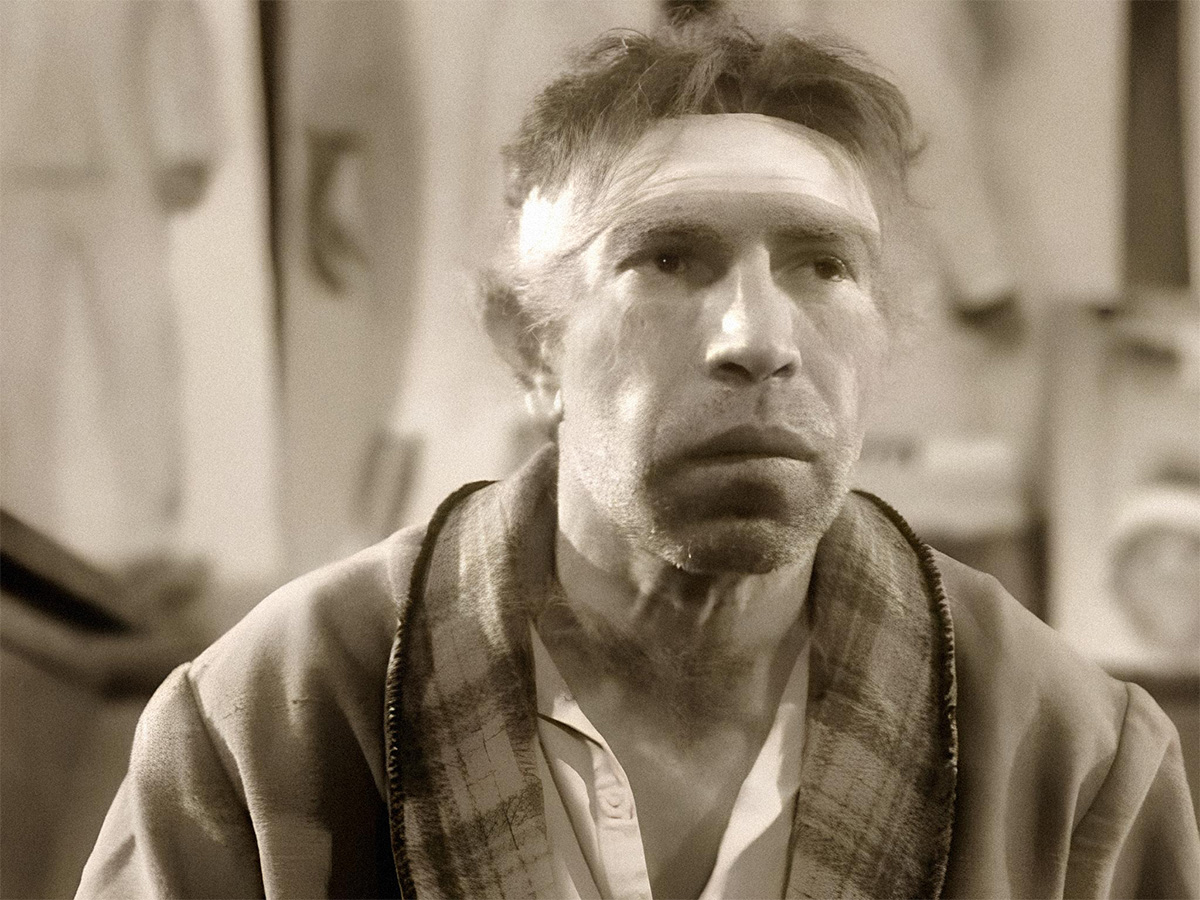
In Heart of a Dog, the same circular narrative structure that Bulgakov embedded in the original is preserved. The film opens with Sharik, his body covered in surgical incisions, lying in Professor Preobrazhensky’s study — and it ends in exactly the same way. The metaphysical dimension is likewise conveyed through the motif of the dream: perhaps everything that takes place between the first operation and the second is nothing more than the dream of a dog under anesthesia. A terrible dream — a sticky nightmare about the rise and fall of a scalded stray who briefly became the head of the sanitation department. Yet the film’s true antagonist is arguably not the humanized dog, but the chairman of the building committee — the all-powerful Soviet official with the telling surname Shvonder, the home’s new master and the destroyer of its very foundations.
It is upon the ruins of that home that the characters of what is arguably Bulgakov’s greatest novel, The Master and Margarita, reside — a work surrounded by countless legends, celebrated endlessly, and adapted for the screen by different filmmakers across different countries and eras. It is precisely The Master and Margarita that is said to bear the author’s own curse, making every attempt to bring it to the screen — there have been roughly a dozen so far, not including the adaptation currently being prepared by Johnny Depp — seem doomed from the outset. Everyone who has tried, from Mick Jagger to Elem Klimov, has encountered its formidable challenges. After reading the novel in 1967, Jagger actively sought financing for a film adaptation in which he intended to play Woland himself. The project never materialized. Instead, inspired by the novel, he wrote the legendary song Sympathy for the Devil, and for nearly sixty years has continued to appear on stage in the guise of Woland while performing it.
Beyond these metaphysical explanations lie entirely objective ones. The Master and Margarita possesses an extraordinarily complex polyphonic structure in which a satirical tale of the Devil’s visit to Moscow, a comic lampoon of Soviet everyday life, the biblical narrative, the author’s reflections on religion and power, and, of course, the lyrical story of a passionate love affair between a married woman and a solitary writer are woven into a single whole. Even without dwelling on its themes of truth, the struggle between good and evil, immortality, and the resurrection of the soul, one can discern Bulgakov’s central image: the home, forever lost and ultimately regained — albeit in another world. This new home is mystical. It is not paradise but “peace”, the place to which the Master and Margarita depart in the closing pages of the unfinished novel.
In The Master and Margarita (2024), directed by the American filmmaker Michael Lockshin, the “curse” said to haunt the novel seems finally to lose its power. It is, in my view, the finest screen adaptation of The Master and Margarita to date. More importantly, it illuminates not only the novel’s circular composition but the creative vision underlying Bulgakov’s entire body of work. For the first time on screen, we can trace the journey taken by the writer and his characters — from the Turbins’ home, destroyed by revolution, to the eternal mystical home of the Master and Margarita, where even Mikhail Bulgakov himself seems to find everlasting peace. Cinema, in its persistent return to Bulgakov’s texts, gives us a uniquely sharpened lens through which to perceive this journey and to read, within the visual fabric of the film, the thoughts and artistic intentions woven into the original literary work.
When copying materials, please place an active link to www.huxley.media
Select the text and press Ctrl + Enter