THE CENTURY OF MARILYN

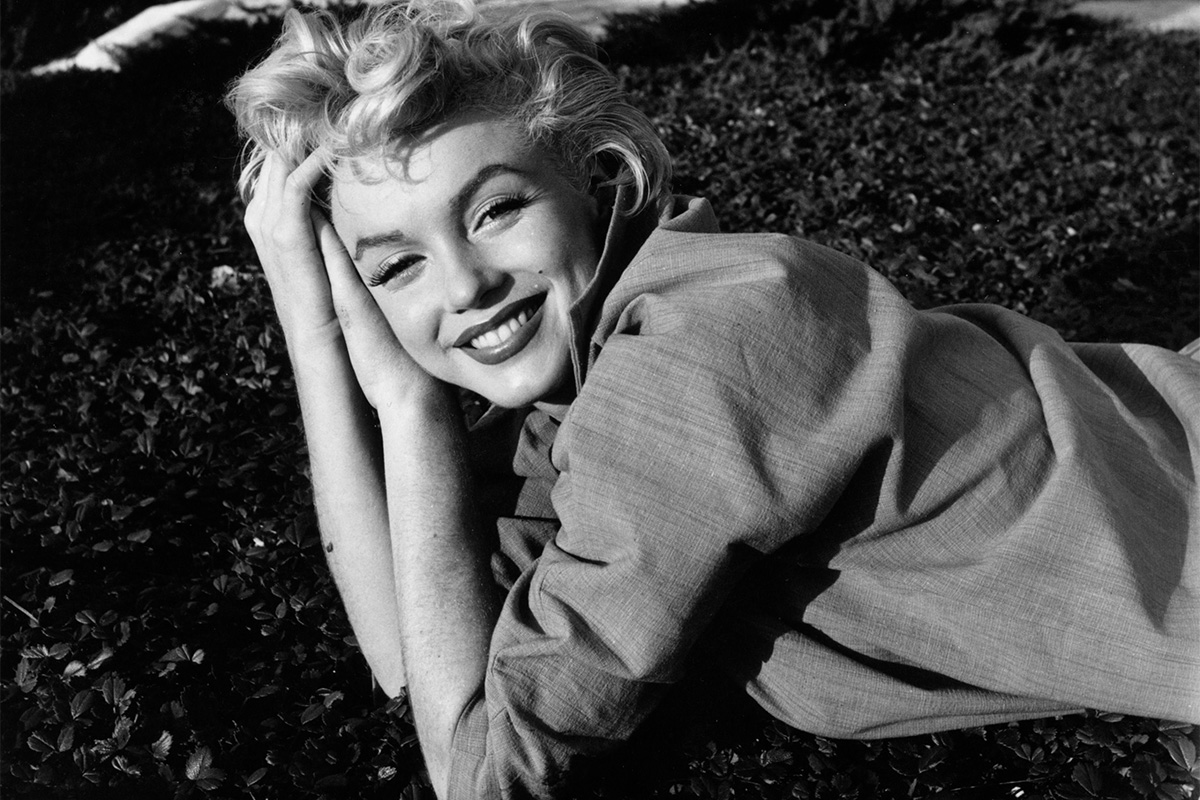
Marilyn Monroe / womo.ua
64 years ago, on August 5, 1962, Marilyn Monroe was found dead in her California home — an actress who, even after her death, never ceased to be a symbol of the twentieth century.
Monroe, the world-famous American film star who appeared in just 32 feature films during her brief career, the subject of thousands of iconic photographs, and a woman who single-handedly challenged the ruthless Hollywood studio system, would have celebrated her 100th birthday on June 1, 2026.
Yet despite everything that has been said and written about her, more than six decades later, the phenomenon of Marilyn Monroe remains not fully understood.
She was only 36 years old when she died. Monroe left no suicide note, and the official police report listed the cause of death as “Probable suicide.” Today, in addition to theories of suicide and an accidental overdose of sleeping pills, several other explanations for the actress’s death continue to circulate — from murder orchestrated by the Mafia or by U.S. intelligence agencies acting on the orders of President Kennedy himself, to a fatal mistake by her psychoanalyst, who allegedly prescribed incompatible medications.
None of these competing theories, however, has prevented the emergence of the Monroe cult. It is a phenomenon rooted not only in her untimely death but also in the extraordinary nature of her life — one that defied the conventions of a successful biography, was permeated by fatal passions, destructive impulses, and sensational scandals, and ultimately ended in tragedy.
Marilyn Monroe became the heroine of modern myths, a feminist icon with borderline personality disorder, a sex symbol, and an icon of popular culture whose “holy image” was created and endlessly reproduced by Andy Warhol himself. Her gentle yet irresistible sensuality was the last great flourish of femininity from the old world, unburdened by feminism. Marilyn died, yet she continues to live through the images she created, remaining a role model for millions of admirers, most of whom know little about either her filmography or even her biography. To them, she is a deity surrounded by the aura of her own glory. Today, this legacy is reflected, among other things, in the so-called “Marilyn Monroe effect” — a psychological phenomenon that embodies the legendary actress’s timeless appeal and charisma. It is a unique blend of confidence, sensuality, and beauty.
Generation Z is now experiencing the full force of this influence, embracing Monroe’s style and her ideals of feminism and body positivity. Members of this generation, in particular, celebrate Monroe’s fuller figure as a symbol of natural beauty and self-acceptance. The dazzling yet deeply unhappy heroine of the silver screen, without whom it is impossible to imagine not only Hollywood’s “dream factory” but twentieth-century America itself, Marilyn spent her entire life in the shadow of her image as the “cover girl,” whom her contemporaries crowned America’s sweetheart. She was — and perhaps still is — the object of dreams and desire for people from every walk of life, from soldiers and baseball players to gangsters and presidents. Intellectuals were no exception. Arthur Miller, the leading American playwright of his era and the author of Death of a Salesman, married her, although their union of intellect and beauty — people joked that “the body married the brain” — did not prove to be a happy one.
It is said that Marilyn kept the works of Sartre and Hemingway on her bookshelf and dreamed of playing Grushenka in The Brothers Karamazov. Miller, however, like all “normal men,” saw her first and foremost as a glamorous and desirable woman. She, meanwhile, tried to be a devoted wife, awkwardly setting the table for guests and sometimes dropping the serving tray. Some believe that there were, in fact, three Marilyns. One was the dazzling screen star, another the eccentric celestial icon, and the third a victim of an unjust male-dominated world. Strangely enough, among these three incarnations, there seemed to be no place for Marilyn the actress. Yet Lee Strasberg himself — the guru of the American “Method” (the U.S. adaptation of Stanislavski’s system that helped shape stars such as Marlon Brando, Al Pacino, Robert De Niro, and Meryl Streep) — held her acting talent in the highest regard and personally coached her in the craft of acting.
Few people know that Marilyn’s deepest dream was to perform on the theatrical stage. She also longed to become a mother. She even harbored poetic ambitions. It is not widely known that the actress, despite her frequent spelling mistakes, secretly wrote poetry. After her death, lines penned in her almost childlike handwriting were discovered in the pages of her diary… But, alas, those dreams remained unfulfilled.
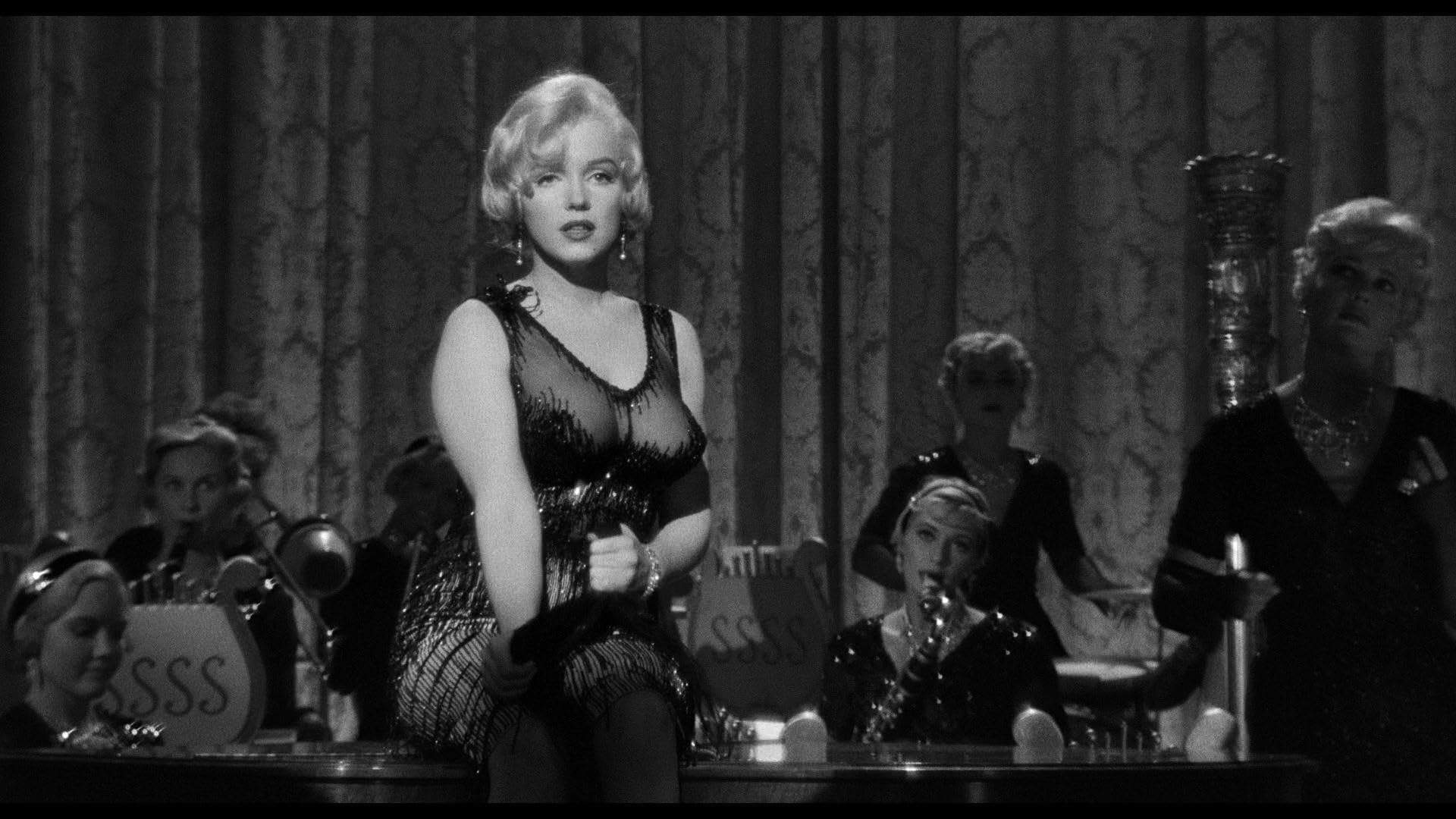
Of the more than thirty roles she played, only a handful have become part of cinema’s golden canon: Billy Wilder’s black comedy Some Like It Hot (1959) and his earlier film The Seven Year Itch (1955); Howard Hawks’s eccentric comedies Monkey Business (1952) and Gentlemen Prefer Blondes (1953); George Cukor’s musical Let’s Make Love (1960); and two psychological dramas — Henry Hathaway’s Niagara (1953) and John Huston’s The Misfits (1961), based on a screenplay written especially for her by Arthur Miller. The rest, regardless of her individual talent, remained products of Hollywood’s assembly-line system and are remembered today mostly by her many devoted fans.
Yet this entire congregation of the “Church of Saint Marilyn” admired her less for her acting than for her public persona: her often questionable witticisms (“A girl should have two things that are beautiful: her eyes and her lips, because with her eyes she can make a man fall in love, and with her lips she can prove that she loves him”), her provocative magazine photo shoots, and her flawless, half-clothed figure. In the eyes of the “average Americans,” who had absorbed from childhood deeply ingrained — often borderline prejudiced — notions about virtue and vice, sex and marriage, their homeland and the world around them, the Hollywood star Marilyn Monroe was completely indistinguishable from her smiling, languid screen heroines, who, despite all their glamour, somehow seemed remarkably similar to the girl next door.

By the mid-1950s, she had become America’s sweetheart, the nation’s angel of sex, an object of mass desire and adoration. The myth of Marilyn Monroe ran neck and neck with the real Marilyn; the glamorous stereotype created by the studio’s publicity department left no room whatsoever for human suffering or compassion, creative frustration, or intelligence. One can only imagine how deeply it oppressed, constrained, and distorted the psyche of the daughter of Gladys Pearl Baker (née Monroe), an obscure film cutter at RKO Pictures. That daughter was Norma Jeane Baker — the young woman who was given the more “euphonious” name Marilyn by the studio, the little girl who spent her childhood in foster homes and orphanages until the age of sixteen, and who then married the young merchant seaman James Edward Dougherty for one reason alone: to gain her freedom. When he went to sea, sixteen-year-old Norma Jeane left school and took a job at an aircraft factory.
Alongside her longing for freedom, Monroe was driven by the dream of finding her father, whom she knew only as a traveling salesman who supposedly resembled Clark Gable. Perhaps that was one of the reasons Hollywood held such a powerful attraction for her. Only after draining the bitter cup of life as a powerless, diamond-dreaming “dumb blonde” starlet — expected, by definition, to satisfy the erotic whims of studio executives — did Monroe gradually begin her ascent to stardom. Even then, however, she was paid ten times less than actresses such as Elizabeth Taylor. She found herself unmarried once again after the legendary baseball player Joe DiMaggio could no longer tolerate the now-famous provocative scene in The Seven Year Itch, whose filming drew what seemed like half the male population of New York.
For that “popular” love and adoration, she paid a devastating price: nervous breakdowns, chronic anxiety, insomnia, memory lapses, unexplained panic attacks on set, dependence on alcohol, and enormous doses of tranquilizers. And after the collapse of her marriage to Arthur Miller, she embarked on a desperate and ultimately hopeless struggle to win the heart of the man in the White House — a pursuit that eventually led her into the arms of his brother. In the end came her mysterious and still unexplained death on the night of August 4–5, 1962, with a telephone receiver still in her hand.
Speaking of presidents, Monroe is often said to owe them not only her downfall but also her rise. Hollywood image-makers of the late 1940s and early 1950s were consummate professionals. Yet they were not the ones who first “discovered” Monroe. That distinction is commonly attributed to Ronald Reagan, then a captain in the U.S. Army Air Forces’ First Motion Picture Unit. Reagan was the first to see something extraordinary in the twenty-year-old newcomer with a flawless figure, whom Army photographer David Conover photographed at the Radioplane factory on his orders. He recognized in her something more than a pretty face — a piece of “clay” from which an unparalleled product of immense commercial appeal could be molded.
It was after this photo shoot, conducted right beside the factory assembly line, that Norma Jeane caught the attention of the very Hollywood publicity experts who would shape her image, as well as several modeling agencies. With the encouragement of the future 40th President of the United States, this became the starting point of her remarkable Hollywood career.
Much later, rumors began to circulate about a brief affair allegedly shared by Reagan and Monroe. They were fueled by a photograph taken in 1959: the black-and-white image shows a smiling Marilyn Monroe in an evening gown engaged in an animated conversation with Ronald Reagan, then president of the Screen Actors Guild (SAG). Reagan’s official biographer also hints at such a romance, yet offers no evidence beyond Reagan’s own vague remark: “She was terrific.”
Sadly, Marilyn never became a true Galatea, nor did she find her Pygmalion. Neither Reagan nor even Arthur Miller fulfilled that role. Instead, her destiny was to remain the “most valuable property” of the Hollywood giant Twentieth Century-Fox. Confronting the Hollywood establishment — with its feudal mindset and its ruthless ability to crush any attempt at individual rebellion — was beyond the strength of a woman raised by a single mother and armed with only a few years of formal education.
Yet Marilyn Monroe did possess a genuine streak of nonconformism, one that became a timid harbinger of a future she herself would never live to see. A century after her birth, Monroe remains the foremost standard-bearer of Hollywood glamour — a woman who died before the sexual revolution, yet helped usher a new sensuality onto the screen and paved the way toward female subjectivity. To this day, an entire generation of actresses continues to be measured against her before anyone else.
Westwood Village Memorial Park, in western Los Angeles, where Marilyn is buried, has become a true Mecca for her admirers. Just as she could never escape relentless public attention during her lifetime, she was denied the solitude she longed for even after death. According to a persistent legend, a millionaire admirer purchased the crypt directly above hers and requested to be buried face down so that he would forever be looking toward his beloved star. Such was — and remains — the power of her enchantment.
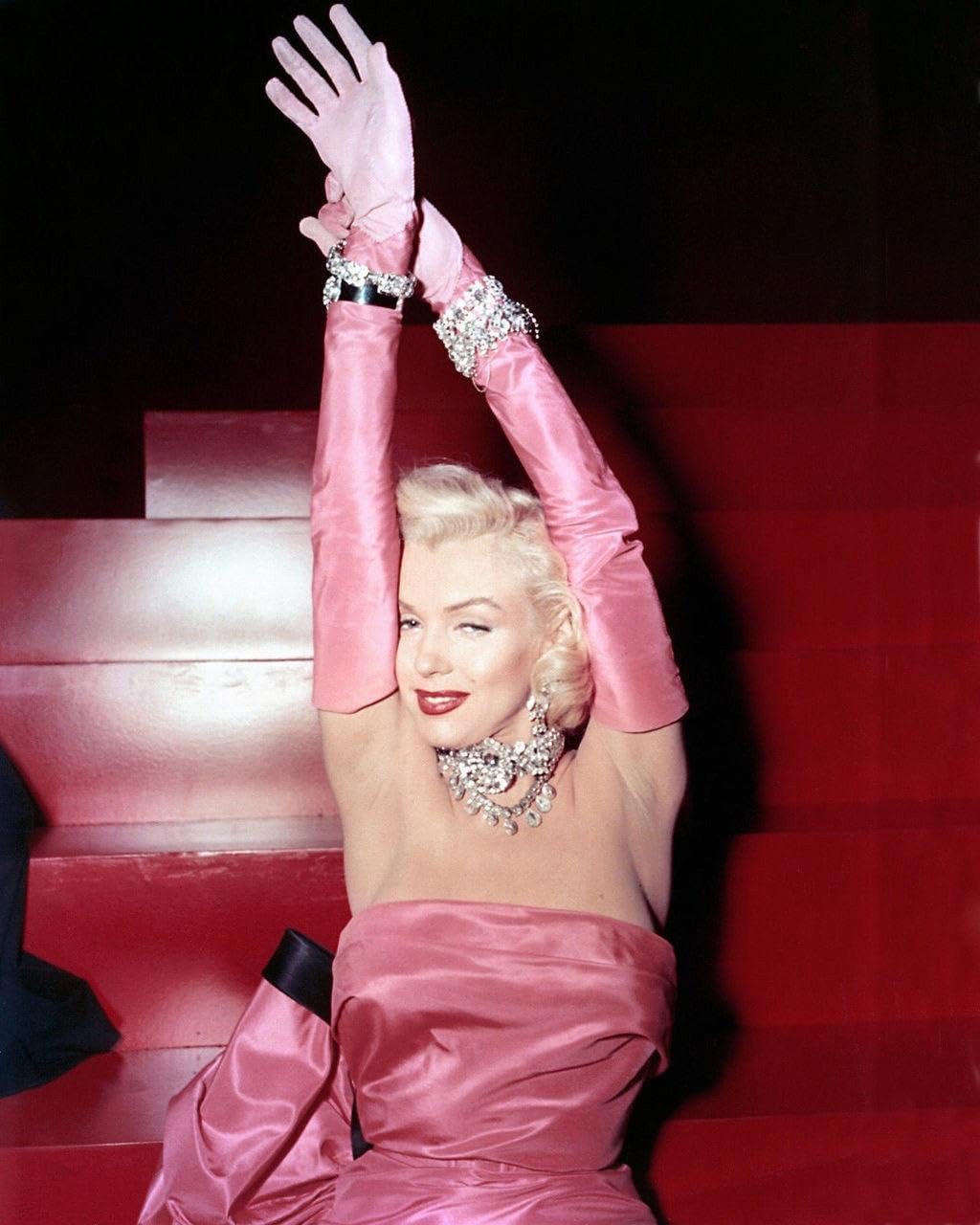
None of the stars of Old Hollywood — not Bette Davis, nor Rita Hayworth, nor Elizabeth Taylor — can claim the same kind of enduring recognition. In part, it is encapsulated in the comedy The Seven Year Itch, the story of a faithful and loving husband who, after seven years of marriage, is overcome by an irresistible craving for a new female body. As fate would have it, his wife and son leave for vacation, while the apartment upstairs is occupied by Monroe’s character — the very embodiment of temptation.
The Seven Year Itch, a film that today may seem somewhat dated, is perhaps the quintessential Marilyn Monroe picture: a charming, utterly lighthearted comedy built on the reassuring notion that by the end of the day everything will somehow turn out for the better. But that is precisely the power of myth — it cannot be fully grasped through reason. It is better simply to watch Marilyn’s billowing skirt and imagine the crowd of spellbound admirers gathered on a New York street at night. That crowd is all of us.
When copying materials, please place an active link to www.huxley.media
Select the text and press Ctrl + Enter