CARDIAC SURGEON ILLYA YEMETS: «In Medicine, the Most Important Thing Is Who You Are as a Person»


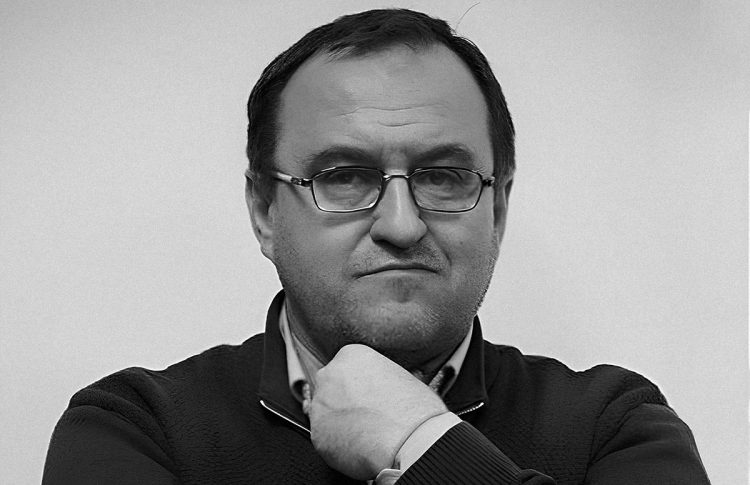
Illia Yemets / Photo from personal archive
SHORT PROFILE
Name: Illia Yemets
Date of Birth: February 21, 1956
Profession: Cardiac Surgeon
Illia Yemets is a cardiac surgeon, Doctor of Medical Sciences, professor, Honored Doctor of Ukraine, Full Cavalier of the Order of Merit, and Laureate of the State Prize of Ukraine in Science and Technology. He twice served as Minister of Health of Ukraine. From 2003 to 2026, he was Director of the State Institution «Scientific and Practical Medical Center of Pediatric Cardiology and Cardiac Surgery of the Ministry of Health of Ukraine». Currently, he serves as the Center’s Chief Scientific Consultant.
Among Illia Yemets’s most significant achievements are the first successful heart surgery on a newborn in Ukraine and across the post-Soviet region in 1992, the establishment of a school of cardiovascular surgeons specializing in the treatment of congenital heart defects in infants, and the saving of thousands of children’s lives. In addition, Yemets is the author of the innovative «Ukrainian method», which involves using a newborn’s umbilical cord blood instead of donor blood for heart surgery from the very first minutes of life. This method has already saved the lives of hundreds of infants and has been recognized as a revolutionary breakthrough in pediatric cardiac surgery.
We speak with Illia Mykolaiovych on the eve of his anniversary. Our conversation focuses on his professional journey, the development of Ukrainian cardiac surgery, and the challenges that must be overcome during wartime. We also discuss plans whose implementation will help train young cardiac surgeons.
Iryna Mamryha: On the eve of your 70th birthday, can you recall a moment in your life that may have determined your destiny?
Illia Yemets: I cannot say that there was a particular moment or period that defined my future life. That would not be true. On the contrary, everything I did, starting even in childhood, was a kind of preparation for becoming a cardiac surgeon. Back in school, I showed an aptitude for geometry and trigonometry; I could visualize three-dimensional forms. I also had a talent for manual work — I could make almost anything with my hands, and many people appreciated the results.
If we speak about medical school, some subjects, such as pharmacology, were difficult for me. However, I could easily understand certain pathologies that were challenging for other students. Later, as a doctor, I found myself in Australia. Although I had grown up in an atheistic world, I had the feeling that someone was guiding me. And when I became a professor and gained worldwide recognition as a cardiac surgeon and scientist, I realized — it was the Almighty. And even now, at the age of 70, events are happening in my life that I do not choose myself; they are chosen for me.
I. M.: I know that music has accompanied you throughout your life. You even graduated from music school with a specialization in violin.
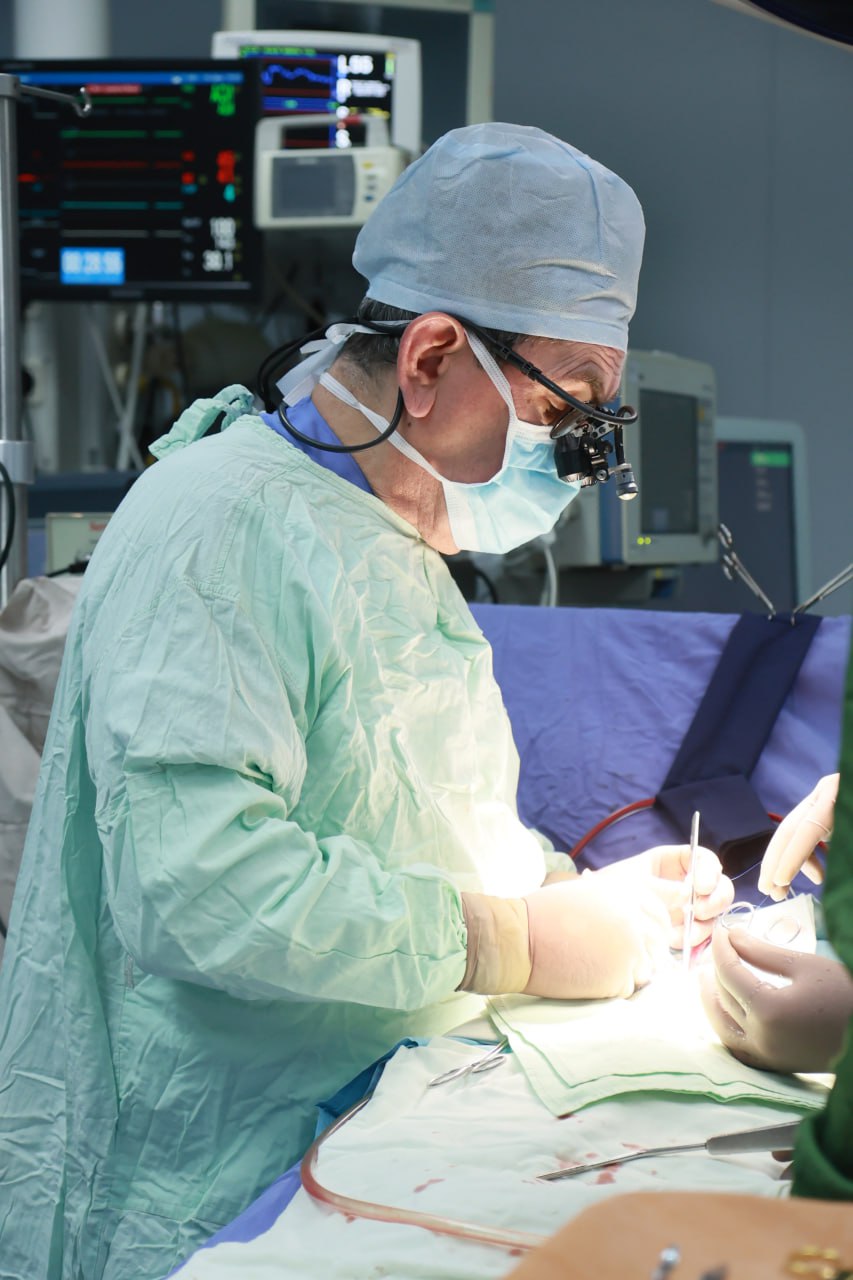
I. Y.: I truly love music, but here as well, a significant part of my journey was leading me toward the most important thing in my life — my profession. When I was six, my parents enrolled me not in piano or trumpet, but specifically in violin. It is a very complex instrument. As a child, I would rehearse a single étude for hours and sometimes even hated the instrument. Playing the violin requires absolute precision and coordination of movement. If your finger is even slightly out of place on the string, it produces cacophony rather than music. Today, that experience greatly helps me be the surgeon who can operate on the heart of a newborn, which is the size of a walnut, with blood vessels less than a millimeter in diameter. Of course, I operate wearing specialized magnifying glasses, but my movements must be no less precise than those of a violinist.
I. M.: Yes, that is a unique experience. But why did you choose cardiac surgery while still a student? What influenced this decision?
I. Y.: In fact, I went into medicine because a tragedy occurred in our family. I am the fifth child, and two of my brothers died. I never even knew one of them, as he passed away when he was very young. My brother, Mykola, was diagnosed with cancer when I was in the sixth grade. His arm was amputated, and then terrible metastases followed. It was a very difficult death. I witnessed all of this, and that is why I decided to study medicine and defeat cancer. However, during my student years, I realized that cancer would be cured thanks to a discovery made not by physicians, but rather by biological scientists — those who would be able to penetrate the genome of the tumor. As for cardiology, when I was a student, I attended the lectures of Mykola Mykhailovych Amosov.
We were dissidents, and at that time, Mykola Mykhailovych spoke the truth in a way that was considered dangerously bold. Just imagine — he was not a member of the Communist Party, yet he was elected a deputy of the Supreme Soviet of the USSR for five consecutive convocations. Sometimes he said things that I still do not understand how the communists allowed. I entered cardiac surgery after I had already worked as a general pediatric surgeon and was invited to a clinical residency to study and treat complex congenital heart defects in children. I passed the examination of Mykola Mykhailovych Amosov and hold a diploma number one, signed by one of the greatest physicians in human history.
I. M.: A major breakthrough in pediatric cardiac surgery took place in April 1992. At that time, you were the first in Ukraine and in the post-Soviet region to successfully perform heart surgery on a newborn. What were your feelings? Did you have any doubts before the operation?
I. Y.: Before the success of 1992, there was December 1991. Cardiac surgery, of course, requires high-tech resources, equipment, instruments, and, most importantly, experience. At that time, I had returned from Sydney and already had the experience, but the technological condition of our hospital was extremely poor. It was then that the father of a dying child — incidentally, a priest — approached me and asked me to undertake the operation. It was the only chance, and I had no right to refuse. Unfortunately, the child did not even leave the operating room alive. That was a very difficult moment in my life.
Then came January 1992, and another infant. Although I had at my disposal the same Soviet equipment, I took the risk and dared to operate again, because I saw no other way. The child lived for four days. It was a very difficult period for me. I saw no prospects for my professional development in Ukraine. Moreover, I was invited to Cuba, and at that time, Cuban medicine was far more advanced than our post-Soviet system.
In April 1992, another child in extremely critical condition was brought to us. It was Mykhailo Kikot. Four days before my planned departure, I decided to perform the operation. Misha did not simply survive — he became the first successfully operated newborn in the former Soviet Union. He is now 34 years old, by the way. At that time, we immediately sent the materials to Moscow — to the central medical journal Aktualnye Voprosy Khirurgii («Current Issues of Surgery»). However, they published nothing for a year — they were waiting, perhaps hoping that someone in Moscow would repeat our success so that Ukrainians would not be the first.
I. M.: After that operation, did you leave for Cuba, or did you decide to remain in Ukraine?
I. Y.: I spent a month in Cuba and then returned. Mykola Amosov and his follower — Academician Hennadii Knyshov — offered me the opportunity to head the newborn cardiology center at the Amosov Institute. A team was assembled. After all, success is not the work of a single surgeon alone; it also depends on the anesthesiologist, cardiologist, intensive care specialist, and perfusionist. Thus began the era of the formation of the Ukrainian school of cardiac surgery for newborns and young infants, and today we are among the world leaders. I am proud that my students now head departments at prominent centers in America and Europe.
I. M.: What key achievements in cardiac surgery over these 34 years since the first successful heart operation on a newborn would you highlight?
I. Y.: If we speak about the Ukrainian school of cardiac surgery founded by Mykola Amosov, the achievements belong not only to me or to my team at the Center but also to other institutions. However, the greatest accomplishment of global significance is my 2009 invention: the use of blood that remains in the placenta after childbirth. As someone once aptly said, the placenta is the least understood human organ — it exists for less than nine months and only in women.
When I began working in newborn cardiac surgery, the main problem was the use of donor blood. Heart surgery is impossible without it: it fills the heart-lung machine, treats bleeding, and provides essential components — plasma and platelets. I therefore proposed not discarding the blood that remains in the placenta (approximately 30–40% of the total volume), but instead using it for the same child if a critical heart defect had been diagnosed prenatally.
At that time, I said to my colleagues, «Let’s verify everything. Surely someone must have done this before!» It turned out that we were the first in the world. Everything ingenious is simple, and everything simple is ingenious. This invention became a breakthrough in newborn cardiac surgery. In 2010, I presented our experience in Geneva — at that point, we had performed only 11 such operations. There was considerable debate and opposition, but I did not stop. Today, the method is recognized worldwide, and some refer to it as the «Ukrainian method». This simple approach gave rise to serious scientific work — dissertations, patents, and stem cell research, which is now so widely discussed. Placental blood has truly become «gold».
I. M.: How do you plan to develop your work in this field?
I. Y.: Our latest initiatives focus on spreading the «Ukrainian method» worldwide — this is important to me. The main thing I have planned, God willing and if my health allows, is to continue working not only as a cardiac surgeon but also as a scientist. I am organizing my activities so that the world will see not merely a school, but a full-fledged institution. In the near future, I intend to open the Yemets Academy. I have many students in different countries who recommend making this a priority, and we are already working on it. It is one of the dreams I want to realize. Incidentally, about 90% of medicine, medical science, and medical education in the world are private institutions. For example, everyone knows the Cambridge School, the Oxford School, or Harvard Medical School in Boston. These are private institutions where the approach differs significantly from that of state-run systems.
I. M.: In your opinion, what qualities are most important in the profession of a cardiac surgeon?
I. Y.: In my life, I had three mentors who taught me not only surgery, but also life: the Frenchman Monsieur Leconte, the Australian Professor Tim Cartmill, and Professor Bill Williams from Toronto. In 1996–1997, while working at a private clinic in Paris, I once argued with Leconte. I told him that a patient does not care about my political views or moral principles. He replied, «No, Yemets, in time you will understand that what comes first is not professionality, but personality». Today, I am convinced: in medicine, the most important thing is who you are as a person — and understanding this enhances your professionalism.
A person who has devoted themselves to medicine already possesses high moral qualities, and professionalism grows on that foundation. Conversely, even the most talented surgeon, if lacking moral integrity, will eventually descend into professional mediocrity. I have never seen outstanding professors or medical scientists who were morally corrupt. In our field, everything depends on human qualities — one cannot be a poor human being and remain a good physician, because it affects everything. This is my credo, which I pass on to my younger colleagues.

I. M.: By the way, when asked «Who are you?» your team gave a powerful answer at the beginning of the full-scale war, when your Center continued operating. Tell us about the challenges you faced and how this affected your patients.
I. Y.: On February 17, I was abroad with my two underage children. When the war began, I left them there and returned to Ukraine. I must say that the Center immediately organized its work even without me physically present: I managed remotely, but the team handled everything. And I am proud of my staff. I am especially pleased to speak about my son, Hlib Yemets, who spent nights at the Center and even celebrated his wedding at the hospital. And that is already more than personality — it is patriotism.
So I would add that in our profession, three «P’s» are essential: propriety, professionalism, and patriotism — though the order can be changed. Another important point: in the first months, we opened a branch in Lviv because it was unclear what would happen to Kyiv. As for patients, the number of surgeries and cardiological procedures did not decrease — on the contrary, there was an increase in heart attacks among adults. As for today, just last week I performed four operations, two of which were for foreign patients from Moldova. Just imagine: during wartime, people travel to Ukraine in order to survive and to have a healthy heart.
I. M.: Which patient stories have stayed with you the most?
I. Y.: I could speak about this for hours. Let me tell you one case of a complex heart defect. Sometimes children are born with only one ventricle instead of two. That was the case with Anton, whom I operated on six times — these were palliative surgeries that prolong life but do not make the heart healthy. Every surgeon becomes attached to their patient, and when it is a child with such a medical history, even more so… Anton’s father left the family, his mother died of cancer after his third surgery, and the boy was raised by his grandfather in a village. He was already 12 years old at the time of the sixth operation.
The evening before, I was walking up the stairs when I met Anton. He looked so cheerful. I knew the operation was risky, so I asked, «Anton, why are you so happy?» And he replied, «Two hours ago, I was baptized». I did not take it seriously. I went into surgery with an unusual feeling: «Why am I taking on a child with such minimal chances?» But everything went perfectly, as if by itself. The hemodynamics improved inexplicably — the pulmonary pressure dropped from 150 to a normal 35–40 millimeters of mercury. I had expected a 7–8-hour operation, but completed it in three.
Later, I met my spiritual mentor and told him everything. He said, «Illia Mykolaiovych, yesterday the child ran to me and said, ‘Father, I will die tomorrow, and I am not baptized.’ So I immediately fulfilled his request». After that, Anton lived for quite some time, but his heart still had only one ventricle. Later, local doctors reported that he developed pneumonia. And such hearts cannot withstand it. Unfortunately. If one does not believe in God, death seems terrifying. That is why one must live in such a way as to die with dignity.
I. M.: What would you advise young doctors who are just beginning their path in cardiac surgery?
I. Y.: One of my favorite books is The Agony and the Ecstasy by Irving Stone, about Michelangelo. You know, it so accurately describes what happens in the soul of a person who works, at times, in dreadful conditions — physically and psychologically demanding ones. Agonies and joys — that is what accompanies a person along their professional path. At first, of course, mostly agonies, but with time… I am already 70 years old, and I struggle every day — with complex cases, with decisions — yet I do so with joy, because it brings immense satisfaction. This is the meaning of an entire life. Mykola Amosov used to say: «Cardiac surgery is like addiction. It is impossible to give it up». And I completely agree with him — this passion holds you, never lets you go, and that is the true beauty of the profession.
When copying materials, please place an active link to www.huxley.media
Select the text and press Ctrl + Enter