CLARA LUCHKO: The “Ukrainian Petunia” Who Lived in Moscow

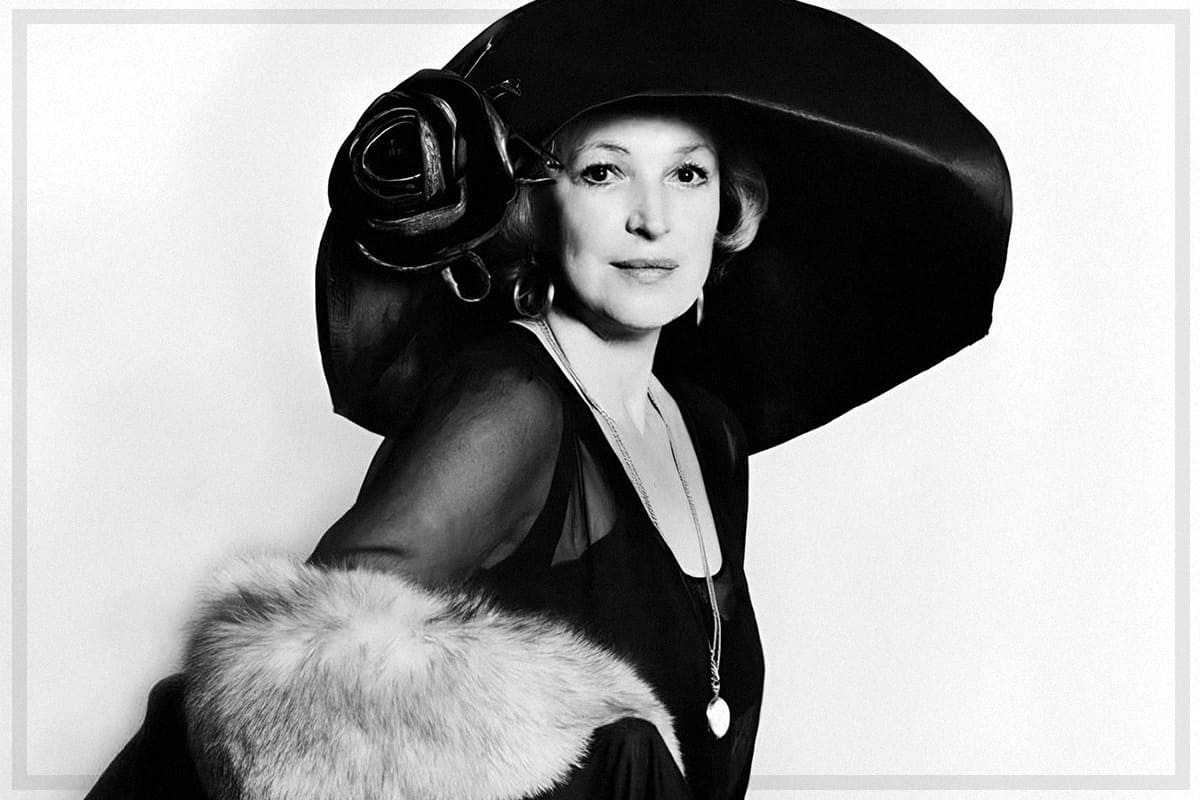
Клара Лучко / Instagram
Clara Luchko (July 1, 1925 – March 26, 2005) was a native of the Poltava region who appeared in sixty films. She portrayed ordinary yet strong-willed women: a military doctor, a regional executive committee employee, a wronged wife, a field brigade leader, a chief engineer, a geologist, twin brother and sister, a dark soul, the heiress of the Montségur family, the head of a collective farm and a city executive committee, a buffet attendant, a woman struggling with alcohol addiction, and the simple Aunt Marusya. She was passionate about unconventional roles that demanded complete dedication. She was honored with the titles Woman of the World, Woman of the Millennium, and the distinction of Honorary Cossack Woman.
“THE GIRAFFE WITH A PARACHUTE”
S
he was named after the revolutionary Clara Zetkin, although she could just as easily have been named Rosa, as her parents spent a long time choosing between honoring Clara Zetkin and Rosa Luxemburg. Clara was the only child in the family, but neither of her parents had time to raise her, as both managed state farms. Instead, she was brought up by her unmarried, childless aunt Kilia (Kylyna Ivanivna Syrota), who paid only passing attention to her homework and focused mainly on preparing meals, especially frying crucian carp. As a teenager, Clara fell deeply in love with a boy named Slavko, but he paid no attention to the gangly, awkward girl his age, whom everyone nicknamed Giraffe. She was unusually tall and, trying to hide what she considered a flaw, constantly slouched. Eventually, she resorted to a bold trick. Spotting her “prince”, she climbed a parachute tower and jumped. But instead of making a proper descent, she ended up suspended in the air — she was simply too light. At the time, a person had to weigh at least forty-five kilograms to make a solo parachute jump. The next day, Slavko drew a mocking cartoon of her, depicting an awkward long-necked giraffe floating above the schoolyard.
HOW NOT TO DROWN IN THE VORSKLA
Once, Lyubov Orlova came to Poltava, and Clara skipped school just to attend her daytime concert. Afterwards, she and a friend followed the slender, almost ethereal film star wherever she went, convinced that she embodied the very ideal of beauty. Her next idol was Tamara Makarova. Determined to look like her, Clara would heat a large nail on the stove and use it to curl her hair.
Fate, however, brought her to the All-Union State Institute of Cinematography (VGIK) because of the war. Her family had been evacuated to Kazakhstan, to the city of Dzhambul, while the Institute of Cinematography had relocated to Alma-Ata. Living nearby were Oleksandr Dovzhenko and Yuliya Solntseva, and the actress took it upon herself to prepare the young woman for the entrance examinations. First, she tried to eliminate Clara’s Ukrainian accent, and then helped her master a lengthy passage from Ivan Turgenev.
At last, the day of the entrance exams arrived, drawing hundreds of applicants. While waiting for her turn, Clara became so overwhelmed with nerves that she completely lost her composure. When she finally stood before the admissions committee, she was barely able to speak.
One of the instructors, Bibikov, came to her rescue.
“Are you afraid?”
“I am”.
“Where are you from?”
“Poltava”.
“Is there a river in Poltava?”
“Yes — the Vorskla”.
“Did you leave a friend behind there?”
“Yes, Zhenya”.
“Then imagine that your Zhenya is drowning”.
Clara shrank back in alarm and suddenly cried out at the top of her lungs, “Zhenya! Zhenya, swim over here!” Then she burst into tears, wailing with genuine anguish, while the professor simply nodded in approval.
“PETUNIA” AND DOVZHENKO
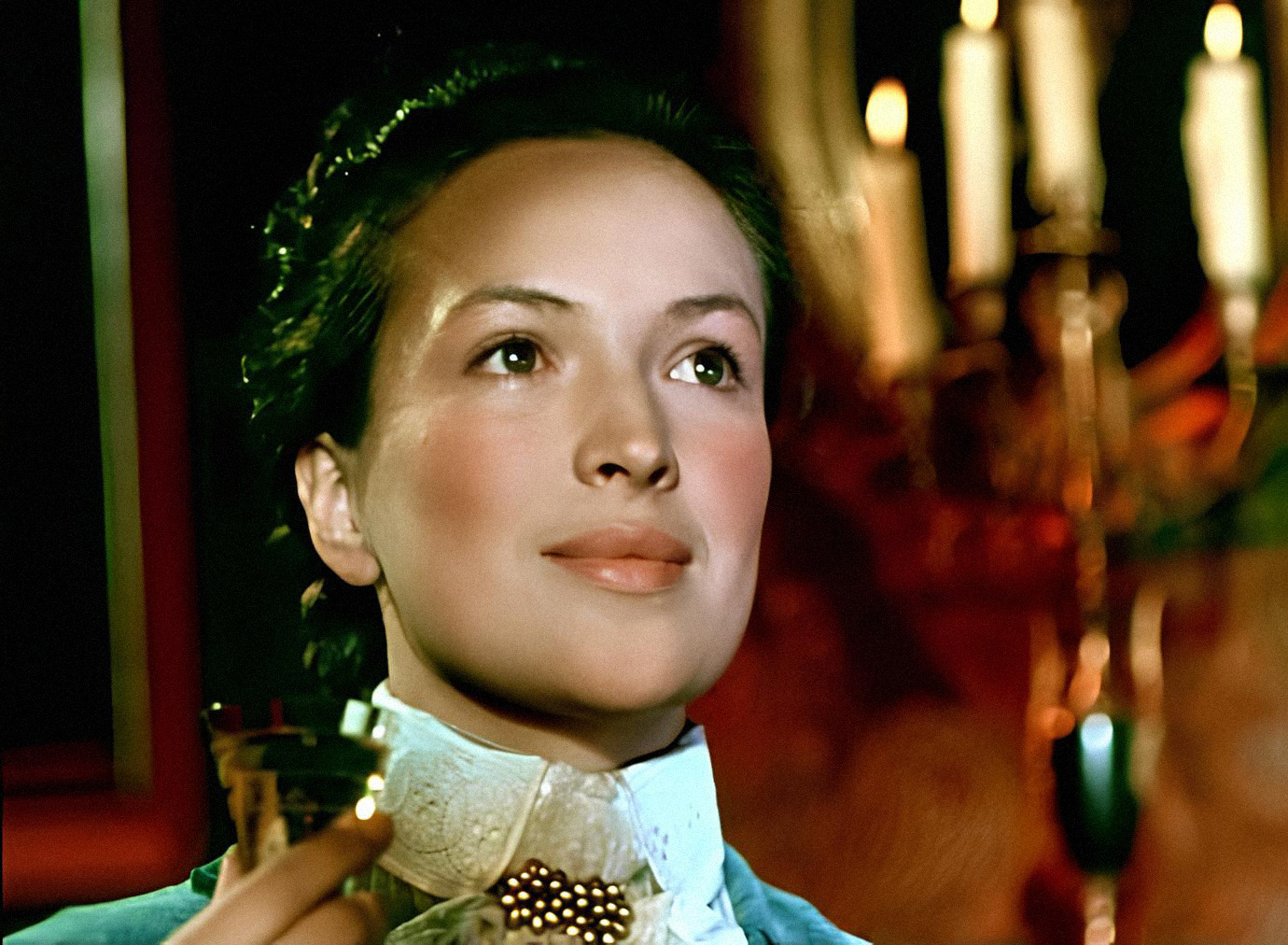
Studying was difficult. Not only did Clara struggle to fully reveal her talent, but she also had to endure hunger, cold, and a meager scholarship. She rented a tiny corner of a room and spent up to two hours traveling to the institute, changing transport three times along the way. Sometimes she could not even afford the metro fare, so she walked with her eyes fixed on the ground, hoping someone might have dropped a five-kopek coin. She earned a reputation for being shy and lacking confidence, yet her teachers nicknamed the otherwise unremarkable student Petunia — apparently in recognition of her perseverance and unbreakable spirit. They advised her to visit Poltava and her parents less often, because each return meant having to “root out” her Ukrainian accent all over again. But Clara stubbornly kept boarding the train to her “saltpeter state”, delighted in reciting Lesya Ukrainka’s poetry — especially No, I Shall Laugh Through Tears… — and until the very end insisted: “I am a Ukrainian who lives in Moscow”.
She met Oleksandr Petrovych Dovzhenko again during her final year at the institute. Clara was walking down a corridor at Mosfilm when she saw the master approaching in his trademark green hat, leaning on his ever-present walking stick. His coat was unbuttoned, and his hair had turned completely white. Catching sight of her, he exclaimed, “I need your face!” Dovzhenko was working on the film Michurin. He explained that there was no substantial role for her but that he could offer her a close-up. Naturally, Clara accepted — who would not dream of working with Dovzhenko himself? Some time later, she arrived at the studio pavilion and was immediately overcome with unease. The vast, dimly lit space was empty and heavy with the smell of medicine. The director was lying on a sofa, having recently suffered a heart attack.
As soon as he noticed his former student, he assured her that filming had not been canceled, only postponed. In the meantime, he would read the speech for which he needed her inspired face. Clara was genuinely puzzled: her role lasted barely ten seconds. But the maestro began to read with such passion that every muscle in her body seemed to tremble. Soon the costume designer and makeup artist arrived, and the pavilion came alive with creative energy. Dovzhenko resumed his reading, and Clara’s eyes filled with genuine tears. Only then did she understand what he had expected from her — and how even the smallest role deserved complete emotional preparation.
LOVE IN AN EMBROIDERED SHIRT
In The Young Guard, Clara had hoped to be cast as Ulyana Gromova, but instead received the small role of Aunt Marina. The director explained his decision quite simply: “Since you’re Ukrainian, and I trust you completely, I’m certain you’ll portray what is truly your own with authenticity”. While preparing for her role in Kuban Cossacks, she immersed herself in the life of her character by working on a state farm, gathering grain at the threshing floor. It was there, on the film set, that she met her future husband, Sergei Lukyanov. Lukyanov was an actor at the Vakhtangov Theatre, considerably older than Clara and already married to a ballerina — the leading star of an operetta company. According to his recollections, one day he stepped into the makeup room and saw the striking young Clara. He looked at her, suddenly exclaimed, “I’m done for!” and quietly closed the door behind him. In time, the two fell in love, married, and shared fifteen happy years together. Sergei adored his wife and brought her fashionable clothes from every trip abroad. At the same time, he deeply appreciated traditional Ukrainian embroidery. Once, he asked Clara’s aunt to embroider a shirt for him in red and black. The shirt turned out beautifully, and he took it with him on a trip to England. There, in Shakespeare’s homeland, the authentic embroidered garment caught the eye of one of the greatest actors of the twentieth century, Laurence Olivier. He was so captivated by its intricate cross-stitch embroidery that he could not help exclaiming: “Forgive me, my friend, but this shirt is mine”. Without hesitation, Sergei took off his embroidered shirt and gave it to him.
THE ACTRESS WITH A HAT FACE
Clara herself also loved dressing elegantly. At the height of her fame, she had her clothes made by Aunt Yulia, a self-taught dressmaker from Poltava. The woman possessed remarkable talent — she could design a dress, a hat, or a pair of boots with equal ease. All it took was a glance at a photograph in a fashion magazine, and she could recreate a swimsuit or a coat. Clara was especially fond of hats and often said that she had “a face made for hats”. “The moment I leave the house without a hat, I feel undressed”. Before another premiere or film festival, she would sometimes sigh: “My God, I really don’t feel like going — but I have to take my dress out for a walk”. (After her death, some of her wardrobe was donated to the collection of a renowned fashion historian, including a Parisian velvet suit trimmed with silk and a cocktail dress made of draped nylon supported by metal hoops).
Even in her later years, she continued to wear high heels, insisting that it was unbecoming for an actress to step onto the stage in slippers. Yet despite her elegance, she knew perfectly well how to milk cows, plaster stoves and ovens, and transform herself from a simple village woman into an elegant French lady. Throughout her life, she remained immensely popular. At the Cannes Film Festival, people even debated whether Luchko’s rosy complexion was natural. The press responded with remarks such as: “A charming actress with the freshness of a shepherdess”.
She was known for her graceful walk, perfectly straight posture, and a size 46 figure. Although she never dieted or exercised, at a height of 170 centimeters she weighed less than seventy kilograms. As for fitness, she claimed to have invented her own routine — stretching in bed. She never underwent plastic surgery, never used moisturizing creams, and often said that she had inherited her youthful appearance from her grandmother. Whenever the elderly actress entered a church, people’s attention shifted from the icons and the priest swinging the censer to the elegant lady herself.
The same was true of her screen presence. She played the lead in Gypsy at the age of fifty-four, even though her Cossack heroine was supposed to be only forty. During the filming of Poor Masha, she had to stand on her head for long stretches because her co-star kept forgetting his lines. She turned down the role of the seductress in The Diamond Arm, believing it improper for a lady of her age to appear in lingerie. By contrast, she waited three long weeks for confirmation of her role in We, the Undersigned, spending the entire time mentally inhabiting the character of regional executive committee employee Violetta Nuikina. When the 1990s brought a flood of low-quality screenplays, she would carry them to the trash between two fingers in obvious disgust. She preferred playing vivid, distinctive characters with depth and edge — not spineless nobodies.
HOW GYPSIES KISS
Clara chose her own Budulai, as none of the other actors being considered for the role seemed right to her. One candidate, in particular, was a slender, narrow-shouldered Armenian who reminded her of Jesus Christ, and with him, she felt, there was simply no chance of creating a believable love story. That is why she invited the Moldovan actor Mihai Volontir to take the role. The director approved her choice but imposed a strict ban on any overt eroticism. The romance had to be portrayed “without hands” — that is, without embraces, kisses, or bedroom scenes. For the actors, this became a genuine artistic challenge: they had to convey love through glances, smiles, and the lightest accidental touches. The film’s most sensual moment is widely considered to be the “kiss with the hands”, when Klava and Budulai repair a poultry net together. In that scene, the tips of their fingers became more expressive than lips. In the famous rain scene, where the Cossack woman was supposed to fight her rival, Katka-Airport, Clara became so immersed in the moment that she completely forgot her lines. The actresses were drenched with water pumped from the Don River, which remained icy cold even in summer. In the end, a single short sequence took six hours to film, and Clara Stepanivna was left with bruises so severe that the following day she had to wear a dress with long sleeves — no amount of makeup could conceal them.
ARCHERS DON’T SIT ON THE BENCH
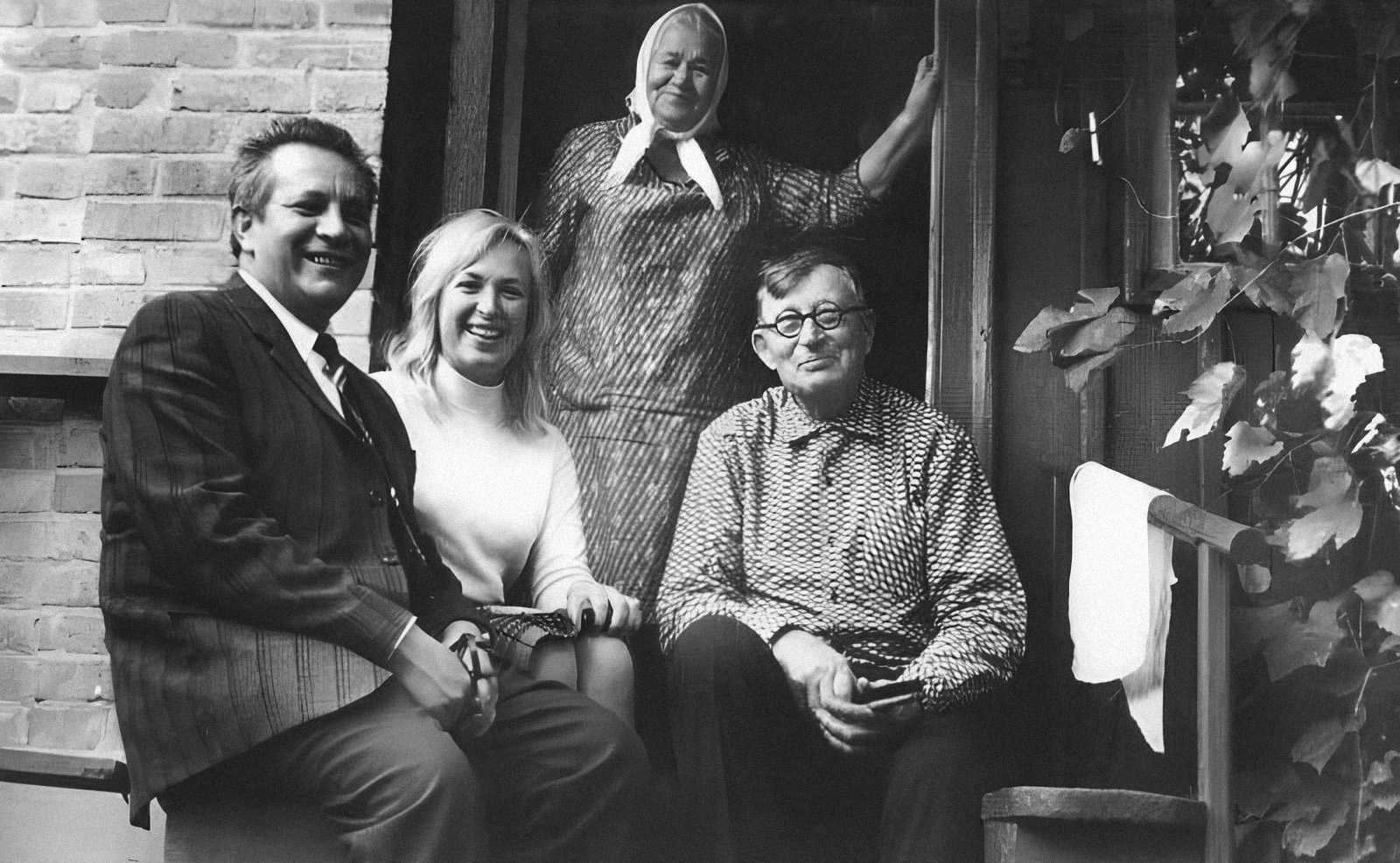
Clara never learned how to rest. She was so devoted to her work that one day she accidentally left her own daughter behind on a film set. That day, she had brought little Oksana to the studio. The child grew tired and fell asleep on a pile of feather boas. Clara was already heading for the exit when the costume designer suddenly called out: “Whose little red-haired girl is sleeping over there?” Clara nearly fainted. “My God… she’s mine”. While filming We, the Undersigned, Clara was summoned to the set at seven in the morning but did not film until evening. Throughout the entire day, she could neither sit down — for fear of wrinkling her dress — nor eat. Yet she never complained to the director. She worked tirelessly until the very end of her career, always afraid of being left behind. Outside the apartment building where she lived with her family stood a row of benches occupied by retirees. She would hurry past them as quickly as possible and, once home, would remark: “God, don’t let me live to the day when I, too, end up sitting on a bench while life marches past”. At her country house, she grew lilies and loved the smell of earth just released from beneath the snow. She drove a Volga, constantly fed stray cats and dogs, and often emphasized that she descended from the Zaporizhian Cossacks, since her surname had military origins. Luchko comes from the word luchnik — an archer. And, indeed, her character embodied the very qualities associated with that name: resilience, determination, and an unbreakable spirit.
When copying materials, please place an active link to www.huxley.media
Select the text and press Ctrl + Enter


