“THE END OF COMPLEX CULTURE”: Why Society Abandons Its Achievements

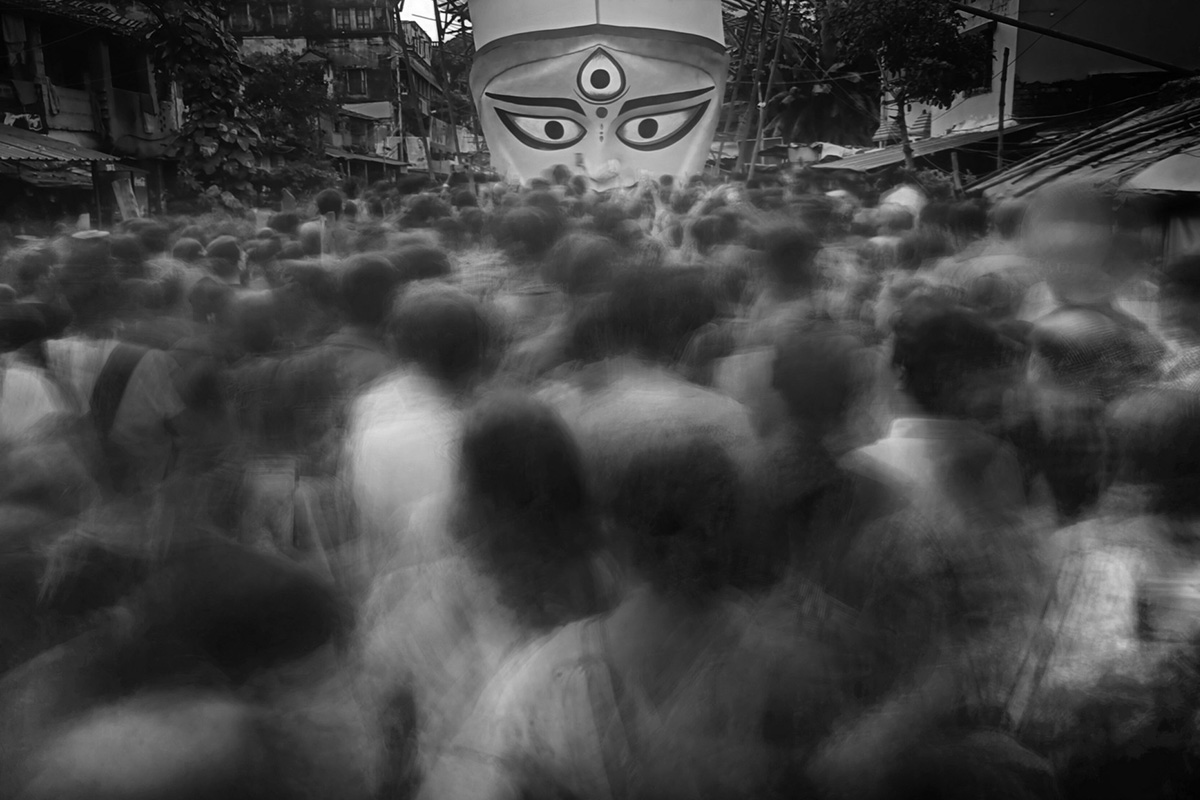
Photo by Dibakar Roy on Unsplash
Throughout human history, there have been many occasions when an era of extraordinary diversity of ideas, styles, and ways of life was followed by an era of uniformity of thought, simplified language, and short answers. Sometimes such simplification was the result of catastrophe, but at times it was society itself that chose it. Today, authoritative experts in a wide range of fields are speaking of the “end of complex culture”. Let us try to understand whether this is indeed the case and why simplification and complexity alternate throughout the history of culture.
WEARY OF COMPLEXITY
I
n the spring of 415, in Alexandria, a mob led by the church lector Peter brutally murdered Hypatia — a mathematician, astronomer, and head of the local Neoplatonic school. For centuries, this scene was portrayed as the triumph of Christian obscurantism over the ancient cult of reason. However, the historical reality was more complex: Hypatia’s murder was the result of a political confrontation between the prefect Orestes and Bishop Cyril. But it took place against a backdrop of genuinely intense philosophical and religious conflicts. Suffice it to say that twenty-four years before this murder, under Emperor Theodosius I, the famous Alexandrian temple of the Serapeum had been destroyed. Hostility intensified along with cultural chaos. Alexandria in late antiquity was in many ways similar to our world today. In a single city, Neoplatonists, Christian theologians, Jewish interpreters, Gnostics, and worshippers of Egyptian gods engaged in disputes. For an Alexandrian, just as for a modern European, no truth was self-evident. And it was precisely in this “broth” of total uncertainty that the need for a single, correct picture of the world, appealing in its “completeness”, was born.
In 1941, the psychoanalyst Erich Fromm formulated this problem in his book Escape from Freedom roughly as follows: can a person become so tired of “complex” uncertainty that they voluntarily prefer the “simplicity” of unfreedom? Before answering this question, it is worth noting that the simplification of society is not such a homogeneous phenomenon. Structural simplification is accompanied by the disappearance of institutions, professions, technologies, and trade networks. Cultural simplification involves a reduction in the diversity of ideas, styles, and ways of life that coexist. Cognitive simplification manifests itself in intolerance of anything that goes beyond the simple explanations offered by black-and-white thinking. But all these processes may well occur independently of one another. The Third Reich is an example of how a technically and administratively complex state imposes an extremely simplified picture of the world on its citizens. Conversely, the collapse of a state may open the way to cultural diversity. It is also useful to distinguish between two possibilities: whether complexity disappears altogether or merely relocates — from the façade to the framework, from the mind to the machine, from craftsmanship to infrastructure.
THE FIRST CATASTROPHE OF GLOBALIZATION
In 1982, a ship that had sunk around 1320 BC was discovered near Cape Uluburun in Turkey. On board, approximately 10 tons of Cypriot copper and about a ton of tin were found — exactly the proportion needed to produce bronze. But there were also glass ingots, Egyptian gold, ebony, and ivory. The ship turned out to be a kind of instantaneous “snapshot” of the complexity of a world in which pharaohs, Hittite kings, and Babylonian rulers exchanged letters, gifts, and brides. Around 1200–1150 BC, this world ceased to exist — Ugarit burned, the Hittite Kingdom collapsed, and the Mycenaean palaces were abandoned. Historian Eric Cline describes this as a systemic collapse: droughts, earthquakes, raids by the “Sea Peoples”, and the disruption of trade routes reinforced one another. Greece became so “simplified” that the Greeks lost writing for several centuries. Yet it was precisely from this “collapse” that the city-states, the Phoenician alphabet in its Greek adaptation, and eventually the philosophy and culture we admire to this day miraculously emerged.
Does this mean that the destruction of a complex system made room for an entirely different kind of complexity? In other words, is there something like the constant “creative destruction” described by Joseph Schumpeter in his economic theory at work in history? Unfortunately, there are also far more dramatic scenarios. When Tasmania became separated from Australia by the sea about 10,000 years ago, several thousand people remained on the island. Europeans who arrived in the 17th–18th centuries found that the Tasmanians possessed an extremely primitive set of technologies: no bone tools, fishing hooks, nets, spear-throwers, or boomerangs. Archaeological evidence indicates that the Tasmanians had once possessed all these things, but they disappeared about 3,500 years ago. Anthropologist Joseph Henrich explained this phenomenon as follows: the population had become too small, and the number of people capable of passing skills on to one another decreased with each generation. Not all scholars agree with this explanation, but the idea itself is important — the complexity of a society depends not on brilliant insights and discoveries, but on the number and ability to communicate of those who preserve and transmit them.
CHRISTIAN ROME: TRANSFORMATION OR DECLINE?
The fall of the Western Roman Empire is a popular example of the Dark Ages, rivaling those that followed the Bronze Age collapse in the public imagination. In Roman Britain, for example, within a few generations after the Romans departed, coins, the potter’s wheel, and tiled roofs disappeared, not to mention the decline in the quality of everyday life. However, many historians, such as Peter Brown, see the 5th–8th centuries not so much as a period of decline but as a “rewiring” of society: monasteries emerged, along with new laws and a new literary culture, while incredibly sophisticated theological debates took place. Yes, Christianization restricted the former diversity. Under Theodosius, pagan cults were banned, and under Justinian, teaching at the Neoplatonic school in Athens was prohibited. But here, too, the legend that persists in the public imagination turns out to be much simpler than history: in Alexandria itself, pagan philosophers continued to teach, while students at Christian schools continued to study Plato and Aristotle. In other words, culture became more dogmatic, but at the same time more complex.
And just a few centuries later, the “simplified” West presented the world with something unknown to Antiquity: universities and extraordinarily complex Gothic cathedrals, a system of canon law, and a culture of scholastic disputation. The heritage of Antiquity continued to be actively translated and interpreted in Baghdad, Constantinople, and Córdoba. It turns out that complexity as such did not disappear; its nature simply changed. In 2019, Stanford historian Walter Scheidel put forward an interesting thesis in his book Escape from Rome: it was precisely because the complexity of imperial Rome had once disappeared and was never restored that Europe became multipolar. Competition among dozens of states, cities, churches, and universities led, a thousand years later, to the Scientific and Industrial Revolutions. Once again, we observe this paradox — the simplification of the state became a prerequisite for the increasing complexity of society. Incidentally, even earlier, in The Collapse of Complex Societies, anthropologist Joseph Tainter concluded that many inhabitants of the late empire welcomed the barbarians as liberators — maintaining the complexity of Rome through taxes and levies had become too costly for them. Whether this is the point at which we should reflect on the fate of the USSR or the contradictions of today’s European Union is for you to decide.
EMPIRE AND UNIFORMITY OF THOUGHT
The history of China allows us to pose the question differently: why does the state seek to eliminate diversity precisely when it wants to increase its ability to govern? In 213 BC, Chancellor Li Si proposed that the Qin emperor burn all historical chronicles except those of Qin, as well as all private copies of the classical texts, preserving only works on medicine, divination, and agriculture. Modern sinologists treat this story with caution: perhaps the chronicler who served the succeeding Han dynasty wanted to discredit his predecessors? Could the famous “burying of 460 scholars alive” also be a later legend? We will probably never know for certain, but the logic of total unification itself is entirely recognizable to us: uniform Chinese characters, uniform measures, uniform axle widths, and a uniform history. Subsequently, the imperial examinations, which existed from the 7th to the early 20th century, reproduced this logic, shaping an educated elite and preserving cultural continuity. Over time, they turned into a competition based on a fixed canon: the “eight-legged essay” of the Ming and Qing dynasties became a symbol of form displacing thought. The Cultural Revolution of 1966–1976 was, in essence, a continuation of the same tradition of forced simplification. The only difference was that, at this new historical stage, it required the destruction of the “Four Olds” (remnants of the past) — old ideas, culture, customs, and habits. In the autumn of 1966, the Red Guards vandalized the Temple of Confucius and his ancestral cemetery near Qufu — thousands of objects preserved there for centuries were destroyed.
Museums and libraries were closed, and schools and universities stopped their regular admissions. Political scientist James Scott demonstrated in his book Seeing Like a State that the mechanisms of simplification also worked perfectly well in Europe. In the 18th century, Prussian foresters replaced mixed forests with neat rows of spruce trees — they were easy to count, fell, and tax. The first generation of such forests yielded record revenues, but the second began to suffer from disease and die: along with the undergrowth, the entire invisible ecosystem disappeared. According to Scott, the state tends to simplify not so much itself as the life it governs. Unfortunately, this simplification has the most tragic consequences for life itself. In 2011, a study of the cultures of 33 countries was published in Science. It found that, historically, “tight” cultures, characterized by numerous strict norms and low tolerance for deviations, had experienced the greatest number of wars, epidemics, and famines. But they also had the highest population densities. Pakistan proved to be the “tightest”, while the Netherlands and Estonia were the “loosest”. Nobel laureate in economics Elinor Ostrom showed that in some polycentric systems, where numerous centers make decisions and learn from one another, diversity can serve as a reserve of resilience, although it sometimes hinders coordination. This echoes Scheidel’s hypothesis about European fragmentation. But standardization also has a nuance: it becomes harmful when it begins to eliminate precisely those differences that help society adapt to uncertainty.
MODERNITY CHOOSES SIMPLICITY
Weimar Germany in the 1920s was one of the world’s epicenters of intellectual culture: the Bauhaus, Expressionist cinema, the theory of relativity, quantum mechanics, psychoanalysis, and the philosophy of Heidegger and Cassirer. But very little time passed before the country chose a regime that reduced all cultural diversity to a handful of slogans. In 1933, the Nazis closed the Bauhaus, and in 1937, the exhibition Degenerate Art opened in Munich. It featured 650 works by Kirchner, Nolde, Klee, Dix, Kandinsky, and other artists, brought together from 32 German museums. All of them were deliberately hung crookedly and accompanied by mocking captions. The day before, Hitler had personally opened the Great German Art Exhibition nearby, featuring approved Neoclassical paintings, to provide a contrast. The result was the opposite of what had been expected: approximately three times as many people came to see the “degenerates” as visited the official exhibition.

In the USSR, simplification took similar forms. After the Central Committee dissolved all literary groups, the First Congress of Soviet Writers in 1934 declared socialist realism the only correct method. Like the Third Reich, the country was sufficiently complex in scientific and industrial terms. It was building Magnitogorsk and developing one of the world’s strongest schools of physics and mathematics, while simultaneously fighting against the “formalism” of Shostakovich’s music. Fromm, who remembered very well what the Weimar Republic had been like, attempted to explain why something similar happens to society. In Escape from Freedom, he describes three mechanisms through which people seek refuge from unbearable freedom: submission to authority, destructiveness, and automaton conformity. He believed that Nazism succeeded because it offered an extremely simple and precise answer to the fears of the impoverished lower and middle classes. In 2005, political psychologist Karen Stenner refined Fromm’s idea in her book The Authoritarian Dynamic: a predisposition toward intolerance lies dormant in society until it is fully “activated” when a person perceives a threat to the normative order. The simplification of the world begins not with the burning of books, but when a complex state apparatus starts reducing the number of permissible ways of thinking.
THE PLAGUE: A CATALYST, NOT A CAUSE
Is catastrophe always the cause of society’s simplification? Contrary to popular belief, the plague of 1347–1352 suggests otherwise. The 14th-century pandemic claimed the lives of between one-third and one-half of Europe’s population. In England, approximately half of parish priests died. In 1349, bishops ordained people in haste, while university-level training of the clergy in the vast Diocese of Lincoln virtually ceased. Teachers of French became scarce, and, according to John Trevisa, by 1385 Latin was being explained in English in all of England’s grammar schools. At the same time, losses and gains went hand in hand: learning became faster, but without French, those educated in this way were helpless on the continent. Later, this process would lead to the emergence of Chaucer, the “father of English poetry”. In fact, much of what is attributed to the plague had begun earlier. The austere “Perpendicular” style of English Gothic architecture, considered a cheaper response to the deaths of stonemasons, appeared around 1332 — the plague merely accelerated its spread, while also killing its creator, the royal master mason William Ramsey. The flagellants, who publicly whipped themselves, first marched in procession through Perugia in 1259–1260, long before the pandemic.
But most importantly, the plague gave rise to new complexity. Historian David Herlihy called it a terrible but effective catalyst: it broke the demographic and technological deadlock into which medieval society had fallen. In a depopulated Europe, labor became a scarce commodity. On the one hand, urban artisans and peasant communities gained more rights. On the other, fulling mills, which replaced a week’s worth of manual labor, became widespread. Spectacles, invented back in the 13th century, became a mass-produced commodity. The high cost and shortage of scribes led to the printing press. From around 1375, real wages rose and remained above pre-pandemic levels until 1500. Economists Nico Voigtländer and Hans-Joachim Voth demonstrated that it was precisely the demographic shock that lifted Europe out of the Malthusian trap long before the Industrial Revolution — by 1700, incomes and the proportion of urban residents in Europe’s most successful economies had doubled. COVID-19, all too familiar to humanity today, followed the same logic, albeit on a smaller scale. The idea of mRNA vaccines had been proposed as early as 1988, but the technology remained confined to laboratories for decades. Like the plague, the new pandemic did not “invent” anything from scratch; it merely became a catalyst for many processes. For example, it accelerated the slow-moving transformation of education.
ARE WE ONCE AGAIN FOLLOWING THE PATH OF SIMPLIFICATION?
There is a well-founded opinion that the era of great complexity began to fade about 50 years ago. According to calculations by economist Robert Gordon, productivity in the United States, reflecting technological progress, grew by 1.89% annually in 1920–1970, by 0.57% in 1970–1994, and by approximately 0.4% in 2004–2014. An analysis of 45 million scientific papers and 3.9 million patents, published in Nature in 2023, showed that research is becoming genuinely groundbreaking less and less frequently. However, these findings remain a subject of debate. Something is also going wrong with the famous law formulated by Intel co-founder Gordon Moore. In 1965, Moore empirically determined that the computing power of processors doubles approximately every two years, while their production costs decline. But today, for this law to continue to hold, more than 18 times as many researchers are needed as in the early 1970s! Mark Fisher called this the “slow cancellation of the future” — human culture seems to have become stuck in the 20th century, endlessly reworking it.
The cognitive sphere is also responding to the slowdown in increasing complexity and development. Admittedly, for now, we are talking about behavior in front of screens rather than a general inability to concentrate. Psychologist Gloria Mark observed that the average time spent focusing on a screen before switching to something else fell from approximately 2.5 minutes in 2004 to 75 seconds in 2012 and 47 seconds after 2016. At the same time, the proportion of Americans who regularly read for pleasure declined from 28% in 2004 to 16% in 2023. According to the PISA 2022 study, students’ performance in OECD countries declined by almost 15 points in mathematics and 10 points in reading, whereas previously, fluctuations between assessment cycles had not exceeded 4–5 points. Notably, the decline in reading performance had already been recorded after 2012, long before the pandemic. In addition, a study of data from 730,000 Norwegian military conscripts demonstrated that the decades-long increase in intelligence quotient (the so-called Flynn effect), observed throughout the 20th century, had given way to a decline among generations born after 1975. The causes lie in environmental changes rather than heredity.
IT IS TOO EARLY TO WRITE A HISTORY OF DECLINE
And yet, what is happening to modern society cannot be reduced solely to decline. In 2023, an experiment involving Meta switched thousands of Americans from algorithmic feeds to chronological ones. People spent less time on social media and saw more moderate content, although their level of political polarization remained unchanged. A 2022 study comparing survey data spanning half a century showed that belief in conspiracy theories is not increasing. A 2025 meta-analysis found no evidence of cognitive decline among computer and smartphone users over the age of 50. On closer examination, the new simplification turns out to be merely an intensification of an old trend. For example, a 2023 OECD study recorded not a decline in overall literacy, but a widening divide in society: over a decade, literacy among those at the “bottom” fell by 10%, while among those at the “top” it rose by 10%.
Artificial intelligence has also brought quite a few surprises. In a 2025 MIT study, 54 students wrote essays under three conditions: using ChatGPT, using a search engine, and independently. In the first case, 83% of participants were unable to quote a single sentence from their own text. In the other two groups, the figure was 11%. But this experiment had a follow-up that yielded an unexpected result: when students first wrote independently and only then brought AI into the process, their performance improved. Perhaps everything depends on who starts thinking first — the human or the machine?
And finally, demography — perhaps the factor that most closely connects us to the plague-ridden 14th century. According to the UN, the global fertility rate has fallen from 3.3 children per woman in 1990 to 2.25. The decline continues, and the population is aging, essentially plunging the world into a situation of “slow plague”. Just as in the 14th century, expensive labor is giving new impetus to automation and robotization. Economists Daron Acemoglu and Pascual Restrepo have clearly demonstrated that the faster a country’s population ages, the more actively it adopts robots. However, if the number of people continues to decrease, it is not only labor that becomes scarce, but ideas as well. Admittedly, modern technologies offer us some hope here. The natural growth of knowledge is slowing, and each discovery will become increasingly costly, but it is quite possible that machines will be able to take over some of the work of researchers.
WHAT CYCLE ARE WE LIVING THROUGH?
The search for cyclical patterns in history is an ancient fascination of humanity. And this fascinating pursuit has its own “stars”: from Oswald Spengler to Arnold Toynbee, from Pitirim Sorokin to Joseph Tainter and Peter Turchin. For the most part, their models emphasize the succession of cultural types and socioeconomic dynamics rather than the alternation between simplicity and complexity. Nevertheless, taken together, they provide the language in which we can ask questions about our own time. In that case, a preliminary answer may take the form of a set of scenarios. For example, the Dark Ages scenario has occurred more than once in human history, which means that under certain conditions it is entirely possible. Dark Ages begin when the channels through which complexity is transmitted — scribes, schools, workshops, and trade networks — break down in society. In other words, what happens is what we observe in Greece after the Bronze Age or in Tasmania. The reduction of diversity to uniformity of thought occurs when society, faced with a threat, itself develops a demand for simple answers, and the state readily provides them. We have seen examples of this scenario in Germany in 1937, in the ancient Qin Empire, and in China in 1966. A renaissance of complexity, apparently, always comes after a profound social shock, a civilizational or natural catastrophe, or an upheaval. It marks a way out of a deadlock, while expensive labor and open space give rise to new complexity.
It was through expensive labor and the expansion of the space of freedom that a path toward new complexity was found after the European plague epidemic of the 14th century and after the fall of the Roman Empire. Our present is not an exact copy of our past. And although it most closely resembles the third scenario, we can also find elements of the first two in it. The complexity of our thinking, science, and technology is most likely not disappearing — the nature of this complexity is simply changing, transforming the economy, infrastructure, and the cultural and social spheres. And we have yet to fully comprehend the experience of this transformation. Almost everywhere, the Earth’s population is slowly aging and seeking a way out of this deadlock through automation, repeating a path once taken before. The main threat along this path is not the global collapse of all humanity, but its tragic division: at the same time, for some it may mean a new Renaissance, while for others — the Dark Ages. In searching for an analogy, we can turn to the 14th century, when England simultaneously produced Chaucer and a barely literate rural clergy, the perpendicular lines of Gothic vaults and the Peasants’ Revolt of 1381. In essence, we have two possible scenarios of simplification that may unfold simultaneously. The first will be the key to the complexity of new scientific theories, new political reforms, and a new stage of modernization. The second will discard both complexity itself and the key to it, asserting a single, uncontested version of social existence.
When copying materials, please place an active link to www.huxley.media
Select the text and press Ctrl + Enter