HOW UKRAINIAN SOPRANO SOUNDS IN AFRICA

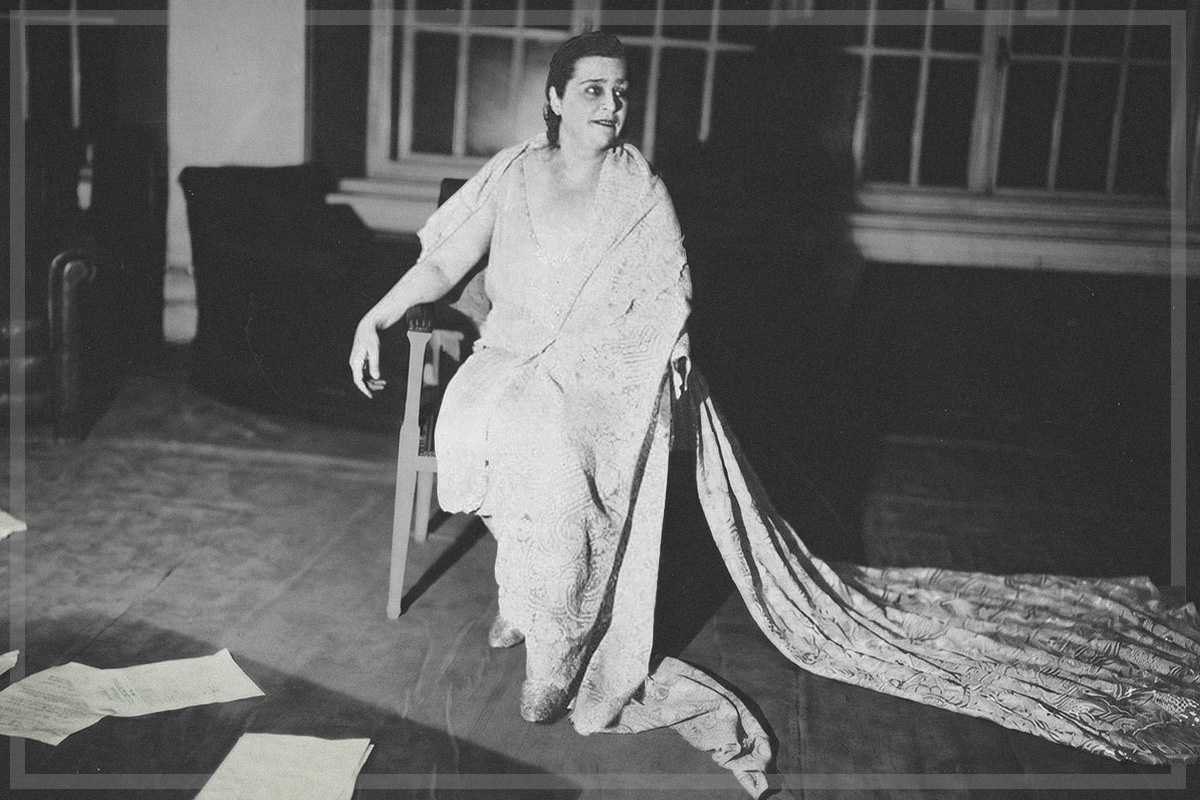
Ksenia Belmas / youtube.com
Ksenia Belmas (January 23, 1890 — February 2, 1981) possessed outstanding vocal gifts and became a prima donna of the French Grand Opera and the Berlin State Opera. She was born in Chernihiv and died in the Republic of South Africa. In Germany, she set a record by recording eighty arias in a single day. At La Scala, she performed as a soloist before the brilliant conductor Arturo Toscanini and was praised as a unique soprano. She always emphasized that her art of singing was born in Ukrainian Chernihiv.
SECRETS OF ANCIENT CHERNIHIV
S
he was discovered in the gray and ancient legendary city with its Red Square, caves, and the ghost of Ilya Muromets. In the province that Mykhailo Hrushevsky compared to the Italian Ravenna. Her mother was a native Ukrainian, her father a Russified Frenchman. He often emphasized that their surname, in translation, meant “beautiful home”. She later recalled: “When I was only five years old, I was already ‘giving concerts.’ I went from house to house, where they first treated me to tea and pastries, and then invited me into another room: everyone sat while I stood in the middle and sang the songs my mother had taught me”. At sixteen, she entered the Kyiv Conservatory and at her graduation exam brilliantly performed the extremely difficult aria of Leonore from Beethoven’s only opera, Fidelio (“Abscheulicher! Wo eilst du hin!”). A bravura, dramatic, vocally rich piece. The deaf composer had to work his hands to the bone, for the first version had failed. The genius set the score aside for eight years and during that time completely rewrote the libretto, added an overture, and only then did everything sound as it should. After graduating from the conservatory, the singer was sent for training to the Bolshoi Theatre; after Moscow came Odesa and Eugene Onegin.
BOBROVNIKOV, MISHKA YAPONCHIK, AND OTHERS
At the age of twenty, she fell deeply in love. Her chosen one was the Chernihiv nobleman and wealthy landowner Bobrovnikov, whose ancestors had probably once hunted beavers, while their descendants now enjoyed cold milk soups with cheese and honey, strolling along oak alleys and through sugar beet plantations. Her husband adored his songbird, spared no expense on her education, and encouraged her to study with Professor Emil Cooper. Cooper had conducted in Diaghilev’s Russian Seasons and brought Mussorgsky’s monumental Boris Godunov to the grand stage. In time, her voice acquired a warm huskiness, became incomparable in bel canto technique, and gained a touch of Slavic brilliance. The woman possessed a wide vocal range, intoned expressively, and masterfully performed works by Rossini, Bellini, and Verdi.
Yet their marital idyll did not last long, for the First World War destroyed everything. Her beloved was wounded, Ksenia left the stage to care for him, and instead of tending to his apiaries, he passed into eternity. Her parents perished in the chaos of madness, and the Soviet authorities confiscated the family estate. The twenty-seven-year-old widow did not know where to go, as she could not endure the Bolshevik spirit. At first, she fled to Odesa and, in order to earn a living, performed before soldiers in the streets and squares, though it was extremely risky: at any moment she could lose her voice. Besides, the city was then ruled either by anarchy or by three powers at once: the Entente, the Whites, and the Directorate, while Mishka Yaponchik had organized his gang and set about robbing shops, gambling halls — in short, the bourgeoisie. There was a shortage of food and work, cholera and the Spanish flu roamed the streets, and so at the end of 1921 she decided to emigrate.
THROUGH MILAN IN WORN-OUT SHOES
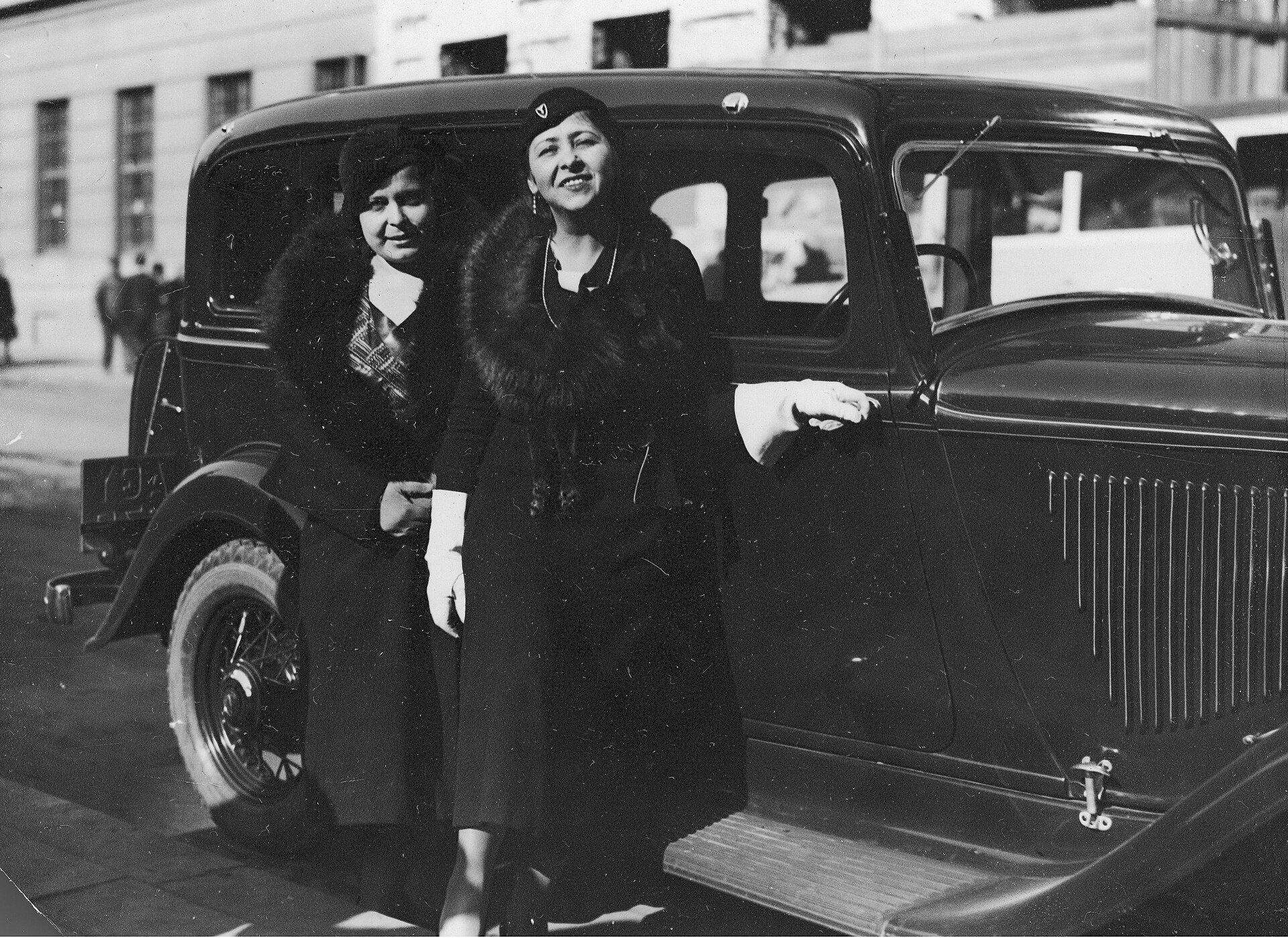
The dangerous journey stretched over ten days. Together with her friends, Ksenia illegally crossed the border and nearly got lost in the Polish Republic, where the Polish mark was in circulation, twenty-seven million people lived, and a constitution had only recently been adopted. From now on, she was no longer an opera soloist but an ordinary refugee. Who knows how everything might have turned out had she not met the Kyivan pianist and conductor Oleksandr Kichin. The young people had much in common: memories of beloved places — the Passage and the Bessarabsky Market — and similar views. They were also united by grace notes, cantilenas, and a love for short and long notes alike. So they married and formed a strong creative partnership. From then on, they toured together across Germany, France, and Italy. The woman arrived in Milan poorer than a church mouse.
“I had only two dresses and one pair of shoes with holes in them. But I was happy and had the opportunity to meet wonderful people”. After Italy came Paris, where she was described as both immensely talented and extraordinarily shy. At the International Exhibition in the Grand Palais, she gave seventeen concerts accompanied by eight outstanding orchestras. In view of this, the director of the Paris Opera, Jacques Rouché, invited her to perform in Aida at the Palais Garnier. The performance took place on January 16, 1926, without a single rehearsal and once again underscored the singer’s high level of professionalism. From that moment on, her devoted admirers included Jacques Rouché himself, the 13th President of France Gaston Doumergue, and Marshal Henri Pétain. A few months later, in the capital of fashion, Symon Petliura was buried to Shevchenko’s “Testament”, while the restored Moulin Rouge, rebuilt after a fire, passionately danced the cancan once again.
In October of that same year, Ksenia returned to Milan, where at La Scala she performed arias from works by Donizetti, Bellini, and Rossini. Then came Berlin and the leading roles in Aida and La Traviata. Over the years, her voice became ever deeper and stronger. Critics noted her incomparable throaty vibrato, lyrical bel canto, Slavic warmth of timbre, and Italian precision. From Berlin she set course for Australia, yet in the “land upside down” misunderstandings arose: Ksenia became entangled in backstage intrigues, and instead of portraying Santuzza in Cavalleria Rusticana, she gave solo concerts. Afterwards she traveled to Monte Carlo, the Baltic countries, Scandinavia, until eventually she found herself in Africa.
BLACK BETRAYAL
On the Black Continent, she endured yet another drama, for her beloved Oleksandr suddenly packed his suitcases and left for a wealthier local lady. Along with his own shirts and ties, he took all the family savings, leaving Ksenia with nothing. She had no money to return home, did not know how to combine concert and production activities, and so remained in a “third world” country. She settled in Durban, founded her own vocal school, gave charity concerts, and sang every Sunday at the Greek Holy Trinity Church.

MADAME BELMAS AND HER OVERRIPE CHERRIES
Durban nestled beside the port of Natal (translated from Portuguese as “Christmas”) on the coast of the Indian Ocean. It had once been discovered by Vasco da Gama, who landed there on the day of Christ’s birth and named the place accordingly. The area was inhabited mainly by Black people who, while speaking, clicked their consonants. One only had to close one’s eyes to hear “tsk-tsk”, “click-click”, “tsik-tsik” all around. To pronounce such sounds, one had to suck in the tongue. The locals spoke Zulu, fried crocodile tails, and stewed antelope meat. They gladly cooked maize porridge, treasured rooibos tea, and suffered from the January heat. Yet in June and July they froze like little dogs, for the temperature could drop to three degrees Celsius.
And yet it was precisely here, as the singer repeatedly assured, that she found “absolute peace and satisfaction”. Ksenia Oleksandrivna settled in a modest three-room house. The home had a green roof, a cramped courtyard with several palm trees, and a terrace facing north. There she founded Madame Belmas’s School of Opera Singing and trained a great number of singers. Her students adored their teacher, while she tirelessly sang to them in a voice steeped in wind, fog, steppe grasses, sweet cherries, and wheat grain. One could wrap oneself in her singing as in a blanket, and in the high notes, which sounded effortless, there could be heard murmuring streams, the rustling of buckwheat fields, and the turbulence of a flute.
DEAD OR ALIVE?
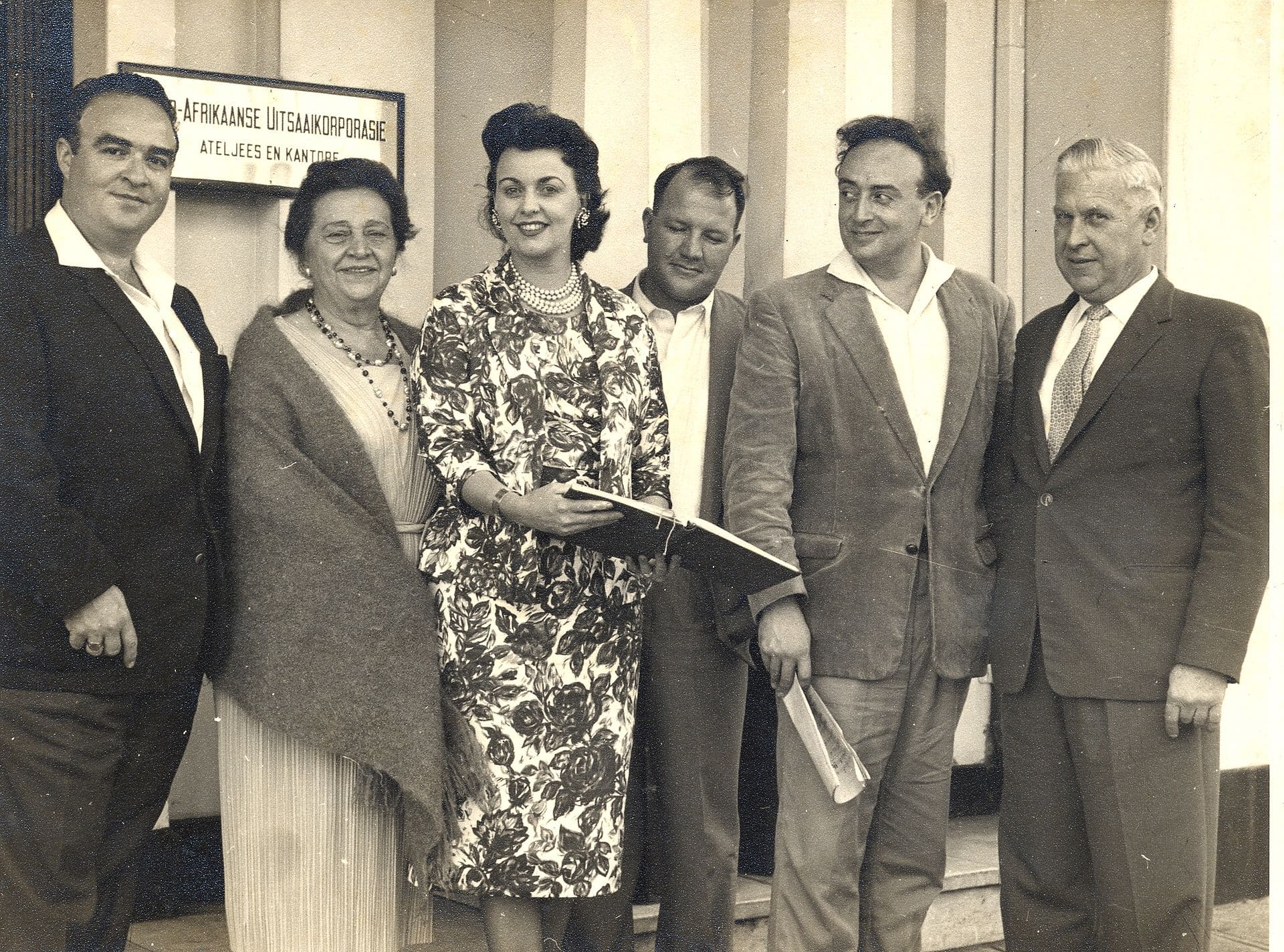
Her students called her “our madame”, and she gladly treated pupils and guests to her signature Ukrainian dishes — perhaps potato pancakes or baked porridge pudding. Though she earned little, she dressed according to the latest fashion. During the Second World War, she gave numerous concerts and donated the money to the needs of the Soviet Army. She spoke French fluently. She had no children from either her first or second marriage. Envious people and enemies she called by the incomprehensible-for-foreigners word svolochi. Her disappearance at the height of her career did not go unnoticed, and therefore her European colleagues believed she had died, especially since no news came from Oleksandr either (her former husband had descended into alcoholism and vanished somewhere among the hills or gallery forests near the acacia-lined Umgazi River).
Only in 1964 did it become known that Ksenia Belmas was alive. In her final years, she was cared for by a devoted friend, the Estonian marine engineer Karl von Lilienstein. The woman was gravely ill with cancer and had to exchange dishes, furniture, and clothing for food. Feeling that the end was approaching, she requested to be cremated and for her ashes to be buried in Chernihiv. Her last wish could not be fulfilled immediately. Only sixteen years later — the engineer had kept her ashes at home all that time — did the opportunity arise to hand the urn over to a Soviet journalist. Sadly, the opera star never made it back to Chernihiv and remained at rest in Baikove Cemetery. The gravestone bears the inscription: “To the singing voice of Ukraine — Ksenia Belmas. 1890–1981. Chernihiv — Durban”.
When copying materials, please place an active link to www.huxley.media
Select the text and press Ctrl + Enter


