“I WANT MY WORKS TO SHARE A COMMON, RECOGNIZABLE LANGUAGE”: Lviv-Based Artist Liudmyla Davydenko

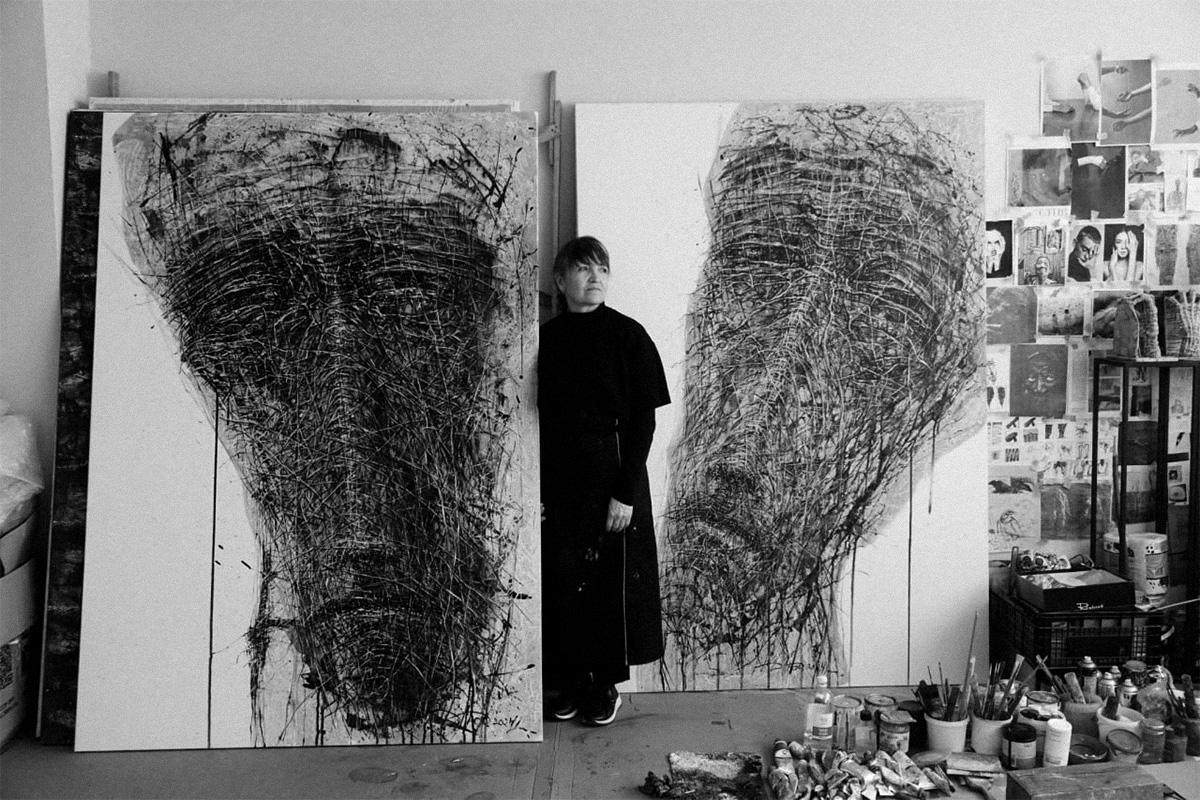
Liudmyla Davydenko / Photo from the artist’s personal archive
SHORT PROFILE
Name: Liudmyla Davydenko
Date of Birth: December 28, 1965
Place of Birth: Bilhorod-Dnistrovskyi, Ukraine
Profession: Artist
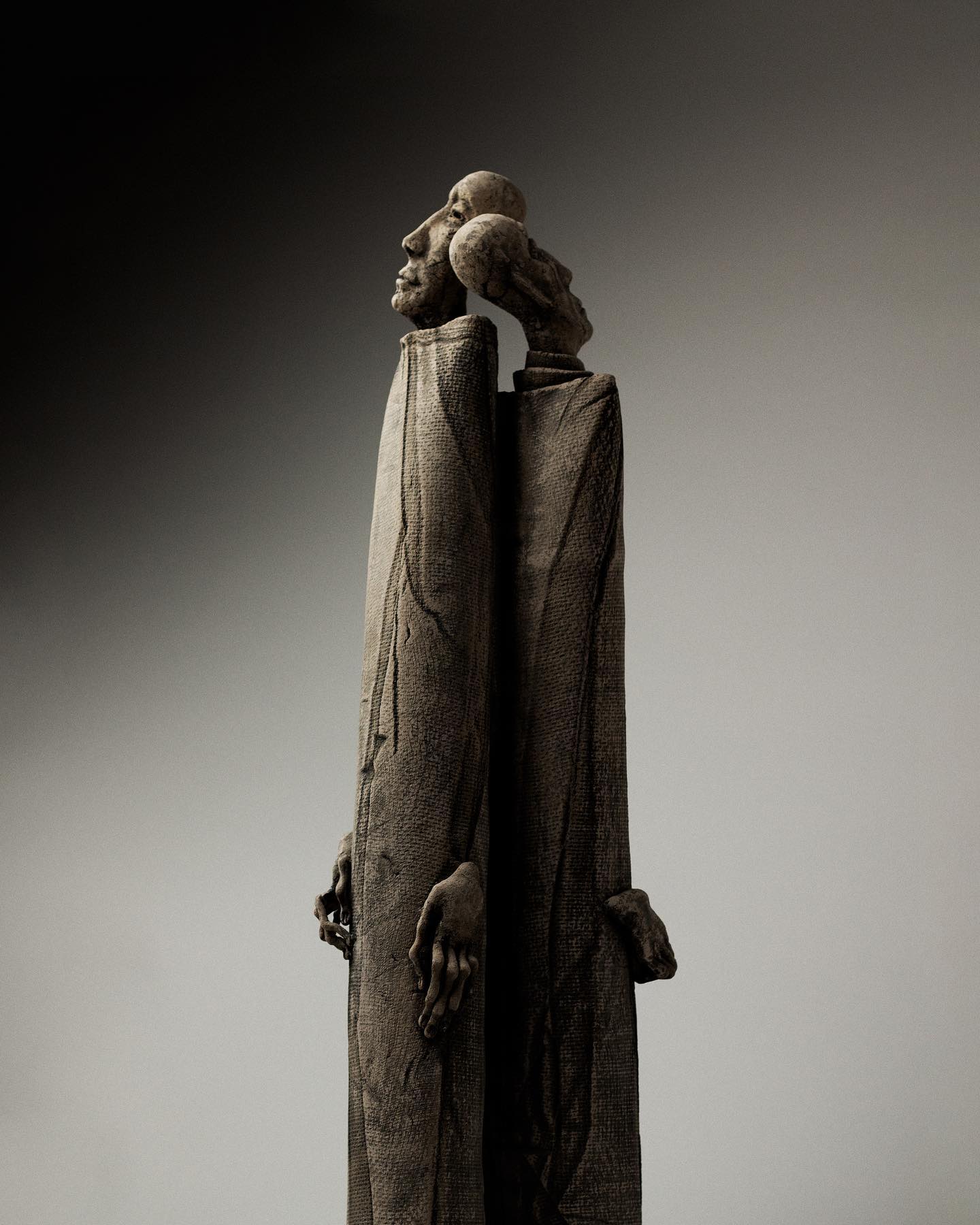
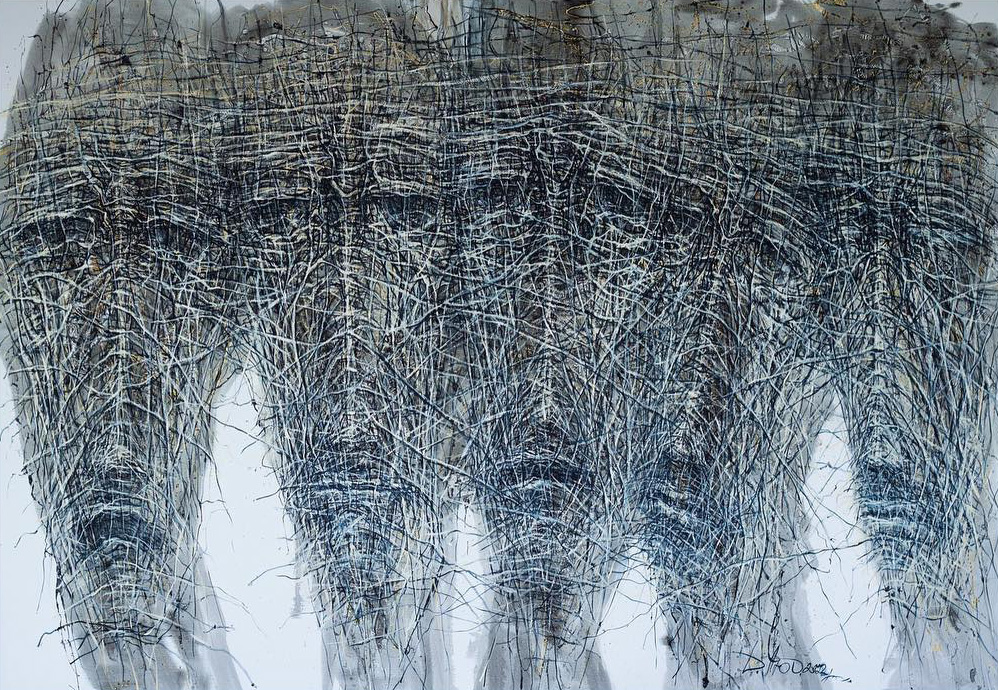
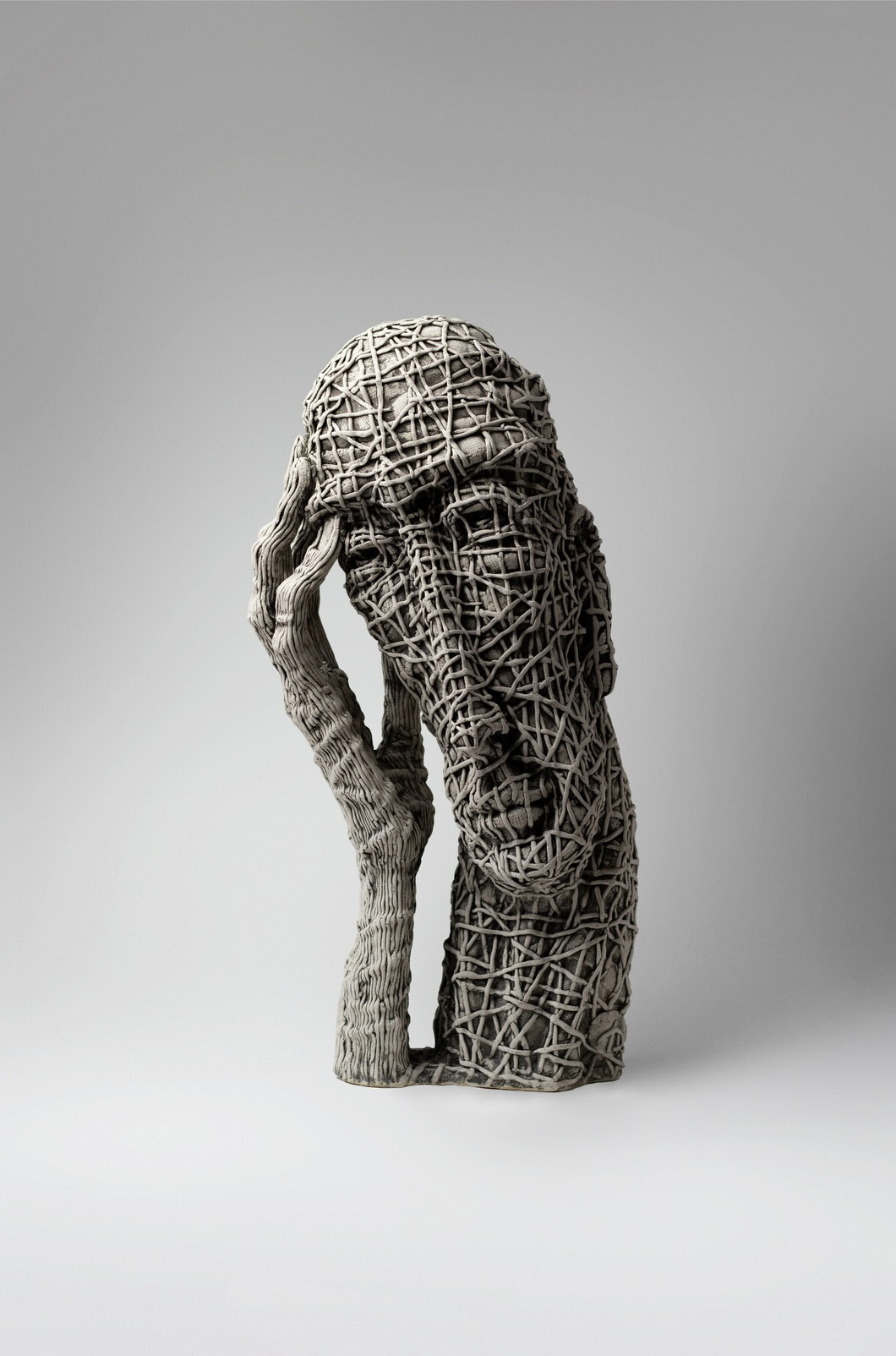
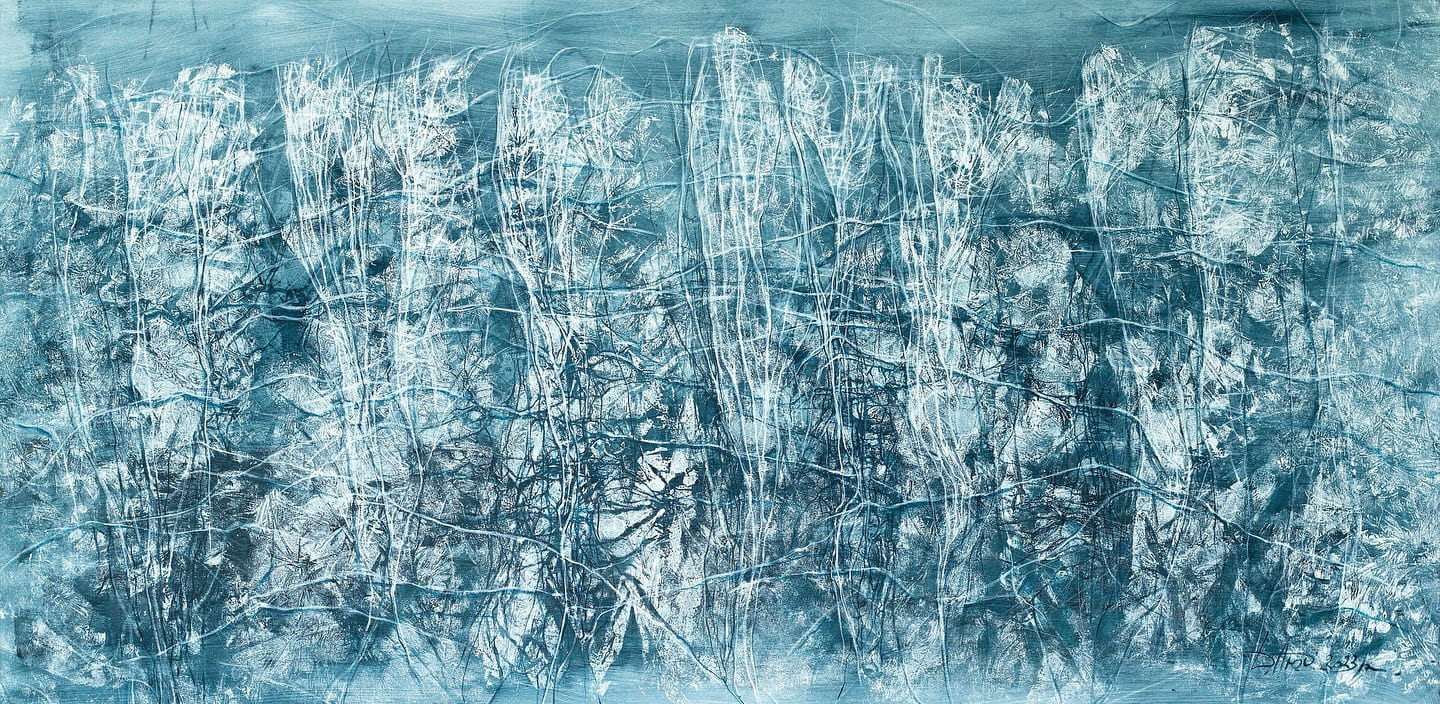
A Lviv-based artist and member of the National Union of Artists of Ukraine. She works in abstract associative painting and sculpture and, more recently, with textiles and installation. She has participated in numerous solo and group exhibitions, plein-air events, and art projects, and is the recipient of Ukrainian and international awards. Liudmyla Davydenko’s work reflects on the current circumstances of both personal and public life, responding sensitively to changes and states of being. In her painting and spatial series, the artist creates multilayered compositions using her own distinctive technique, in which lines and interwoven forms shape images and rhythm. Working across different media, she expands her artistic language, bringing them together into a cohesive statement about pressing concerns.
 What is the first creative moment in your life that you remember?
n elementary school, our teacher asked us to draw a blossoming apple-tree branch. Instead, I drew one large flower. My grade was lowered because of that, and from then on, I always received low grades in art. But I remember that moment because I made the decision myself to depict exactly what I wanted.
What is your creative ambition?
It is important to me that every work has meaningful content. Even an abstract work conveys a certain mood through color and technique. I want my works to share a common, recognizable language and for painting and sculpture to be interconnected. At the same time, my technique is constantly changing along with me. I find it interesting to observe this exploration: where it leads me and how both my work and I change from year to year.
What stands in the way of realizing your creative ambitions?
First and foremost, a lack of time. I have to choose what to work on and abandon or postpone other ideas. Another obstacle is a lack of physical strength and resources. I would like to create large-scale, monumental works, including sculptures, but that requires tools and assistance. When you can rely only on yourself, you have to assess what you are physically capable of doing and what is still beyond your abilities. Although the desire to work in this direction is there.
How do you start your day?
My day begins with the usual morning routine and breakfast. Then I walk to the studio — I need to be there by nine. I always go on foot, and there is no internet in the studio. I value that moment when you already know what you will start with tomorrow. When you leave a work in such a way that you want to return to it the next day, continue, and finish it. Seeing the sun and feeling that the day has begun is already inspiring.
Which creative personalities do you admire most?
I am drawn to black-and-white photography, graphic art, and sculpture, although I do not work in graphic art myself. I particularly love the textile works of Maria Bakanowicz, the works of our graphic artist Pavlo Makov, the sculptures of Antony Gormley, and the large-scale works of Japanese artist Jun Kaneko. I feel a strong affinity for Japanese aesthetics and way of life. It is difficult to name them all: at different stages of life, you admire different artists. I enjoy looking at their works and noticing how each artist’s individual style, distinctive touch, and sense of scale emerge.
Is there someone in your life who constantly inspires you?
My constant sources of inspiration are my wonderful daughters. I have three of them. They inspire me in my art, my style, and life itself. Perhaps they also inspire me to think bigger in my creative work and to believe in myself.
How would you define a muse? And who is your muse?
In my case, my muse is nature, the sea, and the elements — but their gentle, benevolent side. It is a river, a distant horizon, roots from which the first theme in my art — the rhizome — emerged. It is everything that comes from the sun: the air and all living things. Everything that lives, breathes, shines, and inspires — that is my muse.
How do you react when you encounter someone with superior intellect or talent?
My first reaction is deep respect. Then I become curious about a subject that may have been unfamiliar to me and about the person’s approach to it. This can inspire me to learn something new, discover a different subject, or gain a fresh perspective — even in my creative work. For me, it is always about respect and recognizing the value of the person I find myself alongside.
How do you respond when you encounter obstacles on the path to success or face the possibility of failure?
To be honest, I have never seen failure as a threat — it is a natural part of the journey. Nor have I ever given much thought to the path to success. You simply work every day, devote a great deal of time to something, and sooner or later it brings results. Everyone has their own path, and everyone follows it in their own way. There is no point in dwelling on whether something is a success or a failure, because everyone has their own definition of success.
How do you define mastery?
For me, mastery is an ease of execution that comes from professionalism and expertise. This applies to every form of art, including music and painting. It is precisely this effortlessness that reveals true mastery.
What is your greatest dream?
Today, my greatest dream is for the war to end. I think this is the dream of every Ukrainian and everyone living in Ukraine, regardless of nationality. We will think about other dreams later — we will find something else to dream about. But today, this is my one and only wish.
Over the past decade, what has changed in Ukraine…
The war has been going on for 12 years now, and during this time, our perception of the world has changed. A generation has grown up seeing the world differently. And speaking of Ukraine, I think we have become much more conscious.
What I would like to change in my hometown…
To be honest, I don’t even know what exactly I could change in the city. It has a life of its own, and I live in it. I would like to feel comfortable here, living in harmony with the city. Everything should happen naturally.
What I miss in my hometown…
I think what I miss in my hometown is a large body of water — the sea, for example. Otherwise, I am happy with everything.
If not your city, then which city in Ukraine would you choose?..
I actually haven’t had the chance to get to know many cities in Ukraine well, which is a real shame. Besides, many cities are no longer in the condition they once were. Going back to what I said about the sea, it would, of course, be Odesa.
A metaphor, literary character, or association that represents modern Ukraine…
My association with modern Ukraine is Nietzsche’s saying: “What does not kill me makes me stronger”.
Is it possible to forgive an enemy?
I suppose it is possible to forgive an enemy. First, of course, you have to try to understand them. I don’t know how realistic that is, but at least for your own sake, you need to somehow explain to yourself why they did what they did. The enemy is responsible for their actions. And I am responsible for how I make sense of those actions and what happens within me in the process. It is important for me to reflect on this so that I do not allow hatred and bitterness into my soul. Perhaps that is what forgiveness really means.
The best advice you have ever received…
When I was a teenager and wanted something very badly, my father would always say, “Don’t worry, what is meant for you will wait for you”.
Is there a phrase that guides you through life?
Everything is God’s will
When copying materials, please place an active link to www.huxley.media
Select the text and press Ctrl + Enter