OLEH SMAL: on absurdity, freedom, and the art of caricature


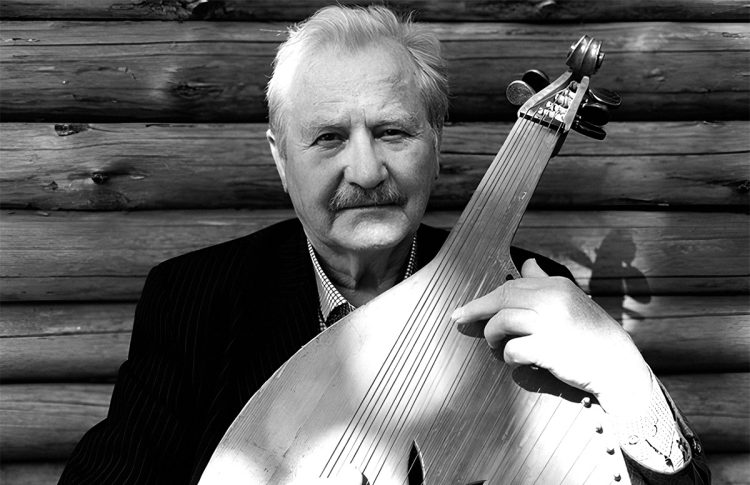
Oleh Smal / Photo from personal archive
SHORT PROFILE
Name: Oleh Smal
Date of Birth: December 7, 1959
Place of Birth: Charukiv village, Volyn region, Ukraine
Profession: Architect, cartoonist, journalist, book illustrator
Oleh Smal’s creative portfolio includes over 15,000 published caricatures and about 1,000 articles on history, culture, art, and architecture. He is a winner and laureate of international caricature contests in Belgium, Italy, Iran, China, Germany, Portugal, South Korea, Romania, Syria, Ukraine, Montenegro, France, and Japan. He has conducted master classes on the art of caricature in Ukraine and the United Arab Emirates. Smal is also an expert on freedom of speech for the OSCE conference. In an interview for Huxley, Ukrainian writer Andrii Kostiuchenko spoke with Oleh Smal about humor, caricature, and many other strange yet profoundly meaningful things.
Andrii Kostiuchenko: I am often asked whether it’s difficult to become a humorist. I’d like to pass this question on to you. And let me add: what does it take, what should one rely on to start making people laugh?
Oleh Smal: Humor is a defensive reflex of the human psyche. The world is imperfect and cruel. Laughter makes it a bit more suitable for living. But using one’s talent for creating laughter as a means of earning money, I consider not a very natural phenomenon. Humor should simply be a part of human life. In one of O. Henry’s stories, the main character — a professional humorist — after exhausting himself searching for humor in everything, fell into deep depression and went to work at a funeral home…
А. К.: By training, you’re an architect. So why caricature? After all, architecture is quite a serious profession. What happened in the life of an architect that made you turn so sharply toward caricature?
O.S.: Strangely enough, I got seriously involved with the genre of caricature during university lectures on the History of the Communist Party and Scientific Communism. I had absolutely no desire to take notes on that nonsense, so my notebooks were filled with caricatures and sketches of the lecturers instead. My female classmates liked them. Ideally, architecture is about creating comfortable living conditions for people, and when these ideas of comfort suddenly fail, they apparently turn into caricatures.
I think another push toward becoming a caricaturist came from my service in the infantry of the Soviet army, where there was such a concentration of human absurdity that, if you didn’t laugh, you could go insane or shoot yourself — luckily, there was always something to do it with. For some reason, I chose to laugh. I believe more in the depiction of war created by Jaroslav Hašek and his soldier Švejk than in Tolstoy’s multi-volume War and Peace — Tolstoy’s portrayal of war and peace is just too serious…

А. К.: One might think your case is unique — but it’s not. Why do so many caricaturists (both in Ukraine and abroad) come from architecture, do you know why?
O.S.: I don’t know for sure, but I can guess. It probably has to do with the structure of an architect’s brain, which is arranged in a rather peculiar way. One half is, without a doubt, pure science, while the other is boundless creativity. And where they meet — laughter sparks…
А. К.: The main thing is that those sparks don’t set the soul — or the house — on fire. But you are, first and foremost, a master (I dare say) of political caricature. What or who inspires you to create simple yet brilliant — or at least talented — works in this particular genre?
O.S.: Political caricature, strangely enough, is the simplest form of caricature for me. You hardly need imagination for it. Politicians are an inexhaustible geyser of illogic and dazzling stupidity. Just work like a camera — and the caricature is ready!
А. К.: What is happening today with Ukrainian and global caricature, Oleh? Who, in your opinion, is the most influential figure in this art form?
O.S.: Caricature has always been historically tied to newspapers and magazines. The global crisis of the print press has, of course, hit professional caricaturists hard. It’s become more difficult to earn a living. Social media niches expand the audience but convert poorly into income. The world’s caricaturists form quite a close community, comprising only a few hundred artists. There are names recognized as undisputed authorities, scattered across different countries and continents. Ukraine holds a worthy place among them — over 2,000 Grand Prix awards alone (not counting other prizes) at international caricature competitions and festivals. A world record!
А. К.: I see. So it’s fair to say that Ukrainians are the best in this genre… or maybe not so boldly?
O.S.: Yes. Ordinary statistics confirm it. It’s no coincidence that Kyiv caricaturist Yurii Kosobukin was recognized by the global caricature community as the most outstanding representative of this genre at the turn of the 20th and 21st centuries. His work holds a place in world culture equivalent to Charlie Chaplin’s achievements in cinema.
А. К.: You have chaired juries for caricature competitions, including international ones. How difficult is it to evaluate caricaturists from different countries with different senses of humor? After all, as they say in Odesa, English and French humor are two very different things — and both are quite unlike Odesa’s…
O.S.: That rule doesn’t really apply to caricature. A successful drawing touches upon and analyzes problems that are universal — equally relevant to Icelanders and New Zealanders. Both great politicians and ordinary people live in a similar world of passions, which are quite concisely described in the Ten Commandments. So it was, so it is, and so it will be…

А. К.: The ARHIGUM Club is a unique phenomenon with more than a 40-year history. Please tell us a little about how it all began and what this community represents.
O.S.: Back in the distant post-Brezhnev–Andropov year of 1983, a group of young Kyiv caricaturists with a shared worldview came together to form the ARHIGUM Club. The name suggests that the core of the group consisted of architects — Viktor Kudin, Anatolii Kazanskyi, Yurii Holovchenko, Serhii Boborykin — as well as aircraft engineer Yurii Kosobukin, radiophysicist Volodymyr Kazanevskyi, actor Volodymyr Vaskovtsev, and other creative individuals.
The club’s ideology radically differed from the Peryts and Krokodil-style humor, which never crossed the boundaries of Soviet ideology and revolved around provincial satire — mocking bureaucrats, profiteers, drunkards, fashion followers, and American imperialism. The ARHIGUM artists chose a philosophical direction, creating wordless drawings that were understandable all over the world. Incidentally, the first collection of «anti-Soviet» caricatures from the still-existing USSR was published in West Germany in 1989. The authors were exclusively members of the Ukrainian ARHIGUM Club. Time is relentless. Caricaturists, too, leave this world. But their art lives on. And ARHIGUM lives on as well — its current members continue to work actively, informing the world about the ongoing Ukrainian-Russian war.
А. К.: You are a world record holder. Almost every decent person dreams of that from childhood (and if not — well, that’s their own business), yet very few actually achieve it. So what is this world record in the genre of caricature — one I couldn’t even imagine existed?
O.S.: I’d rather not recall that record, because it’s a pure distillation of absurdity. In 1999, I was sued for 120,000,000,000 (yes — one hundred and twenty billion) hryvnias over a newspaper caricature. A year of Kafkaesque court hearings followed. Eventually, the claim was dismissed. However, I suppose there has never been such a senselessly colossal lawsuit against a caricaturist in the history of the world… I just happened to be «lucky».
А. К.: I’m somewhat aware that there have been cases when your caricatures were shamelessly stolen. I’m talking about plagiarism… By the way, how well is caricature protected as intellectual property?
O.S.: It’s one of the most painful issues. Many of my caricatures «travel» across social networks as examples of so-called «folk art». I always sign my works with the artistic name SMILESMAL. The thieves aren’t too lazy to erase the signature. And there’s nothing one can do about it. It seems to be an incurable disease in our society…
А. К.: Children are our everything! In 2016, you held a master class on the art of caricature in the United Arab Emirates. How talented are the children there? How do they perceive caricature, and did they show any interest in pursuing it further?
O.S.: Yes, at the invitation of the UAE Ministry of Culture, I held workshops for children at the International Reading Festival in Sharjah. The connection was wonderful — the children were talented. Will they choose caricature as a profession? I don’t know. But I hope they’ll keep warm memories of our collaboration and of their encounter with a Ukrainian caricaturist.

А. К.: Around fifty of your caricatures have won competitions in different countries around the world… Aren’t you tired of winning? Do you have a recipe for success? Perhaps you could share it with our readers?
O.S.: I’m not the record holder among Ukrainian prizewinners. Winning doesn’t get boring — just like Trump never tires of «ending wars». I don’t have any recipes. If I did, I’d be winning every contest. But the main thing, as Ostap Vyshnia once wrote, is the «quality of the product». A caricature should make people smile and think. And prizes… they’re simply a nice bonus for the artist.
А. К.: You’re well known in Belgium, Bulgaria, Montenegro, the Netherlands, China, Portugal, Turkey, Japan, and beyond. Have your works influenced caricature artists in these countries?
O.S.: The influence is mutual. We’re like children — we rejoice at a good caricature, no matter who created it. Perhaps some have a worm of envy deep inside, but overall, caricaturists form a strong and internally low-conflict community.
А. К.: I once ran my own humor pages in various periodicals. And alongside the texts of humor writers, there were often caricatures. That was true for both newspapers and magazines. Oleh Smal was among the top three artists who gave those humor pages their distinctive flavor. Did you feel at the time that you were that popular?
O.S.: Most caricaturists are not public figures constantly appearing on screens. It’s their caricatures that occupy the media space instead. Moderate fame and recognition do exist, of course — oddly enough, and somewhat regrettably, more so outside Ukraine. I was surprised to learn that a Kyiv student once wrote and successfully defended her thesis based entirely on an analysis of my work, particularly within the context of Maidan art. It’s a bit awkward to turn into a bronze classic while still alive…
А. К.: If one could derive a mathematical formula for a successful caricature, it would probably include social relevance, humor, artistic skill, and topical sharpness. In what proportions do you think these elements can be combined?
O.S.: If a universal formula for caricature success existed, AI would already be creating the funniest and sharpest drawings. So far, that’s still beyond its reach.
А. К.: Your caricatures are held in the collections of Stanisław Lem, Roman Viktiuk, the President of Slovakia (2014–2019), Andrej Kiska, the Mufti of the Spiritual Directorate of Muslims of Ukraine (until 2022) Said Ismagilov, as well as in the collections of the ambassadors of France, Belgium, Germany, and the USA to Ukraine. How did your works find their way into such an «elite network»?
O.S.: I sent my futuristic piece to Stanisław Lem through Ukrainian journalists. I gave one personally to Roman Viktiuk during an editorial meeting. Ambassadors in Ukraine sometimes received my works as gifts from their embassy teams. President of Slovakia Andrej Kiska added to his collection after visiting my solo exhibition in Kyiv. And I presented a caricature to Said Ismagilov during the launch of the Ukrainian translation of the meanings of the Qur’an…

А. К.: Interesting. What is the social role of caricature in Ukrainian society? Your works were burned during the Euromaidan. That certainly speaks to their quality mark.
O.S.: Yes, on February 18, 2014, during the assault on Maidan in Kyiv, my Inter-Barricade Exhibition was completely destroyed. When I was collecting the charred remains of my works from the ashes, one of the defenders of the barricades, helping me, said: «Send them to Yanukovych in prison — let him put the puzzles together». I took that as a good review of my art. Overall, our work is sustained by enthusiasm and international recognition. All our initiatives and trips to the front are volunteer-based. Even during this brutal war, it never occurred to our government that it might be worth supporting Ukrainian caricature and using it as a sharp, effective weapon of propaganda and counter-propaganda.
А. К.: The subjects of your political caricatures include the leaders of world powers, both current and former. Has any of them ever commissioned a caricature of a rival — or vice versa?
O.S.: Occasionally, I’ve collaborated with certain politicians — but always as a free artist, with my own perspective on the world around me. That’s probably why I’ve never had any close or familiar relationships with any party or politician. Maybe that’s for the best. I dream of drawing not about politics and war, but only about the eternal things: love, the universe, beer, and rock’n’roll…
When copying materials, please place an active link to www.huxley.media
Select the text and press Ctrl + Enter