INTERVIEW WITH JACQUES SEGUELA: On Mitterrand, Yeltsin and Zelensky, God’s Advertising Campaign, and Turning Ukraine into a Global Brand


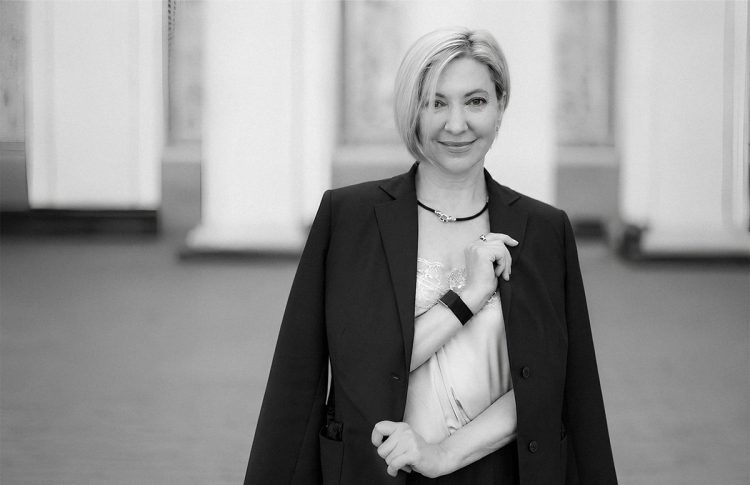
Jacques Séguéla / Photo from the personal archive


The first day of the Kyiv International Economic Forum (KIEF) gets off to an upbeat start. Immediately after a speech by Ukrainian President Volodymyr Zelensky and a conversation with Alibaba founder Jack Ma, a plenary session begins featuring the legendary Jacques Séguéla, co-owner and Vice President of Havas, the world’s fourth-largest advertising and communications group.
On the forum stage, Jacques Séguéla shares his thoughts on “Strategies of Countries and Companies.”
T
he outstanding French advertising executive, who has conducted 1,500 advertising campaigns and 20 presidential campaigns, earning him the nickname “the maker of presidents,” has created numerous global brands and authored 26 books. He is rightly regarded as a visionary and strategist in his field.
In person, Jacques Séguéla comes across as passionate, open, straightforward, and generous in expressing his emotions. And that is exactly who he is: the creative industry demands a certain type of personality, shaping both one’s communication style and outlook on the world.
Talking to people like him is both a privilege and a pleasure. It is not every day that one has the opportunity to experience an entire era through the thoughts and feelings of someone who helped shape the modern world of advertising and political consulting.
Immediately after his appearance at the forum, Jacques Séguéla gave an exclusive interview to Huxley.
 Monsieur Séguéla, you are 85 years old and still work as a creative consultant…
Not exactly. In this business, it is impossible to work alone. Havas, where I am a co-owner and Vice President, employs 20,000 people across 100 countries.
But I am indeed proud of the fact that I have personally served as Citroën’s creative director for 65 years. There is no other example of such a long-standing collaboration in the advertising world.
As for my age, I am still young. I believe old age begins when regrets about the past outweigh dreams of the future. And I have not lost my ability to dream.
At one point, you worked with three presidential candidates simultaneously…
In 1978, I was first asked to design a poster for Giscard d’Estaing, then one for François Mitterrand, and I was also asked to come up with a slogan for Jacques Chirac. Incidentally, that slogan remained relevant for 40 years. A good slogan is easy to remember and stays in people’s minds for a long time.
Two years later, François Mitterrand told me he was interested in continuing our collaboration, but on an exclusive basis. That was a real jackpot!
We live in a society of spectacle, including political spectacle. You have been the mastermind behind many remarkable productions. Do you follow public demand, or do you create it?
You have to take the public mood into account, but even more importantly, you need to be able to anticipate the future — to look far ahead. Those who understand this have the power to create genuine brands. The concept of a brand is not limited to advertising; it lies at the very heart of politics.
When I created the “Quiet Strength” campaign for François Mitterrand, we could not rely on opinion polls because no one was conducting them at the time. Every French presidential candidate used to say, “Vote for me.” Mitterrand was the first to say, “Look at who I am.” It was a radically new approach, and it was what made the campaign successful.
It is also important to remember that time changes the rules of the game. In the past, three to five years were enough for a brand to become firmly established in the public consciousness. In today’s information environment, it takes much longer: thousands of new videos appear on social media every day.
Originally, the effectiveness of advertising was based on a high frequency of repetition. But today, that is no longer enough. The strategy of relying on mere repetition has become obsolete.

One of your professional principles is roughly this: to succeed, you have to back the winner. You have said that Clinton lost not because her campaign was weak. On the other hand, during the last US presidential election, which the whole world was watching, few experts predicted Trump’s victory. Do you have a formula for identifying a future winner?
I became famous thanks to Mitterrand. I ran practically all the campaigns in Eastern Europe after the fall of the totalitarian regimes: in Romania, Bulgaria, Slovenia…
In total, I have conducted 20 presidential campaigns. The fact that 19 of them were successful was an incredible stroke of luck. I am not sure that my campaigns were the reason voters supported my candidates. Rather, it was the other way around: I was lucky with my candidates, and as a result, my election campaigns were successful.
I always tried to identify who had the best chance of winning. At the same time, my criteria for selecting candidates remained unchanged.
First, the candidate had to be a democrat. For example, I turned down Libyan leader Muammar Gaddafi, even though I was guaranteed a payment of one million a year for ten years in Switzerland. I also received an offer from the president of Haiti, but I turned him down as well.
Second, the candidate had to be an honest person. The problem is that we often cannot determine whether this is truly the case until much later.
Third, the candidate must have a goal — to move their country forward.
This approach is what enabled me to win.

In Ukraine, Volodymyr Zelensky’s election victory became a real sensation. We are witnessing an increasing number of people from the arts entering politics around the world: entertainers, actors, artists, singers, television presenters… What is behind this phenomenon, which many people view with mixed feelings?
This is how voters express their attitude toward what is happening. It is something like saying, “To hell with you all!” Humanity is now at the end of a particular historical cycle — caught between the past and a world that has already arrived.
We are living through the third great global revolution. The first was the commercial revolution, when the British built a fleet in the 19th century and set out to explore the continents. The second was the industrial revolution of the 20th century. The third is the digital revolution.
It has changed the very nature of time. Time is accelerating. Everything happens instantly. Political processes are unfolding at an ever-increasing pace. It is hardly surprising that, at some point, people begin to demand rapid change.
In France, people used to replace their cars every eight to ten years. Today, they do so every three years, and tomorrow, perhaps, they will replace them every year. In the past, the lives of nations were governed by tradition, values were structured by religion, and ideas by politics.
Today, political parties in their traditional form are becoming obsolete. The role of the individual who articulates a new idea and becomes associated with it is growing. That is how Trump won in the United States, Macron in France, and Zelensky in Ukraine.
In the modern world, it is difficult to remain an opinion leader for long. Social media allows someone to become famous in a matter of minutes. As Andy Warhol said, “Everyone is entitled to 15 minutes of fame.”
In this boiling magma of information, it is difficult to rise to the surface because people reject politics — it no longer touches them deeply.
In France, after Macron had been in power for two and a half years, we finally managed to remember the names of three or four ministers. The others are perfectly respectable people too, but we know nothing about them.
Mitterrand once gave me a wise piece of advice: “You must choose a man (and I would add: or a woman) who can tell the story of their country at this particular moment in time.” Macron, Trump, and Zelensky were able to tell such a story. And they won.
What was your first impression of Zelensky?
I do not know yet. Today was the first time I saw him (editor’s note — at KIEF). He is young, energetic, and has a sense of humor. I saw how the audience responded to him… I think he has a future. Does he have a heart, a soul? I believe an actor must have a well-developed ability to understand other people’s feelings. That must have helped him during the election campaign.
For your information, Macron devoted ten years to theater. He performed on stage together with his wife. Incidentally, Zelensky made the right decision not to appear on stage with Jack Ma and take part in a joint discussion. Jack Ma is an extraordinarily gifted person, and it would have been extremely difficult to engage with him on equal terms.
All propaganda and manipulation of public consciousness inevitably carry a totalitarian undertone. Have you never faced a moral dilemma? Is there a line you would never cross?
I will never create campaigns for dictators. Wikipedia says that I promoted three African leaders. Those leaders also claim on their own pages that they worked with Séguéla. But I have never seen them, not once in my life!
In business, you sometimes have to go against yourself and your values. This is especially true in advertising. When I started working in advertising in the 1960s, I wrote a book called Don’t Tell My Mother I Work in Advertising… She Thinks I’m a Pianist in a Brothel. When my mother, who was a radiologist, introduced me to her friends, she would tell them I was a pharmacist.
The advertising industry had such a negative reputation that the profession was considered almost indecent. By the 1970s, it had become prestigious and popular. Then its reputation declined again.
It is important to me that advertising maintains a certain integrity. This applies to political campaigns as well. You should not saw off the branch you are sitting on.
Was there ever a project in your career that you desperately wanted to carry out but were unable to bring to life?
In 1996, the Russians asked me to come up with a concept for an election campaign commercial. Of course, I agreed. And I did it for free. It was a step toward democracy for the country, and I understood how important that was because I already had experience running campaigns in Eastern Europe.
I wrote the following script: 6 a.m. Red Square. Sunrise. The first shot shows a Chinese man stopping a tank in Tiananmen Square. Do you remember that legendary photograph? The second shot shows the end of Romanian dictator Ceaușescu’s rule.
In the next shot, a figure approaches us, and we gradually realize that it is Boris Yeltsin. He is surrounded by matryoshka dolls. He opens one of them, and a flock of white doves flies out. Red Square behind Yeltsin turns white. An entire wall of white doves rises behind him. The video ends with the slogan: “Yeltsin — The Flight of Freedom.”

I arrived in Russia with my film crew. Red Square. 6 a.m. — no Yeltsin. 6:30 a.m. — still no Yeltsin… I was getting anxious because the mayor had given us only two hours to film in Red Square. Eventually, I went to the White House myself to find out what was going on. And there, they explained the reason for the delay: “Yeltsin would like to know how much you are going to pay him to take part in the filming.”
I was absolutely furious. I immediately packed up and headed to the airport… Looking back now, I think: what an idiot I was! I should have said, “I’ll pay,” and today that film would be shown in museums around the world as a historic document of global significance.
ЕIs there a campaign you dream of creating?
Yes. An advertising campaign for God.
Why God?
It is a delicate matter… The divine image is the perfect brand, the ultimate product. And it would not be a campaign for the God of any particular religion, but for a universal God, shared by everyone.
When I spoke with French bishops about this idea, they told me, “Such a project should only be created for the Pope.” I replied that, in that case, I would refuse. Because such a campaign cannot be confined to a single religion — it must be created for all believers around the world.
Do you believe in God?
I do not go to church. But I feel close to what François Mitterrand once said: “I believe in the power of the spirit.” There is some higher energy that recreates the world again and again. Everything is constantly being created, and nothing ever disappears forever. The question is: who is behind it?
I believe in God and in faith, which is given to us from above. But I am against religions because they are human creations. Every religion has both virtues and flaws. Religions give rise to wars, as we can see, for example, in the Islamic world.
What visual image would you use to advertise God?
Simply a blank white sheet of paper. But if I actually had to work on such a campaign, I would certainly come up with something extraordinary.
Speaking at KIEF, you said that Ukraine needs to build not so much an economic or tourism brand as a unified, comprehensive national brand. You also said you would even be willing to develop the concept free of charge.
Ukraine needs to be established as a global brand, as an internationally recognized trademark. The United States is a brand. France is a brand. Monte Carlo is a small country, but it is a major brand. Ukraine, however, is not a brand. This idea deserves to be brought to life because Ukraine has enormous resources to make it happen and cannot afford to remain on the sidelines of this process.
I am not saying that every president should marry a celebrity to promote their country, as the head of state of Monaco did. But I am convinced that the president of Ukraine is a unique figure: I saw the audience’s positive reaction to him. The next step, however, is to think everything through down to the smallest detail and develop a strategy.
I can develop a brand concept for Ukraine free of charge. But then a group of Ukrainian companies must be found that are willing to establish a fund for this purpose and finance the brand’s promotion.
As we know, professional expertise and experience are shaped not only by victories but also by failures. What has been your greatest failure?
I forget my failures immediately and regret nothing (pause). Although perhaps there is one story worth telling. Baron Marcel Bich, the founder and owner of the popular brand of ballpoint pens and lighters, once told me: “Jacques, I want to launch a new perfume. It will be extremely good and extremely cheap at the same time. I’ll hire the best perfumers from Prada and Dior. And I’ll sell it in tobacco kiosks at a very low price.”
I created an advertising campaign called “Naked Perfume.” The idea was that there was no need for marketing, a special bottle, or beautiful packaging. The value and essence lay in the liquid itself. It was a complete disaster.
What went wrong?
You cannot change the “place of imagination.” Every place of sale has its own mythology. Dior in a tobacco kiosk or at a gas station — that is impossible! In the consumer’s perception, such a perfume would smell of gasoline rather than fragrance, even if it were magnificent.
While developing the brand, we conducted a blind test involving 30 journalists. They tested five fragrances, and Bic emerged as the winner. The conclusion was that high-quality products must be sold on streets lined with boutiques, in retail outlets of a certain class that match consumers’ expectations and the image of luxury. Otherwise, success is impossible. The entire story was a marketing mistake.
Is there an advertisement that makes you think, “Oh God, why didn’t Havas create that?”
All the time. There are many examples. Take the Moncler advertisement in which a Black man becomes invisible against an icy landscape. It looks as though a snowman is melting into the snow. It is very simple. And it is incredibly powerful.
I should point out that many companies run advertising campaigns, but not everyone succeeds in creating genuine brands. Take, for example, the sporting goods brand Decathlon, which we came up with 40 years ago. Or Carte Noire coffee.
Have your children followed in your footsteps?
I have five children. My son, who is now 40, is a film director. When his third feature film was released on November 10, I prepared a special line for journalists: “Finally! At least one Séguéla has talent!”
One of my daughters is a singer. Another is an interior decorator. And my two twin daughters are studying at business school.
Finally, tell us: how do you plan to celebrate your 100th birthday? Do you have a creative idea?
I will celebrate my 100th birthday at work — in my office in France. I will hang 100 brooms from the ceiling. In France, when someone turns, say, twenty, they say, “I’ve turned 20 brooms.” It’s a slang expression. Every day, I will take one broom down from the ceiling and give it to a visitor so they can sweep away my bad deeds and unsuccessful campaigns (smiles).
Huxley would like to thank its partners, Havas Creative Group Ukraine and the Kyiv International Economic Forum, for their assistance in organizing this interview.
When copying materials, please place an active link to www.huxley.media
Select the text and press Ctrl + Enter