KACHANIVKA — THE BEAUTY AND GRANDEUR OF THE CHERNIHIV REGION

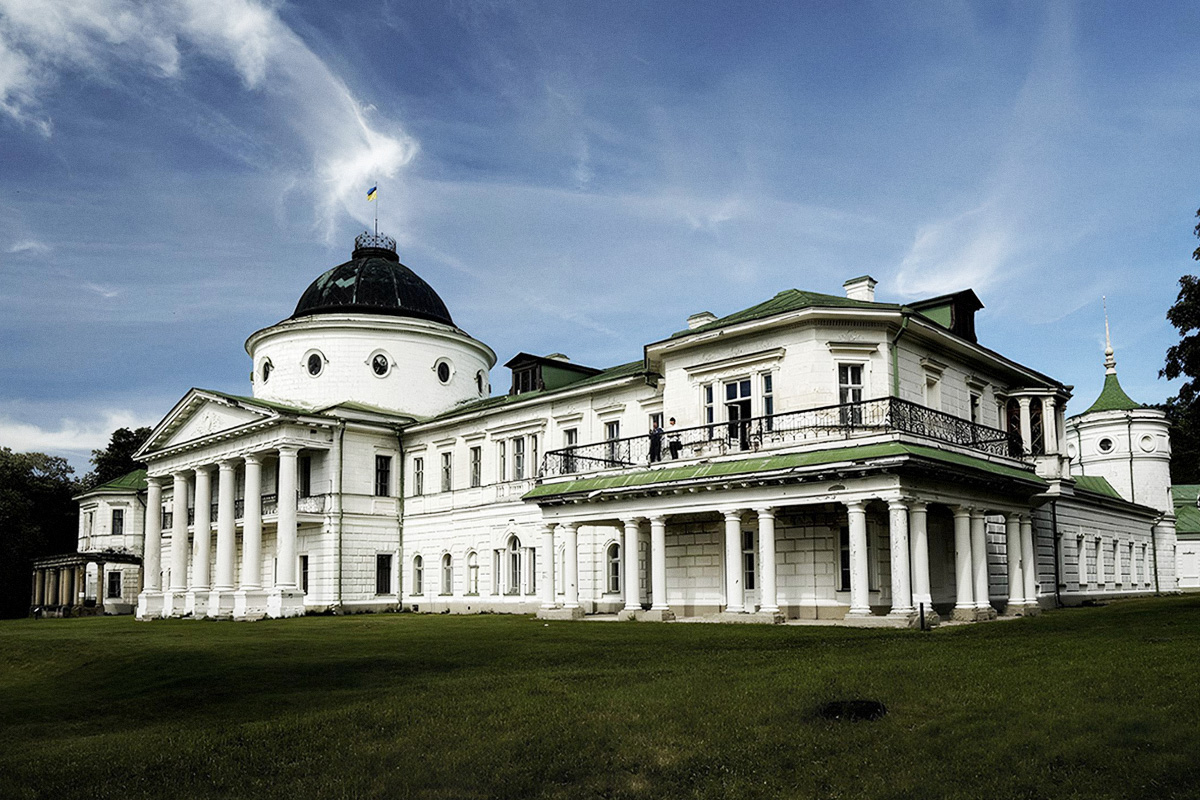
Palace and park complex in Kachanivka / discover.ua
If you have traveled around the Chernihiv region and forgot to visit the village of Kachanivka in the Ichnia district, go back: you have missed the main attraction of the region — the Kachanivka noble estate of the 18th–19th centuries. It is located on the banks of the Smosh River, about 180 km from Kyiv. This is one of the most romantic places in the Chernihiv region. Here, Panteleimon Kulish, Mykola Kostomarov, Taras Shevchenko, Mykola Gogol, Marko Vovchok, Mykhailo Glinka, and Mykhailo Vrubel rested and created…
EVERYTHING HAS ITS BEGINNING
W
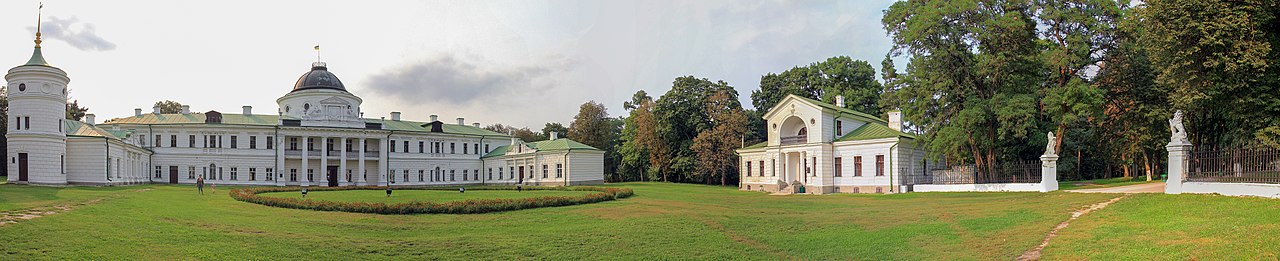
hat was it that attracted creative people here so much? Let us begin our acquaintance with the main element of the Kachanivka ensemble — the palace with two wings and a tower. They form the ceremonial courtyard, and nearby rise the service buildings. In addition to these structures, the estate grounds include St. George’s Church, Glinka’s gazebo, a landscape park with ponds, stone bridges, and «romantic» ruins. The total area of the estate is about 560 hectares, with alleys and paths stretching for a total of 60 km. Now, let us take a few steps back into history and see that this ensemble developed over nearly 150 years. A Greek from Nizhyn, Fedor Bolgarin, acquired these lands by the Smosh River near Parafiivka and founded a farmstead. In 1742, he sold it to a chorister of the imperial court, Fedor Ivanovich Kachenovsky. Not far from Bolgarin’s lands was another farmstead belonging to another Nizhyn Greek, Khoma Mechemach. In 1744, Fedor Kachenovsky acquired it as well. It was he who built the estate that later became known as Kachanivka (in accordance with the surname of the landowner). The lands were then inherited by Fedor’s brother, Mykhailo Kachenovsky.
KACHANIVKA OF COUNT RUMYANTSEV
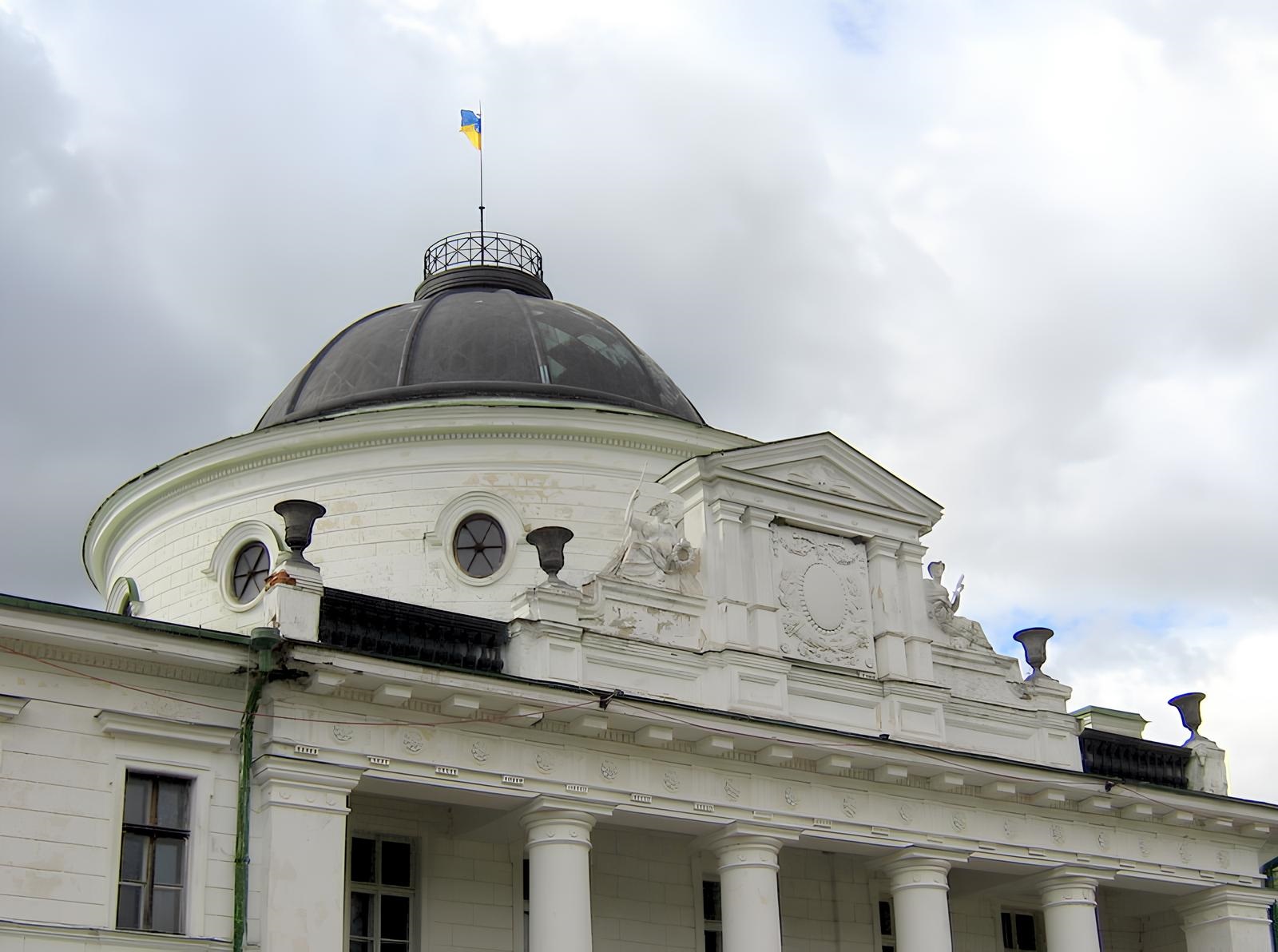
In 1770–1808, Kachanivka was owned by Field Marshal Count Pyotr Rumyantsev-Zadunaisky. Under him, according to the design of architect Karl Blank, the Ukrainian architect Maksym Moscipanov (who studied under Andrey Kvasov, a student of Rastrelli) built a luxurious palace in a romantic style and planned the park. This took place in the early 1780s, and slightly earlier, in a letter written in 1777, Rumyantsev mentioned this farmstead as a site where «one should not delay and miss a favorable opportunity», but should implement the «initiated prospects» as effectively as possible. And no one delayed. From an architectural point of view, the palace of that period looked as follows: a single-story building, with façades decorated by romanticized forms of numerous small towers, terraces, and niches. In accordance with the client’s wishes, it evoked associations with Eastern architecture.
THE FLOURISHING OF KACHANIVKA UNDER THE TARNOVSKYS
But the most interesting chapter in the Kachanivka estate began in 1824, after it came into the possession of the landowning patrons, the Tarnovskys. For seventy long years, Kachanivka became the epicenter of cultural and artistic life in the Chernihiv region. The first owner, Hryhorii Stepanovych Tarnovsky, invited outstanding contemporaries to Kachanivka — artists, writers, and musicians. The estate was later owned by his nephew, Vasyl Vasylovych Tarnovsky Sr. (as Hryhorii had no children of his own), and then by Vasyl Vasylovych Tarnovsky Jr. The latter undertook the expansion of the family estate in 1866: he replaced the wooden service buildings with stone ones and built a water tower near the southern wing.
Moreover, Vasyl was a true collector. He acquired valuable items, works of applied art, and antiquities from the Cossack era that had belonged to well-known Ukrainian figures. Among the exhibits were the sabre of Bohdan Khmelnytsky, personal belongings of Ivan Mazepa, Semen Palii, and Pavlo Polubotok. The collection numbered more than 7,000 items. Vasyl Tarnovsky devoted significant funds to charity. However, philanthropy and collecting, along with a lavish lifestyle, led Vasyl Tarnovsky Jr. to bankruptcy. During the Tarnovsky period, the palace was rebuilt from a single-story structure into a two-story one. It was crowned with a low dome, although later the drum with the dome above the central part of the building was raised higher.
THE «SUGAR KING» WITH HIS DESCENDANTS
In 1897, under the new owner — the «sugar king», nobleman and millionaire Pavlo Kharytonenko (who paid Tarnovsky 1 million rubles for the estate) — the final stage of construction began. At that time, the estate was in need of significant restoration. And if Pavlo Ivanovych had not purchased it in time, there would have been nothing left to restore later. Therefore, he invited the Sumy city architect Gustav Scholz. The palace was faced with brick, the dome was enlarged, the interiors were renovated, and new estate buildings appeared. The exterior décor acquired features of neoclassicism. The park expanded considerably, primarily due to the acquisition of neighboring forest areas. The estate was electrified and equipped with telephone lines. Its last owners in 1914–1918 were the elder daughter of the «sugar king», Pavlo Kharytonenko, Olena, and her husband Mykhailo Oliv. As eyewitnesses testified, on their wedding day, the entire alley from the palace to the estate church, stretching 500 meters, was covered with sugar as a symbol of the sweet life awaiting the newlyweds…
GOGOL, GLINKA, AND OTHER FAMILIAR FACES
Nikolai Gogol visited Kachanivka many times (from 1835 to 1850). It was here that he first read his novella Taras Bulba. In 1838, Mykhailo Glinka stayed at the Tarnovsky estate for about three weeks; it was here that the composer wrote certain fragments of the opera Ruslan and Lyudmila, as well as songs, romances, and the cantata Hymn to the Host in honor of Hryhorii Tarnovsky. In Kachanivka, the composer selected singers from among local boys for the imperial court choir. Some of his works were first performed accompanied by the local serf theater. And to this day, the white-stone Glinka gazebo rises on the hill above the Maiorsky Pond, creating a fantastical landscape. Taras Shevchenko also stayed here. He was friends with the Tarnovsky family, as evidenced by numerous references, one of which is the poem To My Godmother, the Great Martyr (1860), which the poet dedicated to Nadiia Tarnovska (the niece of Hryhorii Tarnovsky), affectionately calling her his dear godmother. And it begins like this:
«To my godmother, the Great Martyr!
Foolish you are and unwise!
In joyful paradise you grew,
And blossomed with rosy bloom…»
Not a bad poem, by the way. Vasyl Tarnovsky included it in his extensive collection, which he assembled in Kachanivka (more than 700 items and documents related to the life and work of the Kobzar). In 1854, Afanasii and Maria (Marko Vovchok) Markovych came to Kachanivka to stay and work. In the summer of 1880, Ilya Repin stayed here — he worked on the paintings Evening Gathering and The Zaporozhians Write a Letter to the Turkish Sultan. The details of the Cossacks’ clothing and weapons were copied from items in the unique collection of Cossack antiquities belonging to the Tarnovskys, and the artist depicted Vasyl Tarnovsky Jr. himself next to the scribe. Repin also painted several portraits of Vasyl Tarnovsky Jr.… And the drawing room of the estate was adorned with a portrait of Tarnovsky’s wife, Sofia, painted by him.
WONDERS, AND NOTHING LESS
It is still astonishing that the estate, founded by Rumyantsev almost 255 years ago, managed to survive two world wars, the fall of the Russian Empire and the Soviet Union, as well as the hardships and challenges of independent Ukraine, becoming a tourist gem known in other countries as well… From 1933 to 1981, various medical institutions were located in Kachanivka. At first, it was a resort, and later — a tuberculosis sanatorium. In 1981, the Kachanivka palace and park complex was transformed into the historical and cultural reserve «Kachanivka», and by Presidential Decree of February 27, 2001, it was granted National status. The Kachanivka ensemble is one of the most striking examples of estate architecture in Ukraine and Europe. It is the only estate of Left-Bank Ukraine preserved as an authentic complex. You absolutely need to see it with your own eyes.
When copying materials, please place an active link to www.huxley.media
Select the text and press Ctrl + Enter


