HRYHIR TIUTIUNNYK: “Burn Everything I Wrote”

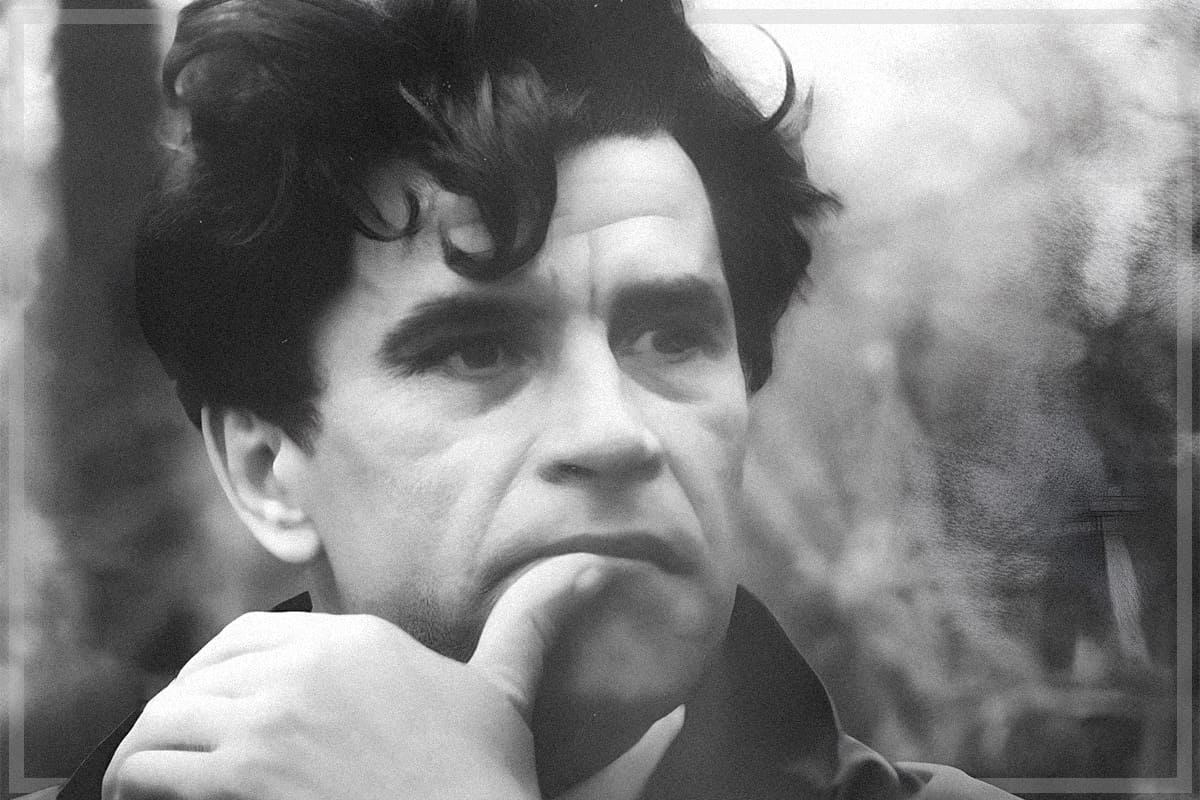
Hryhir Tiutiunnyk / zno.if.ua
Hryhir Tiutiunnyk (1931–1980) was a translator, educator, and Sixtier writer. During his lifetime, he wrote only forty short stories, yet each possessed the emotional and artistic power of a novel. He translated into Ukrainian the works of Vasily Shukshin, Nikolai Ostrovsky, and Maxim Gorky from Russian. He portrayed village life as though plastering the page with clay and sand. His protagonists were ordinary people burdened with extraordinary destinies. He remained uncompromisingly honest in his reflections. He lived under constant strain until, ultimately, he took his own life.
KNIVES FALLING FROM THE SKY
T
hat evening, the staff of the Veselka publishing house was celebrating the eve of International Women’s Day at a restaurant. Hryhir and his wife were also seated at the table, raising glasses with the others. The writer was soon to receive the Lesya Ukrainka Prize, so he was asked to say a few words. He stood up, ran his fingers through his unruly hair, and said something warm about women, poetry, and the first promise of spring. Toward the end, already in the vestibule, as people were putting on their hats and coats, a table knife suddenly fell as if from the second floor. A commotion broke out at once: a waitress cried that cutlery was being stolen, and a policeman began checking women’s handbags and pockets. Then it was Tiutiunnyk’s turn. The prose writer confidently spread his arms, as though preparing to climb onto the cross, and thundered: “Search me!” In an instant, the officer pulled an aluminum knife from his pocket. A heavy, suspicious silence fell. Hryhir turned pale and swayed. He understood that he had once again become the victim of a deliberate setup — but how could he clear his name? That night, unable to endure years of relentless pressure any longer, he put a noose around his neck. On the table, he left a brief note: “Go torment someone else, and burn everything I wrote”.
MOTHER’S LOVE SONGS
His childhood was troubled from the very beginning. His father was accused of anti-Soviet agitation for calling the collective farm a yoke and was exiled to Siberia. Six months later, his mother began an affair with a married neighbor — an activist whom her lawful husband had despised. It was more than a fleeting romance. For hours, dressed in her finest clothes, she would wait for her lover to appear in the windows, while shouting impatiently at her little son. Her lover often failed to come, and in despair, she would sing: “Oh, my God, my God, what have I done? The Cossack has a wife, yet I have fallen in love with him”. Every morning, she tried to scrub the tar off the front gate. Yet every evening, she dressed again in a parachute-silk blouse and a billowing black skirt. One night, the boy woke to the sound of scuffling in the entryway. Frightened, he burst into tears and, trying to climb down from the stove, lost his footing on the stove ledge. He called for his mother, but she never came. Irritated, she merely snapped, “What do you want? Go back to sleep!” Eventually, she took him to his father’s brother in the Donetsk region and left him there, amid the low ochre-and-black steppe. She herself returned to her native Shylivka — after all, her house and vegetable garden were there — and so she was not even there to accompany her son on his first day of school.
KLYMKO’S JOURNEY
Then came the war, his uncle’s mobilization, and the long journey back to the Poltava region to find his mother. His aunt had given birth to a daughter, Lida, and, however one looked at it, he had become one mouth too many to feed. So he set out on foot, walking five hundred kilometers along shattered roads, across devastated fields, and through occupied villages. Everything he endured found its way into his novella Klymko. He often recalled asking a woman for a drink of water, only for her to shake her head and say, “My son, it’s not water you need — it’s food”, before handing him a bundle of baked potatoes to take with him. At last, he made it home. Then followed one stage after another: vocational school, the Malyshev Factory in Kharkiv, service as a radio operator in the Soviet Navy, and work as a lathe operator at the Shchotove railway depot. Then came four months in a penal colony for failing to complete his mandatory work assignment, where he spent every spare moment reading with almost obsessive intensity. When the time came for his release, the library director sighed: “What a pity. What a remarkable reader I had”. For the first time in his life, he experienced genuine happiness while studying philology at a teachers’ training institute. That was when he realized just how deeply he relished the written word. To him, words could be bitter — like dandelions, salty as a pickled cucumber — or sweet as acacia blossom.
A SIEVE FOR ECCENTRICS
He wrote his first story about what hurt him most, and the magazine Krestyanka readily published that confession. In it, a beautiful woman listened to the falling snow as she waited for her lover, while a child pressed against the warmth of a clay stove. In the henhouse, the hens’ claws froze, and restless mice played in the attic with an ear of corn. Then came The Eccentric, about the inquisitive Oles, followed by Pink Haze and The Sieve, the Sieve. Throughout them all ran recurring images: cold and warm stoves, hay, woodpeckers, and fortune-telling with a sieve. Colorful people, vivid conversations, and heartfelt lamentations. But there were no embellishments, no decorative touches. As a result, he received a wagonload of criticism. People, they said, should be portrayed as more cheerful; village houses should be whiter and cleaner. He ought to write about a different countryside and different peasants instead of making men objects of ridicule. Nearly every novella, they complained, was filled with failures — timid, downtrodden, betrayed, destitute, disheveled souls. Such men, the critics implied, belonged on the front line of life, working as tailors and cobblers rather than occupying the pages of literature.
In the end, he had to fight for every book he published and received the smallest royalties, despite deserving the highest recognition. As his friends used to say, “He should have been paid in gold for every page”. His characters were unforgettable. Nyura walked with her knees thrown high, while her husband — flat-chested and narrow-shouldered — inserted the word “as if” into nearly every sentence and “pronounced the letter r with childlike precision, as though trying to crack a walnut”. In The Little Goat, the long-limbed Stekha the Giraffe hammered roofing sheets with her own hands. In Cold Mint, Klava had a slender, carefully tended waist, warm legs, and a name that rhymed with vocal. She longed for Vladivostok and the amateur performances she had taken part in with the sailors. Yarrow scented the air from every direction. The orange evening gradually cooled. The breeze carried the fragrance of young poplar leaves, last year’s weeds, and ashes.
“YOLKI-PALKI” IN UKRAINIAN
Among his fellow writers, he admired Vasily Shukshin above all others and produced a masterful Ukrainian translation of Kalina Krasnaya (The Red Snowball Tree). He would walk for miles over a single word, searching for an expression that was more precise, more vivid. One night, long past midnight, he called the writer Mykola Soroka: “Mykola, you’ve read enough and written enough — tell me, how would you translate ‘yolki-palki’ into Ukrainian?” Shukshin, in turn, held Hryhir in equally high regard. Tiutiunnyk’s prose was translated into Russian by Nila Dangulova, who once gave Shukshin his novella Remembering Markiian to read. It happened in Peredelkino, where writers came in search of peace and inspiration. Then, unexpectedly, at three o’clock in the morning, someone knocked at the door. Nila looked through the peephole and saw a bewildered Shukshin standing there in his long underwear. “Where did you get this? It’s absolutely extraordinary! This story is flawless! I haven’t slept all night, and I won’t sleep until morning. You simply must introduce me to him”. The introduction never took place. Shukshin died suddenly, and Tiutiunnyk bought every marigold and cluster of guelder-rose berries he could find at the Bessarabka Market before flying off to bid farewell to the gifted writer on his final journey.
WHERE THE DRUNKEN CUCKOOS NEST
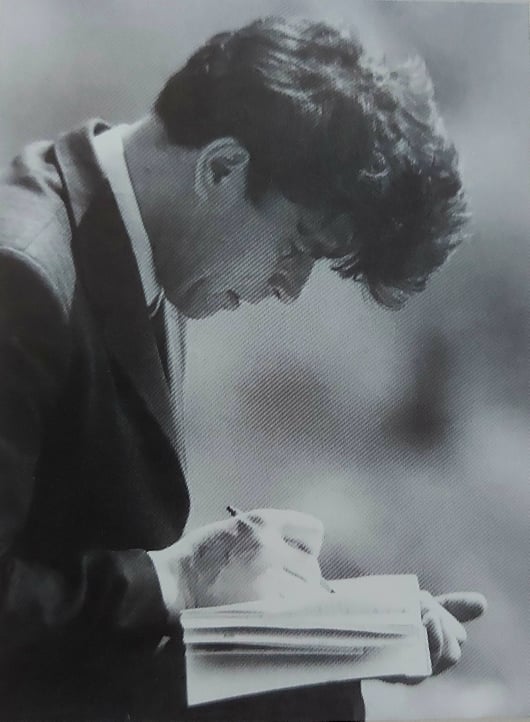
Hryhir himself was tall and broad-shouldered, with a thick head of unruly hair that had never known order and seemed determined to grow in every direction. His face was long and lean, like that of a lathered horse. He always wore a suit, a white shirt, and a bow tie. Yet despite his respectable appearance, he gave the impression of a miner who had climbed out of the pit only moments before. His gaze seemed to look straight through people, while his deep sensitivity was concealed behind a somber, at times almost stone-like expression. He spoke little, appeared reserved and unapproachable, and often gave the impression of being slightly drunk. He possessed a phenomenal memory and knew his own stories by heart. One evening, several male writers and the poet Halyna Kyrpa gathered around the same table. Hryhir asked her to read one of her latest poems. Embarrassed, she admitted that the manuscript was at the editorial office and that she did not know it by heart. “How can you not know it? You’re a poet. But I know your poem!” And without hesitation, he recited it from beginning to end in a single breath before inviting its astonished author to dance. Women fell hopelessly in love with him, but he knew the value of marital fidelity. He deeply loved Ukrainian folk songs and performed “A Cuckoo Flew By and Began to Call” with remarkable skill. Sometimes he joked: “If they throw me out of literature, I’ll join the Veryovka Choir”.
WEATHER FOR STORIES AND APPLES
Whatever the circumstances, he approached writing with extraordinary seriousness, insisting that “it is not a game of chess”. A story, he believed, had to be woven patiently and conscientiously. He often remarked that “literature, like bread and apples, needs the right weather”. He had an unusual habit: before writing a novella, he would first tell it aloud. In doing so, he tested how the story sounded and observed how people responded to it. Even after putting it on paper, he never rushed to submit it for publication. A manuscript had to rest. After some time, he would take it out again, reread it, and conclude that the story still needed to be “kneaded” a little more, left to settle in the hope that, God willing, it would become better. Only then would the manuscript find its way onto an editor’s desk, free of a single unnecessary phrase or superfluous thought. He would often persuade his friend Petro Zasenko to stroll through the Bessarabka Market, convinced that only there could one hear the authentic language, the true dialect, real life itself. In search of subjects, he invariably turned to the village, while the city remained alien to him until the end of his life. Its bustle and confusion irritated him. Once, in his diary, he wrote: “The Feast of the Transfiguration is almost here. Fields, shelterbelts, roadside land overgrown with weeds — and even the road itself smells of autumn. Soon I’ll have to return to Kyiv. Back to work, vodka, and self-contempt”.
THE WIND THAT BLEW AGAINST HIS SAILS…
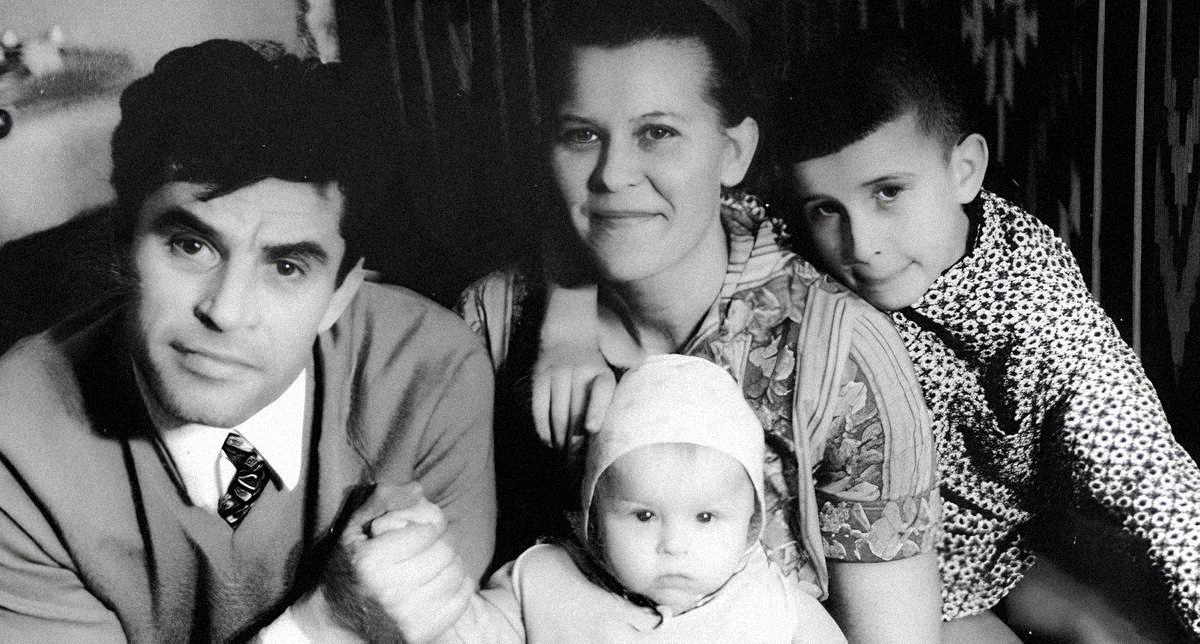
In his final years, worn down by relentless criticism, he sought oblivion in rowan-berry and wormwood liqueurs. Tensions with his wife, Liudmyla, became increasingly frequent as the family lived in constant financial hardship. His diary was filled with despairing reflections: “I’m tired. The wind is not filling my sails. It blows straight against them. I’ve been rowing for a long time now…” At times, he would say with heartbreaking weariness, “I don’t want to live”, while rubbing his furrowed brow. He once asked his closest friend whether he had already chosen a place for himself in the cemetery. Petro blinked in bewilderment and reminded him that he was still a young man — only forty-eight years old. Hryhir quietly replied: “I already have. Near the people from Shylivka, beneath a great pine”. He was not buried in the Poltava region. Instead, he found his final resting place at Baikove Cemetery in Kyiv, among the willows. Liudmyla did not burn his manuscripts. She did not destroy them. And so, to this day, we can still read about Nyura, who walked with her knees thrown high; about Stekha the Giraffe; about the twilight in which the stove takes a long time to catch fire, an ear of corn rustles softly, and the windowpane darkens. About a mother’s sharp “Hush!” and the loneliness of childhood.
When copying materials, please place an active link to www.huxley.media
Select the text and press Ctrl + Enter


