“LIVING LANGUAGES CANNOT EXIST ON DEAD LAND”


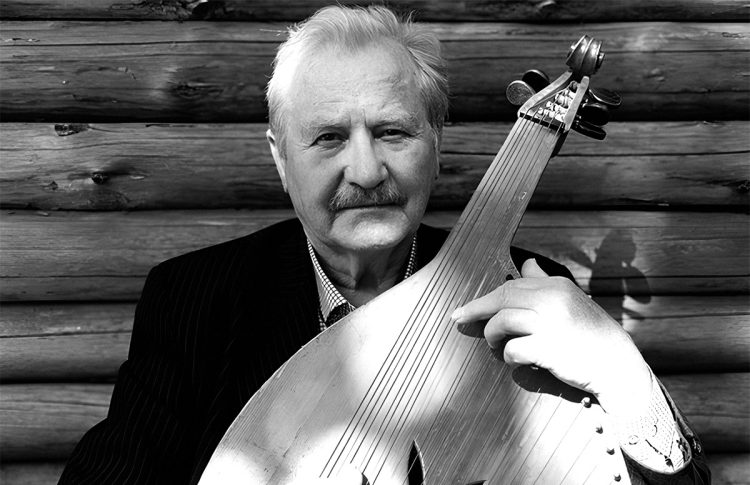
Mykhailo Hrechka — Oriental Studies scholar, philosopher, writer, and head of the geopolitical Center “Euro-Asia — Third Millennium”
Humanitarian policy remains a kind of epicenter of debate about Ukraine’s future. Mykhailo Hrechka, head of the “Euro-Asia — Third Millennium” Center, shares his unconventional perspective on this issue with Huxley readers. In his view, language, territory, and consciousness form a semantic and energetic unity and have been given to us “from above” for a reason.
What are words, one might suppose…
Words and a voice — and nothing more.
Yet the heart beats and comes alive
When it hears them!.. Surely from God
Both that voice and those words
Go forth among the people!
Taras Shevchenko
B
eing is centred on meaning. Without meaning, there is no history. Language and religion are inseparable from the mission of both an individual people and humanity as a biological species. If language and religion detach from the revelation of the meaning of human existence, they lose their “vertical” dimension and deteriorate into the “horizontal”. The religious and linguistic sensibility of such “horizontalists” loses its depth, becoming simplified and flattened.
People and nations are not born, nor do they live in a particular place, by their own will. They are “called” into their language, religion, History, and culture “from outside”. Call it a Higher Intelligence, God, a natural-cosmic law, or the logic of the historical process — it does not matter. “You do not think that you yourself suspended it, do you, Procurator?” — this is the question about control over one’s own life that Yeshua asks Pilate in Bulgakov’s novel. In this sense, whatever “horizontally” oriented humanitarian policy we pursue in Ukraine, we must understand that it is not policy that makes a people, its language, and its culture living or dead.
“Why do we live? What is our mission in existence?” — this is the central question that a living people must ask itself in the living language given to it from above, for both a people and its language are called into being “from outside”, at a specific time and in a specific place, precisely to answer this question. What matters, therefore, is not the “flat” fact that 40 million people in central Europe speak exclusively Ukrainian in restaurants, cafés, schools, and government institutions. What matters is WHAT they speak about in that language; what matters is the vertical dimension of meaning within the discourse. Without a mission, without a “vertical” vision of how we will live on this territory in 25, 50, or 100 years, we fall out of History with a capital H.

The “horizontal” is a level of highly expedient, politicized discussion about loans, reforms, war, laws, and prohibitions—including humanitarian policy itself. Yes, these conversations take place in Ukrainian, but they do not answer the question of Ukrainians’ historical purpose or the meaning of their national existence. They do not “activate” the energetic vibrations without which genuine historical creativity is impossible. Structured energy — in the form of vibrations and cycles, for example — is precisely the language in which the Universe, Nature, God speaks to us. Without an energetic connection to the vertical dimension of meaning, any language, religious idea, or political idea is dead, even if at a particular moment in History it appears to be “more alive than anything else”.
It is impossible to protect a language while destroying the ecosystems of the territory in which it exists, because a people’s land, language, and History are bound together by the closest semantic and energetic ties. Consider the fates of Babylon, Harappa, Mohenjo-daro, or the cultural and religious worlds of the peoples who once inhabited the fertile Sahara. Living languages do not exist on dead land. The fate of the Ukrainian language does not depend on “language quotas” or laws passed by the Verkhovna Rada. It depends on our self-awareness — on whether our consciousness will finally awaken to a messianic understanding of ourselves. So let us not despair: Ukraine still has everything ahead of it. Our Ukrainian existence continues, still hoping to align with its own mission.
When copying materials, please place an active link to www.huxley.media
Select the text and press Ctrl + Enter