ZOYA LYTVYN: On the Courage to Use Your Own Mind


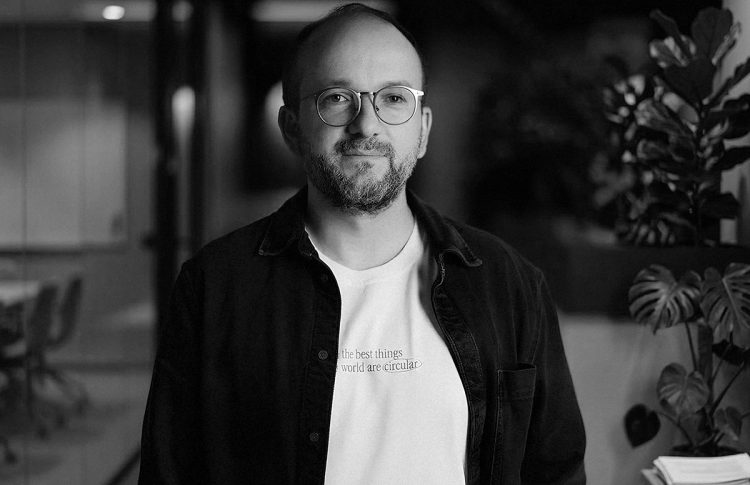
Zoya Lytvyn / Photo from personal archive
SHORT PROFILE
Name: Zoya Lytvyn
Date of Birth: April 2, 1986
Place of Birth: Kyiv, Ukraine
Profession: Ukrainian public figure, entrepreneur, and educator
The future of the Ukrainian state is closely linked to the future of Ukrainian education. Zoya Lytvyn is convinced of this, and her educational work is based on advanced, innovative strategies. But can the experience of her projects, such as Novopecherska School or the NGO Osvitoria, be scaled to the level of the state? What role will artificial intelligence, smartphones, and genetics play in shaping the education of the future? What can accelerate the development of education, and what may cause cognitive regression? Why should we rely on our own minds and live communication? We are confident that Zoya Lytvyn’s advice will help you navigate the world of modern education more effectively.
EDUCATION WITHOUT STRATEGY: WHAT THE STATE LACKS
I
do not believe in one universal education system for everyone. Every country has its own path. As an educator, what I find lacking is the state’s strategic vision: where we are heading, what our national idea is, and how education can help bring it to life. So far, there is neither a shared understanding nor a meaningful dialogue — yet such a dialogue must take place simultaneously at the level of both society and the state. At the same time, every system has something worth learning from. Finland was long considered an educational superpower: its phenomenon lies in raising happy children. Education there is homogeneous and equitable: quality knowledge is accessible to everyone, regardless of background. Teachers are highly trained and well paid. Interestingly, there are almost no private schools in Finland.
My business is private education, but I invest its profits into free training programs for teachers in public schools. I do not want public education in Ukraine to become so weak that private schools turn into the only social elevator. Fortunately, we still have strong public institutions and wonderful educators. Of course, it is possible to look at the experience of other countries. Canada, for example, impresses with its stability: if a plan is approved for 20 years, it remains untouched by political speculation. Changes in government do not halt funding — and this guarantees development. South Korea is an example of how education helped lift a country from the ruins of the 1953 war to the ranks of innovation leaders. They had a strong engineering foundation and are now focusing on creativity and entrepreneurial thinking. Education is synchronized with the national idea, just as it is in Singapore. Estonia, in my view, is another educational superpower. It also went through the Soviet period, but with around 350 schools, implementing change there is much easier than in Ukraine, where, before the full-scale war, there were 15,000 educational institutions.
THE COURAGE TO USE YOUR OWN MIND
I am convinced that we cannot simply copy someone else’s experience and “transplant” it onto Ukrainian soil. We must take the best from different systems and adapt them to our own realities. And someone has to do this work. It is one thing to partner with Singapore or import technologies. It is another to think independently and decide what our own path should be. In the school where I studied, there was a quote hanging above the entrance: “Have the courage to use your own mind”. As a child, I could not understand — who would use someone else’s? But with age, you realize that people only think they are thinking independently, and that is not always the case. How often do we truly understand what is actually happening to us? I deliberately minimized my information channels. There is even a “condition” called FOMO — the fear of missing out. But after the start of the full-scale war, I realized that I am far more effective in my key tasks when I receive a little less information, but of higher quality. It is easier for me to get a concise summary from family or colleagues than to scroll through every piece of news.
Nighttime events and morning news feeds are exhausting. Limiting the flow of information helps me wake up already focused, understand my sphere of influence, and act toward results. Being effective in your calling does not mean knowing everything happening in the world. I used to think the key was to raise lifelong learners. At school, we teach critical thinking: distinguishing opinion from fact, verifying information, and forming your own perspective based on evidence. I was convinced that children with this skill would become the “right” kind of adults. But recently I had a discussion with a journalist, and I agreed that even intelligent people who know how to work with information often do so not in search of the truth. Once they hold fixed views, they look for data to reinforce their position and prove themselves right, rather than reconsider their own beliefs.
In my opinion, true courage is beginning to use your own mind: engaging in an inner dialogue. Asking yourself: “Why is this fragment part of my worldview? Did it come from my grandmother because she used to say so? But do I actually agree with it? Do I want to keep this ‘puzzle piece’? Did this belief come from school? And is it still relevant today?” Unfortunately, not everyone grows into this dialogue, even by the age of ninety. That is why education is a shared effort. I do not believe that children are empty glasses that need to be filled with knowledge. Every child is a unique diamond already needed by the world. The task of a school is to help polish it, illuminate its facets, and give it an individual shape.
GENETICS, ETHICS, AND “A GALLOP ACROSS EUROPE”
There are genetic traits that determine a person’s inclination toward certain types of activity. I discussed this with a professor from Brown University: she showed me research on combinations of genes that may indicate aptitude for mathematics, music, or a high level of curiosity. This can be identified through DNA testing from birth. But this immediately raises an ethical question: what should be done with such information? There are many nuances here: are these inclinations connected to culture, or are they genetic? Is it worth deepening such research? The worst thing would be to tell a child: “You have no talent for mathematics”. This could become a self-fulfilling prophecy and worsen results in an area where the child might otherwise have succeeded. We came to the conclusion that scientific data should be used only to ensure that obvious talents are not overlooked because of circumstances. But is this realistic in Ukraine? From the Soviet Union, we inherited a system where a high school student studied 22 subjects. Today, there are 17, but that is still far too many.
Education turns into “a gallop across Europe”: write it down, memorize it, reproduce it. It is impossible to truly master 17 or 18 disciplines at a high level. In a world where knowledge is accessible through a smartphone, the task changes: not simply to teach mathematics, but to teach mathematical thinking; to teach reflection and analysis. Depth requires time. That is why I am glad that the upper secondary school reform scheduled to begin in 2027 will finally adapt the system to the student. There will be several mandatory disciplines, while the rest will be chosen individually. The global trend is this: a subject is not an end in itself, but a tool for developing thinking. Therefore, in primary and middle school, it is important to give children the opportunity to try different talents and disciplines through trial and error. And in high school, the child must become an active participant in the learning process and have a voice. It is time for us to acknowledge the obvious: a person is not capable of studying 22 subjects simultaneously at a high level. We need to narrow the focus to 5–9 disciplines. We can look to Britain as an example: in senior classes there, students study 3–5 subjects, but in maximum depth.
ARTIFICIAL INTELLIGENCE: A CHANCE FOR A BREAKTHROUGH OR A RISK OF REGRESSION?
As for artificial intelligence, there are many forecasts. Recently, there has been a great deal of hype in education around VR/AR technologies and online learning. But very often, we are simply transferring a lecture into an online format without changing the essence of the process itself. Some are trying to make learning more interactive and take the neurobiology of learning into account, yet a true revolution has not happened so far. I believe AI could become such a breakthrough, but it also carries serious risks. If we fail to teach children how to work with it properly, we risk cognitive regression. There is already evidence showing that uncontrolled use of AI reduces the ability to think independently — why think for yourself if you can instantly receive a ready-made, well-argued answer? The main task of school is not “what to think”, but “how to think”. If a child has not yet mastered this skill and AI has already taken over the process, we will end up with a degradation of cognitive abilities.
On the other hand, if used correctly, AI can provide a powerful positive impulse. For teachers, it can delegate routine tasks: grading assignments, compiling statistics, and analyzing the progress dynamics of each of 36 students. Modern Learning Management Systems help identify things that are difficult to track manually. For students, especially in high school, AI can become a personal tutor. This is particularly important given that 50 million children around the world still have no access to education. But there are developmental stages to consider. For primary school children, many countries are already limiting AI use: for a developing brain, it may bring more harm than benefit. OECD studies confirm that the younger the child, the lower the effectiveness of even the best video courses. Human beings need other human beings. After the age of eleven, AI opens up opportunities for individualized learning. Our task is to teach children by the age of twelve to become confident users of AI, so that they put it at their service rather than become dependent on it.

SMARTPHONES: A BAN AS AN INVESTMENT IN SOCIALIZATION
How should we act when smartphones have become an inseparable part of life? In my school, phones are prohibited. Students may use them only before classes begin or after they end, once they have left the campus. From 8:45 a.m. to 6:00 p.m., gadgets are banned. There is evidence supporting this approach: the absence of phones improves academic performance by an average of three months over the course of a school year. Every year, during tea gatherings with graduates, I ask for their opinion. They laugh and say: “We hated this rule, but later we understood its value”. Our students communicate with each other far more in person. When there is no option to “hide behind a screen”, you interact — and that creates socialization. My son got his first smartphone at the age of twelve, and now I think that was too early. For my daughter, I am considering a different scenario: at twelve, a simple push-button phone for communication, but not a smartphone with social media. At the same time, I do not want to create the effect of a “forbidden fruit”. I try to demonstrate through my own example how digital tools can be used for creativity and learning: a tablet, Canva, and AI-based services. For instance, I recently discovered the service Turbo AI. When I listen to a lecture, I take handwritten notes while AI creates an alternative summary or prepares self-check questions. Sometimes I realize that I missed certain nuances during the lecture. It is a great tool for self-monitoring — and also a way to show children that gadgets are not only about entertainment, but also about efficiency.
“THE LUXURY OF HUMAN COMMUNICATION” AND THE DIGITAL CHASM
Quality education is the foundation for a circle of like-minded people, friendships, a profession, and well-being. But the world lacks around 44 million teachers — and this problem cannot be solved quickly. Under such circumstances, digital tools sometimes become the only chance for gaining knowledge. Imagine a boy from a frontline town where there is no English teacher. Many educators have left the country. If that student has access to a digital English-speaking tutor for practice, that alone is already progress. A “live” teacher will remain a marker of status, but such services will become more expensive and increasingly niche — this is what I call “the luxury of human communication”. I do not view digitalization as something purely negative. There are successful cases: for example, a study in Nigeria where children using individualized AI-generated learning programs completed a one-year curriculum in just three months. The advantage is greater access to education; the downside is less live interaction. At the same time, there is the risk of a “digital chasm”: for children in villages without devices or internet access, the gap will only continue to grow. While some children are already training their own language models, others may not even know such technologies exist. Whether this will make people happier, we shall see.
NEW TIMES — NEW PROFESSIONS
Meaningful changes in career guidance are possible when a child has access to a qualified educational manager who can help them better understand themselves. Our school has such a specialist: students undergo a three-hour assessment, after which we discuss the results in detail with the family — strengths, inclinations, and possible directions for future education. But this is more the exception and a “luxury” of private schools. In the public system, such specialists are almost nonexistent — they are simply not being trained, even though the need is enormous. If we want young people to make conscious choices, we need systemic solutions. One possible solution could be an electronic educational passport for every child, containing information about extracurricular clubs, activities, and interests. This would help create a holistic portrait of the student and make career guidance easier. For now, the role of educational managers is often played by parents — if they have the time and knowledge. And if they do not, decisions become directive: “You will become a financier”.
As for the professions of the future, the trends are quite clear. AI will replace part of the “white-collar” workforce whose jobs do not require exceptional genius. At the same time, speakers at the Davos forum emphasized that demand and salaries are increasing in professions AI cannot replace — applied trades, electricians, plumbers, and similar occupations. Skilled manual labor is becoming “trendy” again, while the broadest opportunities are opening up in STEM fields (Science, Technology, Engineering, Math). Genetic editing of children at the embryonic stage is becoming a reality — along with all the ethical questions it raises. Speaking with the founders of American companies, one can already hear discussions about the possibility of “editing” future children.
This is both frightening and inspiring: biology and related sciences will generate many new professions — from gene editors to genetic architects. The IT sphere is also transforming: prompt engineers and language-model specialists are emerging — people who train and adapt AI models. If companies once hired SMM specialists, they now increasingly need a different type of expert: professionals who “train” models so that AI promotes their service as the best on the market. This transformation even affects résumés. AI is already replacing HR specialists at the first stage of recruitment: it analyzes thousands of applications and selects the top five candidates. If you do not understand how algorithms work, you may not even know how to structure your résumé in a way that gets you into that top five.
ADVICE FOR PARENTS: FREEDOM, RESPONSIBILITY, AND THE JOY OF TODAY
People often ask me: “What advice would you give Ukrainian parents?” It seems to me that we tend to overprotect children and control them too much. Despite the difficult security situation, it is important to remember: you cannot raise a leader if a child has no free time and no personal space — time that they can manage independently. It is equally harmful when children have no responsibilities, or when we do not trust them to walk home on their own or buy groceries by themselves. Our anxieties must be balanced with a normal childhood, where there is room for boredom, reflection, and responsibility. But above all, remember this: every child is a “genetic lottery”, the outcome of which is 80% determined from birth. That is why we should worry less and enjoy communication with our children more. Global statistics show that 90% of the time parents and children spend together happens before the child turns eighteen. After adulthood, shared time becomes far more limited. So let us value every minute now — and not allow fears about the future to steal our present with our children.
When copying materials, please place an active link to www.huxley.media
Select the text and press Ctrl + Enter