NOBEL PARADOXES — 2025: physicists create a «quantum transistor», while chemists build «football fields» inside molecules

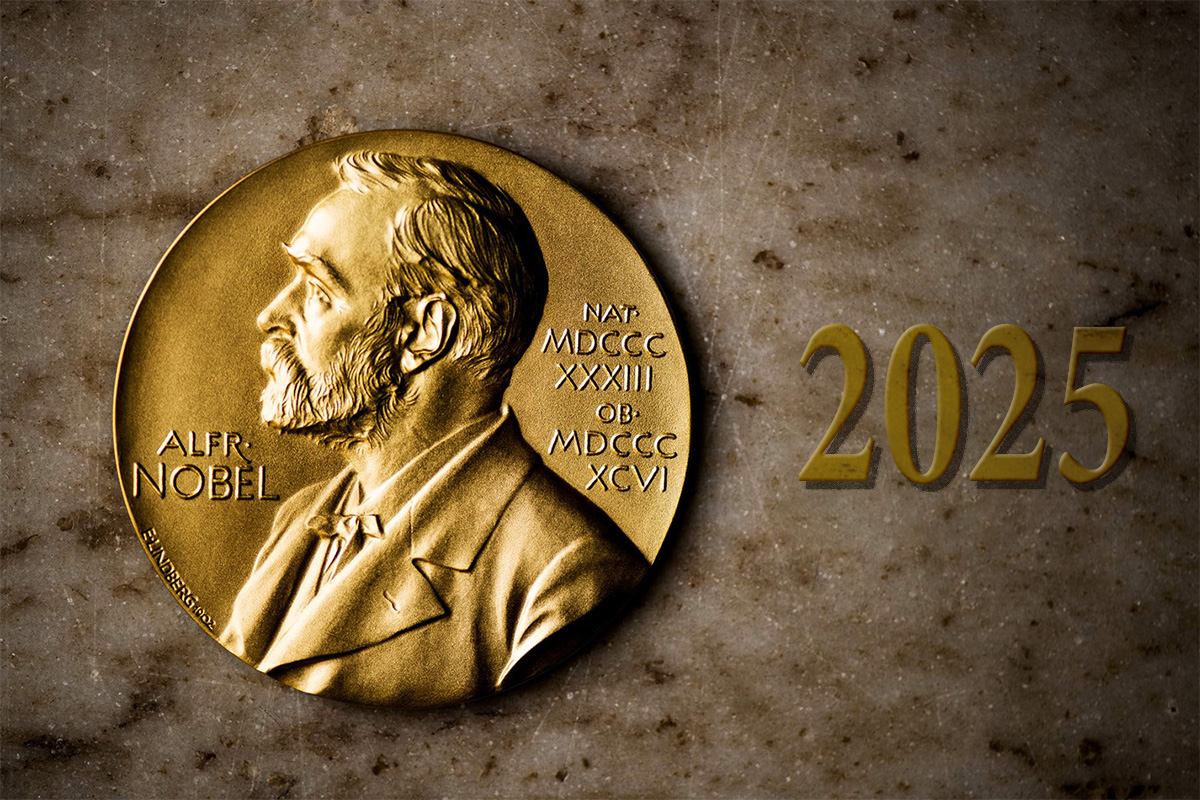
Photo by Alexander Makhmud, 2018. Art design by Olena Burdeina (FA_Photo) via Photoshop
It seems that the dream of creating a quantum computer capable of erasing traditional computers from our reality is about to come true. It is also possible that we stand on the threshold of a revolution driven by new materials being created in chemistry laboratories right now. At least, such a future is foretold by the 2025 Nobel Prizes in Physics and Chemistry.
THE NOBEL PRIZE IN PHYSICS: ON THE PATH TO «QUANTUM SUPREMACY»

HOW TO OVERCOME QUANTUM INSTABILITY
«Q
uantum supremacy» — this is how scientists have defined the state of quantum computing devices capable of solving problems beyond the reach of classical computers. It is no coincidence that today’s quantum technological race involves the greatest minds, the largest corporations, and enormous financial resources. Quantum computers, capable of processing fantastically vast amounts of data, have the potential to radically transform our world — medicine, chemistry, pharmaceuticals, finance, cryptography, and AI technologies.
However, the creation of a fully functional «production model» still appears to be far off. Although the first working prototypes were developed by American and German scientists as early as the late 1990s, quantum machines have yet to overcome a number of obstacles. The main one is their inability to maintain long-term stable operation. Companies like Google, IBM, and Chinese research centers can currently sustain quantum computations for a maximum of 13 seconds. Yet recently, Harvard researchers set a record of 2 hours — an achievement that can rightly be considered a breakthrough in the quantum field.
LEARNING TO «WALK THROUGH WALLS»
The physicists who received the Nobel Prize in 2025 are rightly considered pioneers in the field of quantum measurement. Professors from three American universities — John Clarke from the United Kingdom, Michel Devoret from France, and John Martinis from the United States — were awarded the prize for «the discovery of macroscopic quantum-mechanical tunneling and energy quantization in an electrical circuit».
Sounds rather complex for the uninitiated, doesn’t it? Let’s try to simplify it as much as possible. You probably have some idea that in the quantum world, an observed object can behave paradoxically — both as a wave and as a particle. By tunneling from one state to another, a wave can overcome energy barriers — rather like if we suddenly gained the magical ability to walk through walls.
THE QUANTUM EFFECT IS NOT LIMITED TO THE MICROWORLD
It was once believed that such quantum effects could only be exhibited by subatomic particles. The newly awarded Nobel laureates have proven that systems on a much larger scale can behave in the same way. In particular, electrons in a superconducting circuit can act as a single giant super-particle. Yet the scientists not only discovered this effect — they also learned how to control the tunneling process of this giant «artificial atom».
Moreover, they demonstrated quantum-mechanical tunneling and quantized energy levels in a system that can literally be held in one’s hand. This discovery paves the way for the creation of a «quantum transistor» that switches not current, but the state of the system itself. If the qubits of a quantum computer can remain stable while existing in two states at once, it will unlock immense computational power.

THE NOBEL PRIZE IN CHEMISTRY: EXPLOSIVE TECHNOLOGIES WITHOUT DYNAMITE

ALFRED NOBEL’S WAY
This year’s Nobel laureates in Chemistry were also three professors. Japanese Susumu Kitagawa from Kyoto University, Briton Richard Robson from the University of Melbourne, and Jordanian Omar M. Yaghi from the University of California, Berkeley. They received the prize for research on «metal–organic frameworks» (MOFs), which, according to Heiner Linke, chair of the Nobel Committee for Chemistry, open unprecedented possibilities for creating materials with new functions — and, as they say, «to order».
Interestingly, these discoveries exhibit a certain continuity with Alfred Nobel’s most famous invention — dynamite. In a sense, Kitagawa, Robson and Yaghi have reproduced his invention at a new scientific and technical level. Let us recall what ingenious Nobel devised. The founder of the prize bearing his name took the explosive and unstable nitroglycerin and placed it into a «framework» material — diatomite, a porous rock formed from the deposits of microscopic single-celled algae. The result was an explosive that became safe to work with.
AN ALMOST ACCIDENTAL DISCOVERY
The Nobel laureates did almost the same thing — they learned to synthesize an artificial supramolecular «framework» for any chemical «filler». Thus emerged an entire branch of science now known as «reticular chemistry». Yet, it must be said, it arose almost by accident. Robson initially set out to create a visual aid for his students to study molecular structures. To do this, he used wooden balls (atoms), drilled holes in them, and inserted wooden sticks (chemical bonds).
During this simple handiwork, the scientist noticed that connecting these parts randomly made it impossible to obtain a correct molecular model. Trying to link not individual atoms but different types of molecules, Robson attempted to create a structure resembling the crystal lattice of a diamond. However, unlike a diamond, his model contained many cavities — much like the diatomite used by Alfred Nobel. Further experiments showed that these cavities could be filled with a wide variety of substances. Unfortunately, all of Robson’s constructions turned out to be rather fragile and short-lived.
WHAT «21ST-CENTURY MATERIALS» CAN DO
The problem Robson faced was solved by Susumu Kitagawa. By connecting the nodes of three-dimensional metal–organic frameworks with large molecules, he made them more stable. Further contributions to the idea of stabilization were made by Omar Yaghi. His material, MOF-5, did not degrade even at 350 °C. Enormous volumes of methane could be stored within MOF-5 — just a few grams of the substance contained giant internal cavities comparable in size to a football field, capable not only of holding but also breaking down toxic gases.
Other materials, such as MOF-303, can be used in semiconductor manufacturing, industrial emission reduction systems, and even in extracting drinking water from humid night air in barren deserts. ZIF-8 can recover rare-earth metals from wastewater, while MIL-101 can purify water from antibiotics and store large amounts of hydrogen.
Thus, the world has found itself on the threshold of a true MOF revolution. And although most of these possibilities are still confined to laboratories, companies are already beginning to actively invest in the creation of these «materials of the 21st century».
When copying materials, please place an active link to www.huxley.media
Select the text and press Ctrl + Enter


