OH, LOVE: the Great Seljuk and the Star of His Harem

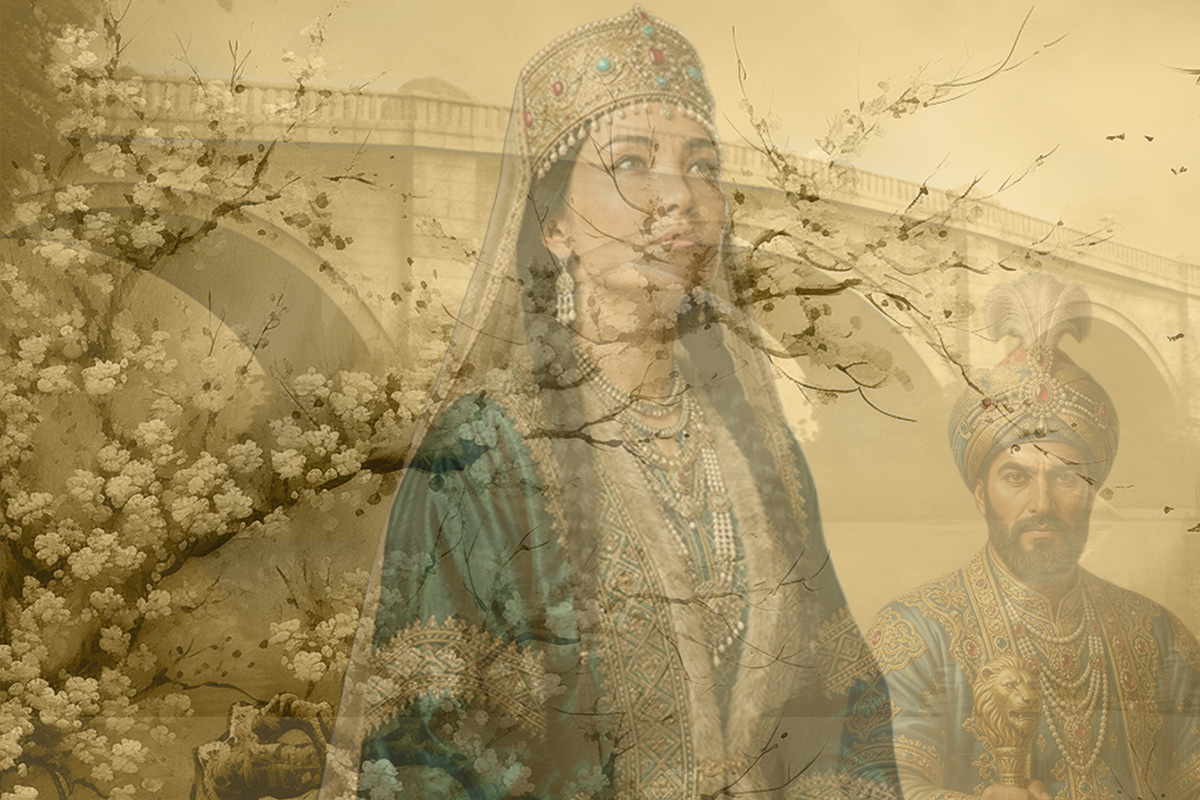
Art design: huxley.media via Photoshop
MEN OR WOMEN?
I
n the world of Islam, norms governing relations between men and women were developed over centuries. Let us neither praise nor condemn them now — there are plenty of people to do that. Let us simply note that for medieval Muslims there was no doubt, and could be no doubt, about male supremacy. All important decisions were made by men, and women were obliged to obey them. Even the opinion of a sultana was not worth a broken coin if the sultan disagreed with it.
And yet we must admit that in European countries there are also plenty of men absolutely convinced that there is no woman who could argue with them, that women are the weaker sex, and that this is how nature, the universe, or the God in whom they believe has ordained it… Meanwhile a woman (most often the lawful wife, though not necessarily) fools him as she pleases and laughs at his ridiculous whims, believing — and not without reason — that things will turn out exactly as she wants them to.
Do you think that polygamy in Muslim countries saves them in any way? It only makes matters worse — instead of competing with one woman, a man has to contend with an entire collective. Especially when love itself intervenes in the balance of power — that very thing which is difficult to define and even harder to predict, and therefore all the more convenient in the hands of a woman. And it was the same a thousand years ago, when the couple I am about to tell you about lived.
HAVE YOU HEARD OF THEM?
First, a few words about the Seljuks. The Seljuks were a conglomerate of Turkic tribes who in the 11th century became the hegemon of Asia Minor and Central Asia. The founder of this state, Toghrul Beg, conquered Khwarezm, Iraq, Azerbaijan and most of Iran. Even the caliph, the formal head of the Muslims, was forced to grant him the title King of the East and the West.
His nephew Alp Arslan, having received power from him, continued the work of conquest and moved into the territory of present-day Turkey, where Greeks had lived for almost two thousand years — at that time subjects of Byzantium, the heir to both ancient Hellas and the Roman Empire. But Alp Arslan was not only unafraid — in 1072 at Manzikert he defeated the numerically superior Byzantine army and captured the emperor himself. After this crushing defeat Byzantium never truly recovered.
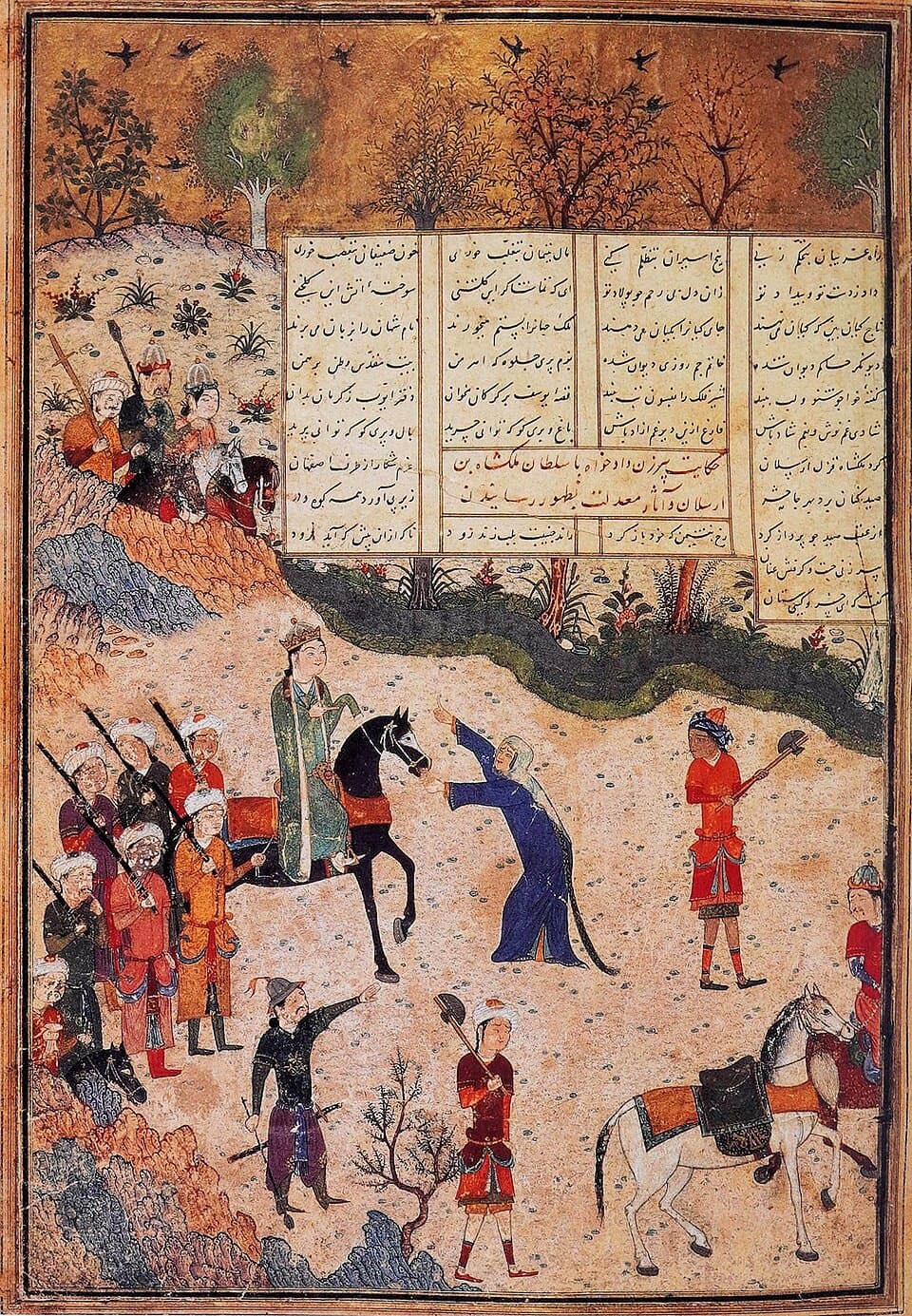
Alp Arslan left this world early — he was only a little over forty. Having started yet another war on the western borders of his empire, he captured the commander of the fortress of Berzem, Yusuf al-Khwarezmi, ordered him brought into his tent and announced that he was sentencing him to death. The brave Yusuf responded with insults and then said something like «it is easy to mock a man who is bound», and Alp Arslan took the bait — he ordered the prisoner to be untied.
Clearly not out of mercy — the sultan seized a bow and shot at the captive. And imagine this: he missed, although he was a superb archer! The prisoner then pulled a hidden dagger from his clothes, rushed at the sultan and inflicted a mortal wound. The guards, of course, literally tore him to pieces, but that did not save the situation. The son of the slain ruler, Malik-Shah, ascended the throne — and he was destined to become the greatest of the Seljuk sultans. It is about him and his beloved wife that our story will be told.
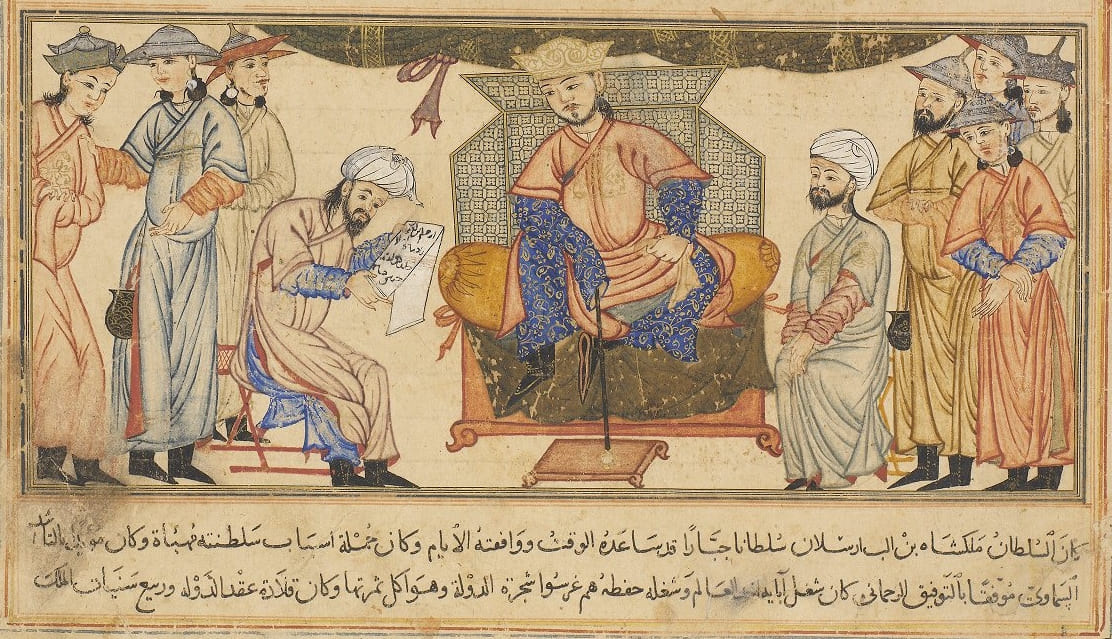
THE HAREM TABLE OF RANKS
It will be somewhat inconvenient — we will have to speak about the sultana without naming her, because her name has not been preserved. The honorary title Turkan Khatun (roughly translated as «Lady of the Turks») replaced her name, and it never reached historians. There were several other women called Turkan Khatun, but let us begin with this one — she deserves it, even though neither her real name nor a reliable portrait of her has survived. The same old story: why know anything about the wife if the husband is known? No one cared about her opinion of her future husband either — she was married off at the age of nine.
For us this would be simply terrifying — how could there be intimate relations with a nine-year-old! And the sultan would hardly like it either (unless he were a pervert, of course!). But no — if for reasons of state the sultan married a girl who was too young, she was raised in the harem as a «bride» and waited until maturity. And whether that maturity had arrived was decided by the valide sultan (the monarch’s mother) and trusted eunuchs. Even at the stage of selection they checked the basics: a graceful walk, clear skin, thick hair, healthy teeth, and that she did not snore even a little, Allah forbid.
If everything was in order, she could be taken into the harem at the lowest level of the five-step ladder — acemi (a novice). Having learned the arts — music, calligraphy, embroidery, and if necessary religion and language — she became a jariye (a trained concubine). From the jariye were chosen the gedikli — the third level, those who personally attended the sultan. The sultan could raise a gedikli to the fourth rank, ikbal, by inviting her to his bed. And the one who bore a child by the sultan rose to the fifth and highest step — kadin-efendi.
THE IDEAL COUPLE AND THE EXEMPLARY VIZIER
Turkan Khatun was taken into the harem without question, because the man who believed it necessary to marry the young Malik-Shah was someone whom no one dared to contradict (except the sultan — and even that I am not sure about). His honorary title has remained through the centuries — Nizam al-Mulk, «Order of the Kingdom». With a firm hand he governed the state under Alp Arslan and continued to do so for almost the entire reign of Malik-Shah, 9 years plus another 20! Naturally, he understood how important it was for the sultan to have a well-organized harem.
Turkan Khatun quickly became kadin-efendi, having borne Malik-Shah three sons and a daughter. True, even the children of sultans did not live long in the 11th century: Dawud died in 1082, Ahmad in 1088, but Mahmud survived, and Turkan Khatun, of course, expected that he would inherit the throne. What mother would think otherwise? However, another kadin-efendi, Zubayda Khanum, bore Malik-Shah a son, Barkhiyaruq, and she too placed her hopes on him — after all, he was older than the son of her rival…
It must be said that Turkan Khatun’s position was stronger. She was not only the favorite wife — she was also loved by the army, and besides, she knew how to manage the finances of the Seljuk state: try arguing with the favorite wife… And Nizam al-Mulk believed that the eldest son should ascend the throne — that is why he was called the «Order of the Kingdom», so that everything in the kingdom would be in proper order. This wise vizier wrote exactly this in his still interesting book Siyasat-nama («The Book of Government»), where he clearly set out the doctrine of governing the state based on organization and centralization (ill-wishers might say that such a state turns into a police state — but who doesn’t have one?).
FELLOW STUDENTS?
There were other opinions about what the Seljuk state should be like — for example, that of Hasan ibn Sabbah, the head of the Ismaili sect, a sharply radical group whose main method was terror. So that Nizam al-Mulk could not criticize him with the help of the shah’s chief executioner, he cunningly seized the impregnable fortress of Alamut and began raising there terrifying hired killers who believed that even after a terrible execution they would immediately enter paradise and receive 72 heavenly houris — specifically plump blondes, which in the East was considered especially luxurious. The country began to be shaken by seemingly unmotivated murders of nobles and high-ranking officials, and the victims did not even try to save themselves — how could one possibly escape from such assassins?
Malik-Shah ruled successfully, started wars himself and always won them. Even Christian countries, for example Georgia, were forced to pay Malik-Shah kharaj — a kind of income tax. His relationship with his beloved wife, who herself showed considerable political ability, only improved. All the court poets sang her praises, even the head of the palace observatory, whom few people at the time considered a poet — we know him as Omar Khayyam. Quite by chance Khayyam’s rubaiyat did not disappear — in the distant 19th century they came into the hands of the English poet Edward FitzGerald, and in his translations they became a sensation. Remember how in O. Henry’s story The Handbook of Hymen one of the characters cannot live without the poems of some Omar Khayyam?
There is a very old legend that Nizam al-Mulk, Hasan ibn Sabbah and Omar Khayyam were fellow students. Hardly so — Nizam al-Mulk was born in 1018, Hasan ibn Sabbah most likely in 1034, and Omar Khayyam in 1048 — that would be quite a class with students of very different ages. Yet there can be no doubt about their historical connection. In particular, the confrontation between Nizam al-Mulk and Hasan ibn Sabbah was indeed important — nothing else threatened the power of the sultanate. Even the caliph, the formal head of the Muslims, was forced to reckon with it, especially since he was married to the daughter of Turkan Khatun, Mahmelek.
AN UNEQUAL MARRIAGE?
The story of this marriage is also interesting. When the caliph proposed, strict conditions were presented to him — an enormous dowry (they asked for 400,000 dinars, though later agreed on 100,000) and the requirement that he take no other wives or concubines (which was practically unheard of!). Nevertheless, in 1087 the marriage took place, and even a son was born. But already a year later the caliph expelled all the Turkic servants of his wife — claiming they behaved badly. Mahmelek was outraged by this, complained to her parents, and angered them so much that the caliph was forced to agree to her return home. However, after returning she soon died, and Turkan Khatun believed that the caliph was responsible for her death. After that she and her loving husband, of course, felt no sympathy toward the caliph.
On October 14, 1092, the fatal day arrived. A fanatic sent by Hasan ibn Sabbah, Bu Tahir Arani, hid at the gates of the vizier’s palace. When the vizier appeared, the assassin rushed forward and, before the guards literally tore him to pieces, managed to strike three blows with a poisoned dagger. The death of Nizam al-Mulk upset the political balance, and Malik-Shah also made a sudden move — he arrived in Baghdad and announced to the caliph that he must leave the country and that from now on their common grandson, the son of Mahmelek, would be the caliph.
I do not know how much this offended Turkan Khatun. But she had an even more serious reason to be angry with her husband — he was clearly preparing to make Barkhiyaruq the heir instead of her four-year-old son Mahmud. It is unlikely that Malik-Shah expected that his beloved wife, whose relationship with him seemed strong and trouble-free, would dare to contradict him. Perhaps he underestimated the power of maternal love, or perhaps he overestimated the power of marital love…
POISON? AND WHAT HAPPENED NEXT?
On November 9, Malik-Shah went hunting and returned with a cold. A healthy 37-year-old man took a medicinal drink and died a few hours later. Almost certainly he was poisoned. Who could have done it? There is no proof. But a number of historians confidently accuse Turkan Khatun. Thus collapsed perhaps the most influential family of the world at that time.
Turkan Khatun acted like an experienced conspirator — she concealed the very fact of her husband’s death for some time, managed to bribe several emirs, and proclaimed her young son the heir. But the commander Kerbogha, whom she had sent to capture Barkhiyaruq, let him escape, and most of the emirs went over to his side. In the battle against him Turkan Khatun was defeated and was forced to recognize his authority, bargaining for modest possessions for Mahmud.
But the sultana did not resign herself and tried to achieve her goal by marrying the brother of Barkhiyaruq’s mother, the wali of Azerbaijan, Ismail ibn Yaquti, in order to draw him to her side. However, Barkhiyaruq ordered his uncle to be killed, and the order was carried out. Even this did not stop Turkan Khatun — she entered into an alliance with Tutush, the son of Alp Arslan… But the beloved wife of Malik-Shah did not live to see the defeats and execution of Tutush — in October 1094 she suddenly died. The cause of her death is as unclear as in the case of her husband — perhaps because they were similar? Literally a month later Mahmud also died — usually it is written that he died of smallpox, though the timing seems rather too convenient…
Thus unfolded the life of Turkan Khatun — for twenty years she was the adored wife of the greatest sultan of those times (perhaps the most powerful ruler in the world at that moment), and then she endured two turbulent years for the sake of an almost unattainable goal — to secure for her son what his father had not wished to leave him. Yes, love for children can outweigh love for a spouse, and this happens often. But love for which one commits a vile act such as poisoning is worth little and quickly collapses — it is worth remembering that.
When copying materials, please place an active link to www.huxley.media
Select the text and press Ctrl + Enter