PHILOSOPHICAL SEMINAR AT THE FRONT


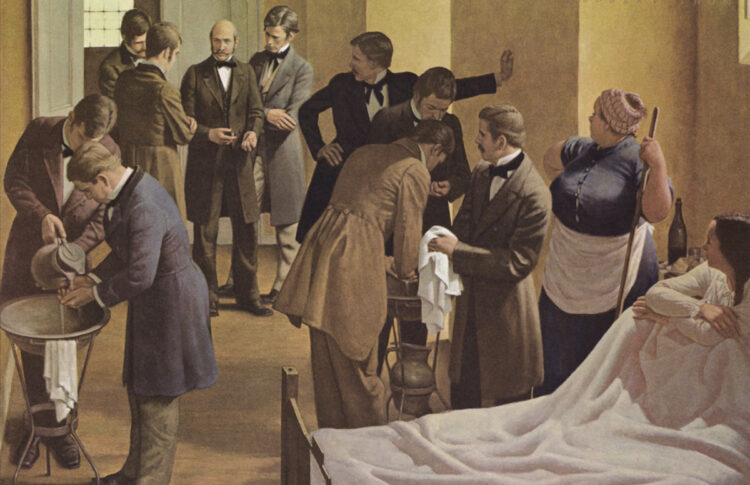
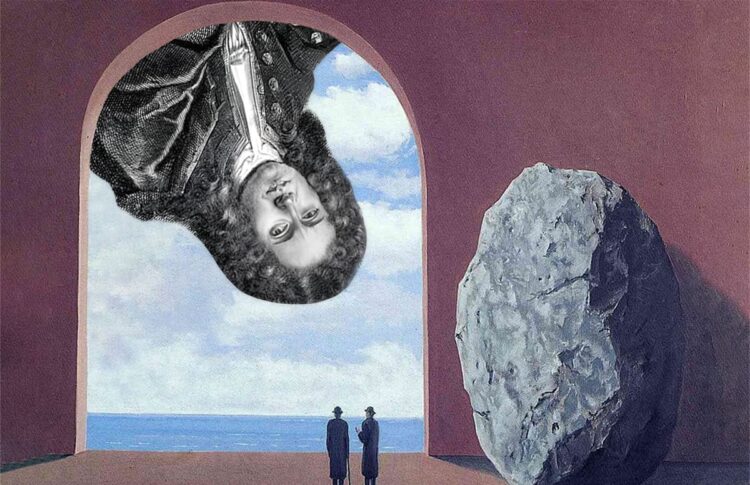
Natalia Amirova. Return Home, 2020 / Facebook, «Sil-sol»
It was already dark in the Donetsk steppe, but silence never came. From time to time, the explosions of shells could be heard — sometimes farther away, sometimes closer — and occasionally bursts of machine-gun fire broke the night. Still, the fighting was less intense than during the day. A few kilometers from there, a pickup truck pulled up near a small grove. In its trunk was an antenna for a Starlink satellite connection. A young soldier was trying to find the best signal — for a connection with me, because we had a seminar scheduled…
C
ould I have imagined, just a few years ago, back when I was organizing a philosophy circle, that the young men who had decided to study literature and philosophy would one day be reaching out to me from the trenches? Could I have imagined that I would lose a close friend in the war?
In those prewar years — after defending my doctoral dissertation, which I had partly written in Vienna under the supervision of Professor Georg Stenger — during what now seems a time of well-being, I dreamed of creating a space where free philosophical inquiry would not be burdened by bureaucracy or stagnant academic formalism.
It seemed essential to me that philosophy, as in the past, should once again unite people of different callings — so that a politician, an artist, a scientist, an engineer, and a philosopher could sit at one table and discuss what truly matters; so that the spirit of mutual respect and the inspired search for truth would ennoble people, just as it once did.
I also sought not only those who needed philosophy, but those whom philosophy itself needed. I was looking for people for whom the desire to think was inseparable from the desire to create, and for whom thought and action were not divided by an impassable wall, but joined in a single creative impulse. The younger generation responded. To my joyful surprise, I met young people whose intellectual maturity and moral integrity deeply impressed me.
Here I should explain something. There is a remarkable feature of the young Ukrainian generation, one I have witnessed many times: the questions they pose are not only about how to improve or adjust something, but about the very essence of things — something primordial. They ask not only how, for instance, literary criticism functions, but what the essence of literature itself is; not merely how to curb the mechanisms of political pressure, but what politics as such really is, and what its meaning might be.
In this, I saw a sign that Ukraine is at a concept-forming stage of its historical development — and that philosophy must play one of the most vital roles in this process.
The Kyiv Philosophical Circle turned out to be a small and little-known community in Ukraine. Although there was a certain trend toward intellectualism, we remained somewhat apart. The reason for this was also our particular approach to philosophical questions — one defined by complete immersion in the problem, a thorough study of the subject, and the utmost attention to the subtleties and nuances of philosophical work.
In this way, we sought to combine interdisciplinarity with rigorous methodological effort aimed at the systematic development of a thematic field. It was clear that «enlightenment» was not among our goals — we had no wish to simplify or soften the depth of philosophical concepts. We wished to serve philosophy, not to turn philosophy into a tool for self-gratification.
Phenomenology stood at the center of our aspirations. Through phenomenology, we viewed the entire history of philosophy. In particular, a phenomenological elucidation of the texts of German classical philosophy was especially important to us.
During my stay at the University of Vienna, I also decided to translate Georg Stenger’s fundamental study Philosophy of Interculturality: Phenomenology of Intercultural Experience. This treatise combines a finely balanced methodology rooted in a deep phenomenological tradition with an analysis of the pressing and even acute problems of the modern world. My work on the translation continues to this day.
But then came the morning of February 24th. The vile and treacherous attack of the terrorist state. Loud explosions were heard in Kyiv. Panic spread. In the first weeks of the war, some members of our circle joined the territorial defense forces, others became volunteers. My close friend Yevhen Volchenko, an active member of our group and a doctor, organized a rehabilitation center for soldiers.
From the very first days of the war, Oleksandr Smagliuk joined the defense of Kyiv. Before the war, he wrote a great deal. His poems are precise, their subtle patterns revealing complex intuitions and unexpected themes. He is a connoisseur of cinema. He admires Novalis, Rilke, and Hofmannsthal. Under my guidance, he, along with several other young men, had been diligently working for several years on Schelling’s System of Transcendental Idealism. Schelling was twenty-five when he wrote that treatise — the same age Oleksandr was when he began studying it.
Oleksandr is deeply interested in the question of will. With his military experience, he is now on the path toward his own philosophy of will.

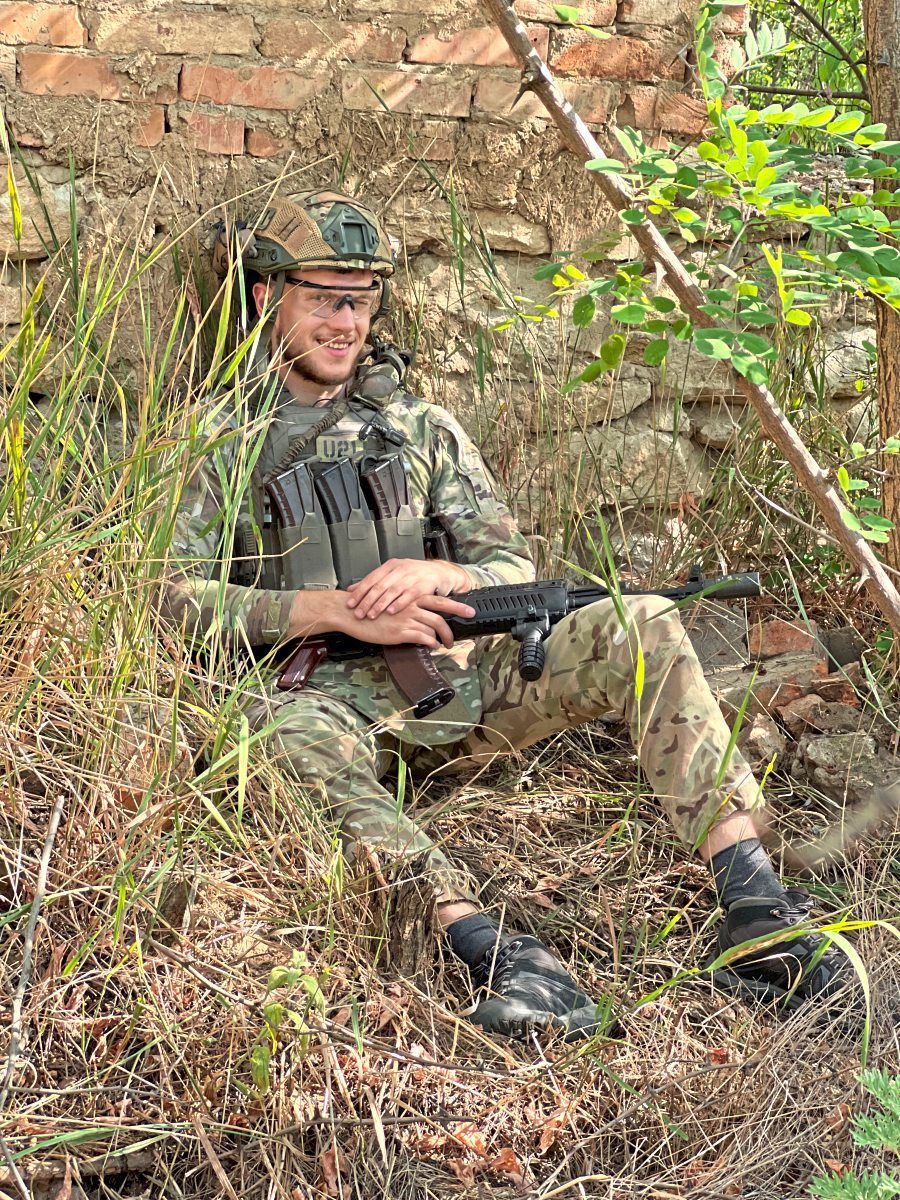
Some of the young men immediately decided to join the Armed Forces of Ukraine. Serafym and Sasha were nineteen, and enlisting was not easy — but they succeeded. Ahead of them lay fierce battles, joyful victories, military training in England, and much more. Yet one thing remained unchanged — our philosophical conversations and seminars.
Of course, their ability to get in touch could never be predicted. Sometimes there was a lull, and Sasha managed to write a remarkable essay — an attempt to comprehend what was happening. But there were also weeks when communication was impossible. During such times, the intensity of fighting increased, demanding their full attention and focus. Sasha was studying Heidegger’s texts on Hölderlin’s poetry.
All three of the young men write poetry. They wrote it before the war, but now their poems read with special poignancy.
They have come to know life in a place where it can so often and suddenly be cut short. Every time they risk their lives under another round of shelling, the thought of life’s value confronts them as a brutal fact. There is something in common between philosophy and war. War throws a person out of a clearly defined life-world into a new, unknown dimension. In this, one’s rootedness in the familiar and ordinary world becomes fully revealed. At war, facing extreme situations, a person experiences the finitude of their own existence. And the key word here is experience, for the explosions of artillery fire are truly lived through — they seize the whole body, sometimes paralyzing consciousness. A soldier at the front constantly lives on the edge. This edge becomes a new dimension of existence. Here, death stands beside life, so close that sometimes they are separated by only a few seconds, a few meters.
Philosophy, too, moves toward boundaries — it seeks to expose them, grasp them, and transcend them. A philosopher is someone who, on one hand, contemplates and thinks about the diversity of being, and on the other, turns their gaze toward the Other, toward nothingness, toward what lies beyond. Sasha and Serafym, at just twenty years old, already know this. They have seen the world from both sides. For them, the timeless question «Why is there being rather than nothing?» has ceased to be merely speculative — it has become entirely concrete.

The time will come when all these young men, having lived to old age, will write their memoirs about this terrible period — about their heroism, about the friends they lost, and about how they greeted our victory. Someday…
But for now, the philosophical practice continues. The young soldiers’ striving for culture and knowledge cannot be stopped by war. On the contrary, it only deepens their experience and strengthens their conviction that cultural development and philosophical understanding are an inseparable part of the victory over raging barbarism.
At our next seminar with Serafym, we will be discussing Tractatus Logico-Philosophicus by Ludwig Wittgenstein — a work itself written in the trenches of the First World War. History seems to enjoy such ironies. Whenever he has a free moment and the circumstances allow, Serafym diligently takes notes on each proposition of the Tractatus.
At the next seminar, out of the darkness of a Donbas night, his face will appear once again, and we will once more plunge into the element of thought. I hope…
When copying materials, please place an active link to www.huxley.media
Select the text and press Ctrl + Enter