REVELATIONS IN SCIENCE: He Called Himself Stupid, Cowardly, and Dishonest

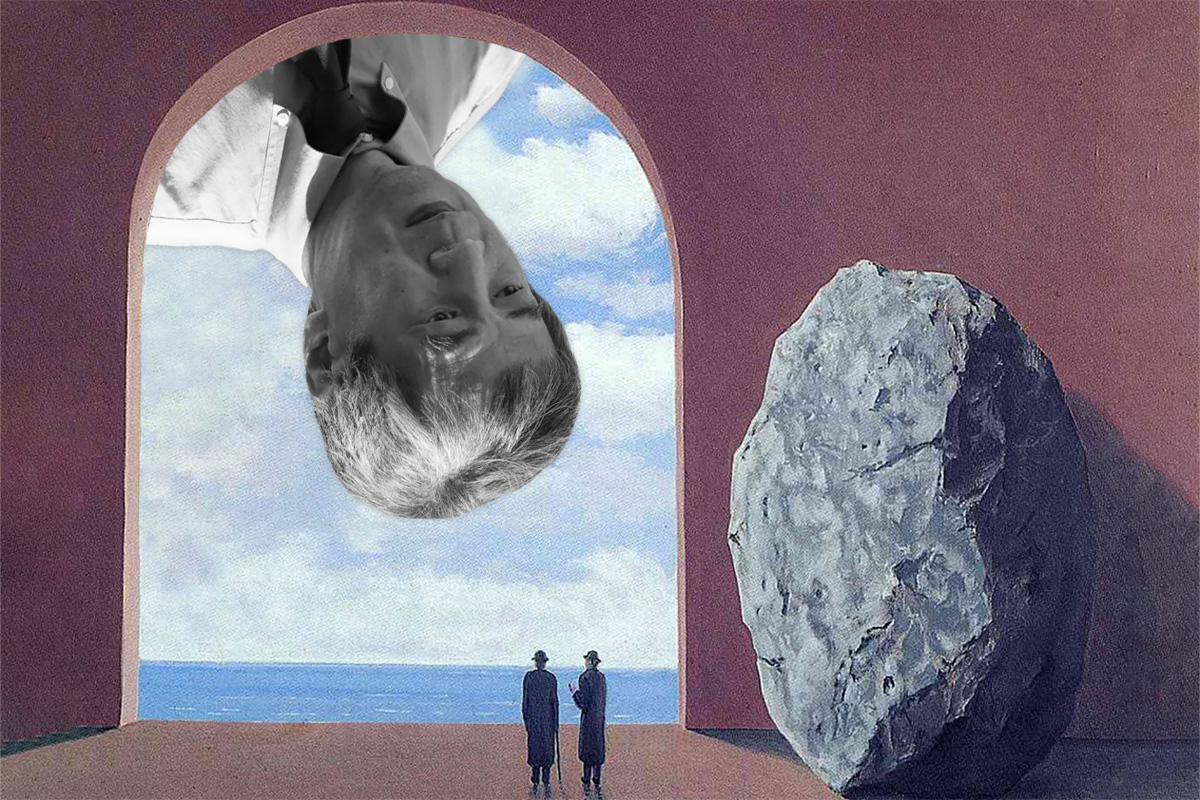
Art design: huxley.media via Photoshop inspired by René Magritte’s painting Portrait of Stephy Langui, 1961
A PRESTIGIOUS PROFESSION
Scientists by no means have the worst reputation on the planet. Quite the opposite: many people regard this path as noble, sensible, and even somewhat enviable. It is well respected, reasonably well paid, the workplace is clean and orderly, higher education is a given, and the cultural level of one’s colleagues is clearly above average — advantages all around. And science certainly does not seem like a crime-prone profession: this is not Soviet-era retail, after all, and in general, punching people in the face, picking pockets, and speaking thieves’ cant against a backdrop of synchrophasotrons and oscilloscopes simply seems absurd and utterly out of place. A wonderful image — but how far it is from reality! Data fabrication (with no connection to the real world whatsoever), falsification (that is, distorting data in favor of the hypothesis the author is defending), and, rather disappointingly, vulgar plagiarism form a three-headed hellhound now gnawing away at the reputations of countless scientists.
In a recent survey, 2.9% of the scientists questioned admitted that they had personally cheated at least once in their lives when obtaining scientific results — roughly one in thirty-five. Even more troublingly, a similar study conducted 12 years earlier found that only 1.97% had done so — one in fifty, meaning the situation has deteriorated quite sharply. And do you know how many scientists said that, although they themselves had never done anything of the sort, they had caught their colleagues doing it? About 15% — nearly one in six! As for minor statistical trickery, such as excluding inconvenient results from a sample or publishing only the favorable ones, one hardly even wants to talk about it — no fewer than one in five, and according to some surveys, a majority!
AND WHY DO THEY DO IT?
It is unlikely that anyone goes into science already intending to do anything of the sort, so where do so many of these cases come from? There must be certain motives that objectively push scientists toward such tricks. And how could there not be? First and foremost, there is the struggle for funding. The main source of it is grants — targeted subsidies for specific research projects. If you can produce results suggesting a potential discovery, the money needed to test the hypothesis will most likely be found. But what if there are no such data? See above. If you cannot find grants sufficient to continue your work, what are you going to pay salaries with?
And if there is money to keep the research going, you may eventually discover something that was not fabricated by mischievous hands but genuinely exists in nature. After all, the Danes discovered Ozempic, and now it ranks first among the country’s sources of revenue — not to mention the fact that it actually treats two obvious scourges of our time: obesity and diabetes. And so many people end up reasoning like this: we will lie for a little while, then somehow find a way out of it — because without that, we are finished!
A BRILLIANT DISCOVERY AWAITS HERE
One wonders whether Korean-born American biologist Dong-Pyou Han (1957), a native of Seoul, ever thought about any of this when he first decided to pursue science, when he came to the United States to study, when he chose an academic career, or when he decided to focus on a task as difficult as developing an AIDS vaccine. Probably not — even now, he most likely thinks he was simply unlucky…
AIDS remains an unsolved problem to this day. The number of documented cures has not even reached double digits. All of them involved transplanting bone marrow into a patient from a donor with a specific mutation found in no more than 1% of the population of Northern and Eastern Europe and nowhere else in the world. The transplant itself is extremely expensive and horrendously dangerous — there is no way such treatment could be used on a mass scale.
The AIDS virus integrates itself into the patient’s DNA, hiding in T lymphocytes while the person is being treated with something effective and emerging from its hiding place once the treatment is stopped. In addition, it mutates extremely rapidly, and even if a treatment works against the virus currently affecting the patient, by tomorrow a new mutation may become completely resistant to it. So treatment has to continue virtually for life.
Recently, drugs have appeared that need to be administered only once every two months: you get an injection, and for those two months the disease is held at bay. A little later, another drug was developed that needs to be taken only twice a year, and no one will ever detect the virus in a patient receiving such treatment — yet it is still there! So I simply cannot exaggerate the glory awaiting whoever finally defeats AIDS — my imagination would not be enough.
ANTIBODIES IN RABBIT BLOOD
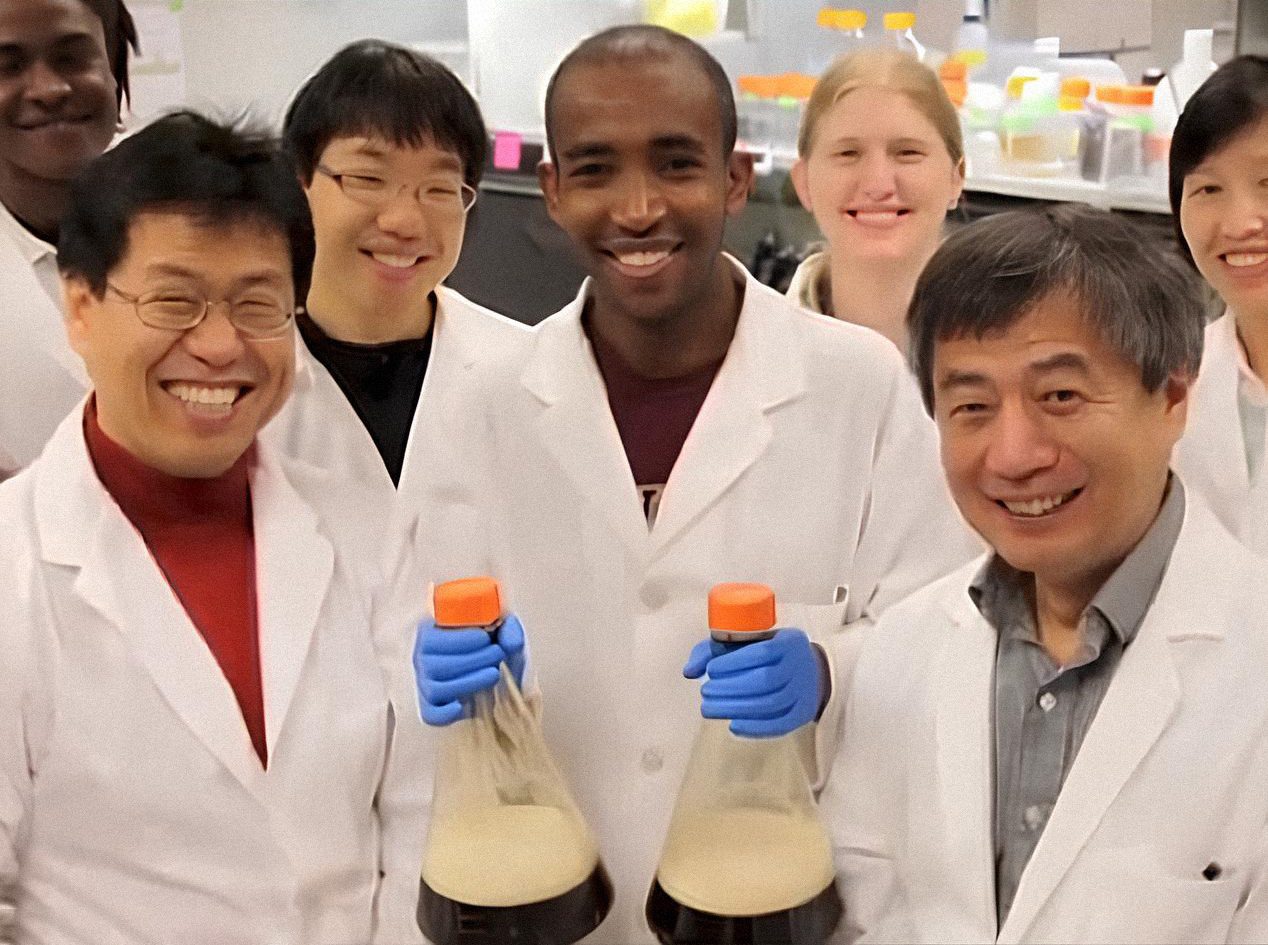
Dong-Pyou Han decided to contribute to this vitally important research. In 2008, at a university in Cleveland, he was studying an experimental AIDS vaccine by conducting tests on rabbits. The results Han reported to the overall head of the research program, Professor Michael Cho, were both surprising and encouraging: under the influence of the experimental gp41 vaccine, antibodies against the AIDS virus had appeared in the rabbits’ blood.
This meant that the vaccine was working and might well prove useful both for prevention and for treatment. It was immediately decided to continue the research in this direction. Scientific expertise and funding were found, but most importantly, there was now a strong desire to pursue this line of research. Grants were allocated for the work at a university in the state of Iowa. Naturally, Dong-Pyou Han became the head of the project.
The next step was to confirm the sensational results and, if everything proved sound, continue the work. What was at stake was nothing less than the possibility of solving one of humanity’s most serious problems — who would dare not place a bet on that?
A SMALL DETAIL
Interestingly, at that point Dong-Pyou Han had not yet done anything dishonorable — he had merely been somewhat careless. The test tubes containing rabbit blood turned out to have been contaminated with human blood, which happened to contain antibodies against the AIDS virus. According to Han, at first he simply regarded this as a stroke of great luck and began investigating the astonishing phenomenon in greater detail.
But fairly soon it became clear to him that there was no miracle at all — only basic carelessness. Well, such things happen; there was nothing disastrous about it. All that was needed was to clearly document what had actually happened, so that others would not fall into the same trap, and then focus on research in a different direction — that was all. Concealing the information and continuing down a dead end was unreasonable, dangerous, obviously pointless, and deeply improper. What made a respected scientist with a perfectly normal reputation wade into this swamp? Dong-Pyou Han later said that he had been driven to it by feelings of shame and embarrassment toward his scientific supervisor, Professor Cho — he found it extremely painful to let him down in such a way.
FIVE YEARS OF DECEPTION
But did he not let him down even more by doing this? And that is not even the main point. The main point is that Dong-Pyou Han, already knowing that the effect he had promised did not in fact exist, decided to continue claiming that it did — and, moreover, to falsify experimental data so that the truth would remain undiscovered for as long as possible. So he was guilty regardless of whether the first data he presented were the result of an experimental error or a deliberate manipulation that ultimately resolved all his doubts.
The group headed by Dong-Pyou Han received generous funding and continued its work for five years. What did that work consist of? Apparently, producing scientific reports — usually issued annually — containing large amounts of falsified data that confirmed the same earlier results that did not exist in nature. Could one single person have done all of this alone? Personally, I find that hard to believe.
Yet so far, I am not aware of any scientist other than Dong-Pyou Han who was held accountable for this fraud. Of course, as the head of the research, he was personally responsible for everything that happened, but did he really carry out all of it himself, physically? Still, the court was in a better position to judge…
And how did the suspicions arise in the first place? Science, too, has developed methods of protecting itself against arbitrariness. All important studies are invariably replicated, and more than once. You cannot simply invent something and expect it to survive for long. Questions therefore began to accumulate around the results presented by Dong-Pyou Han. They prompted additional investigations, and the conclusions drawn from those checks gave considerable cause for thought…
Incidentally, cases in which scientific fraud turns into a criminal prosecution remain extremely rare. Since 2010, not a single person had gone to prison for it! Not because there were so few offenders, but because far too many had escaped punishment…
THE MATTER WAS TAKEN SERIOUSLY
At first, Dong-Pyou Han thought he would get off with measures that were more disciplinary than criminal, since the Office of Research Integrity (ORI), which investigates misconduct in research funded by the federal government, decided to punish him by banning him from receiving federal research funding for three years — and nothing more…
But he was unlucky: Republican Senator Charles Grassley stated, “The ORI punishment seems too lenient for someone who falsified clinical trials and wasted millions of taxpayer dollars,” and began drawing media attention to the case, after which prosecutors had little choice but to bring charges.
The figures that emerged during the proceedings were disturbingly impressive — about $19,000,000 had been obtained for research into something that did not exist in nature. The evidence was overwhelming, and Dong-Pyou Han stopped denying what he had done. Before the trial began, numerous journalists called him. He answered them all, “I am very sorry,” and usually said nothing more. In one document, Han described himself as “stupid, cowardly, and dishonest.”
AN INEVITABLE OUTCOME
Despite this, for more than six months after his arrest, the fraudster maneuvered and resisted, trying to minimize his guilt — claiming, for example, that he had “committed the misconduct without intending to harm anyone.” Yes, of course — it just somehow happened by itself…
In court, he fought back like the three hundred Spartans until it became clear that contesting the charges that were easiest to prove could result in a substantial increase in his sentence. In the end, Han reached a plea agreement with the prosecution, admitting to two counts involving false statements made to the National Institutes of Health. It became clear that punishment was unavoidable — the only question was what form it would take.
On July 1, 2015, the sentence was announced — unprecedentedly severe for a case of this kind. Dong-Pyou Han was sentenced to 57 months in prison — almost five years, an extremely rare term for this category of offense. In addition, U.S. District Judge Gritzner, who handed down the sentence, stated that after his release from federal prison, Dong-Pyou Han would spend another three years under supervised release.
To top it all off, the defendant was ordered to pay the National Institutes of Health, which had suffered losses as a result of his actions, $7,216,890 in restitution and — a detail that genuinely moved me — 12 cents.
As for the papers published by Dong-Pyou Han’s group while they were reporting on their generously funded federal research, dozens of them were retracted from medical journals, many of them highly prestigious. They cannot be trusted, they cannot be cited — they might as well never have existed.
Quite a lot of time has passed since then. In 2020, Dong-Pyou Han completed the full prison term imposed on him. And in early 2024, his period of supervised release also came to an end. He has been permanently barred from receiving government grants and from participating in any research funded by the government. And private investors are hardly likely to line up for someone with such a record — so, for all practical purposes, he no longer exists in science.
There are no traces of public activity left, not a single publication, not even any social media accounts connected with his former scientific field. Scientific and civic death. Most likely, he is alive, but he has been completely excluded from his former profession. If others like him appear, they must be exposed in time. Trust, but verify!
LITERATURA
- Ex-Iowa State scientist gets prison for faking HIV research
- US vaccine researcher sentenced to prison for fraud
When copying materials, please place an active link to www.huxley.media
Select the text and press Ctrl + Enter


